Wednesday, August 28, 2024

Representative Pierre Bossier, The First from the Fourth

 It’s back to school time, so here’s your history pop quiz. For whom was the parish of Bossier named? General Pierre Evariste Bossier, of Natchitoches. Perhaps that question is easy or boring, but here is a tale of tracking down our parish’s namesake that puts to rest the idea that history is boring or irrelevant. Pierre Bossier lived 200 years ago, pre-photography, when the parishes of northwest Louisiana were considered “the frontier parishes,” and even Louisiana was not considered part of the “Old South” but of the “West” or Southwest. Even Washington DC, where Pierre Bossier served in the 28th Congress, was largely still, in the literal sense, swampland.


A remarkable story appeared 69 years ago on August 25, 1955, in the Bossier Banner Progress: “Audubon is Responsible for Likeness of Gen. Bossier in Historical Mural.” This mural, which had a story of its own in this local history column (September 28, 2022), was painted that year by Andrés Sánchez Flores, an internationally-known mural artist and assistant/protégé to the renowned Mexican artists Diego Rivera and Frida Kahlo. Following his move from Mexico to the Shreveport-Bossier area, he got a chance to share his artistic talents in Louisiana when he was commissioned to paint a 35-foot-long, 10-foot-high mural of 400 years of Bossier Parish history in the lobby of the National Bank of Bossier.


The artist, a prodigious researcher, wanted to make every effort to ensure the mural was historically correct. This impetus led to the discovery that no one could find an image of the parish’s namesake General Bossier of Natchitoches, after whom the parish is named, in order to accurately include him in the mural. According to the Bossier Banner Progress article, the long search for an image of General Bossier at first looked hopeless, since Bossier died in 1844 when photography was not widespread, and getting a portrait was a luxury. Sanchez Flores had a secret weapon though – librarians.


Miss Elizabeth Williams, parish librarian, made a search and appealed to the Louisiana State Library in Baton Rouge. Surprisingly, they came up with a book, sent to Ms. Williams, called “Audubon” by Stanley C. Arthur of New Orleans. The famous naturalist and painter who was renowned for his paintings of birds and his compilation of them in his book, “Birds of America” was not well-known for portraits. But he relied on doing them in his pre-fame days to earn some cash to support his young family. General Bossier reportedly paid him 25 dollars in 1921 in New Orleans to paint his portrait.


Once the article detailed the saga of finding the picture, it then explained how Bossier Parish became named for General Bossier when it was carved out of Claiborne Parish in 1843. Bossier was given the honor because in 1842, General Pierre Evariste Bossier of Natchitoches became the first legislator elected to represent Louisiana’s brand-new Fourth Congressional District, which is now represented by Speaker of the House Mike Johnson.


The article next jumped to Bossier’s death. He died during the congressional session on April 24, 1844, and the article claimed it to be suicide committed in his Washington DC office. The article then provided a backstory that “in 1842 [Gen. Bossier] fought a duel near Natchitoches with another man and killed him.” It then mentioned that Bossier owned a planation near Natchitoches and was known as “General” by serving as an officer of the state militia which was a predecessor of the Louisianan National guard.


Unbelievable in today’s time, it is true that he fought to the death of his opponent, François Gaiennie, in a duel. Duels here could still be fought over a woman's hand or to defend one’s honor, or could also be fought to settle political differences. In the young United States, freedom of speech and political beliefs was sacred, so to slander a man for them was considered an iniquity. As was the case for Bossier and Gaiennie, rifles were often used and strict rules of engagement were followed for dueling. An apology to the initiator of the duel for the named grievance could end the duel, even once it started, to avert loss of life.


The duel between General Gaiennie, who, like Bossier had been an officer in the state militia, was likely both for defending “honor” by proving he would not tolerate an insult, allegedly heard at a gathering with both men and women present, against the backdrop of political tensions. U.S. political discourse of the late 1820’s - 1850’s was extremely strident. It was in fact when the two-party system as we know it was forming. The parties at the time, Andrew Jackson’s Democrats and Henry Clay’s Whigs, had begun the practice of sitting separated by an aisle in Congress. In the south, Democrats were gaining on the Whigs, who were fighting back. Gaiennie was the head of the Whig party in Louisiana, and Bossier was a Democratic state senator elected in a surprising Democratic windfall for the Louisiana legislature, where he served from 1833-1843.

A reminiscence in The People's Vindicator, a Natchitoches newspaper, on May 4, 1878, about the Bossier-Gaiennie duel, was of the opinion that Gaiennie had essentially goaded Bossier into the duel and that Bossier’s temperament was too tender and sensitive to live with the fact that he’d killed this well-respected man. The article shared, therefore, that Bossier’s death at age 47 was “hastened” by the shock of the killing, which, according to The Office of the Historian of the House of Representatives, set off a chain reaction of honor killings that left eleven additional men dead.


Other reports of Bossier’s death state that it was illness, likely tuberculosis, that killed him while serving in the 28th Congress. This is a plausible argument, given the time, pre-modern medicine, and place, the hot, moist environment of early Washington DC. According to the Washington Congressional Cemetery, General Pierre Evariste Bossier was the 10th congressman serving in the 28th Congress to die since its session began four months prior in December,1843! Regardless of what killed General Bossier, in the years following the Civil War, public opinion soured against dueling, and laws against the practice were finally enforced.


To learn more about the beginnings of Bossier Parish, come visit us in the History Center, which is now within the new Bossier Parish Libraries Central Complex at 850 City Hall Drive, Bossier City, LA (across Beckett Street from the original History Center and “old” Central Library). We are open M-Th 9-8, Fri 9-6, and Sat 9-5. Our phone number is (318) 746-7717 and our email is history-center@bossierlibrary.org


For other fast facts, photos, and videos, be sure to follow us @BPLHistoryCenter on FB, @bplhistorycenter on TikTok, and check out our blog http://bpl-hc.blogspot.com/.


Images: 

  • General Pierre Bossier by John James Audubon, 1821.
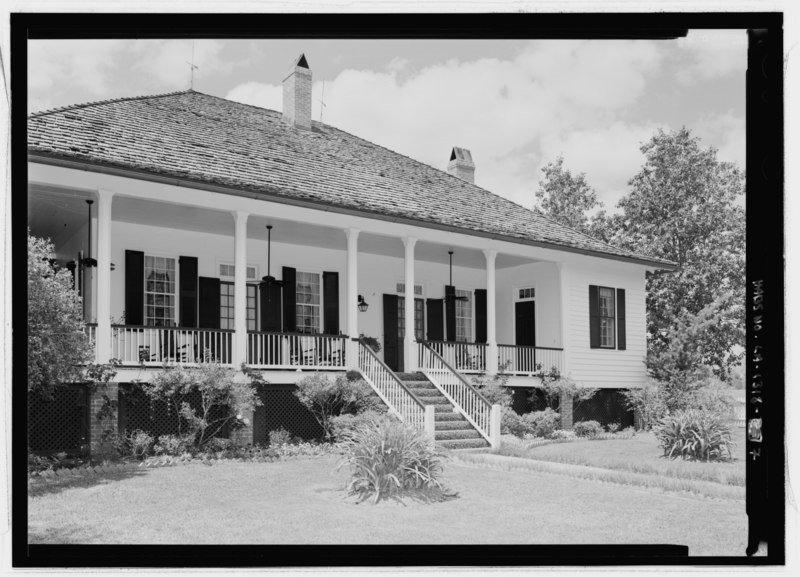
  • Plantation house of Cherokee Plantation — located 1½ miles northeast of Natchez, in Natchitoches Parish, Louisiana, the location of the duel between Pierre Evariste Bossier and F François Gaiennie. Built in 1839, the house is an example of French Creole architecture, and is now located within the NPS Cane River National Heritage Area. Photo from the Historic American Buildings Survey, a program of the National Park Service (NPS) established for the purpose of documenting historic places. Records consist of measured drawings, archival photographs, and written reports. Photo housed at the Library of Congress Prints and Photographs Division.
Article by: Pam Carlisle

Wednesday, August 21, 2024

Motobu, Continued: A Marine’s Best Friend and Sgt. James F. Brown

 Last week’s article featured the story of a shell-shocked and abandoned Japanese war dog named Motobu, for the north Okinawa peninsula where he was found, who was rescued by some US Marines of the 2d Battalion, 6th Marine Division, including a young man from Bossier City, Sgt. James Francis “Frank” Brown, Jr. It would be, I’d hoped, a “feel-good” story of a rescued German Shepherd and “his” Marines. But as I did more research, I learned that Motobu’s Marine Reservist Frank Brown, who attended Bossier High School and served as a volunteer Bossier City firefighter, had been killed on May 20, 1945, when he was shot in the hills of Okinawa, which were pitted with caves and passages hiding Japanese fighters. Here is more of Frank Brown and Motobu’s story.


Toward the end of the year of 23-year-old Frank Brown’s death, Bossier City got its own VFW Post. In the Post’s October, 1945 meeting, an inaugural class of candidates was accepted and initiated and a name was chosen for the new Post, Gandy-Brown. The Planters Press newspaper of Bossier City reported on Nov 1, 1945, that two young veterans were chosen as the post’s namesakes. The first was an army private in WWI, Mr. Guy Ira Gandy, who died of pneumonia after being wounded in France in 1918. The second young man was James Francis Brown Jr., described by the Press as “a Bossier City boy who was widely known throughout Bossier for his winning smile and charming personality. He was employed by the City of Bossier water department and a fireman of Bossier City…known to almost everyone as Frank.” Frank’s grandmother Mrs. Sarah Reichler of Bossier City, who raised Frank after his mother died when he was young boy, and was his “next-of-kin,” was named “Post Mother.”


Two years later on November 10, 1947, a silver star medal for Frank was presented to her, along with the permanent citation and letter, at the National Guard armory in Shreveport. The gala occasion was the Birthday Dinner held by the local Marine Reserve Unit for the USMC’s 172nd Anniversary. The medal was presented posthumously to Sgt. James F Brown Jr., Marine Corps Reserve on behalf of the president of the United States for “service as set forth in the following citation”:


…When his platoon became pinned down by heavy Japanese machine-gun fire from the flank, Sergeant Brown boldly led fifteen men across two hundred yards of open terrain to attack and destroy the hostile emplacement. Upon reaching the reverse slope of an adjacent hill and repulsing a vicious enemy, counter-attacking under the cover of shattering mortar barrages, he valiantly proceeded alone to the crest of the ridge to hurl hand grenades at the enemy forces below and disrupt their attempts to reorganize for counter action. Inspired by his heroic actions, the remainder of his unit joined him at his hazardous post and, fighting with unquenchable spirit, repulsed numerous Japanese onslaughts until reinforcements arrived. Although killed shortly before his besieged forces were relieved, Sergeant Brown, by his daring initiative and unswerving devotion to duty, had materially contributed to his platoon's success… He gallantly gave his life for his country.


More than a year after that occasion, as next-of-kin, Mrs. Reichler had a solemn decision to make. The U.S. Army and Marines buried those killed in action in Okinawa in temporary cemeteries on the island that were organized at division-level. In December, 1945, the War Department began efforts to identify and return the remains of American war dead from battlefields worldwide for reverenced burial in US cemeteries. Working through 1948, the Army recovered 10,243 sets of remains from six cemeteries on Okinawa. The remains went to Saipan in the Northern Mariana Islands for further processing and final disposition. The next of kin were given a choice to have their loved ones returned home or to remain permanently resting overseas.


Mrs. Reichler chose to bring her grandson Frank home. The Shreveport Times ran a story on Feb. 23, 1949, with the headline , “Pacific War Dead Arrive for Reburial – Eight from Shreveport, Bossier City on Ship.” Among those eight was Sgt. James Francis Brown, Jr. The Times reported that the eight from Shreveport and Bossier were “among the 5,806 war dead who have been returned to the United States for reburial from the Pacific area aboard the Amy transport Dalton Victory.” Army officials stated that each next of kin had been notified prior to the vessel’s arrival and would be notified again after the remains arrived at the regional distribution centers for the American Graves Registration Service. From there, as reported in the March 17, 1949, Planters Press, Sgt. Brown’s body would travel with a military escort via the Texas and Pacific railroad to arrive in Shreveport at 11:10 am on March 18.


Frank’s body was taken to Wellman’s funeral home in Shreveport for a chapel service conducted by Rev. T.E. Davis of the First Presbyterian Church of Bossier City. Honorary pallbearers were all city employees, members of the local VFW and the American Legion. He was buried in Shreveport’s Forest Park Cemetery.


As for the dog, Motobu, his fate is unknown. There are scant, yet loving, tributes of him to be found on the world wide web. One is the digitized photo, from May 1945, of Motobu flanked by 1st Lieutenant Merrill F. McLane and Corporal Howard Lee Cox, both looking at him with admiration. This official USMC photo is preserved in the Photograph Collection of the Marine Corps Archives & Special Collections. The other tributes are two short YouTube videos of interviews with Corporal Cox, created in 2012 when he was 87 years old, which feature stories of Motobu and how he helped their unit, and saved Cox’s life many times over.


If you have World War II family photos or stories to share, please visit or contact us at the History Center. We will scan them and return the originals if that is your preference. And don’t forget about our World War Tuesday coffee and discussion group on a variety of World War II topics held the second Tuesday of each month from 10:30 – noon. The History Center (and World War Tuesday) is now located in the new Central Library building at 850 City Hall Drive, Bossier City, LA, across Beckett Street from the original History Center and the “old” Central Library. We are open M-Th 9-8, Fri 9-6, and Sat 9-5. Our phone number is (318) 746-7717 and our email is history-center@bossierlibrary.org


For other fun facts, photos, and videos, be sure to follow us @BPLHistoryCenter on FB, @bplhistorycenter on TikTok, and check out our blog http://bpl-hc.blogspot.com/.


Images: 

  • Portraits of Sgt. James F. Brown and his grandmother, Mrs. Sarah E. Reichler, from The Planters Press, Bossier City, Louisiana, Thu, Apr 04, 1946.   
  • 6th Marine Division Cemetery dedication, Okinawa, Japan, 4 July 1945. USMC photograph from the John C. McQueen Collection (COLL/64) at the Archives Branch, Marine Corps History Division
  • Motobu and Marines. From left to right: Marine 1st Lieutenant Merrill F. McLane (6th Marine Division), Japanese war dog 'Motobu', Corporal Howard Lee Cox (6th Marine Division). United States Marine Corps - Photograph Collection (COLL/3948) of the Marine Corps Archives & Special Collections).
Article by: Pam Carlisle

Wednesday, August 14, 2024

Motobu, A Marine’s Best Friend and Sgt. James F. Brown

 After writing the stories of the horrific Texas City disaster of 1947, it seemed time to venture into lighter, feel-good territory. After finding a story of a shell-shocked and abandoned Japanese war dog, named Motobu for the north Okinawa peninsula where he was found, who was rescued by some US Marines, including a young man from Bossier City, I thought I’d come across the perfect feel-good topic. And, it was just in time for the 79th anniversary of “Victory Over Japan,” commemorating the August 14, 1945 announcement that Japan had surrendered unconditionally to the Allies, effectively ending World War II. As I did more research, the story of the young Marine reservist from Bossier City, Sgt. James F. Brown, who helped rescue the starving German Shepherd that became a critical and beloved member of his unit, takes a tragic turn. But thanks to Motobu, one can still imagine some brave Marines having moments of joy amidst the horrors of the Battle of Okinawa (March 26, 1945 – Sep 7, 1945) in the Ryukyu islands extending off of Japan.


James Francis Brown, Jr. (born 1921), known as Frank, attended Bossier High School in the 1930’s, when it encompassed all grades. According to the 1940 US Census, Frank completed school through the seventh grade, then left to work. It was around that same time that his mother Jane passed away. His father, Frank Sr., worked in the logging and timber industry and James lived with his siblings and stepsiblings with his grandmother, Sarah Reichler, in Bossier City. Before leaving for the service, Frank worked for the city water department and volunteered as a firefighter in Bossier City, where he was apparently was well-known and well-liked.


Shortly after the US entered World War II, Frank Brown, Jr. enlisted in the Marines on February 10th, 1942. He worked his way up through the ranks to Sergeant. He became a part of the new Sixth Marine Division (of Company F, Second Battalion, Fourth Marines) which formed in September, 1944. His division was part of a Fleet Marine Force, which was tactically equivalent to an infantry division and performed offensive amphibious or expeditionary warfare.


The Sixth Marine Division in Okinawa initially had a deceptively easy advance onto the island until they encountered the Kunigami Detachment, which was assigned to defend the Motobu Peninsula and le Shima (now known as Iejima). Fighting at Motobu was fierce and unrelenting. It took several before the peninsula was secured. 207 Marines were killed and 757 were wounded.


The Japanese war dog (both the Japanese Imperial Army and the US Marines used dogs as sentries, messengers, scouts among other important tasks) that was later named Motobu by his US Marine rescuers, was found shortly after the battle. The German Shepherd was suffering from severe shell shock (what is now called PTSD), lying nearly unconscious under a rock and unable to stand or make his way to a nearby stream to drink. In a Marine Corps photo of Motobu post-rescue, the dog is alertly looking right at the camera, tongue out, sporting a beautiful, healthy coat and a handsome pose. He is flanked by two Marines, 1st Lieutenant Merrill F. McLane and Corporal Howard Lee Cox, who are looking at Motobu with looks of respect and even adoration. Motobu fell on good times, but even fiercer battles were yet to come.


Sadly, unbeknownst to the readers of the Motobu story in the Shreveport and Bossier newspapers, James F. Brown was killed in action, even as they were reading of his part in the rescue of Motobu. (Note that there was a “Delayed” annotation in the article’s byline.) Brown was killed on May 20, 1945, when he was shot in the hills of Okinawa that were pitted with caves and passages hiding the Japanese fighters who resisted surrender at any cost.


The Shreveport Journal on Saturday, June 2nd, wrote, “Little did the public realize that Brown was dead when they read in Wednesday’s (May 30, 1945) Journal of his rescue of a shell-shocked dog”. In fact, Frank Brown’s grandmother in Bossier City, Sarah E. Reichler, who was listed as his next of kin, had received notice of Frank’s death on Sunday, May 27th, just three days before the Shreveport Journal story was published. The Planters Press ran the Motobu story even later, on June 7th. The Journal also reported that Brown had not had a furlough since joining the service, so his family members had not seen him for about three years.


Read next week’s article to learn more about Frank Brown’s heroic actions, Motobu’s contributions to the 6th Marines, and how both Brown and his grandmother were shown appreciation by the local community for their sacrifices.


If you have World War II family photos or stories to share (we will also scan and return originals if that is your preference) please visit or contact us at the History Center. Also, don’t forget about our World War II’s Day (Tuesday) coffee and discussion group on the second Tuesday of each month from 10:30 – noon. The History Center (and World War Tuesday) is now located in the new Central Library building at 850 City Hall Drive, Bossier City, LA, across Beckett Street from the original History Center and the “old” Central Library. We are open M-Th 9-8, Fri 9-6, and Sat 9-5. Our phone number is (318) 746-7717 and our email is history-center@bossierlibrary.org


For other fun facts, photos, and videos, be sure to follow us @BPLHistoryCenter on FB, @bplhistorycenter on TikTok, and check out our blog http://bpl-hc.blogspot.com/.


Images: 

  • Sgt. James F. Brown from The Planters Press newspaper of Bossier City, Louisiana, Thu, Apr 04, 1946.   

  • Motobu and Marines. From left to right: Marine 1st Lieutenant Merrill F. McLane (6th Marine Division), Japanese war dog 'Motobu', Corporal Howard Lee Cox (6th Marine Division). United States Marine Corps - Photograph Collection (COLL/3948) of the Marine Corps Archives & Special Collections).  
Article by: Pam Carlisle

Wednesday, August 7, 2024

History Center Moves to New Home Inside Central Library Complex

The Bossier Parish Libraries History Center has a new home. Early last month, the center “packed its bags” and relocated to space inside the Bossier Central Library Complex at 850 City Hall Drive. Although there is still some unpacking of those bags to be done, the center is open for visitors.


Since 1999, the History Center has been documenting and preserving the story of Bossier Parish and its people, and through those 25 years, the center has amassed quite a collection of everything from documents and photographs to furniture and clothing, thanks to the generosity of those who’ve donated items. A letter sent home by a soldier serving on the Korean War battlefield to his worried mom, a pair of devices that were the predecessors of today’s GPS, and a cotton gin that, to our knowledge, is one of only a few of its type left in existence, are just some of the artifacts that the center is honored to have in its collection.


Actually, the accumulation of items dates back to the early 1960s, when the Bossier Parish Library began compiling information related to the history of the parish. As the number of items grew, so too did the need for a dedicated place to house them. A proposal was made to construct a history center for the parish, and in late 1997, ground was broken. A year and two months later, construction was completed and a grand opening was held January 24, 1999. Visitors could see sights such as a diorama depicting life in a Caddo Indian village, and a cabin showing how early parish settlers would have lived.


Educational programs also became available at the History Center. Presentations focusing on genealogy research and highlighting various aspects of local history were offered. Currently, there are approximately 28 different presentations that can be scheduled at or away from the History Center.


A research area is open in the new location to those who may be looking into their family history or simply want to know more about Bossier Parish. Computers are available for research projects, and History Center staff can provide assistance when needed. Books are also available on many different topics of local and national history.


One exciting change still to come is the addition of interactive displays, which will allow visitors to experience history in a unique way. Being able to walk through an example of Bossier’s old Shed Road or enter a Caddo Indian hut are just two of the means by which visitors will be transported back in time to better understand what our parish was like more than a century ago and many centuries ago. These displays are scheduled to be in place sometime this fall or early next year.


Using photos, videos, displays, presentations, oral histories and more, the History Center will continue to tell the narrative unique to the place we call home. As Historian David McCullough said, “History is who we are and why we are the way we are.” Sharing this truth will remain a focus of the History Center, bridging the gap between past and present.


If you have any information or items relating to the history of Bossier Parish, the History Center may be interested in adding the materials to its research collection by donation or by scanning them and returning the originals. Call or visit us to learn more. We are open M-Th 9-8, Fri 9-6, and Sat 9-5. Our phone number is (318) 746-7717 and our email is history-center@bossierlibrary.org. We can also be found online at https://www.facebook.com/BPLHistoryCenter/


Images: 

  • Former History Center under construction/ photo by Shanna Faulk
  • Renderings of new History Center exhibits/Prevot Design
Article by: Kevin Flowers