Showing posts with label military. Show all posts

Wednesday, August 12, 2026

Benton Pilot Among the Missing from Korean War

Seventy-six years ago, President Harry Truman was taking a break from the stress of life in the White House by relaxing at his home in Independence, Missouri. The peace and quiet he enjoyed would not last. Word came on June 24th (June 25th in Korea) that North Korean troops were invading South Korea. Truman rushed back to Washington and committed U.S. forces as part of a United Nations effort to defend the South. The Korean War had begun. Approximately 36,500 U.S. service members would lose their lives in the brutal conflict. One member from Benton is still among the missing.


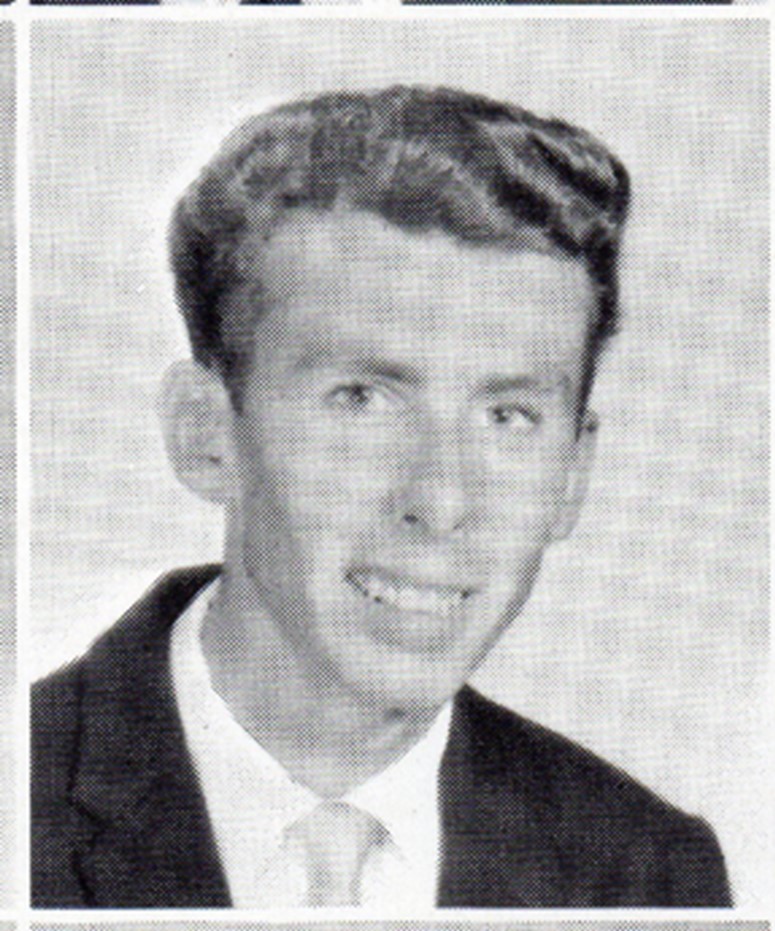
Captain David H. Grisham was a pilot and meteorologist. The 1938 Benton High School graduate first served his country in World War II, flying some 30 combat missions. According to the American Air Museum in Britain, it was during one such flight, with Grisham as co-pilot, that his plane – a B-24 Liberator – was repeatedly attacked by enemy aircraft while returning from a mission over Frankfurt, Germany. The plane lost all four of its superchargers, thus slowing its speed. Protective cloud cover was scarce. Taking evasive action, the Liberator descended to 75 feet. Enemy fighters fell back. Although damaged, the B-24 was able to reach a Royal Air Force station near Kent in England and make a wheels-up landing. This would not be Grisham’s last encounter with danger.


In Korea, weather played a key role in the planning and execution of combat operations, but forecasting the weather could be difficult. Grisham was up to the challenge. As part of the U.S. Air Force’s 20th Weather Squadron, he served as staff weather officer for the 18th Fighter Bomber Group and often flew reconnaissance missions, gathering data vital to troop movements. It was on his 46th recon flight that something went wrong. The Defense POW/MIA Accounting Agency details what happened. Grisham, as number two pilot in a flight of two, departed Ashiya Air Base in Japan in the early morning hours of September 3, 1950, flying a single-seat F-51 Mustang. Grisham and the lead pilot agreed to rendezvous over Pusan, Korea if they became separated. Shortly after takeoff, they had to climb through heavy overcast. The lead pilot exited the clouds, but did not see Grisham’s plane. He tried reaching Grisham by radio with no success. Grisham never arrived at the rendezvous point. Efforts by the Emergency Rescue Squadron failed to find any trace of him. Grisham was missing in action, one-month shy of his 30th birthday.


His family learned of his fate from a telegram sent by the war department. Though the weather had been bad, the operations officer at the time of the flight states in a letter published in The Bossier Banner newspaper in November 1950, “We were ordered to proceed because the ground forces were in dire need of close support.”


Grisham was presumed dead on December 31, 1953, five months after the war ended with the signing of an armistice. His remains were never recovered. His name is inscribed, along with the names of all those who lost their lives fighting to defend South Korea, on the Wall of Remembrance at the Korean War Veterans Memorial in Washington, D.C. He is also listed on the Courts of the Missing at the National Memorial Cemetery of the Pacific in Hawaii and is memorialized with a plaque at Hill Crest Cemetery in Haughton.


If you have any photos or other information relating to the history of Bossier City or Bossier Parish, the History Center may be interested in adding the materials to its research collection. Call us to learn more. We are currently closed for renovations, but can still be reached by phone at (318) 746-7717, and our email is history-center@bossierlibrary.org. We can also be found online at https://www.facebook.com/BPLHistoryCenter/ and http://bpl-hc.blogspot.com/

Images: 

  • Captain David H. Grisham, Defense POW/MIA Accounting Agency
  • Grisham's B-24 Liberator, B-24 Best Web
  • Memorial plaque at Hill Crest Cemetery in Haughton, photo by Sandra Clarkston

Article by: Kevin Flowers

Wednesday, June 24, 2026

Service Across the Sea – N. B. Carstarphen and the A.E.F.

The First World War, The Great War, or the War to End All Wars was one of the most devastating conflicts ever conducted in human history. Beginning in 1914, the world would be ravaged by the new destructive forces devised for this new conflict. No longer were armies content to form orderly columns, as the Western Front especially devolved into a mess of tangled and conflicting trench lines, trading lives and war materiel for marginal changes in the positioning of armies. There were three motivating incidents that led the United States’ intervention into the Great War: German resumption of unrestricted submarine warfare, the sinking of the RMS Lusitania (a British ship carrying American passengers) at the hands of said submarines, and finally the infamous Zimmerman telegram, the German attempt to lure Mexico into joining the Central Powers in exchange for portions of American land. These incidents resulted in the United States to officially join the Entente, commonly known as the Allies. To lead the American Expeditionary Force (A.E.F.), the United States’ contribution to the international coalition, General John J. “Blackjack” Pershing was selected. There, among his famously well-trained and talented staff at the General Headquarters, was a Plain Dealing native by the name of Newton Blanchard (N. B.) Carstarphen


Mister Carstarphen was born January 28, 1894, in Plain Dealing Louisiana to Mr. Edward M. and Mrs. Sallie Wilson. N. B. attended Georgetown University in Washington, D. C., in the 1910s to study law before graduating in 1917. While in D. C., he served as the private secretary to Louisiana Senator Joseph E. Ransdell as well as a messenger for the Committee on Public Health and National Quarantine. After his graduation, Newton volunteered for the upcoming European war effort on July 13, 1917. Newton Carstarphen’s law degree landed him a position as an Army Field Clerk, assigned to the United States General Headquarters (G.H.Q.) as an adjunct. For a period of twenty-six months he served in the A.E.F., throughout both the American involvement in the Western Front offenses, as well as the drawdown of American soldiers in Europe post-armistice. For his service to General Headquarters, Mr. Carstarphen received commendation for exceptional and meritorious service. At least one source claims that Newton served as aide-de-camp and personal courier for General Pershing himself, trusted with carrying secret military movements to the intended recipients.


The A.E.F., at the insistence of General Pershing, maintained a mostly independent command structure from the French and British armies, under his insistence that the A.E.F. would fight more effectively beneath their own flag. On May 28, 1918, the United States saw its first major action in the closing months of the Great War, at the battle of Cantigny. It is important to note, however, that this battle did not occur in a vacuum. The German armies assigned to the Western Front had spent the past two months expending the very last of the Empire’s strength in the German Spring Offensive, partly to end the war before the fresh and invigorated American

Army could arrive upon the shores of France and Belgium. The British Expeditionary Forces, as well as the French Army, were both exhausted from the past four years of brutal conflict. Whilst the A.E.F. would serve with distinction, and come to be a major contributing factor in bringing an end to the Great War, it was only through the immense suffering of the Allies that gave the United States this opportunity.

The remainder of 1918 saw vicious fighting, with the German military being forced to come to terms with their eventual defeat as became increasingly clear when the Spring Offensive failed to materialize the promised victory. On the Eleventh Hour, of the Eleventh Day, of the Eleventh Month, the guns of the Western Front would fall silent, with the signing of the armistice that gave way to the 1919 Treaty of Versailles. For his efforts in leading the United States to victory in the Great War, General Pershing was elevated to a position of which he has only two equals: General of the Armies of the United States. As for Mr. Carstarphen, Newton returned to the United States and attended Loyola University for his Masters in Law, before joining the Louisiana Bar Association in 1921. His career was one as high-powered lawyer and high-ranking politico in Louisiana politics, before his death on June 10, 1983. The Great War was viewed as the War to End All War, and while this adage would ultimately prove false, it was not through a lack of effort or bravery on the part of the Allies, and the American Expeditionary Forces served their parts valiantly in that titanic struggle.

If you have any photos or other information relating to the history of Bossier City or Bossier Parish, the History Center may be interested in adding the materials to its research collection by donation or by scanning them and returning the originals. Call or visit us to learn more. The History Center is currently closed until July 2026, though staff remains available. Our phone number is (318) 746-7717 and our email is history-center@bossierlibrary.org. We can also be found online at https://www.facebook.com/BPLHistoryCenter/ and http://bpl-hc.blogspot.com/

Images: 

  • Newton Blanchard Carstarphen - Lilla McLure and J. Ed Howe, History of Shreveport and Shreveport Builders Vol. 1, Page 433.
  • General John J. "Blackjack" Pershing - United States Library of Congress (LOC Control #: 2004672051)
  • Plain Dealing High School, where N.B. Attended - BPL History Center (1997.031.040)

Article by: Jonah Daigle

Wednesday, June 10, 2026

Thousands Gathered to Witness Beach Landing in Bossier

The east bank of the Red River in Bossier City, a draw now for leisurely entertainment and shopping, attracted crowds for a very different reason 81 years ago today. On Sunday afternoon, June 10, 1945, the shoreline near the Texas Street Bridge came alive with the clatter of machine-gun fire and the roar of fighter planes, as a battle unfolded. But Bossier City hadn’t become the latest hotzone of World War II. The fighting was simulated, meant to give spectators a glimpse of America’s military in action and highlight the importance of financially supporting those who were facing enemies abroad. Although victory in Europe had been declared a month earlier, the war in the Pacific continued.


War bond drives, or loan drives as they were also called, were a critical aspect of U.S. policy during the Second World War. They helped raise funds that the government used to buy equipment and supplies for the war effort, and they helped foster a sense of patriotism among citizenry by providing a means to contribute to that effort. There were eight such drives between November 1942 and December 1945. The mock invasion held in Bossier City was part of number seven.


In the days leading up to the event, local newspaper stories heightened interest by telling of the military machinery and maneuvers that would be on display and the guests who would attend, including Louisiana Governor Jimmie Davis and movie star of that era, Robert Young. Personnel would also be present to sell bonds. In an article on June 9, Barksdale’s Bark, the newspaper of Barksdale Field – as the base was then called – set the scene: “One hundred Barksdale GIs, armed with rifles and machine guns, will be disgorged from nine Higgins boats tomorrow, and behind a smoke screen, will plunge into an inferno of explosions, … belching flame throwers, roaring dive bombers and wheezing bazooka shells to secure a beachhead,” the paper stated. According to the article, Barksdale not only supplied the troops, but also much of the equipment, including jeeps, walkie-talkies and blank ammunition. The Higgins boats, named for Andrew Higgins, founder of the New Orleans company that built them, were brought by truck from Texas.


The “Red River Bond Invasion Show,” as the event was referred to in some local newspapers, got underway before a crowd estimated to number between 25,000 and 30,000 attendees, gathered along both sides of the river and on the Texas Street Bridge. Prior to the start of the invasion, Young addressed those assembled and “placed decided emphasis on the need to buy war bonds,” according to an article the following day in The Shreveport Journal. Navy Lieutenant Joe McMeel, survivor of a bombing attack on the aircraft carrier USS Franklin just four months prior, spoke as well.


After the guest speakers, the invasion commenced. The Shreveport Journal article of June 11 described what took place: “As the men advanced to establish their beachhead, smoke bombs … were set off, providing continuous protection to the men landing on the shore and to those moving upward on the beach. Even as the men advanced, the … P51s (fighter aircraft) continued to come over, providing a cover for them and blasting an opening … to aid the men in their move forward.” This must have been quite a sight to see on Red River! Soldiers stormed ashore and scrambled up the east bank with the objective of planting a flag at a predetermined point in “enemy” territory. Once this was achieved, victory was declared.


Persons who purchased bonds at the event and in the days just before the event were allowed rides on the Higgins boats. Young, who years later would achieve fame on tv in shows like “Father Knows Best” and “Marcus Welby M.D.,” signed autographs for those who bought bonds of $1000 or more. The June 11 article in The Shreveport Journal states that approximately $21,000 in bonds were sold during the afternoon’s show. That amount combined with money from bond sales across the country during the seven weeks of the Seventh War Loan Drive helped achieve a final total of more than $26 billion. Yes, billion.


For one Sunday afternoon in June 1945, Bossier’s east bank became a stage, offering a more forgiving glimpse into the brutal beach landings at places such as Normandy and Iwo Jima. For a moment, the crowd had a visual reminder that freedom isn’t free.


If you have any photos or other information relating to the history of Bossier City or Bossier Parish, the History Center may be interested in adding the materials to its research collection by donation or by scanning them and returning the originals. Call us to learn more. We are currently closed for renovations, but can still be reached by phone at (318) 746-7717, and our email is history-center@bossierlibrary.org. We can also be found online at https://www.facebook.com/BPLHistoryCenter/ and http://bpl-hc.blogspot.com/

Images: 

  • 7th War Loan poster/Wikimedia Commons
  • Beach landing on Red River's east bank/Barksdale's Bark, June 16, 1945
Articlel by: Kevin Flowers

Wednesday, May 27, 2026

Ben Kuroki: All-American War Hero (Part 1)

May is Asian American and Pacific Islander Heritage Month and a perfect time to remember Ben Kuroki, an Army Air Corps gunner from the “Mighty Eighth” Air Force during World War II who couldn’t wait to fight for his country, but who first had to, as he stated, “fight like hell” for the chance.


Ben Kuroki in almost every way possible represented the classic All-American young man of the 1940s. Growing up on his parents’ potato farm outside of Hershey, Nebraska, population 500, he was a high school basketball star and vice president of his graduating class. At the age of 24, two days after the bombing of Pearl Harbor by Japan, he and one of his brothers headed to their nearest military recruiting office in North Platte, Nebraska. But as Nisei, the sons of immigrants from Japan, their credentials as Americans were considered suspect. After they heard nothing from the recruiter for two weeks, they acted on a radio call they heard for volunteers for the army's air corps. With Ben having high hopes of becoming a pilot and younger brother Fred of becoming a navigator, they drove 150 miles to Grand Island, Nebraska and signed up. That recruiter was perhaps more interested in the $2 fee he got for each man he signed up than what they looked like.


The brothers were “in,” but not accepted. Kuroki remembered that they experienced hatred from fellow recruits, NCOs, and officers and described themselves as the loneliest men in the Army. They were frequently on Kitchen Patrol (KP) or tasked with menial chores like cleaning the latrines and digging ditches. Kuroki completed basic training in Texas and was sent to Fort Logan, Colorado for clerical training, not the fighting action the young man dreamed of. Fred was transferred to the Corps of Engineers.


Upon completion of the Army's administrative course, Kuroki was sent to Barksdale Field in Shreveport, Louisiana where a new air group was being formed to fly Consolidated B-24 heavy Liberator bombers. Kuroki was assigned as a clerk-typist to the 409th Bomber Squadron of the 93rd Bombardment Group. In an oral history interview he recalled:


When we went to Barksdale Field, Louisiana, I saw those big B-24s flying in, and I said, laughing, “Oh, my god.” I was so da** excited. But you know, I wouldn’t go near that plane. The first thing they’d say, if something happened, they’d say I was the one that was doing sabotage or something, and I didn’t want to risk it.


In fact, Kuroki was so frightened of something happening to get him kicked out of the Air Corps that he spent his earned leave time on base. Recalling the prejudice he encountered, he said, “I didn't even go into town because I couldn't enjoy a minute of it when I did.” In a speech to business leaders following his wartime experience, Kuroki remembered about his time in Barksdale:


Of the 40 clerks sent to Barksdale, I was the last one assigned. I spent about a month at Barksdale, most of it on K. P. You've all heard the Air Forces motto, "Keep 'Em Flying." Well, my motto was Keep 'Em Peeling"; they called me "Keep 'Em Peeling" Kuroki in those days. The most discouraging thing about that was the fact that I had no assurance that I ever would be assigned.


What kept him going, he said, were letters from his sister reminding him that Americans were in shock from Pearl Harbor and many were “unable to distinguish between Japanese and Americans of Japanese descent.”

“I still was without a friend in the Army, though, and that made it bad. There was only one boy who was kind to me at all,” who would take him his mail when he couldn’t get out of the kitchen in time to get it.


A few days before Kuroki and his squadron were to leave Barksdale, their commanding officer told Kuroki he was to be transferred and wasn't going with them to Fort Myers to prepare for overseas deployment. Kuroki considered that about the worst news he’d ever heard, and he asked the officer why. He only answered that he had nothing to do with it. But the officer started asking him questions, like how he liked the Army, and so forth. Kuroki was frank about his experiences and his hopes. His words must have had some effect, because the day before the group left, the officer again called for him and told him to pack his bags because he was going with them.


At Fort Myers, Kuroki did clerical work for about three months and gradually began to win over some of the soldiers. The young man who used to get his mail for him at Barksdale became an inseparable friend after they were in a truck accident at Fort Myers and Kuroki was able to help him. But when the group finished training and was ready to go overseas, Kuroki was again told he would not be going with them, and was given orders transferring him out of his squadron. This time it felt even worse, because for three months at Fort Myers, he had been counting on going overseas. He went to see the squadron adjutant and begged him, with tears streaming down his face, to take him along. When the adjutant got the approval, Kuroki recalled, “I was about the happiest guy in the world just then.”


In England, Kuroki was an orderly, typing up flight orders and keeping track of squadron records. As the Eighth's first B-24 squadron, its planes flew cross-channel bombing missions. Kuroki spent as much time as possible on the flight line to help out in any way he could and learned to skillfully operate the .50-caliber machine guns of the B-24. He passed a two-week gunnery course and never gave up requesting flight status. Part II of this story will detail exactly how his persistence paid off.


While our History Center exhibit and research areas are closed for installation of new exhibits, you can still explore our History Center resources online at www.bossierlibrary.org and choose “History and Genealogy” under Resources. Or you can attend our History Center programs in the Central complex meeting room. Beginning June 2nd at 6PM, and for the following 3 Tuesday evenings, we are bringing back R & R with History: Read & React: 1 Book; 4 Evenings. In honor of America’s 250th, this session’s book is Valiant Ambition: George Washington, Benedict Arnold, and the Fate of the American Revolution by Nathaniel Philbrook. The discussions will be led by Benton High School history teacher, Rusty Beckham, whose programs receive rave reviews from BPLHC patrons! To get a copy of the book and register, stop by the Central Library circulation desk, at 7204 Hutchison Drive, Bossier City, LA. You can contact us with questions at (318) 746-7717 or email history-center@bossierlibrary.org


Images: 

  • Ben Kuroki/photo colorized by Johnny Sirlande
  • Ben Kuroki welcomed into VFW in Omaha, NE, 1944/photo courtesy National Archives4
Article by: Pam Carlisle

Wednesday, April 1, 2026

A Gold Star Spouse of World War II

This is a story to commemorate Gold Star Spouses Day, April 5th, and the sacrifices made by a young couple in World War II, Haughton’s Cassius Clay “Buddy” Brandenburg Jr. and his young widow Cora Ann Foote Brandenburg. Gold Star Spouses Day is officially recognized by Congress, according to the US Army’s Office of Enterprise Management (OEM), as a time “to remember the profound impact that the loss of a loved one in military service can have on families. It serves as an opportunity for communities to come together in support of these spouses and to hold sacred the memory of their fallen heroes.”


Buddy Brandenburg graduated from Haughton High School in 1932. He entered Louisiana State Normal College in Natchitoches, La (now Northwestern State) and after graduating in 1936, he took a teaching position at Bossier High School. He taught for one year, then took a variety of jobs, including as a field representative with the Universal Credit Company of Shreveport and at General Motors Acceptance Corporation in Alexandria, Louisiana before volunteering for the Army Air Corps December 27, 1941 at Barksdale Field. (A separate branch of service for air power, the US Air Force, was not established until 1947.)

Buddy trained as a bombardier and married a young librarian, Cora Ann Foote, in Walla Walla Washington in August of 1942. Walla Walla was a training airfield for heavy bombers. Cora Ann, originally of Baton Rouge and a graduate of Louisiana State University, had been a librarian trainee at the Benton location of the Bossier Parish libraries. Buddy left for overseas duty on January 1, 1943. Cora Ann worked as a librarian for the US Army’s Camp Claiborne in central Louisiana.


Barely two months after leaving for overseas, Buddy’s plane lost altitude at a point near Utrecht, Holland while returning from a mission over Germany, for which he served as lead bombardier. He wasn’t declared “Presumed Dead” by the War Department for another year, after “all possible efforts” had failed to find the twenty-eight-year-old.


Buddy Brandenburg’s remains have never been recovered, even though some successful attempts to locate remains of WWII soldiers were done through the 1970’s. His name was carved among the 1,722 names on the Wall of the Missing at the Cambridge American Cemetery in Cambridge, England. Like the other American cemeteries in Europe, this one is breathtakingly beautiful, designed by the famed American landscape architect Frederick Law Olmsted and featuring views of the English countryside that, by law, will always remain farmland.


C. C. “Buddy” Brandenburg also has a monument in the Cottage Grove Cemetery in rural north Bossier Parish, and a memorial service was held for him at the Methodist Church in Benton. Buddy’s young widow Cora Ann received a letter from a member of one of Buddy’s combat crews, giving her what details he could about the fate of Buddy’s plane. (the letter is in the History Center’s collection).


Cora Ann returned to south Louisiana briefly and was a children’s librarian in Lafayette before leaving that position in March 1947 to become a librarian at the Veterans Administration Hospital in Alexandra, La. She recruited volunteers to help her do bedside visits, bringing books directly to patients. In June of 1948, she remarried WWII veteran John E. Jungkind from Arkansas. They moved to Columbia, Missouri where she was medical librarian at the University of Missouri Medical School. By 1950 they returned to Lafayette, where John worked as a reporter. They lived and worked various places over the years, but ultimately spent their final years in Baton Rouge.


If you are interested in World War topics, please attend one of our monthly World War Tuesdays coffee and conversation programs at the History Center. They are on the second Tuesday of the month at 10:30 AM. The History Center is located in the Central Complex Library at 7204 Hutchison Street, Bossier City, LA and is open M-F 9-6. Our phone number is (318) 746-7717 and our email is history-center@bossierlibrary.org

For more local history facts, photos, and videos, be sure to follow us @BPLHistoryCenter on FB, and check out our blog at http://bpl-hc.blogspot.com/.

Images: 

  • 2nd LT Cassius Clay "Buddy" Brandenburg Jr./History Center collection
  • Cora Ann Foote Brandenburg/The Shreveport Times, August 30, 1942
  • Tablets of the Missing, Cambridge American Cemetery, England. Creative Commons Photo via Wikimedia: Stevekeiretsu, CC BY-SA 3.0
Article by: Pam Carlisle

Wednesday, December 4, 2024

80 Years Hence: The Railsplitters in the Battle of the Bulge

It was six months since the start of the Normandy Invasion on June 6, 1944, and four months since the Liberation of Paris. The advance had not slowed, with the German Army ceding more ground as the year progressed. Then came December, with winter setting-in for France, and an exhausted Allied army unprepared for the coming storm. Having marshalled its remaining available strength at the behest of Hitler’s mania, Germany launched their last-ditch gamble through the Ardennes Forest on December 16. Their hope was to cut the Allied Offensive in two. What instead occurred is considered one of the bloodiest and largest battles in American history, sealing defeat for the German Reich in the west. This battle bears many names, but the most popular is that of the Battle of the Bulge.


The Allied armies under S.H.A.E.F. (Supreme Headquarters Allied Expeditionary Force) were of two minds when it came to the war as of late 1944. The primary strategic objective, crossing the Rhine and advancing into Germany, had not been met; however, the Allied armies had still made great gains over the past several months. They did this by constantly hammering against the German lines and pushing them further back into France and the Low Countries (Belgium, Luxembourg, and the Netherlands). According to a Center for Military History journal written for the 50th anniversary of the Battle of the Bulge (“The Ardennes: Battle of the Bulge”) by the time of the German all-out assault of the Allied lines, the First Army was exhausted after near continuous fighting over the past month-and-a-half.


Likewise, the 84th Infantry as a part of the United States Ninth Army VIII Corps, had been attacking portions of the network of defensive fortifications built by the Germans just before World War II, known as the Siegfried Line. Indeed, they were still engaged at the beginning of the Ardennes Offensive, and only began shifting south on December 20, four days after the initial German assault. Within the 84th Infantry, otherwise known as the Railsplitters, several local men from Bossier Parish and the vicinity served: Sandy J. Spataro, W. C. Holland, Willis M. Evans, Woodrow Harrison, Emmett E. Cope, Benjamin W. Napper, James D. McLendon, Willie J. Gann, Clyde L. Hamiter, Claude S. Ballard, and Rayford H. Odom. These men, some 5000 miles from home, fought on the frontlines of the entire Ardennes campaign, serving under Major General Alexander Bolling.


The 84th Infantry became involved in some of the heaviest fighting in the European Theatre, and the desperate fight against the German offensive was no different. The division had been reassigned to the U.S. First Army and ordered to secure the Belgian town of Marche. They arrived just before the German advance and defended the town against two Panzer Divisions. The American Infantry bitterly resisted, holding out against the tide of incoming German steel. This defense of Marche, it should be kept in mind, was concurrent with the desperate fighting at the Belgian city of Bastogne to the South, as well as the German drive west towards the coastal city of Antwerp in the north.


After December 26, ten days after the start of the German push, the Railsplitters were able to leave the defensive posturing and return the favor to the German war machine. Working with the 2nd Armored Division, the Railsplitters were given the crucial instruction to begin the drive south, with the intention of closing the Bulge. On January 5, 1945, the advance began, taking ground and prisoners, only to slow as the weather turned against them. With heavy snow in a highly forested region, the advance shifted from the infantry supporting the armor, to the inverse. By January 10, the 84th had managed to advance to Laroche, Belgium, and according to the unit history, the fate of the Bulge was all but settled. However, this did not mean the fighting ended or became any easier. It would take another two weeks before the Railsplitter’s participation in the wider Battle of the Bulge came to an end.


When discussing battles and campaigns of this scale, it is easy to lose sight of the very human cost. The 84th Infantry was one singular division in a sea of Armor and Infantry, tasked with an area only slightly larger than Bossier City. While the 11 local men that entered the Ardennes with the Railsplitters survived, many more did not. The final death toll for the Battle of the Bulge saw approximately 19,000 dead for America alone. With this 80th anniversary, remember not just the great triumph, but also the great cost it took to achieve it.


If you have any photos or other information relating to the history of Bossier City or Bossier Parish, the History Center may be interested in adding the materials to its research collection by donation or by scanning them and returning the originals. Call or visit us to learn more. We are open M-Th 9-8, Fri 9-6, and Sat 9-5. Our phone number is (318) 746-7717 and our email is history-center@bossierlibrary.org. We can also be found online at https://www.facebook.com/BPLHistoryCenter/ and http://bpl-hc.blogspot.com/


Images: 

  • Photo 1: 84th Infantry Howitzer at the Battle of the Bulge / Courtesy of " The 84th Infantry Division In The Battle Of Germany, November 1944-May 1945"
  • Photo 2: 84th Infantry Division Insignia / Courtesy of Wikipedia
  • Photo 3: 84th Infantry at the Battle of the Bulge / Courtesy of "The 84th Infantry Division In The Battle Of Germany, November 1944-May 1945"
Article by: Jonah Daigle

Wednesday, August 21, 2024

Motobu, Continued: A Marine’s Best Friend and Sgt. James F. Brown

 Last week’s article featured the story of a shell-shocked and abandoned Japanese war dog named Motobu, for the north Okinawa peninsula where he was found, who was rescued by some US Marines of the 2d Battalion, 6th Marine Division, including a young man from Bossier City, Sgt. James Francis “Frank” Brown, Jr. It would be, I’d hoped, a “feel-good” story of a rescued German Shepherd and “his” Marines. But as I did more research, I learned that Motobu’s Marine Reservist Frank Brown, who attended Bossier High School and served as a volunteer Bossier City firefighter, had been killed on May 20, 1945, when he was shot in the hills of Okinawa, which were pitted with caves and passages hiding Japanese fighters. Here is more of Frank Brown and Motobu’s story.


Toward the end of the year of 23-year-old Frank Brown’s death, Bossier City got its own VFW Post. In the Post’s October, 1945 meeting, an inaugural class of candidates was accepted and initiated and a name was chosen for the new Post, Gandy-Brown. The Planters Press newspaper of Bossier City reported on Nov 1, 1945, that two young veterans were chosen as the post’s namesakes. The first was an army private in WWI, Mr. Guy Ira Gandy, who died of pneumonia after being wounded in France in 1918. The second young man was James Francis Brown Jr., described by the Press as “a Bossier City boy who was widely known throughout Bossier for his winning smile and charming personality. He was employed by the City of Bossier water department and a fireman of Bossier City…known to almost everyone as Frank.” Frank’s grandmother Mrs. Sarah Reichler of Bossier City, who raised Frank after his mother died when he was young boy, and was his “next-of-kin,” was named “Post Mother.”


Two years later on November 10, 1947, a silver star medal for Frank was presented to her, along with the permanent citation and letter, at the National Guard armory in Shreveport. The gala occasion was the Birthday Dinner held by the local Marine Reserve Unit for the USMC’s 172nd Anniversary. The medal was presented posthumously to Sgt. James F Brown Jr., Marine Corps Reserve on behalf of the president of the United States for “service as set forth in the following citation”:


…When his platoon became pinned down by heavy Japanese machine-gun fire from the flank, Sergeant Brown boldly led fifteen men across two hundred yards of open terrain to attack and destroy the hostile emplacement. Upon reaching the reverse slope of an adjacent hill and repulsing a vicious enemy, counter-attacking under the cover of shattering mortar barrages, he valiantly proceeded alone to the crest of the ridge to hurl hand grenades at the enemy forces below and disrupt their attempts to reorganize for counter action. Inspired by his heroic actions, the remainder of his unit joined him at his hazardous post and, fighting with unquenchable spirit, repulsed numerous Japanese onslaughts until reinforcements arrived. Although killed shortly before his besieged forces were relieved, Sergeant Brown, by his daring initiative and unswerving devotion to duty, had materially contributed to his platoon's success… He gallantly gave his life for his country.


More than a year after that occasion, as next-of-kin, Mrs. Reichler had a solemn decision to make. The U.S. Army and Marines buried those killed in action in Okinawa in temporary cemeteries on the island that were organized at division-level. In December, 1945, the War Department began efforts to identify and return the remains of American war dead from battlefields worldwide for reverenced burial in US cemeteries. Working through 1948, the Army recovered 10,243 sets of remains from six cemeteries on Okinawa. The remains went to Saipan in the Northern Mariana Islands for further processing and final disposition. The next of kin were given a choice to have their loved ones returned home or to remain permanently resting overseas.


Mrs. Reichler chose to bring her grandson Frank home. The Shreveport Times ran a story on Feb. 23, 1949, with the headline , “Pacific War Dead Arrive for Reburial – Eight from Shreveport, Bossier City on Ship.” Among those eight was Sgt. James Francis Brown, Jr. The Times reported that the eight from Shreveport and Bossier were “among the 5,806 war dead who have been returned to the United States for reburial from the Pacific area aboard the Amy transport Dalton Victory.” Army officials stated that each next of kin had been notified prior to the vessel’s arrival and would be notified again after the remains arrived at the regional distribution centers for the American Graves Registration Service. From there, as reported in the March 17, 1949, Planters Press, Sgt. Brown’s body would travel with a military escort via the Texas and Pacific railroad to arrive in Shreveport at 11:10 am on March 18.


Frank’s body was taken to Wellman’s funeral home in Shreveport for a chapel service conducted by Rev. T.E. Davis of the First Presbyterian Church of Bossier City. Honorary pallbearers were all city employees, members of the local VFW and the American Legion. He was buried in Shreveport’s Forest Park Cemetery.


As for the dog, Motobu, his fate is unknown. There are scant, yet loving, tributes of him to be found on the world wide web. One is the digitized photo, from May 1945, of Motobu flanked by 1st Lieutenant Merrill F. McLane and Corporal Howard Lee Cox, both looking at him with admiration. This official USMC photo is preserved in the Photograph Collection of the Marine Corps Archives & Special Collections. The other tributes are two short YouTube videos of interviews with Corporal Cox, created in 2012 when he was 87 years old, which feature stories of Motobu and how he helped their unit, and saved Cox’s life many times over.


If you have World War II family photos or stories to share, please visit or contact us at the History Center. We will scan them and return the originals if that is your preference. And don’t forget about our World War Tuesday coffee and discussion group on a variety of World War II topics held the second Tuesday of each month from 10:30 – noon. The History Center (and World War Tuesday) is now located in the new Central Library building at 850 City Hall Drive, Bossier City, LA, across Beckett Street from the original History Center and the “old” Central Library. We are open M-Th 9-8, Fri 9-6, and Sat 9-5. Our phone number is (318) 746-7717 and our email is history-center@bossierlibrary.org


For other fun facts, photos, and videos, be sure to follow us @BPLHistoryCenter on FB, @bplhistorycenter on TikTok, and check out our blog http://bpl-hc.blogspot.com/.


Images: 

  • Portraits of Sgt. James F. Brown and his grandmother, Mrs. Sarah E. Reichler, from The Planters Press, Bossier City, Louisiana, Thu, Apr 04, 1946.   
  • 6th Marine Division Cemetery dedication, Okinawa, Japan, 4 July 1945. USMC photograph from the John C. McQueen Collection (COLL/64) at the Archives Branch, Marine Corps History Division
  • Motobu and Marines. From left to right: Marine 1st Lieutenant Merrill F. McLane (6th Marine Division), Japanese war dog 'Motobu', Corporal Howard Lee Cox (6th Marine Division). United States Marine Corps - Photograph Collection (COLL/3948) of the Marine Corps Archives & Special Collections).
Article by: Pam Carlisle

Wednesday, May 15, 2024

Lt. Edward F. Teague: A Brave Pilot with a Brave Family

Decoration Day will be here soon, the last Monday in May. Three years after the Civil War ended, in 1868. Maj. Gen. John A. Logan, the head of the Grand Army of the Republic, an organization of Union veterans, established Decoration Day as a time to decorate the graves of their war dead with flowers, already a springtime tradition in several communities, both the North and South. Logan chose the date of May 30th because, some say, it was a time flowers would be in bloom all over the country. Over time, the day became Memorial Day, a day to honor all those who died in service to our nation.

In honor of a young man from Bossier City who made this ultimate sacrifice in 1947, replace the vision of springtime and flowers with snow, lots of snow, and short days of little sunlight. Imagine a resting place not in a manicured, flowering cemetery but in an isolated sub-arctic landscape 70 miles north of Goose Bay, Labrador, Dominion of Newfoundland (before it was a province of Canada). This was the transitional resting place of Lieutenant Edward F. Teague of Bossier City, whose C64 single-engine plane went down on March 13, 1947.

Growing up in Bossier City with six siblings, Lt. Teague attended Bossier High School, along with his future wife, Katherine Eatman. He attended LSU and joined the Army Air Force (AAF) in 1943. (The US Air Force began as the Army Air Corps in 1926 and became the more autonomous Army Air Force in 1941. It became the standalone US Air Force in September, 1947). After completing flight training in New Mexico, Edward Teague instructed at US airfields until sent to Goose Bay in Labrador in 1946. Goose Bay was a Royal Canadian Air Force airfield, with the south-side reserved for the AAF.

Lt. Teague was serving in the Atlantic division of the Air Transport Command (ATC). The Air Transport Command, active from 1942-1948, had extensive responsibilities: the ferrying of all aircraft within the United States and to many destinations outside of the US, the control, operation, and maintenance of establishments and facilities on air routes outside of the US and the transportation by air of personnel, equipment, supplies and mail for all War Department agencies that didn’t have their own troop carrier units.

Lt. Teague was an assistant base operations officer at the Goose Bay AAF station, which served as an ATC jumping-off point for Great Britain, and flew supplies to outpost weather stations and made rescue flights. In the bitter cold of February, 1947, he had rescued Sgt. Patrick Hayes of Wisconsin when he was lost after a crash. One month later, on March 13th, Teague, as pilot, with Sgt. Hayes and a Lt. William Haemker of Indiana, were in a single engine C-64 Norseman 4-seater, one of the light-transport work horses from WWII, when their base lost contact with them.

The March 18, 1947, Shreveport Times reported that bad weather impeded search operations but several planes were standing by in Goose Bay to search for Lt. Teague and the other two men once the weather cleared. The next day the Times reported that Royal Canadian Air Force planes had covered 19,000 square miles of the Labrador “wastelands” in the search, and a ground search was underway. The Times also reported that waiting for news in Bossier City were Teague’s parents, Mr. and Mrs. A.M. Teague, and his wife Katherine and two-year-old son.

Several days later, the Bossier City Planters Press reported that the aerial search for the lost men and their plane had been called off, but Teague’s family was holding out hope. Ground forces were still searching and an AAF captain stationed at Goose Bay, a friend of Edward Teague’s, was bolstering the family’s hopes through daily short-wave radio communications. He had advised Katherine Teague that

Edward’s plane (which was designed for the worst of conditions) was thoroughly equipped for emergencies, with skis and pontoons to land on ice or water. There were enough open areas in the snow - “wastelands” - that Edward could bring the plane down safely, and the men had ways to resist the cold. The captain also assured Mrs. Teague that the plane was supplied with an abundance of first aid articles, and ammunition and food to last for at least 30 days.

Edward’s brother, local realtor Arthur Ray Teague, reported the family found these Goose Bay reports encouraging. Their sister Joy Teague, who was in civilian service at General MacArthur’s headquarters in Tokyo, Japan, was also communicating with the family via radioed messages. In addition, the Planters Press article related that the family was receiving messages of concern and sympathy from a multitude of local friends and acquaintances to help them through their “period of anxiety.”

In late June, the family received dreaded news, in the least-comforting way. The Friday, June 27, 1947 Shreveport Journal reported that an Associated Press dispatch had just disclosed that the body of Lt. Teague had been found by a search party. The family, though, had not yet received any official notice by the War Department. They had only received word through Congressman Overton Brooks that a ground crew had been ordered to Mur Inlet 70 miles north of Goose Bay because wreckage of a plane had been spotted from the air.

Once the ground crew reported a positive identification of the plane and the three bodies found inside, Mrs. Teague was contacted by the War Department and the news was reported on the front page of the Planters Press on Thursday, Jul 3, 1947. After another week, and an incorrect speculation by the Associated Press that Lt. Teague’s body would be buried in the snow-covered sand dunes where it was found, Katherine Teague received word that the War Department would be sending her husband’s body home.

Twenty-five-year-old Lieutenant Edward Teague was buried in Shreveport on July 14, 1947, at Forest Park Cemetery with military honors. His body had been accompanied from Goose Bay by an officer of the US Army. Personnel of Barksdale Field conducted the service. Air Corps officers served as pallbearers. At the cemetery, an honor guard from Barksdale fired the traditional military salute, and the flag that had been on Lt. Teague’s casket was presented to his widow. The Planters Press reported that deep sorrow for the loss of Lt. Teague was felt not only by Mrs. Teague, her young son, and other family members, but felt throughout the community.

The day he was buried, Mrs. Katherine Teague signed a government application for a flat granite military grave marker for her husband. The application initially listed a typed date of death as 26 June 1947, the day he was found. That date was then scratched out in red pencil, and March 13, 1947 was handwritten over it. That hastily scribbled date honored the day his family’s world stopped. The June date is when it shattered.


If you would like to add to or explore our collection of Bossier’s military heroes stories or photos, please stop by or contact the History Center. We are located at 2206 Beckett St, Bossier City, LA and are open M-Th 9-8, Fri 9-6, and Sat 9-5. Our phone number is (318) 746-7717 and our email is history-center@bossierlibrary.org

For other fun facts, photos, and videos, be sure to follow us @BPLHistoryCenter on FB, @bplhistorycenter on TikTok, and check out our blog http://bpl-hc.blogspot.com/.


Images: 

  • Lt. Edward Teague
  • Norseman Noorduyn UC-64 from the Charles Daniels Photo Collection album "US Army Aircraft,” San Diego Air and Space Museum Archive.

Article by: Pamela Carlisle


Wednesday, July 5, 2023

Bossier Parish Soldiers Gave All in Korean War

 On the evening of Sunday, July 26, 1953, President Dwight Eisenhower was nervous. The armistice ending the Korean War was due to be signed the following day, and according to White House Assistant Staff Secretary Arthur Minnich, Eisenhower feared “that there was the possibility that something would go wrong before the signing was complete.” Those fears proved unfounded, as the armistice was signed the following morning at 10 a.m., 70 years ago this month, ending the conflict which saw families across the nation burying loved ones killed in action, including three from Bossier Parish.


James E. Kelleher Jr. had been a resident of Benton since birth. Articles in The Bossier Banner and The Planters Press newspapers state that he was a graduate of Benton High School and entered the U.S. Army in 1948, training in California before being sent to Japan as part of the 5th Calvary Regiment, 1st Calvary Division. Rising through the ranks, he became a sergeant and, according to the American Battle Monuments Commission, was a recipient of the Purple Heart, Korean Service Medal and the National Defense Service Medal, among others. After being wounded on August 2, 1950, he wrote a letter to his mother saying she shouldn’t worry about him. “I am not in too bad a condition,” he stated. “I did get shot though, and it didn’t feel very good.” A copy of the letter is in the History Center archives. Kelleher returned to duty in late August, but was wounded again during fighting on November 28, 1950. After recuperating, he rejoined his division in mid-January 1951. Approximately a month later, he was killed in action. He was 20 years old.

“I am not in to [too] bad a condition,” he stated. “I did get shot though, and it didn’t feel very __ good.” 

Lionel King of Plain Dealing also served in the Army, the 9th Infantry Regiment, 2nd Infantry Division. Born in 1922, this African American soldier earned several medals while achieving the rank of master sergeant. Among the service decorations listed for him by the ABMC are the Purple Heart, Republic of Korea War Service Medal and the Republic of Korea Presidential Unit Citation. Although additional information about King’s time of service was difficult to find, online records of the National Archives show that he was killed in action February 14, 1951, during fighting in South Korea. According to The Planters Press, his family was notified approximately a month later. He was 28 years old.


Charles J. Steelman hailed from Plain Dealing as well, and like King and Kelleher, served in the Army. He was a private first class with the 17th Infantry Regiment, 7th Infantry Division, and his awards included the Purple Heart, National Defense Service Medal and Republic of Korea War Service Medal, according to the ABMC. Information about Steelman was also difficult to find, but National Archive records show he was killed in action in the South on February 19, 1951, aged 19.


Today, the Wall of Remembrance at the Korean War Veterans Memorial in Washington, D.C. commemorates these three men and the more than 36,000 other Americans who lost their lives fighting to defend South Korea. The names Kelleher, King and Steelman are inscribed there. At least two of the names can also be found here at home. Sgt. Kelleher was buried at Lay Cemetery in Benton, while Pfc. Steelman was laid to rest at Stevens Cemetery in Caddo Parish. The final resting place of MSgt. King was unable to be verified. Their sacrifice is stated simply but eloquently by the phrase attributed to Korean War veteran Howard Osterkamp, “All gave some; some gave all.”


If you have any letters, photos or other information relating to residents of Bossier Parish who’ve served in the military, the History Center may be interested in adding the material to its research collection. Call or visit us to learn more. We are open M-Th 9-8, Fri 9-6, and Sat 9-5. Our phone number is (318) 746-7717 and our email is history-center@bossierlibrary.org. We can also be found online at https://www.facebook.com/BPLHistoryCenter/


Image 1: Sergeant James E. Kelleher Jr. / photo courtesy of A Footstep In Time & Donna Hinton Warke

Image: 2 Cropped section of the letter written by James E. Kelleher, Jr. 

Image 3: Purple Heart Medal/ photo courtesy of Clipart-library.com

Image 4: Grave marker for Private First Class C J Steelman/ photo courtesy of Family Miner


Article by: Kevin Flowers

Wednesday, December 28, 2022

War Takes No Holiday: Saving the Phone Calls for Uncle Sam

 During World War II on the home front, civilians sacrificed and saved so that the soldiers, especially those overseas, would have what they needed to fight to victory. Barksdale Air Field promoted the “Jeep-O” civilian /G.I. ride-sharing program to conserve gas and seats on the buses, and homemakers and school children were rationing food and saving and collecting cooking fats. A particularly poignant sacrifice, especially during the holidays, was severely limiting time on the telephone with family and loved ones.


An advertisement from Southern Bell Telephone and Telegraph Company in the December 3rd, 1942, “Planter’s Press” newspaper of Bossier City featured a smiling young woman telephone operator with the caption, “I am a Soldier of the Wires”. This operator persona decided with the holidays approaching to “speak right out and ask for the help [she feels] sure everyone is willing to give” even though, writing as someone with far-away family, it’s a pretty tough ask:


"This December, war will take no holiday and Uncle Sam will be using the telephone more than ever. Therefore, we operators are asking you to help us by not making holiday greeting long distance calls this year. We urge that no such calls be made, especially on Christmas Eve, Christmas Day, or New Year's Eve."


Even after New Year’s celebrating was over, the demand was still high. The pleas to yield the phone lines continued in the January 7, 1943 issue of the “Planter’s Press:”


“The New Year, 1943, is the ‘end of the beginning.’ A greater burden of toil and conflict lies ahead. And while America’s sons fight in desert and jungle, telephone communication lines at home will carry an ever-increasing load of calls vital to Victory.


Telephone materials are still going to battle in the form of guns and shells. So, to get the most out of our present equipment, we will continue to need your help in keeping long distance lines clear of all but necessary calls. And remember, the greater the distance you talk, the greater the chance of your call getting in the way of important war calls.


Phone customers were also requested to make their calls in the daytime so that lines were available in the evening when soldiers were at liberty to make calls. (Though the “Barksdale Bark” newspaper encouraged the men on base to call in daytime, if at all possible, since it was the less-busy, though more-expensive time on the phone lines. Customers were also asked to keep the lines and operators free by looking up phone numbers themselves in the Directory.


Most of these requests were shown in clever ‘ads’ from the phone company itself, Southern Bell Telephone and Telegraph, which served most of the American South. But these ads corresponded with an order from the War Department, which appeared in the 15 October 15, 1942, Bossier Banner-Progress:


The Board of War Communications ordered long distance telephone calls relating to the war effort and public safety be given priority over all other calls, effective November 15. Calls concerning moving armed forces during combat operations, urgent orders for the armed forces, immediate dangers due to presence of the enemy and disasters materially affecting the war effort or public security will get first priority. Operators will give precedence to top priority calls at all times.


If your family has any Bossier Parish WWII stories to tell or photos to share, or if you have any information, stories, or photos about local efforts to help out servicemembers during WWII, we would love to see them or to copy them, with permission, to add to the History Center’s research collection. Please visit us at the Bossier Parish Libraries History Center. Don’t forget we have a monthly World War II’s Day coffee and conversation group that meets the second Tuesday of the month, which will continue in the New Year, at the History Center from 10:30-noon. Our next meeting is on January 10th.

We are located at 2206 Beckett St, Bossier City, LA and are open M-Th 9-8, Fri 9-6, and Sat 9-5. Our phone number is (318) 746-7717 and our email is history-center@bossierlibrary.org


Article by: Pam Carlisle


Images: 

1) The Planters Press: 30 Nov 1944

2) The Planters Press:03 Aug 1944

3) The Planters Press:14 Dec 1944

For other fun facts, photos, and videos, be sure to follow us @BPLHistoryCenter on FB, @bplhistorycenter on TikTok

Wednesday, November 9, 2022

Wall of Faces – Remembering Vietnam Veterans

 In February of 2017, the History Center received one of its most poignant, and challenging, research requests via a phone call from Hawaii. Janna Hoehn, a volunteer researcher, was helping to find photographs for the Vietnam Veterans Memorial Fund’s (VVMF) Wall of Faces, the online “Virtual Wall” to pair with each name engraved in the Vietnam Wall memorial in Washington D.C. When Ms. Hoehn called us, she had the names of four veterans whose address of record was “Bossier” or “Bossier City” and for whom she had no photo for a proper visual tribute.  

Arthur N. Welch
Dennis Black
 Right after talking to us, Ms. Hoehn was able to   contact a girlfriend of Bossier veteran Alton D.   Kellogg and within minutes the girlfriend scanned   and emailed his military portrait. Within a couple of   days, History Center staffers were able to provide   Ms. Hoehn with photos for two more of the Bossier   names:  yearbook photos of Bossier High School   alums Dennis B. Black and Arthur N. Welch. Arthur   Welch a little bit of detective work by Marisa   Richardson at the History Center. At first, she passed   over the yearbook photo of the student listed as “Buddy Welch”. Once back at her computer, she decided to dig a little. She found through an online memorial tribute by a boyhood friend that Arthur N. Welch was indeed known by the name “Buddy.”  

The last remaining veteran to find was Herbert Walter, who died in September of 1969 at the age of 23. As an African American who would have attended high school around 1960-64 and whose home of record was Bossier City, we figured he likely attended Bossier Colored High (or possibly CH Irion High School in Benton. He is buried at Longview Baptist Church cemetery, northeast of Bellevue).  We did not have a complete run of yearbooks for the schools for black students. The yearbooks we do have or have seen tended to be paperback, less likely to last than hardbound books. Some of the schools were not able to put out a yearbook each year. We also could not locate an obituary for Herbert Walter, so we had to widen our search for Herbert Walter’s photo. I wrote in the Spring 2017 History Center newsletter that we were seeking the public’s help.   

After reading that newsletter, local researcher and genealogist, Isabelle Woods, along with researcher and retired “Shreveport Times” reporter John Andrew Prime, whose reporting included local military history, became determined to find a photograph of Herbert Walter. They were determined that his picture could be added to the Vietnam Veterans Memorial Fund’s Wall of Faces.  

Herbert Walter
Mrs. Woods and Mr. Prime searched for records that could lead to family members. After they found the soldier’s obituary which listed him as Herbert Walters, instead of Walter, Mrs. Woods was then able to get the names of his family members. However, his widow’s name was not given on the obituary, and it did not contain a photograph.  

Mrs. Woods located and contacted a different family member and learned the names of Herbert Walter’s widow and daughter and that they had long ago moved out of the state. Knowing just their names and a general location that they had moved to decades prior, Mrs. Woods continued her search. Incredibly, Isabelle Woods successfully located and contacted Herbert Walter’s widow, who was happy to share photographs of him. 


In summer of 2022, the Vietnam Veterans Memorial Fund made the announcement that at least one photo had finally been found for each of the 58,281 service members listed on The Vietnam Veterans Memorial Wall. This effort was completed by volunteers, like Jana Hoehn, from across the country, and by the attendant efforts from local institutions and volunteers who stepped up in cities and small towns and rural areas across the country. 

We remain grateful to Isabelle Woods for her time, her determination and her research expertise. We are thankful for John Andrew Prime, whose assistance was crucial in finding the trail that led to the visual reminders of the short life of Herbert Walter. It is because of their efforts that not one but three photographs of Herbert Walter were added to the Vietnam Veterans Memorial Fund’s “Wall of Faces.” You can virtually visit the wall of faces here: http://www.vvmf.org/Wall-of-Faces/ 

For research requests like Ms. Hoehn’s that we receive from around the country, we are delighted to take donations of yearbooks or to borrow one to carefully scan or photocopy. If you would like to add to or explore our collection of Bossier veterans’ stories or photos, please stop by or contact the History Center. We are located at 2206 Beckett St, Bossier City, LA and are open M-Th 9-8, Fri 9-6, and Sat 9-5. Our phone number is (318) 746-7717 and our email is history-center@bossierlibrary.org


For other fun facts, photos, and videos, be sure to follow us @BPLHistoryCenter on FB, @bplhistorycenter on TikTok

Article by: Pam Carlise

Images: 

Arthur “Buddy” Welch 1950-1969 Bossier High School yearbook 1967, his junior year. He is not in the yearbook his senior year.

Dennis Black 1947-1968 Airline High School yearbook 1966

Herbert Walter 1946-1969

Wednesday, September 21, 2022

Remembering the Louisiana Maneuvers

Louisiana Maneuvers The Louisiana Maneuvers were large-scale military training exercises beginning in 1939. The maneuvers included a mock ’war’ to prepare the United States’ young and inexperienced military force for possible U.S. entrance into the Second World War. The idea was for troops (and equipment, including newly designed tanks and aircraft) to be tested in actual primitive battle conditions. As General George Patton himself said, "If you could take these tanks through Louisiana, you could take them through hell." Some of the men, who came from around the country, concurred with Patton’s view of Louisiana’s wilds: “I had spent some of the worst days and nights of my existence chasing all around the boondocks of that state,” wrote Bob Bearden, a paratrooper from Dallas who participated in three Louisiana Maneuvers.


The 1941 Louisiana Maneuvers were the largest training exercises ever held in U.S. Army history. They were held with half a million men in a 30,000 square mile area in northwest and central Louisiana. “The Second Army,” commanded by General Ben Lear, was pitted against the “Third Army,” commanded by Lieut. General Walter Krueger. The troops tested new types of equipment, strategies, supply systems and the use of massive divisions and corps instead of customarily small units. The maneuvers also brought public attention and money to this area of Louisiana and resulted in the establishment of new training camps like Fort Polk and Camps Claiborne and Beauregard. The 1941 maneuvers ended with the “Battle of Shreveport” in September, 1941 then moved to the Carolinas, wrapping up only 9 days before Japan attacked Pearl Harbor on Dec 7, 1941. The United States entered the war the following day.


As critical as the Louisiana Maneuvers were, and despite the fact that some of their key participants went on to become household names, like General George S. Patton, General (later President) Dwight D. Eisenhower, and General George C. Marshall, they are not widely-known. However, there are still some Louisianans who were children at the time, or who heard stories from their parents, who keep alive memories of when, almost literally in their front or back yards, young men from across the United States were preparing to fight across the globe.


That is, in fact, exactly how I first learned of the Louisiana Maneuvers, through a personal story from my mother-in-law, Mary Young Carlisle, who grew up in tiny Avinger in Northeast Texas and lived almost all of her adult life in Coushatta, Louisiana. Even though the Louisiana Maneuvers were supposed to stay in Louisiana, Major General Patton, commanding the Blue Army’s 2nd Armored Division, decided to capture Shreveport using the element of surprise. Instead of coming from the south where they were stationed in central Louisiana, they’d approach Shreveport coming from the north, by going well up into northeast Texas, then coming south. This maneuver took them right past Mary’s house, where the teenager stood at the end of her driveway smiling and waving as the young men rolled past. The soldiers wrote down their contact info, crumpled the paper into a ball, and threw the papers to her. Mary struck up correspondence with these young men, sending morale-boosting letters when the men were stationed overseas. Return letters to Mary often included WWII insignia patches as souvenirs, a collection she cherished all her life.


History Center patron William David Caldwell, who grew up in Bienville Parish, cherishes a letter his father, Chapman Caldwell, received from William M. Kerr of Buncome, Illinois who had been sent to the woods of northwest Louisiana during the Maneuvers. William Kerr wrote on November 11, 1941, after he’d been stationed to Camp Forrest Tennessee, “Dear Mr. Caldwell. I often think of you and others who were so nice to us during Maneuvers. I appreciated every kind word. “


Another patron, W. E. Heins, wrote in an email, “I remember the Louisiana Maneuvers. The soldiers camped out on the old football field at what is now Bossier Elementary School. Our home was on Colquitt Street across the street from the school. My friends and I visited with the soldiers and were fascinated by the rifles and other military equipment. They used blank rifle ammunition. They even gave us some of their K-Rations. One day my grandmother invited two of the solders to have lunch with us. We enjoyed talking to them and hearing their stories about military life.”


These could have been some of the same soldiers that turned up at the nearby Bossier City branch of the Bossier Parish Library that shared space in the courtroom of the old City Hall of Bossier City on Barksdale Blvd. A photo in our collection depicts uniformed soldiers packing the small space, seated or standing among the handful of research tables. A newspaper clipping with the photograph is titled, “Soldiers Enjoy Use of Library:”

Remembering the Louisiana Maneuvers

“That soldiers on maneuver, lonely and far from home, find libraries a godsend is testified by the above photograph of soldiers making themselves at home in the Bossier City branch library. The library makes a standing offer of stationery and writing materials for any solder desiring to use them…Night after night soldiers appeared to seat themselves at the reading tables and write home. Others enjoyed the newspapers, current magazines and books provided by the library. All were pleased with the friendly hospitality shown them…[and] the library was pleased to be of service.”


Of course, we are still pleased to be of service. If WWII’s one of your pursuits, come join us at the History Center for World War (II) Tuesdays on the second Tuesday of each month at 10:30 AM for coffee and informal discussion. Participants can share stories like some of the ones above, which brings the war experience “home” in a way that you won’t find in any history text book. We’d love to hear your family’s stories or see your photos or clippings about the Louisiana Maneuvers, whether you attend the program, just drop by or give us a phone call or an email. The History Center is located at 2206 Beckett St, Bossier City, LA. We are open M-Th 9-8, Fri 9-6, and Sat 9-5. Our phone number is (318) 746-7717 and our email is history-center@bossierlibrary.org


For other fun facts, photos, and videos, be sure to follow us @BPLHistoryCenter on FB, @bplhistorycenter on TikTok, and check out our blog http://bpl-hc.blogspot.com/. 


Article by: Pam Carlisle