Showing posts with label Bossier Parish. Show all posts

Wednesday, July 29, 2026

Old Stories, New Storytelling

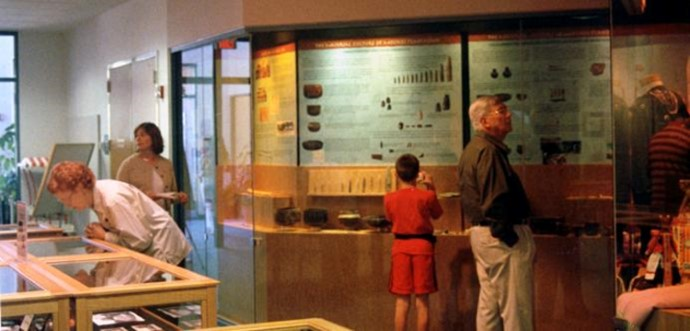
 The original Bossier Parish Libraries Historical Center opened to the public in 1999 as part of an expansion of the original Central Branch on Beckett Street. Though it had rotating exhibits in table cases and glass cabinets, it also had permanent exhibits, which had been designed and constructed at the same time as the building that would host them. These exhibits were housed in in-wall displays on either side of the foyer, and were the first things that one saw when one entered the History Center. There was a diorama of a Caddo village, created by amateur archaeologist Louis Baker; a steamboat exhibit; a log cabin exhibit; and more. Each exhibit represented an aspect of Bossier Parish’s past, and each exhibit was created in cooperation with historians and Bossier Parish locals.


For several years, the original History Center served the public as a research facility, archive, museum, and meeting space. However, by the mid-2010s, talk had turned to renovating the Central Branch, which would include moving the History Center into a different area of the library. Eventually, it was decided that instead of renovation, an entirely new location would be built to house both Central and the History Center. This gave the History Center a unique opportunity: since our new home was being built from the ground up, we could give our old exhibits a serious glow-up, and even put in brand new ones.


Unique and exciting this opportunity might be, but it also brought up many questions. What stories should these exhibits tell? What was the best way to tell them? How would all of this be accomplished with the resources presented? The History Center staff discussed all of this and more for years, with each other, with library and parish administration, and with Prevot Design, Dorand Design Studios, and Downtown Fabworks, who were chosen to bring the new History Center and its exhibits to life. All the while, the History Center also juggled the new building’s construction, the new building’s opening in April of 2024, and the History Center’s move to the new building during the summer of 2024. Finally, in April of 2026, all of that planning came to fruition, as Downtown Fabworks began installing the new permanent exhibits.


The History Center has always been about showcasing as many pieces of Bossier Parish’s past as possible, and these new exhibits take it to the next level. Anyone who steps through our doors can see the Caddo diorama inside of a Caddo hut, and read about Old Shed Road while walking through (a small portion of) it, and view the interior of a dog trot log cabin that seems to have been built right through our wall. Just like in the old building, each exhibit represents an aspect of Bossier Parish’s past. Some, such as the dog trot, we share with other places in this country, but Old Shed Road, a nine-mile-long toll road that was totally covered by a shed to enable farmers to transport their cotton by wagon during rainy periods, is thought to be the only thing like it in this country’s recorded history. Though all of these exhibits were fabricated by Downtown Fabworks, the designs are pulled from photographs and historical documents, a lot of which is housed in the History Center. In addition, the items inside the exhibits are from the History Center’s collection, and so are, for the most part, authentic artifacts from Bossier Parish’s past, donated by Bossier Parish residents or their loved ones. From the spinning wheel in the log cabin to the cotton gin. Even the murals on the walls derive from photographs in the History Center’s collection, and are of people from Bossier Parish history, donated to us by the people of Bossier Parish. These exhibits are therefore a blend of old and new, a culmination of centuries of creation and care.


“History is who we are and why we are the way we are,” and that is why it is of the utmost importance to share it. It can be challenging to do so in a way that is educational, interesting, and respectful of the people of the past, but that is our goal with our new exhibits. The History Center is scheduled to reopen later this year; when it does, people will be able to see the old with new eyes, the culmination of dozens of people’s efforts over centuries. Their creation was a long process, but I believe it will prove to be well worth it.


Bossier Parish Libraries History Center in the Bossier Central Library complex remains closed while our new exhibits are installed. However, we are continuing to share history in a variety of ways. You can explore many of our collections on our website, www.bossierlibrary.org. Look for the History and Genealogy page under Resources. Feel free to contact History Center staff by phone or email for assistance. Our phone number is (318) 746-7717 and our email is history-center@bossierlibrary.org.


Our next meeting of World War II’s Day, a monthly coffee and discussion program on a variety of WWII-related topics, will be Tuesday, August 11th at 10:30 AM in the Bossier Central library complex’s large meeting room. Because August 6, 2026, is the 81th anniversary of the atomic bombing of Hiroshima, Japan, Dr. Cran Lucas, Emeritus Professor of Biological Sciences at LSU Shreveport, will present "Hiroshima and the Aftermath". During the spring and summer of 1966, Dr. Lucas was part of an overseas study group from Lewis and Clark College. He and his cohorts spent five months in Japan including a visit to Hiroshima. Dr. Lucas will discuss the atomic bombing of Hiroshima, its immediate aftermath, and the long-term effects on its extant population and later generations. We hope you can make it, and stay tuned for the re-opening date of the History Center and its new exhibits!


Images: Sneak preview of two of the History Center’s new exhibits: “Old Shed Road,” and “The Red River, Winding through Bossier’s History.” BPL History Center photos by Kevin Flowers.


Article by: Jaylie Rester

Wednesday, March 25, 2026

North Bossier Park – Twenty Years Strong

Late last year, in a pervious article written by Kevin Flowers, a fellow member of the Bossier Parish Libraries History Center, he wrote about the Bossier Racquet and Swim club, and how the city planned on potentially buying the ailing complex. Ultimately, however, they would decide against doing so and would instead seek to build their own recreation site. This caught my eye, as around this time last year I wrote an article on Mike Woods Park. Therefore, let’s take a look at another major Bossier Parish park, the North Bossier Park, and the associated Bossier Tennis Center.


The earliest mention to the park project itself was in late 2003, according to the Bossier Parish Police Jury minutes from both September 17 and October 15, when Police Juror Eddy Shell met with members of a committee made up of representatives from the City of Bossier City, Bossier Parish School Board, and of course the Bossier Parish Police Jury. After the events of this meeting, the jury agreed to draw up an action plan for the development of the North Bossier Recreation Park Complex. Late that month, funds for the project would be approved by Bossier City, with $1 million dollars approved by the City Council, drawing an equal mix of funding from gaming revenue and the sales tax capital improvement fund. A series of meetings would follow as 2003 ended, and 2004 began, and in April of 2004 a steering committee would be formally established for the purposes of coordination between the three bodies.


By the end of the year, ground would be broken on the project, with the initial estimates for the cost of the project being around $98,000, with an approved expense of $60,000 from the BPPJ to cover the cost of the labor. Work would continue apace through the fall of 2004, with the clearing of the site and the laying of the base infrastructure for the first phase of construction. In the December 1, 2004, meeting of the BPPJ, concerns were raised about the park being built as purely a tennis complex. Statements were made to reinforce that the park should be for everyone, not just tennis players, and it is here where the first discussion on playground equipment at the new park was had by the Police Jury. The next series of meetings for the Police Jury would include discussion of the potential playground equipment, and on February 2, 2005, the Police Jury would authorize the purchase of handicap accessible playground equipment in conjunction with Bossier City funding.


The construction of the tennis courts themselves, the underlying driving force for Bossier City’s contribution to the project, would begin in the summer of 2005, continuing into 2009. Finally, come early July 2006, the day would come: the North Bossier Park Tennis Center would have its ribbon cutting. Members of each of the three contributing bodies would participate in the grand opening, and the full park would be, officially, open to the public. The initial count for the tennis courts would be a ‘mere’ twelve, which would be later expanded to add another six in the coming years. The courts were built, in part, to encourage children and the greater community to develop an appreciation for tennis in the local area. Indeed, as part of the grand opening, there was an accompanying set of tennis scrambles open to the public.


From the lengthy walking trail to the eighteen tennis courts, there is plenty for everyone to enjoy. For the past twenty years, the North Bossier Park has been a mainstay of the community, servicing the area with free and easy access to the amenities therein.


If you have any photos or other information relating to the history of Bossier City or Bossier Parish, the History Center may be interested in adding the materials to its research collection by donation or by scanning them and returning the originals. Call or visit us to learn more. We are open M-Th 9-8, Fri 9-6, and Sat 9-5. Our phone number is (318) 746-7717 and our email is history-center@bossierlibrary.org. We can also be found online at https://www.facebook.com/BPLHistoryCenter/ and http://bpl-hc.blogspot.com/

Images: 

  • Students at the Bossier Tennis Center – BPT (Jul 04, 2006) – Rachel Hayes
  • Construction of the North Bossier Park Parking Lot – BPT (Sep 23, 2004) – Jennifer Ganey
  •  Jim Pevier walking his dog at North Bossier Park – BPT (Dec 02, 2005) – Rachel Hayes

Article by: Johan Daigle


Wednesday, February 18, 2026

Bossier Parish’s first Jeanes Supervisor, Carrie Martin

Early 20th-century schools for African American children in the South, especially in rural areas, were in a catch-22 caused by a segregated education system that offered less months in the school term, and less years of schooling: You couldn’t have schools for African American students without African American teachers, and you couldn’t have African American teachers without African American schools, especially high schools. Enter a Quaker woman and philanthropist from Philadelphia named Anna T. Jeanes. In 1907 she created a one-million-dollar endowment named the Negro Rural School Fund, more commonly referred to as “the Jeanes fund,” to develop a cadre of educated and professionally trained African American teachers to staff more and better schools for African American children in the rural South, including secondary schools.

Carrie Washington Martin was a school teacher who became the first Jeanes Teacher (often referred to as Jeanes Supervisor) in Bossier Parish, and only the third in the state of Louisiana, in 1913. She was appointed by the Bossier Parish School Board after teaching for a number of years in the Plain Dealing area of northern Bossier Parish.


Carrie Martin was born in December of 1883 in Spring Ridge, Louisiana, a rural part of southwestern Caddo Parish. Her parents were Anthony and Georgia Jackson Washington. Her father farmed and served as a Methodist preacher; census records note that he was literate. Carrie was 16 years old when she married her first husband, Franklin Roan. The young couple lived a few houses away from her parents in Jackson Parish in 1900. Franklin’s fate is unknown, but in May of 1909 Carrie married James C. Martin in Bossier Parish. Her father owned land in the Hughes Spur community, which is near Plain Dealing. Carrie became a school teacher and her husband farmed. Carrie did not have a college degree, but she received teacher training during summer institutes for black teachers. This was typical of the early Jeanes Teachers.

As Bossier Parish’s first Jeanes Teacher, Carrie Martin was charged with providing or improving education for 4,733 African American “educables” ages six to eighteen, and supervising their teachers in 59 schools spread throughout the parish’s approximately 838 square miles. She would likely have been driving in her own vehicle, without travel compensation, on dirt roads that were, for much of the year, mud pits.

In addition to supervising and training teachers in the African American schools, and improving the literacy rate of less than 50% among the parish’s African American population according to the 1910 census, Carrie Martin was also expected to be a leader in school and community health and nutrition, home life, and beautification. As a Jeanes Teacher, she supervised home demonstration (home economics) work for African-American women, such as teaching food preservation, home management skills, and public health by making home visits and organizing homemaker clubs. She also organized community members to raise money to build more or better schools, including by raising livestock or growing cash crops with proceeds going toward a school fund.

Leo Favrot was the state supervisor for Rural Negro Schools and made several visits to Bossier Parish to inspect the schools and the work of Carrie Martin. She was ill during one of his visits, so he called on the parish’s superintendent of schools, W.A. Fortson, to discuss her work. Mr. Favrot concluded from this trip that there was considerable activity on Carrie Martin’s part, but that the Jeanes program did not have secure standing with the Bossier Parish School Board. Mr. Favrot’s suggestion was to win the board over with the usual strategy used at the time to sway a reluctant white community to the cause of education for African Americans– emphasize the practical, industrial nature of the Jeanes Teacher’s work, especially in agriculture.


In 1919, Bossier was without a Jeanes Teacher. The reason for this gap in Carrie Martin’s term is unknown, but Leo Favrot admonished the school board by saying, “This is to be deplored,” because Carrie Martin’s work had “done a lot of good” promoting the interests of schools in Bossier Parish. He hoped the board would resolve to again have a Jeanes teacher and make an appropriation “sufficiently large” to attract a very capable agent. They must have listened, because Carrie Martin was rehired as a Jeanes Teacher the following year.

Carrie Martin passed away on March 11, 1926 from cervical cancer, after an illness of about six months. In recognition for her significant work expanding and improving the educational opportunities available for African American students, the Bossier Parish School Board named the Plain Dealing all-grades school for African American students “Carrie Martin High School” in 1954. After the de-segregation of Bossier Parish schools (1970), the school closed, and Plain Dealing Elementary School opened in the same building. In 2003, community members pressed for the school board to once again have an existing school named to honor Carrie Martin, and Plain Dealing Elementary was re-named Carrie Martin Elementary. In 2018, the elementary school was moved to the campus of Plain Dealing’s middle and high school due to a declining enrollment, but the elementary wing is still named after Carrie Martin, and her portrait hangs in the hallway.


You can visit the Bossier Parish Libraries YouTube channel to watch a virtual slide show on Carrie Maritn, at https://www.youtube.com/watch?v=ig-kWHgY5mw&t=3s or contact us at the History Center if you’d like more information on the parish’s Jeanes Teachers. We are located in the Bossier Central Library Complex at 7204 Hutchison Drive in Bossier City, LA. 2206 Beckett St, Bossier City, LA. Or, go online to our collections database and search for “Catalogs” at http://bossier.pastperfectonline.com/

Please note the new hours for the History Center: M-Fri 9-6. Saturdays we are open by appointment. Our phone number is (318) 746-7717 and our email is history-center@bossierlibrary.org For other local history events, facts, photos, and videos, be sure to follow us @BPLHistoryCenter on FB, @bplhistorycenter on TikTok, and check out our blog http://bpl-hc.blogspot.com/. Contact us if you’d like to be on our email list to receive our newsletter and History Center event updates.


Images: 

  • Carrie Washington Martin: 2003 The Yellow Jacket Carrie Martin High School Reunion Yearbook
  • Louisiana Rural School Agent Leo Favrot (caption on photo)
  • Jeanes Teacher exhibit at La. State Fair (caption on photo)
Article by: Pam Carlisle

Tuesday, September 2, 2025

Name Change a Contentious Issue in Bossier City History

“What’s in a name? This question from Shakespeare’s “Romeo and Juliet” might well have been asked concerning a name change for Bossier City. Beginning in the early 20th century, efforts surfaced to re-label Bossier City as East Shreveport. But how serious were those efforts, and could Bossier still retain its own identity if referred to as something else? Would Bossier, by any other name, still be Bossier?


When Bossier City, namesake of soldier and congressman General Pierre Bossier, was still officially a village, local maps from the early 1900s show a subdivision of the village was called East Shreveport. In the History Center collection is a copy of a Bossier map from 1914, displaying the words East Shreveport. Real estate advertisements appeared in local newspapers, touting the benefits of living in the subdivision. An ad in the February 9, 1914 edition of The Shreveport Journal states, “East Shreveport is bound to grow. East Shreveport is at the end of the new traffic bridge. High cost of living is reduced in East Shreveport. East Shreveport puts you closer to Shreveport.” These and more were listed as reasons for moving east of Red River. The ad was placed by the Bossier City Realty Company.


In 1923, with Bossier’s population topping one thousand, the village was upgraded by Louisiana’s governor to a town, and the idea of changing the entire town’s name to East Shreveport began to take hold. A headline in The Shreveport Journal of February 19, 1923, declares, “Bossier City To Be ‘East Shreveport.’” The accompanying article states, “Bossier City will drop out of the list of Louisiana municipalities, and East Shreveport will appear on the map in its stead, if a motion carried by a large majority at a mass meeting Friday night is finally adopted.” According to the article, 82 Bossier citizens met to discuss the town’s future, and a vote of 68 to 14 was made favoring the name change. Three days later, The Journal printed a column supporting the change. “Congratulations to the East Shreveporters!,” the column began. It states that “quite a number” of Bossier residents do business in Shreveport, making them “almost a part of Shreveport;” therefore, “It seems natural that they should wish to be known as East Shreveporters.”


In researching this topic, I found no mention in local newspapers that year of a final adoption of the motion passed at the meeting. Obviously, Bossier City kept its name, but the debate continued. Fast forward 27 years to December 1950 when the Shreveport Chamber of Commerce proposed that Bossier become East Shreveport, saying both communities would benefit. An article in The Planters Press the following month says those benefits, according to the chamber, would include Shreveport gaining Bossier’s population numbers and Bossier gaining Shreveport’s industrial recognition. Under the proposal, Bossier would still have operated under its own municipal government.


In March 1951, the Bossier Chamber of Commerce agreed to the name change after sending ballots to its membership and receiving a favorable vote. The chamber then asked Bossier’s town council to call an election so residents could vote on the proposal, but the council declined, citing public opposition to Bossier changing its name. Afterwards, chamber leadership decided to abandon the contentious idea. Chamber President James Larkin was quoted in The Planters Press on June 21, 1951 as saying, “The fact that there is strong feeling against the issue, and since there is no real all-out leadership for the project, it has been dropped.” But apparently the idea was not forgotten.


Changing Bossier’s name to East Shreveport surfaced again in the mid-1960s when a local developer suggested it while speaking to the Shreveport-Bossier Board of Realtors. The reasoning echoed earlier claims about the benefits of such a change. The Bossier Tribune, in an article of July 28, 1965, states an argument was made that Shreveport and Bossier “constitute a single industrial complex and should be linked together by name” and “East Shreveport would give Bossier a national identity that it now lacks.” But according to the article, a random survey conducted by The Tribune found the majority of Bossier residents opposed the change. One resident was quoted as saying, “I much prefer the lack of national identity to the loss of identity.” And so the matter was put to rest and has remained a part of Bossier City history. As Shakespeare might have written, thus we bid adieu to thee, name change.


If you have any photos or other information relating to the history of Bossier City or Bossier Parish, the History Center may be interested in adding the materials to its research collection by donation or by scanning them and returning the originals. Call or visit us to learn more. We are open M-Th 9-8, Fri 9-6, and Sat 9-5. Our phone number is (318) 746-7717 and our email is history-center@bossierlibrary.org. We can also be found online at https://www.facebook.com/BPLHistoryCenter/ and http://bpl-hc.blogspot.com/


Images: 

  • photocopy of 1914 Bossier map showing East Shreveport subdivision/History Center collection
  • Bossier Tribune headline from July 28, 1965/Newspapers.com


Article by: Kevin Flowers

Wednesday, July 23, 2025

Bossier West of the Red

When looking at the bounds of Bossier Parish, one would be forgiven for believing that the western bank of the Red River was entirely Caddo Parish, and the eastern bank was entirely Bossier Parish. One would also be quite wrong. Several portions of the traditional Caddo Parish side of the river are in fact Bossier Parish, leading to several instances of disconnected parish land. The reason for all this is due to the language used on the founding of Bossier Parish, as well as physical geographical changes over the past 182 years.


When the borders of Bossier Parish were first drawn, the area that would become Bossier was still Claiborne Parish (which in turn had once been a portion of the greater Natchitoches Parish). The official wording of the act states; “That all that portion or tract of Country in the Parish of Claiborne bordering on Red River and bounded as follows to wit.” The document then goes into detail about official bounds, following Loggy Bayou through Lake Bistineau, then following Bayou Dorcheat up to the Arkansas state line before turning back west and following the state line until meeting the Red River. The observant might notice that much of the above description does not match the current eastern bounds of Bossier Parish. This is due to Webster, and how it was founded out of three separate Parishes: Bossier, Claiborne, and Bienville. On the western bound, it is important to remember, however, that the river has shifted since the 1843 founding, as well as the fact that Caddo Parish was founded before either Bossier or Claiborne Parish. With Caddo Parish’s eastern bound set as the Red River, this created a situation where the bounds for Bossier Parish needed to be drawn in relation to Caddo Parish as well, not just the geographical bounds of the Red River.


First, there is Wright Island, one of the smaller portions of Bossier Parish across the Red River. The residential area has been annexed into the Shreveport municipal area, receiving things like fire, police, and sewage from Shreveport, while things like education are carried out by Bossier Parish. Indeed, according to the August 5th, 1961, edition of the Shreveport Journal, Caddo Parish School Board was approached about accepting the students of Wright Island, but the deal never came to fruition, seemingly due to another orphaned part of Bossier Parish, the Free State Park area. To the east, the Coates Bluff Apartments are the largest section of residential buildings on Wright Island, accompanied by a small number of homes to the west. Another, the Champion Lake area closest to the Red River, south of Anderson Island and Westgate Bridge, is also included on the Bossier side of the boundary line. This includes things like the YMCA, the Loyola Athletic Complex, and the Champion Lake Apartments, to name a few. Due to both areas being within Bossier Parish, as well as the East 70th Street Bridge (Jimmie Davis Bridge) area, most of southern Clyde Fant Memorial Parkway lies within Bossier Parish, not Caddo.


The other large portion of Bossier Parish still on the Caddo side of the Red River lies north of Downtown Shreveport, known as the Free State Industrial Park. Formerly the Free State Plantation, the Free State Industrial Park is dominated by two major features, the aptly named industrial park, and the Shreveport Downtown Airport. There are a few homes within the area as well, though residential homes are in the minority of properties in the Free State Park area. One final, and personally unexpected, region of disconnected Bossier Parish sits in downtown Shreveport. The Shreveport Aquarium, part of Riverview Hall, and the downtown fountains are all part of Bossier Parish. Thanks to the causes natural and man-made, the Red River has been shifted to its current position. Perhaps it is no surprise, therefore, that some portions of Bossier have become disconnected from the greater whole.


If you have any photos or other information relating to the history of Bossier City or Bossier Parish, the History Center may be interested in adding the materials to its research collection by donation or by scanning them and returning the originals. Call or visit us to learn more. We are open M-Th 9-8, Fri 9-6, and Sat 9-5. Our phone number is (318) 746-7717 and our email is history-center@bossierlibrary.org. We can also be found online at https://www.facebook.com/BPLHistoryCenter/ and http://bpl-hc.blogspot.com/

Image: Map of Bossier Parish west of Red River (BPL HC - 1997.086.015)

Article by: Jonah Daigle

Wednesday, June 18, 2025

History Center Collection Highlights Wedding Fashions and Trends of the Past

June is such a popular month for marriages. Did you know that the month of June derives its name from Juno, the Roman goddess of marriage? Here is a look in the History Center’s collection to learn about the traditions and fashions of Bossier’s historic weddings.

There are many photographs of wedding parties and brides in our collection. Thomas P. Adger and Clyde Louise Herndon wed at the First Baptist Church in Plain Dealing on June 17, 1914. We have an entire series of candid photos from their wedding day taken by John Allen, including one of the young couple climbing into an automobile after the ceremony. This series highlights the fashions of the couple and the wedding party, as well as the many attendees.


The Bossier Banner frequently would include wedding announcements and ceremony descriptions. B.F. Smisson and his new bride, Sallie M. Arnold Smisson, sent the Banner more than just a write-up of their 1875 wedding – they also sent cake! William Scanland, editor of the newspaper, received a box filled with “the most delicious cake – from the richest fruit to the snow-white bride’s cake, emblematic of her purity.” The couple was married at the home of T.J. Tidwell, one of Bossier Parish’s well-known citizens.

In fact, sending wedding cake “in exchange” for an announcement seems to be business as usual for editor Scanland. When the couple - Mr. Henry Bodenheimer and Miss Cora Well - were married in the bride’s mother’s Shreveport home on May 26, 1880, Scanland wrote that, though both bride and groom had been residing in Shreveport the past several years, they “in fact have been raised here and have many warm friends of all classes and creeds. The fair bride is one of the handsomest and most lovable young ladies in the city, and certainly Henry has won a rich prize … We acknowledge the receipt of the usual printer’s fee--delicious cake and sparkling wine. We wish them all imaginable happiness.”

The majority of brides today wear white dresses for their weddings, but colorful dresses were common in the past. Leila Wyche wore a dark brown dress with a matching hat for her marriage to Harry M. Carter on November 15, 1887 in Bellevue. This practical dress was donated with its coordinating hat by her family to be preserved in the History Center’s collection. It was fashionable enough for a wedding and Leila could wear it for other occasions, too. The Bossier Banner printed the Carters’ marriage announcement two days after the wedding, noting that the bride is a “lovely and accomplished lady and a favorite in Bossier Parish social circles,” while the groom is a “worthy young gentleman of excellent character and energetic habits.”

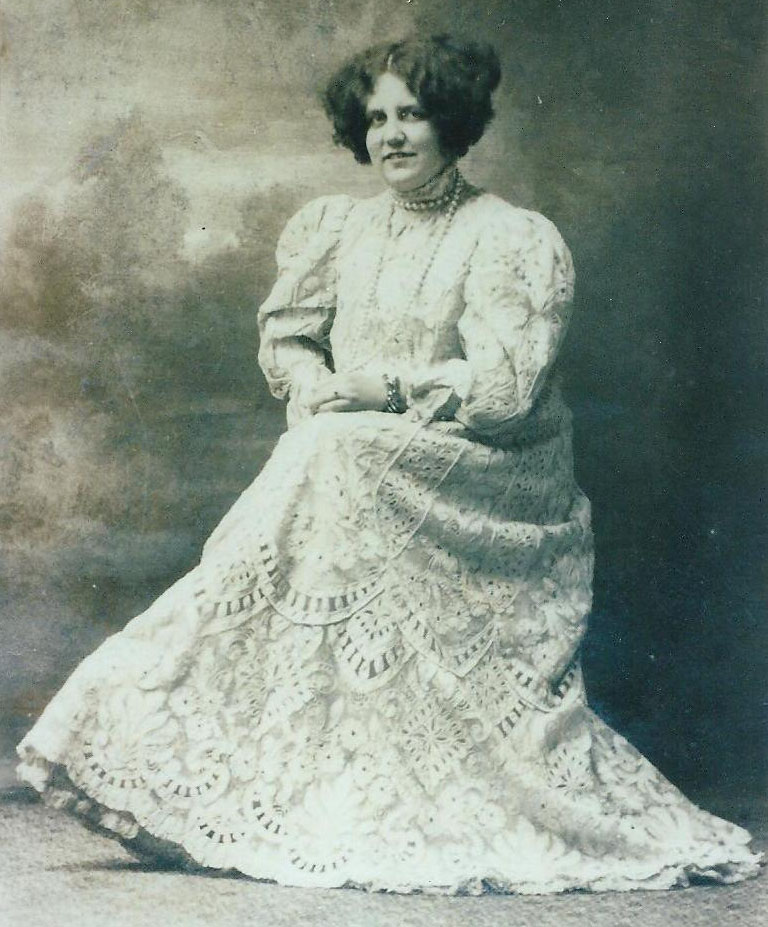
The History Center’s collection also contains a photo of a young woman with wavy bobbed hair wearing a high-necked Victorian-style long-sleeved, floor-length gown covered entirely in lace, possibly ivory or another light color, and two strands of pearls. It is not, however, her wedding day! It is a photo of the donor’s friend, “Maugrete T in her mother's wedding dress on ‘Dignity Day’ c. 1930.” Another reference to such a day is found in the Shreveport Journal in October of 1930. It describes members of Shreveport’s Fair Park High School Class of 1931, the first graduating class of Fair Park, who “observed their ‘Dignity Day’ last Tuesday. The girls were dressed in the sweeping skirts, ornate blouses and waists (shirts) and fantastic hats of bygone days. The boys turned out in full dress.” It appears that roughly a century ago, Dignity Day meant dressing up for fun in very formal, noticeably old-fashioned clothes and, of course, accessories.


Like the photos mentioned above, many of our photographs are black and white, so it helps to research the wedding announcements in the local newspapers to get a better idea of bridal fashions. William Calvin Vance, Jr. and his fiancée, Mary Emily Arnold, married on February 6, 1902. The following week, an article about their wedding ran in the Bossier Banner. We learn that Mary’s dress was much more vibrant than the photo leads us to believe. “The beautiful and charming bride wore a dainty gown of green Venetian cloth, with trimmings of delicate pink appliquéd in white. An exquisite boa of soft white chiffon gave an elegant finish to this lovely costume. She carried a bouquet of bride’s roses, white carnations, and ferns.”


Please visit the History Center to look at these and other photos of weddings in Bossier Parish, or to utilize our genealogy resources to research the marriages in your family tree. The History Center is located at 7204 Hutchison Drive, Bossier City, LA. We are open: M-Th 9-8, Fri 9-6, and Sat 9-5. Our phone number is (318) 746-7717 and our email is history-center@bossierlibrary.org.For other fun facts, photos, and videos, be sure to follow us @BPLHistoryCenter on FB and check out our blog http://bpl-hc.blogspot.com/.

Images: 

  • Tom Adger and his bride Louise after their wedding, June 17, 1914/History Center collection
  • Woman wearing her mother's wedding dress on Dignity Day, 1930/History Center collection
  • Emily Vance in her wedding attire, Feb. 6, 1902/History Center collection
Article by: Pam Carlisle

Wednesday, June 11, 2025

Barksdale Provided Training to Help Frenchmen Reclaim Homeland

Eighty-five years ago this month, France officially surrendered to the Germans following the Nazi invasion of the country in 1940. But while flags emblazoned with the Nazi swastika flew over Paris, there were those who vowed that Hitler’s forces would not long remain on French soil. And Barksdale Field, as the base was then known, helped keep that promise.


Beginning in May 1944, young Frenchmen started arriving at Barksdale to train as pilots, gunners, navigators, and bombardiers. They carried with them the hopes of a nation desperate to oust the invaders. In the coming weeks and months, others arrived. They were part of a larger contingent of French cadets, eventually totaling approximately 4,000, that came from areas outside occupied France for training at airfields across the United States. The goal: to equip them with the skills necessary to help reclaim their homeland. They would be known as the Free French Air Force and, according to a September 2019 article in the magazine France-Amerique, the men were quite surprised by life in the U.S. “They couldn’t believe their eyes,” the article states. “After the hardships of war, they discovered an affluent America filled with Coca-Cola, hamburgers, drive-in theaters, and boogie-woogie music.”


The Frenchmen who came to Barksdale received a warm welcome. The Shreveport Times of May 7, 1944, contains a story of the first arrivals being feted with a party at the home of Centenary College language professor, Dr. E.L. Ford. Although, according to the story, some of the men spoke no English, that didn’t prove a hinderance. “Once at the Ford home, … where a number of persons who spoke French were present and also a group of girls from the French club at Centenary, the men … in bits of French and English strongly expressed their delight at being here,” the story states. “They like ‘cokes’… and are in awe of our food.” I wasn’t able to find specific information about how the language barrier was overcome during their training at the airfield.


As the parties and welcoming faded into memory and the men’s training began, a seriousness took hold, reminding them that they had a job to do and a country to save. An article in Smithsonian Magazine from March 2004, describes the scolding that one cadet training in Alabama received after a poor flight performance. “The exasperated instructor marched him over to another officer on the flightline and told him to give the student hell—in French.”


Unfortunately, some of the cadets at Barksdale paid the ultimate price during flight training. From September 1944 through February 1945, thirteen Frenchmen were killed in plane crashes here. Newspaper accounts of the time detailed the tragedies. A witness to one of the crashes was a city editor with The Shreveport Journal. “There was a dull thud as it struck the ground, an explosion, a burst of flame … and then great billows of smoke rose skyward,” he said in the September 15, 1944 issue of the paper. And the hazards of training were not limited to the air. Another young cadet died after accidently stepping into a spinning propeller.


The B-26 Marauder, a twin-engined bomber, was the aircraft in which the men were given instruction. According to the National Air and Space Museum, it included some new features, but could be difficult to learn due to higher speeds needed during take-offs and landings. The museum states that one of the plane’s early nicknames was the “Widow Maker.” Despite these challenges, the B-26 proved to be invaluable. The museum says of it, “Like the M1 Garand combat rifle, the Sherman tank, and the LST, the Marauder was an important weapon in the war against the Axis powers.”


As reports came over the radio of the liberation of Paris in August 1944, the Frenchmen were, of course, thrilled. Barksdale’s Bark, the official newspaper of the airfield, stated in an article from August 26 that year that the men “ … marked the stirring events in their native France by marching together on the parade grounds.” A photo shows them carrying both the American flag and the French tri-color flag, a fitting tribute to Barksdale’s role in providing the skills necessary to help France rise again.


If you have any photos or other information relating to the history of Bossier Parish, the History Center may be interested in adding the materials to its research collection by donation or by scanning them and returning the originals. Call or visit us to learn more. We are open M-Th 9-8, Fri 9-6, and Sat 9-5. Our phone number is (318) 746-7717 and our email is history-center@bossierlibrary.org. We can also be found online at https://www.facebook.com/BPLHistoryCenter/ and http://bpl-hc.blogspot.com/

Images: 

  • French fliers attend party welcoming them to Barksdale Field/courtesy The Shreveport Times, May 7, 1944
  • French fliers march on parade grounds at Barksdale to mark the liberation of Paris/courtesy Barksdale's Bark, August 26, 1944
Article by: Kevin Flowers

Wednesday, June 4, 2025

Safety on the Home Front

If you’ve ever worked or been anywhere where accidents can happen (which of course is anywhere us fallible humans are!) chances are you’ve seen signs: “Safety is no accident!” Or, “Stay alert, don’t get hurt!” or some other slogan reminding you that a minute of distraction could lead to a lifetime of pain – or worse. The National Safety Council (a nonprofit symbolized by a green cross that was founded in 1913, and chartered by Congress in 1953) has designated June for National Safety Month as an annual observance to help keep each other safe, in the workplace, home or anyplace. The designation of June to highlight safety happened in 1996, but special campaigns at other times of the year had already been run for decades earlier, including, and perhaps especially, toward the end of and just after WWII.


In its March 29, 1946 issue, The Plain Dealing Progress ran an article announcing a special fund-raising and awareness campaign for May that year “to enlist all in a “war on accidents” under the banner of the “Green Cross for Safety”. This drive that for the first time in the council’s history appealed directly to the general public for funds, because of “the appalling rise in traffic deaths since end of the war. The Green Cross will serve as the emblem of safety in the home, on the farm, in the factory and in the school, as well as on the teeming streets and highways of the nation.” said the NSC’s president Ned Dearborn.


This increase in accidents was after, Mr. Dearborn pointed out, already during the war, deaths and injuries from accidents on the home front exceeded battle casualties among the American military forces. He stated that in 1945 alone 96,000 Americans including 20,000 children lost their lives through all types of accidents. And at least 10,300,000 persons were injured accidentally.


Some of these home front incidents of course, were affected by wartime deprivations. A dwindling availability of farm labor due to Americans fighting in the war, meant that fewer, and less experienced, farm workers were doing the vital, yet often dangerous work of growing and harvesting food, and raw materials, such as rubber used in tires, and production workers and facilities for newer vehicles or replacement parts, being needed for wartime equipment needs rather than civilian automotive use meant more older, or less-maintained vehicles were on American roads.


The following June, just before the first Fourth of July in peacetime (following the surrender of Japan) an editorial from the National Safety Council was published in the “Bossier Banner-Progress,” on June 20, 1946, entitled, “Be Alive on the Fifth.” The column warned that historically, the Fourth of July has also been a tragic day when hundreds of citizens have died of careless accidents and that if a recent trend held, that year could be the worst:

“Peace brought an end to the killing only on the battlefield. Since V-J Day (Victory in Japan Day, September 2, 1945) the accident toll has skyrocketed to near record highs, up 44 percent in traffic alone. Why? Plenty of gas, more leisure, release from restraint and restrictions. No wartime patriotic urge. A long-deferred desire to blow off stream with a little fun and relaxation. Add to that worn-out cars and tires, deteriorated highways, a carefree sprit that too often becomes a careless spirt, and you have a dark prospect for this Fourth of July and the entire vacation season. The tragic and ironic part of it is that so many Americans, after sacrificing and risking so much to preservice life and freedom, will lose it irrevocably and needlessly during a moment of carelessness.”

The editorial concluded, “It has been a long time since America enjoyed a real summer holiday and vacation season. Everyone deserves that relaxation. So have fun on the Fourth. But be alive on the Fifth!”


Incidentally, this seems like a good time to brag on the employees of the Bossier Parish Police Jury and members of the BPPJ and say that Jason Hazelton, Safety Services Consultant with the Louisiana Workers' Compensation Corporation (LWCC), recently awarded a plaque to Glenn Benton, Police Jury President, for being one of the 70 safest workplaces in the state in 2024! Workers from each BPPJ department, including Bossier Parish Libraries, were present to receive the award on May 21, 2025.


If you have any information, stories, or photos about the home front in Bossier Parish during WWII, or about past campaigns to keep Bossier citizens safe and healthy, we would love to add them to our History Center’s research collection. Contact us at 318-746-7717 or email history-center@bossierlibrary.org or visit us at 2206 Beckett St., Bossier City. We are now open: M-Th 9-8, Fri 9-6, and Sat 9-5. For other intriguing facts, photos, and videos, be sure to follow us @BPLHistoryCenter on FB, @bplhistorycenter on TikTok, and check out our blog http://bpl-hc.blogspot.com/.

Images:

  • Postwar advertisement for Firestone Tires and the company’s solution for worn tires until new tires become available.  The Planters Press, Bossier City, Louisiana, Jan 17, 1946.
  • Members of the Bossier Parish Police Jury and staff from all BPPJ departments receive a plaque from Jason Hazelton, Safety Services Consultant with the Louisiana Workers' Compensation Corporation (LWCC), for being one of the 70 safest workplaces in Louisiana in 2024. May 21, 2025. BPPJ photo.
Article by: Pam Carlisle

Wednesday, March 12, 2025

Julia Sparke Rule: Nineteenth Century Community Chronicler and Mother

March is Women’s history month and it’s always exciting to find women from local history who challenged conventions, achieved something out-of-the-ordinary, or used whatever gifts and opportunities they had for the good of their community. Mrs. Julia Rule, became nationally famous for driving the golden spike in Bossier City, La. to mark the completion of the Shreveport and Arkansas Railroad on April 6, 1888 (later known as the Cotton Belt). She was well-known locally for her role working in the male domain of journalism, especially as the society columnist known as “Pansy” and was not afraid to use that platform to benefit both her own financial security as a widowed mother, but also the philanthropic endeavors of other women.


On the surface, Julia Rule’s life may have looked rather glamourous. Perhaps it was, but she was also fulfilling the never-ending demands on a working mother of very young children, and soon, as a widowed and bereaved mother of young children. She was doing so in the days before Social Security, life or disability insurance. Much of this behind-the-scenes story didn’t get widely told. Julia, of course, wrote mostly about other people’s lives.

Julia Sparke was born in Kentucky around 1852. The 1870 census shows her living in Shreveport at the age of 18 with her 27-year-old husband Charlie Rule, listed as a bookkeeper. Living right next door are her parents and younger siblings, ranging in age from 8 months to 15. She had just gotten married in 1869 in Louisville.

According the Census 10 years later, much in Julia’s life had changed. She is listed with the occupation of “Boarding,” apparently helping to run a boarding house, and has three children ages 1, 5 and 6, Ida, Louise and Glenn. Her husband is no longer employed, and has not been employed for the entire census year.

Not shown in the census records is that between 1870 and 1880 there was an older child born, named Lucy Stewart Rule who passed away in Shreveport on Oct. 11, 1877 at the age of 6 years and 9 months. Lucy Stewart’s life is evidenced only by a very brief notice in the Shreveport Times and a stone with her name on it near her parents’ headstones in Shreveport’s Oakland Cemetery. Then Charlie Rule passed away in 1881. That same year, Julia began teaching calisthenics (physical education – and later also penmanship) for head Kate Nelson at the Shreveport Seminary for Girls and Children not long after Charlie passed.

Mrs. Rule began a newspaper career within a decade, writing for several local papers. Venturing even further into unfamiliar territory for women, she became Secretary of the Louisiana State Press Association, and was always in attendance at their state conferences, sometimes as a featured speaker. She even attended the National Press Association conference in July, 1891.

Mrs. Rule also took a job as the secretary for the mayor of Shreveport, a position which set her up to be the first woman to drive the golden spike, in the mayor’s absence, along with R. N. McKellar who was the president of the Cotton Exchange. She gained national media attention for this honor, since she was considered to be the first woman to drive a golden spike to mark the completion of a railroad. The New York Evening Post even had a little fun at her expense, dubbing her “the Golden Rule.”

Perhaps most remarkably, Mrs. Rule was also an entrepreneur. By 1890 local and regional newspapers show that she decided to put her connections and fashion observations made while covering society to her financial benefit. She put a notice announcing her own “purchasing agency,” later called the Mrs. Julia Rule Millinery and Dressmaker supply:

“My extensive acquaintance with business houses in the city and experience gives me unrivaled facilities for filling orders that may be sent me…Parties residing out of the city who desire goods can save the expense of a trip and obtain better prices by ordering what they want through me than by purchasing themselves…”

In fact, Mrs. Rule put her column itself to use in advertising this business, interspersing her society notes in the “Shreveport Times” with entries about the latest goods available at “Mrs. Julia Rule’s millinery store.” She was perhaps, just ahead of her time, because by January 1895, her inventory was listed in a bankruptcy sale, then not advertised any further. She did end up going to work for the Louisiana State Fair in what was comparable to the more modern “public relations” position.

Julia Rule also wrote fondly of her friend Adah Vinson DeLay well-known Shreveport advocate for abused, abandoned or orphaned children. The daughter of a former mayor, Mrs. DeLay had been raised in comfort but died penniless while funding her work for children.

In addition to Mrs. DeLay’s philanthropy, Julia’s society column is credited with helping to promote Shreveport’s Home for the Homeless, later known officially as the Home for the Aged or unofficially as the “Old Ladies’ Home.” The home was started by women who organized themselves as the Ladies Charitable Association in 1897, and continued to be directed by women even after the addition of an “Old Men’s Home.” These homes became what is now known as the Glen Life Plan Community. They were much-needed institutions in a time well before the Social Security Act of 1935 provided for a system of Federal old-age benefits or enabled states to make more adequate provision for aged residents. By the early 1920’s the only other home like it in Louisiana, was the Little Sisters of the Poor in New Orleans.


Julia Rule herself lived well into old age, living with her daughter and family in the end. She passed away in April, 1931. To read more about the Home for the Aged, see The History of the Glen, 1898 to 1998 by Dr. Ann Mathison McLaurin, which is available in the reference collection of the History Center. If you would like to have our “Women Who Made a Difference in Bossier Parish” program, which includes Julia Rule (in Part 2) or any of our other programs presented to your group, please contact us, as well. We are located at 7204 Hutchison Drive, Bossier City, LA and are open M-Th 9-8, Fri 9-6, and Sat 9-5. Our phone number is (318) 746-7717 and our email is history-center@bossierlibrary.org

For other fun facts, photos, and videos, be sure to follow us @BPLHistoryCenter on FB, @bplhistorycenter on TikTok, and check out our blog http://bpl-hc.blogspot.com/.

Images: 

  • Portrait of Pansy: Mrs. Julia Rule, Shreveport Daily Times, Illustrated Edition, October 24, 1894
  • Pansy illustration that headed Julia Rule’s society column Shreveport Times, Dec 6, 1896 

Article by: Pam Carlisle 

Wednesday, January 1, 2025

What’s in a Name: Tycoons or Plain Dealers?

Happy New Year – it’s the first day of 2025! Have you come up with your New Year’s resolutions? If you’re the trendy type, perhaps you’ve eschewed New Year’s resolutions for a business or even personal “rebranding.” Let’s take a look at a historical rebranding in Bossier, when the community of Guernshein became known as the town of Plain Dealing in 1890. The names themselves represented two very different images of life in America in the late twentieth century.  


The name Plain Dealing came from the expansive cotton plantation (5000 acres) owned by James Oglethorpe Gilmer, whose land became the subdivided site for the town. The name was meant to represent Gilmer’s honesty to potential cotton traders and represented a more agrarian society. 


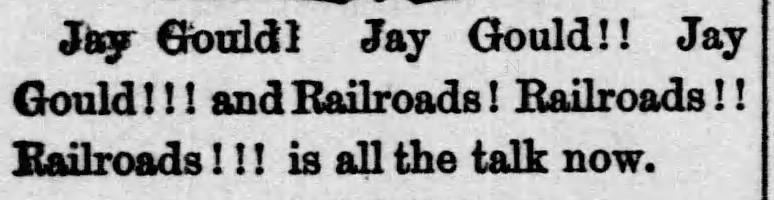
In the 1880s, prior to Plain Dealing’s incorporation, but when its train depot for the Cotton Belt Railroad was already built and busy and the subdivision home lots were being sold, the community was named Guernshein or Gernshein. According to local histories, the name was for a prominent railroad investor, sometimes noted as an investor in the Jay Gould railroad syndicate (of which the Cotton Belt eventually became a part). 


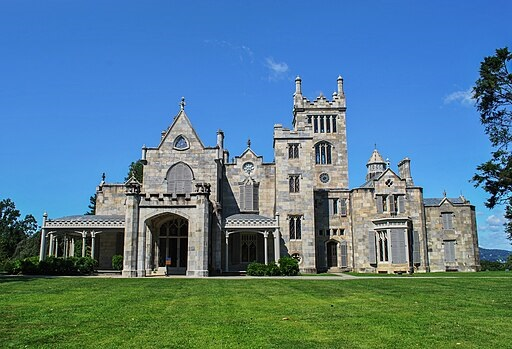
Jay Gould controlled railroads from coast to coast by sometimes underhanded (to put it mildly) tactics. He was known as one of the original Robber Barons, or less-scrupulous titans of industry of the Gilded Age. The Gilded Age in U.S. history, from the late 1870s to the early 1900s, was a time of great industrial growth and accumulation of massive and ostentatious new wealth among industrial owners. It was also a time of growing economic inequality and of political corruption. Railroads that Gould owned included the Missouri Pacific railroad, the St. Louis and Iron Mountain, the International and Great Northern, the Richmond Terminal, the Texas Pacific, the Union Pacific, the Wabash, the St. Louis Southwestern (the official name of the Cotton Belt), and the Manhattan Elevated Railroad. He also owned the Pacific Mail Steamship Company, and the Western Union Telegraph Company.


Gernshein himself was not identified in Plain Dealing histories beyond his last name and the simple description of “railroad investor”, but research into railroad investors of the time points to Michael Gernshein (spellings varied) of Manhattan, New York City. He was a German immigrant who worked as a banker, stockbroker, and railroad investor. He was an early general partner (from 1875 – 1881) of the most influential investment banking house of the Gilded Age in New York - Kuhn, Loeb and Company. It was a major competitor of the J.P. Morgan Company in financing America's swiftly growing railroad industry. The bank has since merged with Lehman brothers, and later with American Express.


Despite changing its name from Gernshein, which harkened back to its railroad, and not its agrarian roots, Plain Dealing’s history with the railroad was inextricably linked. The young town prospered due to its connection to the Cotton Belt. Ornate Victorian homes sprung up in the town in an area previously known for simple, practical dog-trot style log cabins (with two living areas separated by a wide-open hallway) and it became the site of the parish’s first brick building, Plain Dealing High School. The first high school building was actually funded by the vice-president of the Cotton Belt, S.J. Zeigler, whose daughter was among its first pupils. 


From the staff of the Bossier Parish Libraries History Center, we wish you all a happy New Year. If you have any information, stories, or photos of old Plain Dealing or other communities in Bossier Parish, we would love to add them (or scanned copies) to our History Center’s research collection. We are located at 7204 Hutchison Drive (formerly called 850 City Hall Drive) just across Beckett Street from the old Central Library and History Center in Bossier City, LA. All Bossier Parish Libraries locations will be closed Wednesday, 1/1/2025. Normal operating hours for Bossier Central Library and History Center are M-Th 9-8, Fri 9-6, and Sat 9-5. Our phone number is (318) 746-7717 and our email is history-center@bossierlibrary.org


For other local history facts, photos, and videos, be sure to follow us @BPLHistoryCenter on FB, @bplhistorycenter on TikTok, and check out our blog http://bpl-hc.blogspot.com/.


Images: 

  • Jay Gould clipping from Bossier Banner-Progress   January 27, 1887
  • Bond of the St. Louis Southwestern Railway Company 1891 Image By Edhac-Edham - Public Domain, https://commons.wikimedia.org/w/index.php?curid=53837122
  • Map of the St. Louis Southwestern Railway (Cotton Belt) system as of 1918, with trackage rights in purple.  modified 2008 from Bureau of Transportation Statistics North American Transportation Atlas Data). Public Domain, https://commons.wikimedia.org/w/index.php?curid=5283506
  • Lyndhurst, Jason (Jay) Gould mansion, Tarrytown, NY, Photo by Elisa Rolle, Shared under the Creative Commons license https://creativecommons.org/
Article by: Pam Carlisle

Wednesday, December 18, 2024

Holiday Viands (Good Food!) in Old Bossier

During the holiday season in Bossier Parish, delicious food is always on the menu. From the parish formation in 1843 to today, treasured recipes are the backbone of family gatherings and community events. Newspaper articles from the 19th century are full of words and delicacies we might not recognize now, but the celebratory spirit and impulse to gather with special friends and family and favorite foods remain.


Rupert Peyton, newspaperman and a recorder of Bossier Parish history, was born in 1899 in Webster Parish and grew up as a child and young man on a farm in the Plain Dealing area of north Bossier Parish. He recalled, “Of all the seasons of the year Christmas time was the most enjoyable. Though we seldom received many presents such as toys, we always had plenty of good things to eat, oranges, apples and candies. It was also the time for feasting on such things as roast turkey, cakes and pies. It also meant family reunions. We usually gathered for Christmas day at some relative’s home there to play and enjoy ourselves with our many cousins … Eggnog was one of the delights of the day for both old and young. The older folks would spike the nog with whiskey, which they drank and it added to the gayety of the occasion. We children, however, got no whiskey in our nog, it was served to us unspiked, but that made little difference with us children.”


For 19th century Bossier Parish residents, Christmas eve was an especially celebratory time. Clare M. Nelson wrote in her August 28, 1987 independent study paper, “Christmas Customs of the Northwest Louisiana Pioneers, 1850-1880,“ that following a night of dancing, which rarely ended before midnight, “Christmas morning came early and usually brought visits from friends and family.” These visitors enjoyed eggnog offered by hosts and hostesses.


Ms. Nelson continued that the main Christmas meal was served at mid-day. It included the usual fare of meat, vegetables, relishes such as chow-chow (made typically from pickled, chopped green tomatoes, onions, cabbage, and seasonal peppers or other vegetables), cucumber pickles, and pickled peaches. Cornbread and “beaten biscuits” (that were more like a slightly soft cracker than the fluffy, airy biscuits popular today) were eaten with freshly-churned butter. She pointed out that oysters were a special Christmas treat and therefore a popular hostess gift.


The desserts would include cakes, puddings and pies. As an example of the ingenuity of nineteenth century homemakers, “vinegar pie” would be made when no fruit was available or affordable and were said to taste remarkably like lemon pie. The most delighted-in cake might be the fresh coconut cake. Since they cost as much as an extravagant ten cents each, coconuts were also a special Christmas present. After the milk had been drained from the coconut and the meat grated for a cake, the shell was carefully saved and used as a dipper bowl or an ornament.


A tongue-in-cheek article in the Shreveport Times of January 18, 1883, which began with the premise that remote Bellevue, the parish seat until 1888, “is the Paris of Bossier Parish,” remarked that the town earned its high-tone reputation for its renowned whiskey. The article continued the story of Bellevue with less mockery when it described Bellevue’s “Holiday Week,” which exemplified many of the traditions described among the “Christmas Customs” article, above:


“On Thursday night (likely December 20th) the ladies gave a church fair in the courthouse. They had a great many tables filled with choice viands (a fancy, archaic word for fancy foods) of every description; also, an abundance of presents or gifts, alluring to the eye but very painful to the purse….The big ball that followed the fair was attended by some of the fairest ladies in Bossier and Webster. She whose rosy lips had been dallying with a pound or so of salad, nuts and cakes a few minutes ago, was now whirling gracefully in the mazy waltz, coquetting behind her fan with auburn haired gentleman who erstwhile had ravenously tackled a turkey, etc. The enchanting strains of the Bellevue string band infused with life and gaiety everyone present, and upon the midnight air the sounds of revelry and joy broke, and youth and beauty and innocence reigned supreme.”


From the staff of the Bossier Parish Libraries History Center, we wish you all the best this Christmas and holiday season. If you have any information, stories, or photos about Christmas and other holiday traditions in Bossier Parish, we would love to add them (or scanned copies) to our History Center’s research collection. We are located at 7204 Hutchison Drive (formerly called 850 City Hall Drive) just across Beckett Street from the old Central Library and History Center in Bossier City, LA. All Bossier Parish Libraries locations will be closed Tuesday and Wednesday, 12/24 and 12/25. Normal operating hours for Bossier Central Library and History Center are M-Th 9-8, Fri 9-6, and Sat 9-5. Our phone number is (318) 746-7717 and our email is history-center@bossierlibrary.org


For other local history facts, photos, and videos, be sure to follow us @BPLHistoryCenter on FB, @bplhistorycenter on TikTok, and check out our blog http://bpl-hc.blogspot.com/.


Images: 

  • Photo of beaten biscuits, which were traditionally made by literally beating the dough against something hard (like a tree stump) with any number of tools at-hand, like a hammer or sideways axe. Photo by Stuart Spivack from Cleveland, Ohio, USA - Flickr, CC BY-SA 2.0, https://commons.wikimedia.org/w/index.php?curid=7587136.
  • Rupert Peyton, who once wrote for the Shreveport Journal, the Bossier Press and the Bossier Tribune and other local publications.
  • Picture of Bellevue, C 1900 - 1910.
Article by: Pam Carlisle

Wednesday, November 20, 2024

First People of the Red River

 Looking straight at me and my coworker Sarah-Elizabeth Gundlach, Ms. LaRue Parker, the tribal chair of the Caddo Nation of Oklahoma, asked us how we would feel if someone dug up our grandmother’s grave, taking the bones and the jewelry and all that was buried with her. “Violated,” answered Sarah-Elizabeth. “Outraged,” I said. “Yes,” Ms. Parker said, with the tribal council members seated around her nodding in agreement, “That’s how we feel when it happens to us.”


National Native American Heritage Month is commemorated each year in November to celebrate the traditions, languages, contributions and stories of Native American, Alaska Native, Native Hawaiian, and affiliated Island communities to ensure those vital histories and contributions continue to thrive and be known through coming generations. 2024’s theme is Weaving together our past, present and future. It is an opportune time to recall that meeting on April 20, 2006, and other lessons learned from the Bossier Parish Library History Center’s First People of the Red River exhibit and symposium, which opened in October of that year.


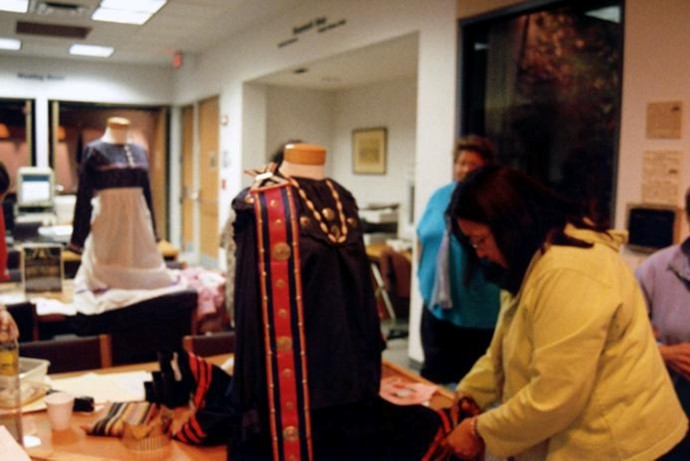
The First People of the Red River exhibit was a display of Caddo Indian artifacts from the “Mounds Plantation” site of Caddo Parish, the largest Caddo ceremonial site in Northwest Louisiana, as well as the “Haley” site in southwest Arkansas. The one-of-a-kind collection had never before been seen by the public and included finely engraved pottery and a range of beautifully-worked stone tools. To plan the exhibit, History Center staff worked closely with members of the Tribal Council of the Caddo Nation and its Cultural Preservation Department, which are located in Binger, Oklahoma. It was the topic at-hand in our meeting with Chair Parker and her historic all-women tribal council that cool spring day in 2006.


Ms. Parker opened the meeting with her hopes for the exhibit: She wanted visitors to the History Center to know why the objects were in the mounds, who made them, how the present-day Caddo Indians feel about the artifacts, and especially, how they feel about looting.


The council stressed that we show that the artifacts are sacred to a living people who still practice the ways that the artifacts represent. They wanted visitors to take away the message that the Caddo people’s ancestors, and the artifacts, were buried with great ceremony and love to help them in their journey to their next life – sometimes with water jugs, food, or even their horse. The council chair and members hoped that the exhibit, by putting human faces and beliefs to the artifacts, will cause people to think twice before taking artifacts and disturbing Caddo burials.


The Council chair and members emphasized that through the exhibit we aim to teach as many people in Shreveport-Bossier as possible that the Caddo are “still around’ and to build bridges between cultures. They hoped to break down barriers as people learned about the Caddo tribal members of the present-day.


The main message of the exhibit became that Mounds Plantation in Northwest Louisiana is an important, sacred place to an ancient and living people, the Caddo Indians. A number of tribal members living in the modern world still honor and practice the ancient traditions that the Mounds Plantation artifacts represent, such as community dances and feasts, speaking the Caddo language to reinforce Caddo identity, and continuing Caddo spiritual practices. For the exhibit’s opening symposium on October 7, 2006, after being welcomed by Mayor Lo Walker, Caddo elders were able to make those points directly to the public here in Bossier City.


The History Center acknowledges that the tribal council made a significant commitment in participating in the exhibit process when displaying these sacred items was not their customary inclination. They did so with the hope for more recognition of who they are as tribal members from cultural institutions such as the Bossier Parish Libraries History Center and by the public in northwest Louisiana.


The best to way to learn more about the Caddo people is to go to the source. The Caddo Nation has a Heritage Museum in Binger, OK (west of Oklahoma City), though it is currently closed for renovations. Closer to Bossier, for a daytrip, you can visit the Caddo Mounds State Historic Site in Alto, TX, and step inside a Caddo grass house built under the direction of Caddo elder Phil Cross and walk among prehistoric Caddoan mounds. If you can’t visit in person, you can view an excellent video on the house and its construction called, “Koo-Hoot Kiwat: The Caddo Grass House.” (Search for it on YouTube.)


Closer still, the Caddo artifacts mentioned in this article are now on display with the McKinney collection at the Louisiana State Exhibit Museum in Shreveport’s Native American Gallery. Or, History Center staff can visit with your group or school with our replica Caddo Indian tools and hunting weapons for the “Caddo Indians: Early Inventors” program. And come to the History Center to peruse or request our many books and other resources on the Caddo, such as a “Time Travel Kit” of books, educational activities and primary source materials. We are located at 724 Hutchison Drive (formerly called 850 City Hall Drive, just across Beckett Street from the old library and History Center), Bossier City, LA and are open M-Th 9-8, Fri 9-6, and Sat 9-5. Our phone number is (318) 746-7717 and our email is history-center@bossierlibrary.org


For other fun facts, photos, and videos, be sure to follow us @BPLHistoryCenter on FB, @bplhistorycenter on TikTok, and check out our blog http://bpl-hc.blogspot.com/


Images: 

  • Bossier City Mayor Lo Walker presents Keys to the City to LaRue Parker, Chair of the Caddo Nation, at the First People of the Red River.  Exhibit and Symposium Celebrating Caddo Culture on October 7, 2006 at the Bossier Parish Libraries History Center. History Center photo by Sarah Elizabeth Gundlach
  • Women from the Caddo Nation not only loaned the Bossier Parish Libraries History Center their traditional clothing and accessories for the First People of the Red River Exhibit, but helped set up and arrange them properly. October, 2006. History Center photo by Sarah Elizabeth Gundlach.
  • Visitors to the First People of the Red River: Exhibit and Symposium Celebrating Caddo Culture on October 7, 2006 at the Bossier Parish Libraries History Center. History Center photo by Sarah Elizabeth Gundlach.


Article by: Pam Carlisle 


Thursday, October 17, 2024

School Tragedy in East Texas Prompts Response from Bossier Parish

Among the many headstones at Forest Park Cemetery in Shreveport, there stands one with the name of a young girl who perished 87 years ago in the worst school disaster in our nation’s history. Mary Priscilla Carney was only 12 that fateful afternoon in 1937 when an explosion reduced her school in New London, Texas to rubble. Bossier Parish responded, as did many communities, and began taking steps to ensure such a tragedy wouldn’t happen here.


Revenue flowing from the East Texas oil fields brought much-needed prosperity to New London in the 1930s. Located approximately 122 miles southeast of Dallas in Rusk County, the area grew as families moved there drawn by its wealth. Little expense was spared in building a school to accommodate the influx of children. An article from March 2007 in Texas Monthly magazine states that oil revenue “contributed to top-notch facilities … that included an elementary building, a gymnasium, and even a lighted football field. But the crown jewel belonged to children in fifth through eleventh grade (“senior year” at that time): the $300,000 two-story junior and senior high school, … fully equipped with a chemistry lab, an auditorium with a balcony, and an industrial-arts workshop.”


For Mary, who was in 7th grade, and approximately 500 of her fellow students, who occupied this nice, new crown jewel the afternoon of Thursday, March 18, 1937, the bell signaling the end of the school day was likely top of mind. It was supposed to sound at 3:30. What the students and their teachers didn’t know was that it would never sound. Its ringing would never be heard again.


Natural gas had been used to heat the campus since its construction. In January 1937, the school board voted to cancel its gas contract and save money by tapping into a nearby line of lower quality gas, sometimes referred to as a residue line, that was available for free. An article of May 1, 1995, on the Texas State Historical Association website states that tapping such a line “was a frequent money-saving practice for homes, schools and churches in the oil field.” In this instance, the practice proved deadly.


Within weeks of the change, ominous warning signs made themselves known. Headaches and burning eyes began afflicting students according to the online news site Texas Standard in an article from August 13 this year. But apparently no one suspected the culprit was a gas leak. At the time, natural gas had no odor additive, making leak detection difficult. As Mary and her classmates waited to go home that Thursday afternoon, the unthinkable happened.


Some accounts say it occurred at 3:05, others 3:17. A workshop teacher turned on an electric sander, unaware of the volatile gas fumes in the air. A spark flew from the switch, igniting the gas. The high school building exploded. The article on the TSHA website describes the blast: “Immediately the building seemed to lift in the air and then smashed to the ground. Walls collapsed. The roof fell in and buried its victims in a mass of brick, steel, and concrete debris.” A nightmare had come to New London.


Assistance arrived swiftly, as townspeople, oil field workers and many others who heard and felt the explosion rushed to the scene. Bossier Parish also offered help. An article in the March 25, 1937, edition of the Bossier Banner Progress newspaper details how businessman Arthur Ray Teague and E. W. Rice, chairman of the Bossier Red Cross chapter, delivered medical supplies. It also mentions Bossier City doctors John Victor Hendrick and William Mastin Scott arriving to render aid. The Planters Press newspaper of the same date describes Bossier firefighters arriving on scene to provide first aid and “anything else which would be of help.” Barksdale Field - as Barksdale Air Force Base was then known - sent planes with medical supplies, and according to item in the March 20, 1937, issue of the Miami Tribune of Miami, Florida, these planes flew over the disaster site and dipped their wings as a show of condolence.


The death toll estimate was approximately 300 killed, including about 16 teachers. Five of the young victims, including Mary, were brought to funeral homes in Shreveport. An investigation into the cause of the accident “concluded that gas had escaped from a faulty connection and accumulated beneath the building,” states the 1995 article on the TSHA website. This conclusion prompted Bossier officials to begin checking gas lines.


On April 9, 1937, The Plain Dealing Progress newspaper noted that the Bossier Parish School Board “ordered a thorough inspection of plumbing or gas fixtures in all school buildings of the parish burning natural gas.” Approximately two weeks prior, classes at Benton High School were cancelled for a day while repair work was done to gas lines, although in its April 1 edition, the Bossier Banner Progress states, “This work was not undertaken because of any fear of an explosion, but because the gas bills have been too high of late.”


Texas quickly passed legislation requiring something be added to natural gas to give it an odor, making leak detection much easier. Other cities and towns followed suit. Because of New London, the rotten egg smell signaling a gas leak became the industry standard. And lives have been saved because of it. Mary and her classmates and their teachers did not die in vain.


If you have any information or items relating to the history of Bossier Parish, the History Center may be interested in adding the materials to its research collection by donation or by scanning them and returning the originals. Call or visit us to learn more. We are open M-Th 9-8, Fri 9-6, and Sat 9-5. Our phone number is (318) 746-7717 and our email is history-center@bossierlibrary.org. We can also be found online at https://www.facebook.com/BPLHistoryCenter/


Images: 

  • Mary Priscilla Carney/courtesy Christie Marie Shepherd Findagrave.com
  • New London monument to those who perished/courtesy Wiki Media Commons
Article by: Kevin Flowers

Wednesday, October 9, 2024

The First Catholic Church in Bossier Parish: Christ the King, Part 2

Did you know that Christ the King Catholic Church in Bossier Parish is home of the largest number of Spanish-speaking parishioners in the Diocese of Shreveport – which covers all of north Louisiana? September 15th through October 15th marks Hispanic Heritage Month, so let’s take an additional look at the history of Christ the King in downtown Bossier City, the first Catholic Church in Bossier Parish.


Christ the King was built in 1940 at the corner of Barksdale Blvd. and McCormick St. in old downtown Bossier City, a handsome white brick veneer church in the Spanish Mission style. In the church’s early history, this structure was its main expression of Spanish culture. In 1978, the growing church’s building was completely reconstructed in a modern, airy style with numerous windows and vast open space, leaving no hint of its previous Spanish style. Within the following decades though, Spanish language and culture could be seen and heard through the real structure of a church – its people.


In 1987, the Catholic Diocese of Shreveport began its Hispanic Ministry, an outreach program to Spanish-speaking Catholics in north Louisiana. “As Hispanic Catholics migrate into our area, we need to welcome them warmly as brothers and sisters in Jesus Christ,” asserted Bishop William B. Friend in the May 28, 1994, Shreveport Times. Within the ministry’s first five years, one Spanish Mass a month was conducted in south Shreveport at Saint Mary of the Pines and one was conducted in Bossier City at Christ the King. Father Rigoberto Betancurt, a pastor in Monroe, conducted both masses.


The coordinator for the diocese’s Hispanic Ministry, Elisa Milazzo, looked forward to the day when Spanish Masses could be held weekly, and had high hopes that the Shreveport-Bossier area would get its own Spanish-speaking priest. In July of 1999, Milazzo got her wish. Reverend Betancurt came to Shreveport fulltime to be chaplain over Hispanic ministries in the Diocese of Shreveport’s western deanery (geographic area). In the August 13, 1999, Shreveport Times, Milazzo affirmed that Betancurt’s arrival “has been an inspiration to all of us…You just can’t imagine the anticipation.”


The Times article also told the backstory of Father Rigo, as he likes to be called. Growing up in Pacora in northeast Colombia, Betancurt’s father died when he was only 7, but he never lost the memory of his father taking him and his 9 siblings to daily mass at five o’clock each morning. When Betancurt was in fifth grade and a group of priests visited his school to inspire the boys to train for priesthood, he signed up. His mother discouraged that path however, telling young Rigo he was needed to support the family. He became a teacher of music and Spanish, but ultimately could not ignore the call to priesthood. He trained in Medellín, Colombia, then Rome, Italy before returning to Colombia for his ordination in 1983.


Father Rigo’s first assignment was to a university in Brussels, Belgium, where he studied for a master’s degree in theology. Those studies were cut short when his mother became sick and he returned to Colombia. There he served in various churches and schools until he founded a church in the poorest section of the country’s second largest city, Medellín. He set his sights on helping members of the local drug gangs but the unspeakable violence of the time continued. When the director of Hispanic ministries for the Diocese of Alexandria (which once included what is now the Diocese of Shreveport) visited Betancurt in Colombia with an appeal to help fill the need for Hispanic services in northwest Louisiana, Betancurt made the complicated decision to leave his family and homeland. He did not know English, but set himself to the challenge of the move. He said, “I want Catholic Hispanics to know each other, who we are and be together for the Eucharist [communion]. I want people to reinforce their belonging to the diocese and to be in contact with pastors.”


The goal for the new Hispanic chaplaincy was to increase membership in individual parishes as well as strengthen the diocese. Like the priests in colonial and early Louisiana, who found in the scattered Catholic communities in the state’s remote areas accustomed to being unchurched, Betancurt found that many immigrants from Latin America had also faced a shortage of priests and parishes and were not accustomed to churchgoing. To reach these potential parishioners, Betancurt had many advantages. In addition to fluency in Spanish, he held valuable cultural knowledge, such as how holidays and services specifically to honor the Virgin Mary are central in the beliefs and practices of many Hispanic Catholics. However, perhaps Father Rigo’s best “secret weapon” was his certification as a soccer referee. He ran weekly pickup games at the LSU Shreveport soccer fields, where he could build relationships and invite the players to church.


In 2002, Father Betancurt, and the diocese’s Hispanic Ministry, were homebased at Christ the King. By 2003, Spanish services went from once a month to several a week, reported the April 28 Shreveport Times, and Father Rigo introduced Monday evening masses at Christ the King for service or hospitality industry workers who were not be able to attend church on the weekends. Christ the King also offered language classes both for English speakers to learn Spanish and Spanish speakers to learn English, and ministered to the spiritual and basic needs for migrant workers who sent their wages back to family in their economically-ravaged home countries.


Father Rigo believed that separate Spanish and Anglo masses and fellowship groups were what Hispanic parishioners typically needed upon arrival in a new home or homeland, but he said his ultimate goal is that the Anglo and Hispanic communities could eventually merge. Christ the King Parishioner Mary Morgan, who took the church’s Spanish classes and was welcomed as an honorary member of the church’s Hispanic community, echoed that sentiment. “Our prayer,” she said, “is that this becomes a bilingual parish. That is really what would be wonderful.”

The History Center always appreciates donations of photos and documents of Bossier Parish churches and other local institutions, and we are especially looking to add items from the Hispanic communities of Bossier Parish. If you have stories or photos or other items to donate or allow us to copy for our collections, be sure to visit or contact the History Center. We are in the new Bossier Parish Libraries Central Complex at 850 City Hall Drive, Bossier City, LA (across Beckett Street from the original History Center and “old” Central Library). We are open M-Th 9-8, Fri 9-6, and Sat 9-5. Our phone number is (318) 746-7717 and our email is history-center@bossierlibrary.org


For other fun facts, photos, and videos, be sure to follow us @BPLHistoryCenter on FB, @bplhistorycenter on TikTok, and check out our blog http://bpl-hc.blogspot.com/.


Images:

  • Father Rigoberto Betancurt. Photo courtesy of Christ the King Catholic Church, Bossier City.
  • Father Rigoberto Betancurt at Christ the King Catholic Church, Bossier City, C. 2003 Photo courtesy of Christ the King Catholic Church.
  • A celebration of the Virgin Mary at Christ the King Catholic Church, Bossier City, C. 2003 Photo courtesy of Christ the King Catholic Church.
Article by: Pam Carlisle