Showing posts with label Bossier Parish Schools. Show all posts

Wednesday, October 7, 2026

Calisthenics Time: Fresh Air and Fitness in North Bossier Parish

One of my favorite photos in the History Center collection is a panoramic photo, circa 1930, taken by the Grabills, two of Shreveport’s most significant and talented photographers, father and son Burch and William Grabill. The sepia-toned photograph shows a panoramic view of a hundred or more girls of varying ages among the tall timbers surrounding Plain Dealing High School. The school at that time encompassed all grades, from first through high school. The photo shows groups of girls in their regular school clothes of skirts, blouses, tights and lace-up shoes, each posed in a different stretch. In the center of this scene are a group of tall, older girls playing basketball, sporting the classic women’s athletic gear of the early 20th century, bloomers and middy blouses.


Some groups of girls have both arms straight out on either side, and some have their arms at angles above and below their heads. One group is possibly doing push-ups. The exercises are being led by teachers, who are also in their regular workwear of cardigans, blouses, skirts, stockings and high-heeled but sturdy shoes. One can guess these young scholars and their educators are participating in the exercises known as “calisthenics,” loosening their limbs in order to stretch their young minds.


Calisthenics are free body exercises (exercises that use the body’s own weight) that include such motions as bending, stretching, twisting, swinging, kicking, and jumping, as well as such specialized movements as push-ups, sit-ups, and chin-ups. The exercises are designed to promote strength, endurance, flexibility, coordination, and improve wellbeing by putting the cardiovascular system to work in a controlled and steady way. Calisthenics arose in the early 19th century from the work of Germans who popularized gymnastics for the “everyday” person. Some physiologists stressed calisthenics’ importance in the development of education for women. In the United States, an early advocate for education for girls, Catherine Beecher (whose family of high-achievers included Harriet Beecher Stowe, author of Uncle Tom’s Cabin), was also an early adopter of calisthenics. Beecher wrote Physiology and Calisthenics for Schools and Families (1857), and was among those who promoted calisthenics solely for women.


Despite Beecher’s and others’ emphasis on calisthenics for girls and women, the exercises became an activity for both sexes. In advertisements for private schools in Bossier Parish newspapers in the 1880’s, when public school offerings were still extremely limited in northwest Louisiana, calisthenics were touted in the curricula of schools of both sexes. The “Bossier Banner-Progress” in 1881 ran an advertisement for the Minden Male Academy that emphasized, “In order to promote the health of the students, and to cultivate a graceful movement and carriage, there will be regular exercises in calisthenics.” The Minden Female College Boarding and Day School for Young Ladies and Children ran a longer ad that laid out all their varied academic and musical offerings, while emphasizing that no matter what course (and tuition tier) one chose for their daughter, “Calisthenics, [are] a part of the daily exercises and free of charge.”


At Plain Dealing High School, calisthenics seemed to seamlessly fit among the other activities of the school day. An article from the “Plain Dealing Progress” dated April 9th, 1937, entitled “Art Exhibit Was a Huge Success Here During Last Week” stated that, “A very interesting literary and physical education program was conducted in connection with the art display and Mr. Phillips said the pupils especially enjoyed the exercise outdoors last Thursday afternoon.”


The Bossier Parish Libraries History Center can provide an abundance of interesting facts and photographs about Bossier Parish. We would also love to hear your stories and see your photos. With your permission we could scan them to add to our collection. Currently, the Bossier Parish Libraries History Center section of the Bossier Central Library complex remains closed while our new exhibits are completed. Watch our Facebook page or library website homepage for updates at www.bossierlibrary.org. You can also go the Resources/History and Genealogy page of the website to use our online resources. You may call us at (318) 746-7717 and our email is history-center@bossierlibrary.org. For other intriguing facts, photos, and videos of Bossier Parish history, be sure to follow us @BPLHistoryCenter on FB check out our blog http://bpl-hc.blogspot.com/

Images: 

  • Panoramic photo (scanned in two parts) of female students exercising and playing basketball on the grounds of Plain Dealing High School, 1931. Photo by Grabill, from the Mayme Rae and Hunter Willett collection at the Bossier Parish Libraries History Center
  • Advertisement for the Minden Male Academy from the Bossier Banner-Progress, September 15, 1881.
Article by: Pam Carlisle 

Wednesday, March 11, 2026

Charlotte A. Mitchell: The Second “Class Act” for Bossier Parish’s Jeanes Teachers

Until as late as 1970, if you wanted to easily find the leaders of African-American communities in the South, you would do best to look in the segregated Black schools. The most educated, highly-regarded, and active members of the community could be found there, working as school teachers or administrators. The supervisors of African American schools in hundreds of school districts throughout the South were called Jeanes Teachers, or Supervisors, and they exemplified leadership. Their titles were named for the Philadelphia Quaker philanthropist behind the Jeanes program, Anna T. Jeanes.


The Bossier Parish School Board tapped Charlotte Mitchell as its second Jeanes Teacher in 1925, following Carrie Martin. Mrs. Mitchell supervised Bossier Parish’s approximately one hundred African-American teachers spread throughout the rural parish. The parish superintendent stated that Mrs. Mitchell was expected to travel throughout Bossier to “Improve classroom instruction, direct industrial activities and promote production and preservation of foods, through school activities.”


Charlotte Watson Mitchell was born in Benton, Bossier Parish in 1880 to Ralph and Jane Watson. Ralph Watson was born enslaved in South Carolina in about 1825. Jane Watson was also born in South Carolina, in 1843. According to the 1880 Census, Ralph Watson could read but not write. He worked as a janitor at the Bossier Parish courthouse in the parish seat of Benton and owned 50 acres that he farmed. In 1912 Charlotte Watson married Oliver L. Mitchell. Oliver Mitchell worked in many occupations during his lifetime, including as a preacher in the Colored Methodist Episcopal (C.M.E.) Church, teacher, school administrator, and farmer.


When Charlotte Mitchell became a Jeanes Teacher for Bossier schools, she was 45 years old and the mother of three young children. Husband Oliver was working as principal of what became the Bossier Parish Training School in Benton where the family eventually lived on campus. As the “new” Jeanes Teacher, Charlotte Mitchell already had thirty-one years of teaching under her belt, mostly in rural schools, including eleven years in a one or two-teacher schoolhouse where she was responsible for teaching children in multiple grades at one time. She also taught algebra and Latin at the high school level and spent a year as a Jeanes Teacher in Lafayette County, Arkansas immediately north of Bossier Parish.


Charlotte Mitchell kept up Carrie Martin’s busy pace. In a “Report of Jeanes Agents” for 1928-29, there were sixty-two “Negro” public schools in Bossier Parish. She visited all but two of them over an average school term of 106 days. She also raised $1,615.00 for new, improved school buildings. On her visits, Mrs. Mitchell would check on the progress of the teachers. Retired Bossier Parish teacher Minnie B. Walker Payne remembered Charlotte Mitchell “was the supervisor of the school. And she would come around and sit…and write as you teach. Every class you taught she would write. After she would do that, she would have a conference with you and tell you of your weak points and tell your strong points…She never was harsh and she kept a smile. And she said, ‘Now teacher, it should be this way.’”


Ms. Payne also remembered how Charlotte Mitchell would help the teachers take care of the nutritional needs of the students. She reminisced:

And then too, we didn't have lunchrooms. We had…big old iron heaters like that with the pipe. And we would get commodities…I never will forget [Charlotte Mitchell]. In this commodity it was a lot of cabbage and apples. And she taught us how to cook apple and cabbage together. Oh, honey that's the best stuff in the world. You wouldn't believe it…Layer of apple, layer of cabbage on that wooden heater, get a great big old boil. And it was the best something.


Mrs. Payne said that Mrs. Mitchell was responsible for distributing the food for the schools, commodities that (along with all the cabbage and apples) typically included giant cans of vegetable soup that the teachers would heat up for the students.


A crowning achievement of Charlotte Mitchell’s tenure was the opening of the Bossier Parish Training School in Benton in 1928, producing its first secondary-level graduating class in in 1932. Training schools were post-elementary schools with an emphasis on industrial subjects or teacher training. The training school eventually expanded its offerings to increase the local supply of African American teachers by offering two years of college. As the only school of its kind in the parish, many students boarded in dormitories or with local families.


As a Jeanes Teacher, Charlotte Mitchell not only affected the educational life of the parish’s African-American community, but home life, as well. Over an eight-month period in 1932-1933, Charlotte Mitchell reported sixty visits to homes in addition to her seventy-five visits to schools. She led the Colored Home Demonstration Clubs in the parish and oversaw food canning centers in four of the parish’s African-American schools, allowing community members to put up thousands of tin cans of food each year. Many of the cans were set aside for the Red Cross to distribute to the hungry.


Charlotte Mitchell retired as Bossier Parish’s Jeanes Supervisor in 1937. She continued to teach for at least four more years at the Bossier Parish Training School where she still lived at the campus. Oliver Mitchell passed away in 1939. Charlotte Mitchell died in 1948 at the age of sixty-eight. However, Charlotte Mitchell’s name has endured. In 1954, the Bossier Parish School Board renamed the Bossier City Colored High School to Charlotte Mitchell High School. It is now known as Mitchell Community Center, with an adjoining Mitchell Park. The building, on Cox Street in “Old Bossier”, is used for youth and food bank programs by the Bossier Parish Sheriff’s Office. In 2017 the Charlotte Mitchell High School class of 1969, the last to graduate in the school, dedicated “Charlotte Ann Mitchell Memorial Drive” with a large and visible sign on Cox Street, honoring Charlotte Mitchell almost 70 years after her passing.


Visit the History Center in the Bossier Parish Central Library Complex for more information on the Jeanes Teachers or other local women for March, Women’s History Month. We are located in the Bossier Central Library Complex at 7204 Hutchison Drive in Bossier City, LA. 2206 Beckett St, Bossier City, LA. Or, go online to our collections database and search for “Catalogs” at http://bossier.pastperfectonline.com/ The History Center is open: M-Fri 9-6. Saturdays we are open by appointment. Our phone number is (318) 746-7717 and our email is history-center@bossierlibrary.org For other local history events, facts, photos, and videos, be sure to follow us @BPLHistoryCenter on FB, or check out our blog at http://bpl-hc.blogspot.com/.


Images: 

  • Portrait of Charlotte A. Mitchell 1999.130.001
  • Bossier Parish Training School (AKA C.H. Irion HS) in Benton, La. (Cover of Reunion Booklet 1986, Collection of BPL History Center)
  • Charlotte Mitchell High School (AKA Bossier Colored HS) in Bossier City, La. 2013.016.001


Article by: Pam Carlisle 

Wednesday, February 18, 2026

Bossier Parish’s first Jeanes Supervisor, Carrie Martin

Early 20th-century schools for African American children in the South, especially in rural areas, were in a catch-22 caused by a segregated education system that offered less months in the school term, and less years of schooling: You couldn’t have schools for African American students without African American teachers, and you couldn’t have African American teachers without African American schools, especially high schools. Enter a Quaker woman and philanthropist from Philadelphia named Anna T. Jeanes. In 1907 she created a one-million-dollar endowment named the Negro Rural School Fund, more commonly referred to as “the Jeanes fund,” to develop a cadre of educated and professionally trained African American teachers to staff more and better schools for African American children in the rural South, including secondary schools.

Carrie Washington Martin was a school teacher who became the first Jeanes Teacher (often referred to as Jeanes Supervisor) in Bossier Parish, and only the third in the state of Louisiana, in 1913. She was appointed by the Bossier Parish School Board after teaching for a number of years in the Plain Dealing area of northern Bossier Parish.


Carrie Martin was born in December of 1883 in Spring Ridge, Louisiana, a rural part of southwestern Caddo Parish. Her parents were Anthony and Georgia Jackson Washington. Her father farmed and served as a Methodist preacher; census records note that he was literate. Carrie was 16 years old when she married her first husband, Franklin Roan. The young couple lived a few houses away from her parents in Jackson Parish in 1900. Franklin’s fate is unknown, but in May of 1909 Carrie married James C. Martin in Bossier Parish. Her father owned land in the Hughes Spur community, which is near Plain Dealing. Carrie became a school teacher and her husband farmed. Carrie did not have a college degree, but she received teacher training during summer institutes for black teachers. This was typical of the early Jeanes Teachers.

As Bossier Parish’s first Jeanes Teacher, Carrie Martin was charged with providing or improving education for 4,733 African American “educables” ages six to eighteen, and supervising their teachers in 59 schools spread throughout the parish’s approximately 838 square miles. She would likely have been driving in her own vehicle, without travel compensation, on dirt roads that were, for much of the year, mud pits.

In addition to supervising and training teachers in the African American schools, and improving the literacy rate of less than 50% among the parish’s African American population according to the 1910 census, Carrie Martin was also expected to be a leader in school and community health and nutrition, home life, and beautification. As a Jeanes Teacher, she supervised home demonstration (home economics) work for African-American women, such as teaching food preservation, home management skills, and public health by making home visits and organizing homemaker clubs. She also organized community members to raise money to build more or better schools, including by raising livestock or growing cash crops with proceeds going toward a school fund.

Leo Favrot was the state supervisor for Rural Negro Schools and made several visits to Bossier Parish to inspect the schools and the work of Carrie Martin. She was ill during one of his visits, so he called on the parish’s superintendent of schools, W.A. Fortson, to discuss her work. Mr. Favrot concluded from this trip that there was considerable activity on Carrie Martin’s part, but that the Jeanes program did not have secure standing with the Bossier Parish School Board. Mr. Favrot’s suggestion was to win the board over with the usual strategy used at the time to sway a reluctant white community to the cause of education for African Americans– emphasize the practical, industrial nature of the Jeanes Teacher’s work, especially in agriculture.


In 1919, Bossier was without a Jeanes Teacher. The reason for this gap in Carrie Martin’s term is unknown, but Leo Favrot admonished the school board by saying, “This is to be deplored,” because Carrie Martin’s work had “done a lot of good” promoting the interests of schools in Bossier Parish. He hoped the board would resolve to again have a Jeanes teacher and make an appropriation “sufficiently large” to attract a very capable agent. They must have listened, because Carrie Martin was rehired as a Jeanes Teacher the following year.

Carrie Martin passed away on March 11, 1926 from cervical cancer, after an illness of about six months. In recognition for her significant work expanding and improving the educational opportunities available for African American students, the Bossier Parish School Board named the Plain Dealing all-grades school for African American students “Carrie Martin High School” in 1954. After the de-segregation of Bossier Parish schools (1970), the school closed, and Plain Dealing Elementary School opened in the same building. In 2003, community members pressed for the school board to once again have an existing school named to honor Carrie Martin, and Plain Dealing Elementary was re-named Carrie Martin Elementary. In 2018, the elementary school was moved to the campus of Plain Dealing’s middle and high school due to a declining enrollment, but the elementary wing is still named after Carrie Martin, and her portrait hangs in the hallway.


You can visit the Bossier Parish Libraries YouTube channel to watch a virtual slide show on Carrie Maritn, at https://www.youtube.com/watch?v=ig-kWHgY5mw&t=3s or contact us at the History Center if you’d like more information on the parish’s Jeanes Teachers. We are located in the Bossier Central Library Complex at 7204 Hutchison Drive in Bossier City, LA. 2206 Beckett St, Bossier City, LA. Or, go online to our collections database and search for “Catalogs” at http://bossier.pastperfectonline.com/

Please note the new hours for the History Center: M-Fri 9-6. Saturdays we are open by appointment. Our phone number is (318) 746-7717 and our email is history-center@bossierlibrary.org For other local history events, facts, photos, and videos, be sure to follow us @BPLHistoryCenter on FB, @bplhistorycenter on TikTok, and check out our blog http://bpl-hc.blogspot.com/. Contact us if you’d like to be on our email list to receive our newsletter and History Center event updates.


Images: 

  • Carrie Washington Martin: 2003 The Yellow Jacket Carrie Martin High School Reunion Yearbook
  • Louisiana Rural School Agent Leo Favrot (caption on photo)
  • Jeanes Teacher exhibit at La. State Fair (caption on photo)
Article by: Pam Carlisle

Wednesday, November 5, 2025

Haughton High Mascot Has Changed Through the Years

Buccaneers, Vikings, Panthers, Bearkats, Tigers, and Lions, these fearsome high school mascots can all be found in Bossier Parish. And each has remained the same through the years, except for one. For Haughton High School’s mascot, the image of a swashbuckling pirate hasn’t always been the case.


Haughton High was established in 1886 in a small, two-room building with a handful of students, and today has an enrollment of approximately 1,400. Much has changed on the campus through the years, including its mascot. While conducting some research recently on another subject, I came across local newspaper accounts from 1939 through 1946 of Haughton High sports events - mainly football, basketball and baseball - that referred to the teams as the Travelers. Items such as one from The Planters Press of November 13, 1941 were common: “The Haughton Travelers football squad stayed at home last Friday and defeated the scrappy Dubach eleven, 28 - 0, before a large crowd of fans. This makes six wins and one loss for the Travelers this season,” the item states. Surprised to see Haughton called the Travelers, I began looking into the origin of the name and attempted to find a reason for its selection to represent the school. Unfortunately, these same newspaper accounts weren’t any help.


Searching through newspapers such as The Planters Press, The Bossier Banner-Progress, The Shreveport Times and The Shreveport Journal, I had no luck uncovering any information about the school mascot name. Other than game scores and details of how Haughton won or lost, articles mentioned nothing about how or why the name Travelers was chosen. Time to find another source.


Former Haughton High Principal Gene Couvillion knows the school well and shared with me a piece of information that I hadn’t expected. Another mascot name existed before Travelers. Through much of the 1930s, Haughton High was known as the Lumberjacks. A search of sports stories from that era in local newspapers confirmed this bit of campus history. A story in The Shreveport Times from December 23, 1937, states, “Bossier High School Bearkats defeated the Haughton Lumberjacks in a hard-fought basketball game Tuesday night on the Centenary College court.” An article in The Times from 1932 highlights a football game between Bossier High and the Haughton Lumberjacks.


So, Haughton High School had not one but two other names prior to Buccaneers. Perhaps Lumberjacks was chosen because of the timber industry’s significant presence in the parish. Travelers could have indicated the school’s teams played more away games than at home. Thus far, I’ve been unsuccessful in finding documented evidence to substantiate these theories. But I’m unaware of any other current parish high school that has had more than one mascot name.


Airline High adopted the Vikings moniker with the school’s opening in 1964. The Panther mascot was used by Parkway when the school was a junior high and continued after the transition to a high school in 1968. Bossier High began calling its sports teams the Bearcats in 1926, although the spelling was changed to Bearkats about 11 years later. Benton High has been known as the Tigers since at least the late 1920s. An item in The Shreveport Times from October 21, 1927 mentions a basketball game between Elm Grove High School and the Benton High Tigers. Incidentally, Elm Grove High, now a middle school with the name Eagles, called itself the Panthers. The Lion has been the mascot for Plain Dealing High School since at least the early 1930s. The Bossier Banner-Progress from October 8, 1931, has an article about an upcoming Lions football game. “The Plain Dealing High School Lions will engage the eleven bearing the colors of Sarepta High School here this afternoon …” the article states. Prior to desegregation, the African American high schools in the parish had mascot names such as Bears, Wildhogs, Yellow Jackets, Dragons and Panthers.


It seems Haughton High began calling itself the Buccaneers sometime in the late 1940s. An issue of The Shreveport Journal from October 15, 1948, contains a brief mention of a Haughton football game against Mooringsport and uses the name Buccaneers. By the fall of 1950, the name was being used extensively in sports stories about the school. But regardless of its mascot name, Haughton High is an integral part of our parish’s education system and can be rightly proud of the role it plays in preparing students for life ahead.


If you have any information relating to the history of Haughton High School’s mascots, the History Center may be interested in adding that to its research collection. Call or visit us to learn more. We are open M-Th 9-8, Fri 9-6, and Sat 9-5. Our phone number is (318) 746-7717 and our email is history-center@bossierlibrary.org. We can also be found online at https://www.facebook.com/BPLHistoryCenter/ and http://bpl-hc.blogspot.com/

Images: 

  • Haughton High Buccaneers mascot/image courtesy Haughton High School
  • Sports headline/Bossier Banner-Progress, Nov. 15, 1956
Article by: Kevin Flowers

Thursday, October 17, 2024

School Tragedy in East Texas Prompts Response from Bossier Parish

Among the many headstones at Forest Park Cemetery in Shreveport, there stands one with the name of a young girl who perished 87 years ago in the worst school disaster in our nation’s history. Mary Priscilla Carney was only 12 that fateful afternoon in 1937 when an explosion reduced her school in New London, Texas to rubble. Bossier Parish responded, as did many communities, and began taking steps to ensure such a tragedy wouldn’t happen here.


Revenue flowing from the East Texas oil fields brought much-needed prosperity to New London in the 1930s. Located approximately 122 miles southeast of Dallas in Rusk County, the area grew as families moved there drawn by its wealth. Little expense was spared in building a school to accommodate the influx of children. An article from March 2007 in Texas Monthly magazine states that oil revenue “contributed to top-notch facilities … that included an elementary building, a gymnasium, and even a lighted football field. But the crown jewel belonged to children in fifth through eleventh grade (“senior year” at that time): the $300,000 two-story junior and senior high school, … fully equipped with a chemistry lab, an auditorium with a balcony, and an industrial-arts workshop.”


For Mary, who was in 7th grade, and approximately 500 of her fellow students, who occupied this nice, new crown jewel the afternoon of Thursday, March 18, 1937, the bell signaling the end of the school day was likely top of mind. It was supposed to sound at 3:30. What the students and their teachers didn’t know was that it would never sound. Its ringing would never be heard again.


Natural gas had been used to heat the campus since its construction. In January 1937, the school board voted to cancel its gas contract and save money by tapping into a nearby line of lower quality gas, sometimes referred to as a residue line, that was available for free. An article of May 1, 1995, on the Texas State Historical Association website states that tapping such a line “was a frequent money-saving practice for homes, schools and churches in the oil field.” In this instance, the practice proved deadly.


Within weeks of the change, ominous warning signs made themselves known. Headaches and burning eyes began afflicting students according to the online news site Texas Standard in an article from August 13 this year. But apparently no one suspected the culprit was a gas leak. At the time, natural gas had no odor additive, making leak detection difficult. As Mary and her classmates waited to go home that Thursday afternoon, the unthinkable happened.


Some accounts say it occurred at 3:05, others 3:17. A workshop teacher turned on an electric sander, unaware of the volatile gas fumes in the air. A spark flew from the switch, igniting the gas. The high school building exploded. The article on the TSHA website describes the blast: “Immediately the building seemed to lift in the air and then smashed to the ground. Walls collapsed. The roof fell in and buried its victims in a mass of brick, steel, and concrete debris.” A nightmare had come to New London.


Assistance arrived swiftly, as townspeople, oil field workers and many others who heard and felt the explosion rushed to the scene. Bossier Parish also offered help. An article in the March 25, 1937, edition of the Bossier Banner Progress newspaper details how businessman Arthur Ray Teague and E. W. Rice, chairman of the Bossier Red Cross chapter, delivered medical supplies. It also mentions Bossier City doctors John Victor Hendrick and William Mastin Scott arriving to render aid. The Planters Press newspaper of the same date describes Bossier firefighters arriving on scene to provide first aid and “anything else which would be of help.” Barksdale Field - as Barksdale Air Force Base was then known - sent planes with medical supplies, and according to item in the March 20, 1937, issue of the Miami Tribune of Miami, Florida, these planes flew over the disaster site and dipped their wings as a show of condolence.


The death toll estimate was approximately 300 killed, including about 16 teachers. Five of the young victims, including Mary, were brought to funeral homes in Shreveport. An investigation into the cause of the accident “concluded that gas had escaped from a faulty connection and accumulated beneath the building,” states the 1995 article on the TSHA website. This conclusion prompted Bossier officials to begin checking gas lines.


On April 9, 1937, The Plain Dealing Progress newspaper noted that the Bossier Parish School Board “ordered a thorough inspection of plumbing or gas fixtures in all school buildings of the parish burning natural gas.” Approximately two weeks prior, classes at Benton High School were cancelled for a day while repair work was done to gas lines, although in its April 1 edition, the Bossier Banner Progress states, “This work was not undertaken because of any fear of an explosion, but because the gas bills have been too high of late.”


Texas quickly passed legislation requiring something be added to natural gas to give it an odor, making leak detection much easier. Other cities and towns followed suit. Because of New London, the rotten egg smell signaling a gas leak became the industry standard. And lives have been saved because of it. Mary and her classmates and their teachers did not die in vain.


If you have any information or items relating to the history of Bossier Parish, the History Center may be interested in adding the materials to its research collection by donation or by scanning them and returning the originals. Call or visit us to learn more. We are open M-Th 9-8, Fri 9-6, and Sat 9-5. Our phone number is (318) 746-7717 and our email is history-center@bossierlibrary.org. We can also be found online at https://www.facebook.com/BPLHistoryCenter/


Images: 

  • Mary Priscilla Carney/courtesy Christie Marie Shepherd Findagrave.com
  • New London monument to those who perished/courtesy Wiki Media Commons
Article by: Kevin Flowers

Wednesday, June 26, 2024

Winning World War II from the Kitchen

In the archives of the Bossier Parish Libraries History Center is a 1944 photograph of Mrs. Bonvillion’s fifth grade class at Bossier Grammar School (now Bossier Elementary School). The students proudly hold a banner that proclaims, “We brought the GREASE to write the PEACE.” They brought waste fats and tin cans that were needed to make munitions for the armed services during World War II.


Schools were not the only places in which kitchen fats were collected. Lettie VanLandingham was Bossier Parish’s Home Demonstration Agent through the Depression, WWII and into the 1950’s. Home Demonstration agents were provided by Louisiana State University’s Cooperative Extension Service. They taught women homemaking techniques, particularly related to food production and preparation, through organized clubs and general outreach in even the smallest of their parish’s communities.

In “The Bossier Banner” throughout WWII, Ms. VanLandingham advised homemakers on how to contribute to the war effort in their kitchens by saving cooking fats, which she referred to as a “miracle material”

“If the necessary supply of fats and oils is to be maintained, Louisiana housewives will have to save more frying-pan drippings that are unfit for further use.”

“By salvaging grease otherwise ready for the garbage, home-makers can assure themselves of more fats and oils, and at the same time supply the armed forces with the raw materials to make TNT, incendiaries, vaccines and thousands of battle-field necessities.”

“To make a hundred essentials for the battlefield, as well as the home front, they are vitally needed. One pound of fat saved in a kitchen will help supply the medicines to maintain a hospital bed for 12 days. One pound of fat will also help to make 19 pounds of synthetic rubber for ambulance tires. Save all fats. They are vital to help make these and other essentials like parachutes, bullets and soaps for the battlefield and home front. By saving one teaspoonful of fat each day for a month, the housewife will find that she has salvaged one pound of fat.”


Ms. Van Landingham’s dispatches on saving fats made it clear that recycling during WWII was not only good for the life of the planet, it helped to save lives of soldiers. Another important reason for saving fats, though perhaps not as noble, was that it was good for the wartime homemaker’s wallet, which would have included ration stamps or coupons in addition to money. Food was rationed during World War II for a variety of reasons, including supply and demand issues, military needs, and the economy, including keeping inflation in check. Food was mostly rationed using a point system that adjusted frequently for shifts in supply and demand. Products with high demand and low availability needed more points than items that were easier to obtain. Point value on a blue ration stamp were for foods that were processed and canned, frozen, dried or otherwise pre-packaged. Red stamps were for meat, cheese and fats. Therefore, Ms. Landingham pointed out,

“The more used kitchen fats home-makers turn in, the less likely are point values to rise on such items as shortening, lard and cooking oils,” she said. “Each pound of used kitchen fats means two extra red ration points and 4 cents to the home-maker. In other words, the home-maker who saves kitchen fats and sells them, trades a commodity she can’t use for one she can. In return for her salvaging job, she finds more fats and oils on open shelves, and she has more red points with which to buy them.

Bring or send any kitchen fats you have to the home demonstration club meetings and it will be delivered to some of the dealers who are taking care of it,” concludes the agent.

To learn more about life during World War II, join us for World War Tuesdays on the second Tuesday of the month from 10:30 – noon. The next meeting is July 9th and will feature food issues on the home front with the development of Victory Gardens and home food preservation. This meeting will be in the new Central Library building 850 City Hall Drive, Bossier City, LA (across Beckett Street from the original History Center and the “old” Central Library). We are open M-Th 9-8, Fri 9-6, and Sat 9-5. Our phone number is (318) 746-7717 and our email is history-center@bossierlibrary.org

For other fun facts, photos, and videos, be sure to follow us @BPLHistoryCenter on FB, @bplhistorycenter on TikTok, and check out our blog http://bpl-hc.blogspot.com/.

Wednesday, August 23, 2023

Back-to-School in Bossier Pop Quiz

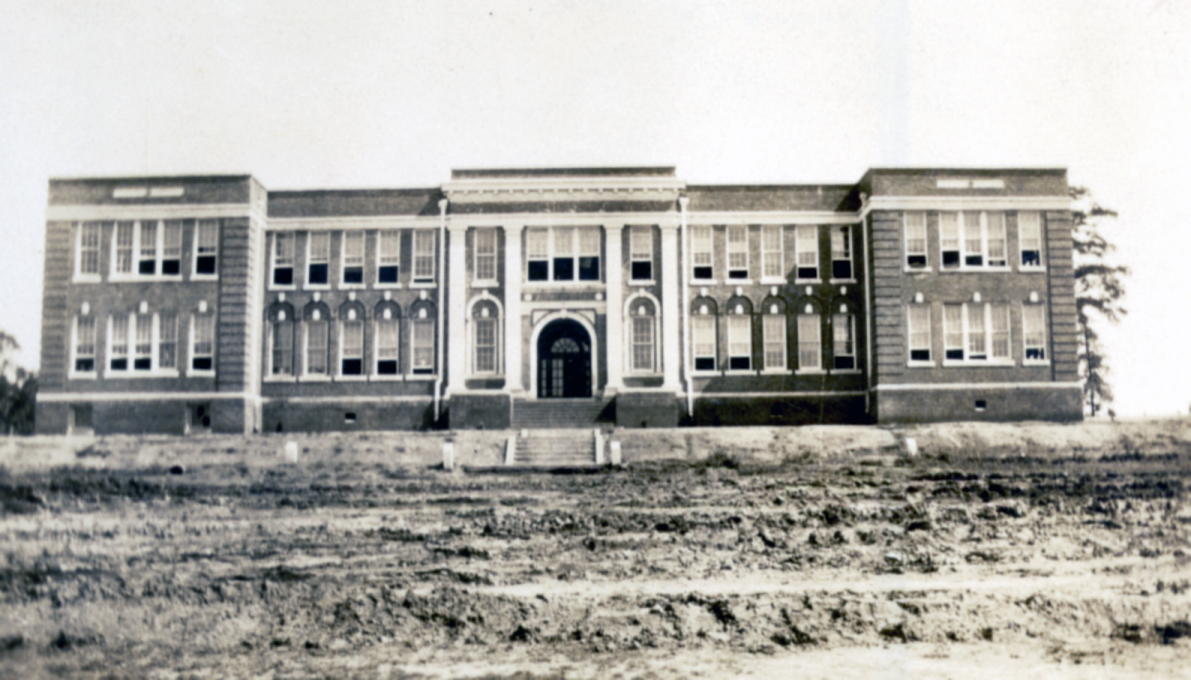
 It’s back to school time…and time for a quick pop quiz! Question 1) What was the first high school in Bossier Parish? Question 2) What was the first brick building in Bossier Parish? Answer, Question 1: Pioneer High School in Plain Dealing. The Pioneer High School cornerstone in Plain Dealing was laid in 1888, making it the first high school in Bossier Parish. The school opened in January of 1889, Answer, Question 2: Plain Dealing High School. In 1921, a new brick building was built for Plain Dealing High School to accommodate its growing student body. It was the first brick building to be built in Bossier Parish, and was built by Edward F Neild, architect.


But I’ll go easy in grading this ‘quiz’. If you answered Plain Dealing High School for both, or Pioneer High School for both, or even have the answers flip-flopped, I’ll still give you full credit. Plain Dealing got its solid though short-lived start as Pioneer High School at the very same location where it still stands. Also, if for the first question you answered Benton High School, well, I think I’ll give you some credit for that one, as well. Benton was actually the first school built in Bossier Parish using taxpayer money, in 1907. Schooling for children was not required until the 20th century, so schools that were completely tuition-free for the student and their family were a rarity. Even when they did exist, they often required citizens or community organizations to donate or raise money for the buildings.


The Pioneer High School cornerstone mentioned above gives two names: J.E. Johnston (often known as “Professor” Johnston) and S.J. Zeigler, vice president of the Cotton Belt branch railroad, which had just been completed from Lewisville, Arkansas to Shreveport. The railroad’s arrival created a business and residential building boom in Plain Dealing. Ziegler donated the land and Joseph E. Johnston was the first teacher and principal.


The first session at Pioneer High School began January 1, 1889, with primary, intermediate, and high school departments. Monthly tuition was, $2.00, $3.00 or $4.00, respectively, for the three departments. In 1890, the town of Plain Dealing was chartered, and in 1898, the mayor of the town of Plain Dealing authorized the town to buy the building, land and fixtures of Pioneer High School. Not long after, Mayor J.A. Mitchell authorized the town to donate it to the Bossier Parish School Board and Pioneer High School became Plain Dealing High School. (Like Pioneer and other high schools well into the 20th century, PDHS served primary through high school grades.)


In 1910, Plain Dealing High School was remodeled and an auditorium and 8 classrooms were added to the building. Following the brick building that upgraded the wood frame school in 1921, an additional brick building was erected in 1928 for high school grades (8-11) and another one was built in 1938 for upper elementary students. In 1963, the high school building burned and the “new” one (that still stands) opened August 31st, 1964.


If you would like to see the cornerstone from Pioneer High School, it is on display here at the Bossier Parish Libraries History Center. If you would like a presentation on the history of education and schools in Bossier Parish, featuring photos from the History Center collection of the one or two room school houses scattered throughout the parish, or a Bossier history “trivia” activity for your group or classroom, these and many other presentations can be requested by contacting the History Center. The History Center is located at 2206 Beckett St, Bossier City, LA. We are open M-Th 9-8, Fri 9-6, and Sat 9-5. Our phone number is (318) 746-7717 and our email is history-center@bossierlibrary.org


For other fun facts, photos, and videos, be sure to follow us @BPLHistoryCenter on FB, @bplhistorycenter on TikTok.

Images: 

  • Plain Dealing High School’s 3rd grade in 1916 in front of their wood school building that was originally the Pioneer High School.
  • Plain Dealing High School 1928
  • Cornerstone of Pioneer High School
Article by: Pam Carlisle


Wednesday, March 22, 2023

Lydia Fay Walker: From Babies to Seniors, She Served them All

Here’s another extraordinary Bossier Parish woman to celebrate in March, which is Women’s History Month: Mrs. Lydia Fay Walker. Mrs. Walker became Bossier Parish’s last Jeanes Teacher, or Jeanes Supervisor, prior to school desegregation. A Jeanes Supervisor was a multi-faceted position named for the Quaker woman, Anna T. Jeanes, who funded a program to improve the training levels of teachers in Southern U.S. schools for African-American children. The Jeanes Teachers also supervised home demonstration work for African-American women in Bossier Parish, one of the few parishes that added responsibilities such as teaching food preservation, home management skills, public health, and doing home visits and homemakers clubs. They also organized community members to raise money to build more or better schools.  In many ways, Jeanes Supervisors were like a cross between teachers and Peace Corps Volunteers. 


In addition to her Jeanes teacher job, Lydia Fay Walker worked relentlessly throughout her life for the Parish’s citizens. She worked during segregation, especially for African-American students, and after segregation, she worked to improve conditions for every race and age range, from baby to senior citizen. 


Mrs. Walker was a native of Plain Dealing and a resident of Bossier City for 55 years. Her education career spanned that of a classroom teacher, principal and supervisor of elementary and secondary education and also as a parish-wide supervisor of adult education and a supervisor of student teachers from Bishop College in Dallas, her alma mater. She received a master’s from Columbia University and a business education degree from Spaulding Business College in Shreveport. She was married to L.G. Walker Jr., a school bus driver and farming truck driver. It seems they had no children of their own though they did have Lydia Fay’s sister and a young niece living with them on Hamilton Street in Bossier City.  


Through much of the 1960’s, essentially all aspects of life in Bossier Parish were segregated, including philanthropy. Lydia Fay Walker worked with fellow Jeanes supervisor Inez Cenales (at times they split the parish schools among them) and Jack Strong, president of the Bossier Parish Negro Teachers Association, as co-chairs of the 1948 March of Dimes (Polio Fund) for the parish’s “negro schools” in 1948, and was the point person for the Shreveport Times’ “Negro Joy Fund” in Bossier, calling for clothing and furniture and especially monetary donations for food. She was also co-chair of the American Red Cross “negro division” drive.  


However, Mrs. Walker’s fundraising would occasionally cross color lines even before desegregation. In the November 13, 1947, issue of the “Planters Press” of Bossier City, principal Jack L. Strong of Bossier City Colored High School issued an appreciation: “We, the Bossier City Colored Football Team along with our coaching staff, take this method to thank Lydia Fay Walker, supervisor of colored schools in Bossier Parish, for her soliciting from our white friends, funds to help our football team purchase their jerseys and sweaters, which they now have in their possession.” Mrs. Walker also served on the board of the Caddo-Bossier chapter for the Louisiana Association for Mental Health in the 1960’s.  


During her “retirement” in the 1970s and 1980s, Mrs. Walker worked and organized for social causes in a newly-integrating community. She directed the Bossier City Day Care Center, which she had helped found in the 1950’s when she saw a desperate need for it. Without it, she told a Shreveport paper, many children would be left with brothers and sisters who had to drop out of school to care for them, or they might be left alone. The center served as a second home for thousands of local children.  Mrs. Walker stated, “in training and caring for the children, we try to develop the whole child, so when they leave, they will be able to adjust well in public or private schools.” Transportation, breakfast, a hot lunch and snack were served, and playtime and naptime observed.  


Mrs. Walker is also credited with organizing the Bossier Parish Head Start program for preschoolers, was active in the United Way, the Voters League, the Cancer Drive and March of Dimes. She was a member of the Bossier Parish School Board’s advisory committee for school districts 3 and 13. She ran for school board membership in 1978 and lost by only 9 votes in a runoff election against former Bossier city mayor and real estate investor Jake Cameron. She told the Shreveport Times that her priorities were “providing quality education for all people, reducing dropouts and expanding equipment and curricula.” She ran again, unsuccessfully, in 1985.  


For the other end of the lifespan, in 1987 Lydia Fay Walker served as the member-at-large from Bossier City on the Bossier Council on Aging. She succumbed to cancer on October 9, 1989. Her funeral was held in Shreveport at Good Samaritan funeral home, officiated by Bro. Leroy Hudson, pastor of Bennet Street Church of Christ in old downtown Bossier City.  


If you have stories or photographs of some of the area’s civic-minded women, we’d love to see them, and perhaps make copies for our collection, with your permission. If you would like to have our “Women Who Made a Difference in Bossier Parish” program, which includes Lydia Fay Walker (in Part 2) or any of our other programs presented to your group, please contact us, as well. We are located at 2206 Beckett St, Bossier City, LA and are open M-Th 9-8, Fri 9-6, and Sat 9-5. Our phone number is (318) 746-7717 and our email is history-center@bossierlibrary.org 


For other fun facts, photos, and videos, be sure to follow us @BPLHistoryCenter on FB, @bplhistorycenter on TikTok


Image: 

Elect Lydia Fay Walker for Bossier Parish School Board, 1978, Bossier Parish Libraries History Collection

Article by: Pam Carlisle

Wednesday, November 23, 2022

Lunchtime at Bossier Elementary c. 1930

 In 2023 Bossier Elementary School will be celebrating the 100th year of its original brick school building. It was the first brick (not wood) school building in Bossier City, built on ten lots on Traffic Street. It served as both high school and elementary school. In 1927 the student population was growing and a second two- story brick building was built on the campus for the elementary students. High school students stayed in the old building until 1941 when the Bossier High School building on Bearkat Drive near Fort Smith Park and Coleman Street opened. However, there was another outbuilding associated with the school that is largely forgotten but served an important purpose. A tiny building in the school’s neighborhood served as the school cafeteria, and it was nothing like the institution of a school cafeteria as we know of today. The school cafeteria was a “business” that was run first by one widowed mother, Mrs. Baby Yarborough, and then another, widowed mother, Mrs. Cora Daigle. This work even launched Mrs. Yarborough into a teaching career.

According to an oral history interview with Mrs. Yarborough’s son, Col. Neill Yarborough, Baby Yarborough ran the cafeteria for the whole four years he was in high school, and a couple of years before that. According to Col. Yarborough, the school board furnished the building, on Traffic Street according to Mr. Yarborough, and that was all. Mrs. Yarborough paid all the utilities, bought the food and sold it, and hired the school kids to help her work. When he was in school, every day at recess and lunchtime he went to the cafeteria building and helped her. After Neill and his sister and youngest brother got out of school, she’d hire other kids and had an adult helper, too.

Neill recalled that the kids would be roughhousing in the cafeteria, just one big room including the kitchen, and she could just glance at them and with a couple of words, quiet them down. The other teachers would say, “I wish I could do that. I wish I had that knack“ and told Mrs. Yarborough she should be a teacher. Mrs. Yarborough took their advice. She became a teacher after going to school in the summertime, taking some classes at Centenary College in Shreveport and ultimately attending East Texas Baptist University.

Mrs. Gloria Daigle Roberts’ mother Mrs. Cora Daigle, ran a cafeteria after Mrs. Yarborough. Mrs. Daigle was a widowed mother living in her parents’ home at 500 Wyche Avenue in Bossier City who needed a job. In interviews, Mrs. Roberts recalled the day that Mr. Kerr, the Superintendent of Schools, came to tell her mother that she had gotten the job as a school cafeteria "lady." “She jumped up and down…She was crying. We were all so excited because Mother got the job as cafeteria ‘lady.’" “Mr. Kerr gave her a start in the business. Back then women didn't have their own business and this was considered her own.” She ran the cafeteria from a tiny shotgun house on Peach Street, and first week's profit was $19.00.

Gloria Daigle Roberts worked for her mother from the time she was in the first grade by helping her serve lunch to the teachers. She remembered, “it was wholesome, homestyle food that Mother cooked and served that to the teachers on a lawn table with the table cloth… and flowers on it and silverware…. And I was excused ... from class so that I could take the menus around for the all the teachers to decide what they wanted to eat. And so … their plate would be ready.” According to Mrs. Roberts, that service was no longer offered once her mother left the cafeteria. Students still were served hamburgers, and “chipped barbecue beef, [which] was hamburger meat with barbecue sauce in it on a bun, and it was 5 or 10 cents for each one of those. “

Mrs. Roberts’ other memories included, “Kids didn’t go through orderly… There were hands through the air and they wanted to give me their dime and they were getting their change and this, that and the other. And wanting that, ‘Give me a hamburger, give me a hamburger!’ It was so chaotic in this little house.” (The students ate inside too, at long tables.) She also remembers freezing her arms when helping her mother serve multiple cokes from the icebox, where you “put the cokes in and you chip up the ice and put it on there and you put your hand down in that cold water.” But, Mrs. Roberts recalled, “those were wonderful, wonderful days.”

The Bossier Parish Libraries History Center can provide an abundance of interesting facts and photographs about Bossier Parish schools. (We don’t seem to have any photos of these special cafeterias, however.) We would also love to hear your school stories and see your photos. With your permission we could scan them to add to our collection. Visit us soon at 2206 Beckett Street, Bossier City. For our regular hours, we are now open: M-Th 9-8, Fri 9-6, and Sat 9-5. However, for this holiday week, we will be closed on Thanksgiving Day plus Friday and Saturday.

For more information, and for other intriguing facts, photos, and videos of Bossier Parish history, be sure to follow us @BPLHistoryCenter on FB, @bplhistorycenter on TikTok

Images: 

1.) Bossier High School faculty, 1937. Many of these teachers likely enjoyed Mrs. Cora Daigle’s home-cooked meals during their lunch break, served on table cloths with silverware and fresh flowers with help from Mrs. Daigle’s daughter, Gloria.  

2.) Gloria Daigle Roberts (right) with Pam Glorioso at the Bossier High Reunion for classes of 1940-1944 that was held in 1999.

Article by: Pam Carlisle