Showing posts with label Plain Dealing. Show all posts

Wednesday, January 1, 2025

What’s in a Name: Tycoons or Plain Dealers?

Happy New Year – it’s the first day of 2025! Have you come up with your New Year’s resolutions? If you’re the trendy type, perhaps you’ve eschewed New Year’s resolutions for a business or even personal “rebranding.” Let’s take a look at a historical rebranding in Bossier, when the community of Guernshein became known as the town of Plain Dealing in 1890. The names themselves represented two very different images of life in America in the late twentieth century.  


The name Plain Dealing came from the expansive cotton plantation (5000 acres) owned by James Oglethorpe Gilmer, whose land became the subdivided site for the town. The name was meant to represent Gilmer’s honesty to potential cotton traders and represented a more agrarian society. 


In the 1880s, prior to Plain Dealing’s incorporation, but when its train depot for the Cotton Belt Railroad was already built and busy and the subdivision home lots were being sold, the community was named Guernshein or Gernshein. According to local histories, the name was for a prominent railroad investor, sometimes noted as an investor in the Jay Gould railroad syndicate (of which the Cotton Belt eventually became a part). 
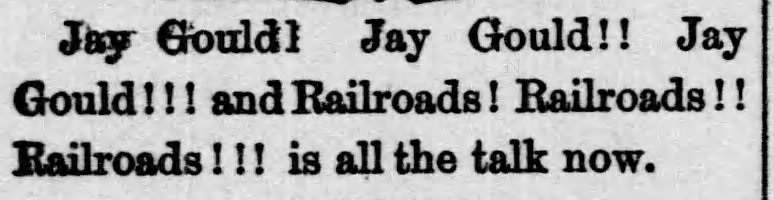


Jay Gould controlled railroads from coast to coast by sometimes underhanded (to put it mildly) tactics. He was known as one of the original Robber Barons, or less-scrupulous titans of industry of the Gilded Age. The Gilded Age in U.S. history, from the late 1870s to the early 1900s, was a time of great industrial growth and accumulation of massive and ostentatious new wealth among industrial owners. It was also a time of growing economic inequality and of political corruption. Railroads that Gould owned included the Missouri Pacific railroad, the St. Louis and Iron Mountain, the International and Great Northern, the Richmond Terminal, the Texas Pacific, the Union Pacific, the Wabash, the St. Louis Southwestern (the official name of the Cotton Belt), and the Manhattan Elevated Railroad. He also owned the Pacific Mail Steamship Company, and the Western Union Telegraph Company.


Gernshein himself was not identified in Plain Dealing histories beyond his last name and the simple description of “railroad investor”, but research into railroad investors of the time points to Michael Gernshein (spellings varied) of Manhattan, New York City. He was a German immigrant who worked as a banker, stockbroker, and railroad investor. He was an early general partner (from 1875 – 1881) of the most influential investment banking house of the Gilded Age in New York - Kuhn, Loeb and Company. It was a major competitor of the J.P. Morgan Company in financing America's swiftly growing railroad industry. The bank has since merged with Lehman brothers, and later with American Express.


Despite changing its name from Gernshein, which harkened back to its railroad, and not its agrarian roots, Plain Dealing’s history with the railroad was inextricably linked. The young town prospered due to its connection to the Cotton Belt. Ornate Victorian homes sprung up in the town in an area previously known for simple, practical dog-trot style log cabins (with two living areas separated by a wide-open hallway) and it became the site of the parish’s first brick building, Plain Dealing High School. The first high school building was actually funded by the vice-president of the Cotton Belt, S.J. Zeigler, whose daughter was among its first pupils. 


From the staff of the Bossier Parish Libraries History Center, we wish you all a happy New Year. If you have any information, stories, or photos of old Plain Dealing or other communities in Bossier Parish, we would love to add them (or scanned copies) to our History Center’s research collection. We are located at 7204 Hutchison Drive (formerly called 850 City Hall Drive) just across Beckett Street from the old Central Library and History Center in Bossier City, LA. All Bossier Parish Libraries locations will be closed Wednesday, 1/1/2025. Normal operating hours for Bossier Central Library and History Center are M-Th 9-8, Fri 9-6, and Sat 9-5. Our phone number is (318) 746-7717 and our email is history-center@bossierlibrary.org


For other local history facts, photos, and videos, be sure to follow us @BPLHistoryCenter on FB, @bplhistorycenter on TikTok, and check out our blog http://bpl-hc.blogspot.com/.


Images: 

  • Jay Gould clipping from Bossier Banner-Progress   January 27, 1887
  • Bond of the St. Louis Southwestern Railway Company 1891 Image By Edhac-Edham - Public Domain, https://commons.wikimedia.org/w/index.php?curid=53837122
  • Map of the St. Louis Southwestern Railway (Cotton Belt) system as of 1918, with trackage rights in purple.  modified 2008 from Bureau of Transportation Statistics North American Transportation Atlas Data). Public Domain, https://commons.wikimedia.org/w/index.php?curid=5283506
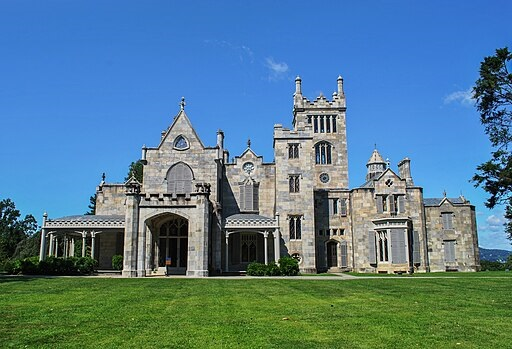
  • Lyndhurst, Jason (Jay) Gould mansion, Tarrytown, NY, Photo by Elisa Rolle, Shared under the Creative Commons license https://creativecommons.org/
Article by: Pam Carlisle

Wednesday, November 29, 2023

“WAAC, Wisconsin Girl, Teacher:” Putting a Near-Century of Life into Words

 As a member of the WAAC (Women’s Army Auxiliary Corps, later known simply as WAC), which formed early in the United States’ involvement in WWII, who had been a longtime resident of the north Bossier community of Plain Dealing, the 2017 obituary of Dorothy “Chris” Christoffersen Walker caught my eye. I had actually been scrolling through digitized historic newspapers looking for something else entirely, but I always want to know more about local WACs. The obituary comprehensively covered the scope of her 99 years, and it also had me wanting to know more.


Dorothy started her life as a small-town Wisconsin girl, the child of Norwegian immigrants. She was an honor roll student in Menasha High School, and received her college degree from Iowa State in 1939, where she won an award for her outstanding leadership in YWCA activities while in college. She stayed in Iowa and taught home economics and then went back to Wisconsin to teach the subject in the School of Vocational and Adult Education in Marshfield.


During her time in Marshfield, the local newspaper issues were peppered with household tips from Miss Christoffersen, under the byline, “Have you Heard? By D. Christofferson” or “Dorothy Christoffersen says.” Some pretty handy advice would follow: An empty baking powder can is an excellent device for chopping cooked potatoes into small pieces for frying or creaming. Or, A little salt sprinkled in the pan before putting in fat helps to prevent grease from sputtering when meat is fried. She also was in demand as a guest speaker or instructor in the community. This was wartime, and home economics, promoting how to run a household well and efficiently in a time of shortage and sacrifice, was a serious subject.


Dorothy, however, wanted to go afield and make an impact beyond the literal home front. On December 18th, 1942, in Milwaukee, Dorothy Christoffersen was sworn into the WAAC to serve as an officer. The Marshfield News-Herald shows that the Board of Vocational and Adult Education accepted her resignation on Dec 30th. They could not approve her initial request for a leave of absence because she’d not been in their employ for the required year. Amazingly, considering she appeared in the Marshfield newspaper over fifty times since the beginning of her tenure at the vocational school, she’d only been in the position for four months.


As it turned out, she would not be returning to Wisconsin. While serving as a WAAC, Dorothy, who went by Chris, met fellow officer Elmer Scovell Walker, a B17 bomber pilot. She married Capt. Walker, who went by Scovell, in Greensboro, North Carolina in August, 1944. Following the war, they settled in Scovell’s hometown of Plain Dealing, La. If the young couple had any thoughts of instead returning to Chris’ home state of Wisconsin, perhaps their wedding gift of the Square Deal Plantation in Plain Dealing, homesite of Scovell’s ancestor and “town father,” George O. Gilmer, persuaded the couple to head South.


A forester with a degree from LSU, Scovell Walker kept the plantation a certified tree farm, as well as worked for 30 years for the S.H. Bolinger lumber company. Mrs. Walker raised three children and taught school in Plain Dealing at Plain Dealing High School (in the junior high section) and Plain Dealing Academy. According to her obituary, “She was appreciated by countless former students and loved by family and friends.”


Though they cannot tell the whole story of a life, obituaries are an important source of information for our researchers of genealogy and local history, and the History Center collects all Bossier Parish-related obituaries and/or funeral notices that we find or receive. To donate to or research this collection, please visit or contact us. The History Center is located at 2206 Beckett St, Bossier City, LA. We are open M-Th 9-8, Fri 9-6, and Sat 9-5. Our phone number is (318) 746-7717 and our email is history-center@bossierlibrary.org


For other fun facts, photos, and videos, be sure to follow us @BPLHistoryCenter on FB, @bplhistorycenter on TikTok, and check out our blog http://bpl-hc.blogspot.com/. You may also check out the History and Genealogy page under Resources at www.bossierlibrary.org

Wednesday, July 26, 2023

The Walker’s Chapel Reunion of the Matlock/Wise Family

 July is National Family Reunion Month, and next Monday, July 31st at 2PM we will be having a Genealogy and Family Reunions presentation at the History Center, where you can get ideas for ways to collect and use family history at your reunion. Recently I re-discovered some oral history interviews where a Bossier Parish family reunion provided such an opportunity to gather family history, as well as shed light on everyday rural life in the first half of the 20th century. On October 11, 2003, Bossier Parish Libraries History Center staff attended the Matlock/Wise family reunion in Walker’s Chapel and conducted oral history interviews with Rex Matlock and his younger sister Jo Matlock Baker. 


Walker’s Chapel is located about 12 miles east of the north Bossier Parish town of Plain Dealing. Rex Matlock described his family’s “homeplace,” grandpa Matlock’s 80-acre farmland, where his family lived during his young childhood in a house that was one big room, “the fireplace room,” with a very small bedroom in back. Most of the family of eight slept in the big fireplace room. They grew cotton for an income, his father tended a garden for the family’s subsistence, and his mother cooked on a wood stove, until the family moved to Bellevue in south Bossier Parish for his father to make a better living in the oilfield, where an older brother was already established.  


The family tried to buy very little at the one store in Walker’s Chapel (Winham’s). His father would pay on their account once a year when he sold his cotton. He grew a lot of things in his garden and he always had plenty of potatoes and tomatoes. Rex’s mother would can the tomatoes, while the potatoes, kept dry, would last through the next seasons. 


Sugar was one of the things they did buy at the store. His father grew some sugar cane, but he made syrup out of it. The extended family in Walker’s Chapel used a syrup mill there. Mr. Matlock recalled, “I got to stay home from school one day to poke cane in the mill.  We had this mule-driven mill.  It was a long pole reached out from the mill.” The mill had two flat cylinders that ran close together and “what they do is stick that cane up in there and it would run through and squeeze out the juice and there was a bucket to catch the juice … They’d take that and put it in the … great big, old rectangular-shaped iron pan” that was two or three feet deep. Then you would “Fire it up and constantly keep it stirring.”


Rex’s youngest sister Jo Matlock Baker was too young to remember living in Walker’s Chapel, though she remembers visits to see their grandmother and other family members. Her memories really start at the Bellevue oilfield where they moved when she was three. In Bellevue, the family lived in a three-room shotgun house with one small room later added on to the side. Their house had more rooms but still, physical comforts were rudimentary compared to her present day, even after leaving the farm.


Mrs. Baker remembered wearing flour sack dresses because, “All the flour and feed and stuff came in material that you could reuse.” Prior to getting electricity, she remembers the ice man that delivered ice for the ice box. You’d put a card in the window telling him how much ice you wanted left, and she remembered using kerosene lamps. Also, she stated, “We didn’t have an indoor bathroom until I was in high school,” then laughingly added, “I shouldn’t have said that on that tape.”


When asked if they had family celebrations or reunions like the lively, food-laden event going on around them during the interview, Mr. Matlock answered, “Oh yes, at grandma’s house, yes. The Fourth of July was the big one. Daddy would barbecue a pig and they would have a… big old wooden keg and make it full of lemonade.  And that was some of the best lemonade.” He pointed out that they always had homemade ice cream, too.


Come to the History Center’s presentation on MONDAY, JULY 31, 2023 AT 2 PM, “Genealogy and Family Reunions” and gain some practical tips and handouts for reunion planning and get ideas for fun ways to promote family history at your reunion. Presenters are History Center staff Pam Carlisle, Outreach Historian, and Kevin Flowers, Research Assistant, formerly of the local tourism bureau where he helped groups plan their reunion events.  The History Center is located at 2206 Beckett St, Bossier City, LA. We are open M-Th 9-8, Fri 9-6, and Sat 9-5. Our phone number is (318) 746-7717 and our email is history-center@bossierlibrary.org


For other fun facts, photos, and videos, be sure to follow us @BPLHistoryCenter on FB, @bplhistorycenter on TikTok


Images: 
  • Walker’s Chapel Methodist Church
  • John R. Matlock of Walker’s Chapel, north Bossier Parish

Article by: Pam Carlisle

Wednesday, July 6, 2022

Lake Plain Dealing - Go “North” to Cool Down!

 With record-breaking heat lately, let’s go north to cool down - well, to north Bossier Parish that is, to Lake Plain Dealing! Lake Plain Dealing started its life as a bond issue to protect the area from flooding but it has become a part of the community for its less-utilitarian but just as life-sustaining role as a place for recreation, fishing and enjoying the natural setting of Plain Dealing.


In 1956 the association called the Upper West Fork of Cypress Bayou Watershed and the Board of Supervisors of the Dorcheat Soil & Water Conservation District established three lakes in the Plain Dealing area to thwart persistent flooding. The municipality passed a $52,000 bond issue and the Bossier Parish Police Jury built and blacktopped roads to the lakes. The rights-of-way were mostly donated by citizens. The sawmill S.H. Bolinger and Company donated work crews and equipment for clearing out and leveling up the shoreline and picnic grounds. Prisoners cleaned scrub and debris from the recreation area. Boy Scouts stacked brush and planted grass. In 1961, the endeavor was named national Watershed Project of the Year.


 Lake Plain Dealing c. 1960
One of these three lakes was Lake Dogwood, used for flood control and fish and wildlife. There was an unnamed lake for flood control only. The largest of the lakes, Lake Plain Dealing, remains popular for recreation and has been enjoyed for picnicking, boating, swimming, water skiing and fishing. One former Plain Dealing resident remembered in an online post about the lake how she “sure did have fun there sixty years ago.” She remembers swimming area, a raft and some beach area, a concession stand, some woods, and a spinning ride that would throw you into the lake!


The Home Demonstration Club, other women’s clubs, and the American Legion helped financially in projects around the lakes. In addition to the myriad informal swimming and family picnic outings, local newspapers of the early days of Lake Plain Dealing announced a wide variety of organized activities there, such as skeet shooting, turkey shoots, fishing tournaments, sunrise church services, water ski shows, scout campouts, and trail rides. Some of these events at the Lake Plain Dealing park were part of Dogwood Drive festivities held annually in Plain Dealing. What is omitted from these newspaper articles is that, like schools, recreation areas were segregated. Regrettably, in its early days, Lake Plain Dealing and its amenities were intended for and enjoyed by white people only.


 Lake Plain Dealing c. 1960
Today, Plain Dealing women are again the fundraising and volunteer movers and shakers readying the park and facilities for all families, working together as “Plain Dealing Proud” along with parish and civic funding and labor. Rope and buoys were again placed in the swimming area and recently a dock was put in and a swing set improved. The Dogwood Drive no longer exists but now Lake Plain Dealing is part of Louisiana’s National Scenic Boom or Bust Byway in the northwest part of the state. Visitors to Lake Plain Dealing now have new picnic tables sitting on concrete pads that have been added thanks to the Byways designation. Apparently the wooden spinning structure that throws you into the lake has not made a comeback –changes in safety awareness over the intervening decades surely have a lot to do with that!


So if you’re looking for a place to cool off this hot summer, take a drive up “north,” to Plain Dealing and (safely) jump in the lake! Or, come see us in the nice and cool History Center. We’d love to hear your stories or see your pictures of Lake Plain Dealing or other recreation areas in the parish. Contact us at 318-746-7717 or email history-center@bossierlibrary.org or visit us at 2206 Beckett St., Bossier City. We are now open: M-Th 9-8, Fri 9-6, and Sat 9-5. For other intriguing facts, photos, and videos, be sure to follow us @BPLHistoryCenter on FB, @bplhistorycenter on TikTok

Article by: Pam Carlisle


Wednesday, June 15, 2022

When the Big Top Was Big Time: Ernest Haag’s show traveled the Red River, and a Continent

 The photo looking north on Lynch Street near the corner of Mary Lee Street in Plain Dealing shows an elephant ambling down the street, looking straight at camera, just as its rider does. Behind the giant pachyderm is the compact white-painted wooden Plain Dealing Methodist church. The peaceful scene in the photo makes it seem typical to see an elephant strolling down one of the main dirt roads of the Bossier Parish town near the Arkansas border. Another photo shows four horses pulling a highly decorated wagon/calliope down Mary Lee Street, with the picturesque Methodist church providing the simple background for the marvel of the calliope, a wagon-sized instrument that works by sending steam or compressed air through large whistles, like train whistles. Even small calliopes can project their sound for miles. On top of the calliope wagon sat live musicians, contributing to the sound and spectacle.

Few in town or the surrounding area would want to miss the circus show that this parade announced. It would have been the entertainment event of the year in this or any rural American community in the early 20th century. The distinctive gilded designs on the calliope wagon identifies this particular circus as the Mighty Haag Show, one of many American traveling shows that brought entertainment and sights and sounds of the world to small towns like Plain Dealing.

The Mighty Haag Show is northwest Louisiana’s circus that traveled the North American continent. Mighty Haag shows are listed in “Parkinson’s Directory of American Circuses from 1891-1938.” It was started by Ernest Haag (1866 - 1935) in 1891 in Louisiana as a wagon show, and became one of the best-known southern circuses and one of the largest traveling circuses in the United States.

Like many of the great circus entrepreneurs of the time (including James Bailey of the Ringling brothers, Barnum and Bailey famous circus), Ernest Haag had a rags to riches story that circus promoters liked to showcase. He, as some stories say, ran away from home at age twelve, and had a sideshow in Shreveport in a tent he pitched on the fairgrounds. He moved up to a floating barge show on the Red River, and eventually a two-wheel cart drawn by three mules, then wagons. In 1909, the show began using the name, Mighty Haag Shows and upgraded to train travel. Hard times sent Haag back to using wagons in 1914. Returning to the use of wagons actually proved to be a good business decision in the fiercely competitive world of traveling shows in the early 20th century. The Oct 28, 1922 issue of the national entertainment periodical “Billboard,” noted,

“The Haag Shows are going to play Pennsylvania, Ohio, Michigan and Wisconsin next season for the first time on wagons. It will be a two-ring show, carrying twenty cages and five elephants in the menagerie, two bands and a calliope. It will be one of the largest overland shows ever organized, and will put in the usual season of forty to fifty weeks. The days of the wagon shows are coming back…The shows have all grown so large that it is impossible for them to play the small towns or even towns of 5,000, and the showman with a twenty-wagon outfit can pick his territory and have practically no opposition. Ernest Haag has proven that a wagon show, even in the South in the summer, can make money.”

By 1929 Ernest Haag had replaced all wagons with trucks. Haag had ultimately specialized his touring show as a southern show, and projected the image that it was produced by “a southern gentleman.” In addition to his circus, he became a large property owner and for 18 years was the director of Shreveport’s Commercial National bank when it was the largest bank in Shreveport. Pine Wold Manor,

still standing on Fairfield Avenue in Shreveport is the stately, large brick former home of Ernest Haag and winter home of his circus. The grand home was begun in 1903 by lumberman T.M. Jones, remodeled to what it looks like today in 1919 by oilman J.P. Evans. It was used as the Mighty Haag Circus wintering grounds. An elephant, Trilby, is said to be buried on site.

Haag circus animals lived at Pine Wold in winter seasons or when not traveling, as well as at the fairgrounds in Shreveport, and private farmland in the area, including the Rushings’ farm in Princeton, Bossier Parish, where circus animals were fenced in like their cows, according to the childhood memories of a Princeton resident. Children growing up in Shreveport, especially in the vicinity of Pine Wold, remember when local children were urgently called upon to help find and catch an ‘escaped’ members of the menagerie, which was greeted with so much enthusiasm from the youngsters that there’s speculation the gates were opened on purpose as a publicity stunt. A clearly contrived ad in the “Shreveport Times” from March 27, 1913, exclaimed, “ESCAPED from the HAAG CIRCUS, PART OF THE MENAGERIE, A LARGE, STRIPED BENGAL TIGER.” In smaller letters it stated, “He has been captured and is now in captivity and serenely domiciled in the central show window of Dreyfuss’ (dry goods store).

In early 1935, at the age of 70, Ernest Haag passed away. His son and nephew took over and called the show Haag Brothers Circus. They kept it going only a few years, through 1938. One of its very last shows was in Plain Dealing. Visit the History Center, at 2206 Beckett St. in Bossier City or online at www.bossierlibrary.org to see the photos of the elephants, calliope and other parade attractions ambling down the streets of Plain Dealing in the Mighty Haag circus parade, or to read contemporary newspaper articles of 19th and 20th century circuses. Also visit the History Center on Thursday, June 23, 2022, at 6 p.m. to hear Dr. Gary Joiner, Professor of History at LSU-Shreveport present “The Secret Confederate Naval Base in Shreveport.” The Pages Past book club (open to all) will have a special Shark Week meeting on Monday, July 11, 2022 at 6 pm to discuss Michael Capuzzo’s book, “Close to Shore: The Terrifying Shark Attacks of 1916.” Call (318) 344-8040 for more information.

Article by: Pam Carlisle

Saturday, January 1, 2022

This Month In Bossier Parish History

 January: Through the years!


Jan. 8, 1931: The announcement was made for enlistment to the Navy.  All men between the ages of 17 through 25 were encouraged to enlist. 

Bossier Banner
08 Jan 1931

Lieutenant Raymond B. Statham, 
Official Naval portrait, New Orleans, 1967.

USS Amsterdam, Raymond Statham was aboard
 this vessel during his service.
2002.021.002   Statham Collection

August, 1943: Billy Davidson and others leaving Shreveport
for Navy Boot Camp, San Diego, California by train.  
Left to right W. E. "Billy" Davidson, Betty L. Gibbs, Byran O'Donnell, 
Helen Hemperley, and "Billy" Heins. 

Jan. 15th: National Hat Day!

Since at least 1983, schools, libraries, and museums have observed National Hat Day.  Hats come in many shapes and sizes.  A hat is considered head covering which is worn for various reasons, including protection against weather conditions, ceremonial reasons such as a school  graduation, religious reasons, safety, or as a fashion accessory.

Please enjoy all the photos of citizens from our parish looking quite dapper with their hats, caps and bonnets.

C.1890’s: Young girl, identified as Wimmie Brownlee.  
Is seated on a fence, holding a large hat with a ribbon.

C.1930’s: Martha Gilmer Graves Swann "she always wore a hat with veil
2003.007.016c   Gramham Collection

Tom Parks  2019.045.349  Jones Collection

1910: Mercer B. (?) and Mercer Poole (son of Robert T. 
and Louella May Mercer Poole
2001.031.004   Antrobus Collection

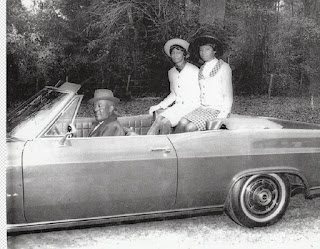
Gentleman driving two young ladies in a convertible automobile.
2016.038.015  Moore Collection

1914: Koran, La.  In front of the Bossier Point Baptist Church.  
The gate to the church can be seen in the background.  
L to R.  Mary Lee Thompson,  A.N. Tooke,  Trebie Jackson,  A.J. Thompson
0000.005.003

 "Jordan Smith- Ida's Grandfather, Luther Leroy Smith- Ida's Father,
 Glover Smith- Ida's Father's Brother"
2019.045.116   Jones Collection

 1900’s: four children play a game of marbles in Plain Dealing. Louisiana.
 One of the boys is believed to be the brother of Beulah Allen Findley.
0000.006.013

1900’s: Mabel Scanland and Lucy Antoinette Wyche Burt, both wearing hats. 
0000.004.017 Scanland Collection

C.1910’s: Ed Loftin with Abney Scanland
0000.004.019  Scanland Collection


Jan.26, 1922: Weekly news from 100 years ago

       · The Banks twins step up to help with house hold chores while their mother was ill.
· Rumors on the streets are that businesses are contemplating on moving.
· Mr. and Mrs. George Bounds entertained Wednesday night with a Rook Party.
· Alton Keoun, student at Centenary College, was guest of his parents.
· W.W. (William Walter) and daughter Vey, are improving from an attack of influenza.
· Garland DeMoss was at home sick.
· Namie New (Oglesby) spent the past week-end at her home in Plain Dealing.
· Lazarus Willer’s car to a ditch Sunday afternoon


1900’s:  Mary Ella and Mary Etta Banks 
on either side of an unidentified girl.
2018.010.099   Corley Collection


1900’s: Flooding along street, WC Banks Groceries & Feed store building seen.
 All buildings are wooden.
1997.031.039


George Albert Bounds, Sirena Mae Wilcox Bounds
 and daughter Myrtis Bounds.
2012.059.047


C. 1920’s Alton L. Keoun
2021.007.018   Rountree Collection


C.1880’s: William Walter Oglesby and his wife, Janie DeMoss.
1998.044.001  Rich Collection


1929 Plain Dealing High School Football Team
Front row, L to R: Honely Sears, Eugene Rodgers, Garland DeMoss
Middle row: Burnis Flanghan, Edison Kirklin, Mike Taylor, T.P.Gould, 
Buddy Nuckolls, Lynwood Fluitt, Clifford New, Wesley Sentell
Back row: Coach Glenn Crawford, Glendon Morris, Buddy Foster, Boots Oglesby,
 Ardner Chechire, Milton Foster, “Fats” Gleason, Odell Anderson, 
Dixon Barnett, Marcus Wingate, F.G. Phillips
2000.064.025  


1920-1930’s: New Family. Back row: Madge Dudney 
New Johnson, Clifford Oglesby, Nanna Mae New Oglesby, 
Nathaniel Nixon New, Elizabeth Rebecca Dudney New, 
and Ella Lee New Powdrill.  Front row: Arthur New, 
Ruth Marie New Rivers Garrett Carson, and Clifford B. New.
1999.143.010  Crochet Collection


The Samuel and Sarah Willer Family, 1926
Seated, left to right: Rosa W. Gamm, Samuel and Sarah Willer, Goldye W. Watner
Standing, left: Ethel W. Eltis, Clara W. Groner, Lazarus Willer, Rachel W. Braunig
2002.034.016    Eltis Collection 


Wednesday, December 29, 2021

The Wheels of Change Ends an Era

Plain Dealing Depot c 1910s.
Bryce Turnley Collection: 1997.062.108
The American railroad system was built around the turn of the nineteenth century. Today, many towns in America owe their existence to being selected for a railroad depot. Whether pre-existing or established by the railroad, any place chosen as a depot experienced significant growth from the commerce that followed. Plain Dealing enjoyed such growth as a depot on the Cotton Belt Railroad.

The depot was built there in February 1888, with the track reaching Shreveport a couple of months later. Mrs. Julia Rule, one of Shreveport's most popular women and newspaper columnists, was given the honor of driving the golden spike in Bossier City. The following month telegraph offices were opened at Vanceville, Benton, Alden Bridge, Plain Dealing, and Bradley, AR.

Plain Dealing Depot c 1910s. Photograph by John H. Allen
Located in the center of town, the depot was a vital landmark used in the town's charter to specify the town limits in terms of distance from the depot. According to Manry, "Young and old would meet the northbound train from Shreveport every evening. Drummers would be ushered to waiting hacks, and friends and relatives would be helped down the steps from the train cars. All the daily news that was fit to hear was repeated at the depot when the train arrived."

Plain Dealing Depot, c 1950s.
Bryce Turnley collection: 1997.062.321
In 1971, after 83-years in operation, the announcement of its closing was reported to The Shreveport Journal by correspondent J.A. Manry. The closing of this depot was the end of an era, evidence of the wheels of change. While for many decades, the trains serviced passengers and freight. But with the advent of automobiles and airplanes led most railroad companies to stop pulling passenger cars and focus strictly on hauling freight.

With the focus on freight, the decision to close the depot in Plain Dealing was in the name of efficiency, to allow freight trains to highball through town. The last depot agent here was Ben Bethany. He was transferred to Waldo, AR. Tomorrow will be the 50th anniversary of the closing of the depot. The railroad's last Morse circuit was dismantled while railroad officials gathered to check it out. Cuspidors, clocks, coal shuttles, lanterns, hand grenades, cotton hooks, ticket cases, and trucks were inventoried and hauled away.

Plain Dealing Depot.
Source: The Shreveport Journal, Dec. 31, 1971
The big question lingering in everyone's mind was, what would happen to the old depot building? The St. Louis Southwestern Railway Company offered to give the building to the town as long as it moved it away within three months. At that time, Mayor Leon Sanders stated, "he would consult with the town's inhabitants and the town council would decide its new location and the purpose for which it will be used."

However, meeting minutes of the Town of Plain Dealing reveal that "After a lengthy discussion, a motion was made by Alderman Southerland and duly seconded by Alderman Pittman that the donation be declined and that the mayor be authodized [sic] to draft a letter to the Railway Company stating the reasons for the refusal. This motion being put to vote carried unanimously." Unfortunately, the minutes did not give insight into the reasons for the refusal.

By: Amy Robertson

Wednesday, November 24, 2021

Remembering "Happy" Cornish

“Happy” Cornish, born William Clayton Cornish, was a native of Plain Dealing. He started his athletic career at Plain Dealing High School as a star athlete playing football and track & field. While earning his M.S. in Education at Louisiana Normal College at Natchitoches (now Northwestern State University), Cornish was a headliner athlete. He was a three-letter man in football (quarterback), track & field, and baseball. Still, he also excelled in poll-vaulting and javelin throwing. He was one of eight people inducted into the Northwestern State University’s N-Club Hall of Fame in 1973.

After college, Cornish coached the Bossier City High School Bearkats for eight years, from 1933-1941, where he quickly proved his skills as a coach. His first year there, the Bearkats were undefeated in their regular season. In 1941, he received his Master’s degree at LSU, and he became principal of Elm Grove High School. After that, he spent two years at Louisiana State University as a physical education instructor. From 1945-1951 Cornish was the head of Centenary’s Physical Education Department.


The following article appeared in the Shreveport Journal, Jan. 13, 1961, detailing how Cornish revived Centenary athletics after World War II:

“Shortly after the outbreak of World War II, Centenary de-emphasized its athletics, abandoned football, basketball, and boxing. When the warfare began to diminish, Centenary College persuaded Cornish to move into its athletic director’s office in a period that found veterans marching back to the campus.

“Happy’s athletic curriculm [sic] for the students was sound with emphasis on conditioning—principally on an intramural scale.

“Flow of veterans picked up tempo in their return to the classrooms with many of the battle scarred men boasting previous football and basketball experience on outfits at other colleges. With the veterans showing the way, Cornish’s athletic program was hiked to include a campus fraternity football league. Interest soared, frequently the fraternities rented Byrd High School stadium for games that were played under the lights. Byrd and St. John’s 9now Jesuit) offered to loan equipment to the teams.

“One day Cornish was seated in his office when he was greeted by a surprise telephone call.

“It was from Camp Polk, La., an Army training center. A colonel of Camp Polk advised that he had an Army football team troubled by a lack of opponents and asked if Cornish would be interested in bringing a team of Centenary All-Stars to the military base for an exhibition.

“Cornish explained that the college did not have a piece of football equipment other than a few footballs for use in touch football games and told the officer he would investigate the possibility for developing the game.

“Next, Happy summoned a few of the leaders of the various fraternities to review the offer. The idea ignited with enthusiasm.

“Equipment was obtained (via loan from excess material in store rooms at local high schools) and a call was issued for Centenary All-Stars.

“The players gathered—some of whom had played varsity football before entering the armed forces and others who were fresh from schoolboy careers. Drills were limited and the squad romped through about two seasons.

“Cornish secured a battered schoolbus [sic] for the trip to Camp Polk, The Stars arrived at Camp Polk, suited up and returned to their bus for a quick jaunt to Deridder where a packed stadium greeted the team on its entrance to the field.

“Loaded with material from the Pacific Coast, Midwest, Southwest and Southeast Conferences and bolstered by several All-American players, Camp Polk mauled the Centenary Stars.

“Nobody cried because the game had been arranged strictly for the morale of the servicemen in the Polk area.

“Cornish’s stars were invited to dine with Polk’s athletic officials; the meal was completed and the squad was preparing to return to Shreveport.

“Cornish was making his departure from the dining hall when he was summoned by one of the Army officers, only to hear a surprising story about an excess of football equipment. Polk’s excess togs were offered to Centenary. Cornish advised that he had no actual football team.

“Athletic leaders of the fraternities were asked to join the conversation. The equipment was accepted and divided among the school’s Greek organizations.

“Two weeks later, Camp Polk officials telephoned Cornish again. This time to inquire about possibility for a second football game with the Stars—a 15,000 seater at the time.

“Tickets were printed and distributed and on the night of the game a crowd of 10,000 gathered to watch Centenary’s brief return to the gridiron.

“It was Cornish who started Centenary on the return to the hardwood. With Nickie Lester, Omar Shively, Cotton Bobbins and Dayton Waller a cage outfit was formed for games with local independent teams. A year later, Cornish had his cagers playing a collegiate schedule that was stepped up when Jack Clayton was hired to take over the hardwood program.


“Cornish’s efforts to bring back football to Centenary resulted two years later in the college’s one-year revival of the sport in a shake-up of the athletic department. New coaches were hired. Cornish departed to become athletic director and head coach of Furman University with Clayton moving to Western Kentucky.” …

Everywhere he went, the students, faculty, and fans all loved him. When Cornish died in 1977, the 1935 BHS football team members paid for a wind-chime memorial for his church, Kelley Memorial Baptist Church.

By: Amy Robertson

Wednesday, October 6, 2021

The War on Rats

Rats have proven to be prolific human colonizers, repeatedly influencing disasters within human populations. They have leveled civilizations with their epidemics, brought about wide-scale biological extinctions in fragile ecosystems, depleted food resources, and cost governments billions of dollars annually in control.

Throughout history, wherever civilizations form, there have always been nuisances that plagued them. Among these nuisances are rats and mice, which have stood the test of time, and somehow, they manage to survive, despite man's many attempts to eliminate them through countless wars waged against them throughout every nation on earth. Community leaders and public health boards have often promoted these wars. The federal government has also funded them from time to time.

One example of federal funding on the war on rats was in 1967 when the Senate approved a $40 million, two-year authorization under which local governments could wage war on rats. The provision was part of comprehensive public health legislation. With or without federal funding, when communities experience excessive rats in the area, they call on all community members to join the war and call on others for help when necessary.

In 1909, a report in "The Bossier Banner" appeared announcing that "Five thousand American cats have been shipped to Japan to aid in the war on rats. Other shipments are to follow."

In 1917, a suggestion appeared in the local paper of tasking schoolboys in Alden Bridge with killing rats on the school grounds. At that time, they calculated that one rat destroys a cent's worth of property every day.

In 1936, Mayor Mack Phillips of Plain Dealing declared war on the rats of Plain Dealing through a proclamation. The following announcement and the proclamation appeared in "The Plain Dealing Progress" on Oct. 1, 1936.

"Due to a noticeable increase of rodents in Plain Dealing over the past several months, Mayor Mack Phillips has issued a proclamation declaring war on rats and mice here and asking the people of his city to put out rat poison on the same night−the evening of Monday, October 5th.

"Everybody having rats in their house, store, barn, smoke-house or what have you, is urged to participate in this worthwhile movement. Put your poison out on this date and each night thereafter until our town is rid of these destructive pests. There are literally thousands of rats and mice in Plain Dealing at this time, and they MUST DIE. It is up to the individual to do his or her part if we are to be rid of them.

"In our war on rats and mice the mayor suggests that we all use some kind of poison that will not endanger the lives of anything but rats and mice. K.R.O. (Kills Rats Only) is a brand of rat poison that is said to be harmless to anything but rodents. It may be secured at any drug store and most mercantile stores for only 85¢ per can, and is already prepared for putting out."

The previous year, Shreveport waged war on rats. During their efforts, the city's board of health reported the following:

 "Five hundred seventy-nine pounds of red squill−a poison fatal only to rats−was mixed with 4,372 pounds of hamburger meat, 3,157 pounds of oatmeal and 1,441, pounds of corn meal and distributed at 20,816 places, of which approximately 20,000 were residences."

"The work required 25 working days, on each of which approximately 60 men were employed. Total cost of materials was $1,449.31. Total cost of labor was $3,500. Men were employed through the E.R.A."

At that time, government agencies estimated that rat campaigns of this magnitude were only eighty percent effective and required repetition due to the high reproduction rate among rodents.

By: Amy Robertson