Wednesday, February 24, 2021

The Community Canning House: A Relief Enterprise


The history of preserving food through canning dates back to the French Revolution in the late 18th century. The armies suffered from limited food availability, limiting military campaigns to the summer and autumn months. In 1795, the need for a steady supply of quality food for the French army and navy led the French government to offer a reward of 12,000 francs to anyone who could develop a reliable method of food preservation.

Nicholas Appert, a Frenchman from Champagne's region who worked as a chef for French nobility, set his sights on the prize. He committed himself to study food preservation, and his experimentations led to the successful preservation of food in hermetically sealed containers sterilized by heat. His experiments began with "champagne bottles, sealed airtight with an oddly effective mixture of cheese and lime."

He then progressed to wide-necked glass containers that he had made especially for food preservation. "In 1803 his preserved foods (which came to include vegetables, fruit, meat, dairy and fish) were sent out for sea trials with the French navy." By 1809, Appert was declared the official winner; the French government gave him the award but stipulated that he publish his method. His book, The Art of Preserving, for Several Years, all Animal and Vegetable Substances, was published the following year.

That same year the use of tin for canning was introduced by an English businessman, Peter Durand, who patented the use of tin-coated iron cans instead of bottles. Another fifty-years passed before Louis Pasteur was able to explain why Appert's method was effective. That the heat killed microorganisms in the food, and the sealing kept other microorganisms from getting in. The idea to can sodas didn't happen until 1940, which is interesting considering the first soda machine was patented in 1819.

The availability of canned food has played a critical role in man's survival during non-harvest seasons, times of war, and economic recessions. During the great depression of the early 1930s, canning houses sprang up in communities across Bossier Parish, providing residents with access to canning equipment for home-growers to preserve their backyard harvest. During the Second World War, food rationing revived community canneries as people grew victory gardens to meet their nutritional needs.

Lettie VanLandingham performing one of her
many canning demonstration in Bossier Parish
Gay England Collection: 2013.041.038
Community canning houses were both educational as well as a relief enterprise. Home Demonstration Agents, like Lettie VanLandingham, spent countless hours giving canning demonstrations throughout Bossier Parish. Under her supervision, some 23 canning centers were built and operated throughout the parish as the Bossier Parish Demonstration Agent from 1929-1960.

Many of the canning houses were located within the agricultural department of schools or in a canning house built on school grounds. This allowed girls in 4-H to learn the art of canning. These 4-H'ers formed canning clubs and helped address food shortages in the community.

Canning prevents food waste, saves money, is earth-friendly, and provides healthful nutrition. In 1987, the Canned Food Information Council designated February as National Canned Food Month to break down misconceptions that canned food is less nutritious than fresh food.

By: Amy Robertson

Wednesday, February 17, 2021

Dogwood Queen Presents Painting to First Lady

Felix “Dan” Broussard, an insurance salesman from Lafayette, La, attended the first Louisiana State Society Mardi Gras ball in Washington D.C. in 1944. He believed that the ball was “a great chance to bring the culture of Louisiana to Washington.” This statement led to him being placed in charge of the future balls, which he remained involved in for the next thirty years.

It was in 1947 that Broussard suggested that they invite Louisiana festival queens to the ball. Other members of the society agreed, and the next year six Louisiana festival queens were presented to the royal court. “Today over 25 Louisiana festivals proudly send their queens to Washington.” The reigning Plain Dealing Dogwood Festival Queen of 1953, Julia Ann Burford, attended the Louisiana Society’s Mardi Gras festival in 1954.

The following appeared in the Bossier Banner-Progress on Mar. 18, 1954, and gives an account of Burford’s Mardi Gras experience in Washington D.C.

“Congressman Overton Brooks, who extended so many courtesies to Miss Julia Ann Burford, the Plain Dealing Dogwood queen on her recent visit to the Mardi Gras festival at Washington recently, sent the following letter to the editors of the Banner-Progress:

‘“I am writing to inform you of the splendid manner in which Miss Julia Ann Burford represented the Dogwood festival at the Louisiana Mardi Gras here in Washington, and at other functions in which she participated while here. She has created an immeasurable amount of good will for the festival and for Plain Dealing.

“Soon after her arrival here Mrs. Brooks and I accompanied her to a special luncheon in the Capitol building, honoring her and other queens following a brief visit in the gallery of the House of Representatives. We enjoyed talking with her about our friends in Plain Dealing and were honored to present her to others at the luncheon as our own queen. Shortly after the luncheon Mrs. Brooks and my secretary rushed her away to one of Washington’s most popular television programs where she performed a dance, and told the listening and viewing audience about the Dogwood festival and Plain Dealing. Many people here saw this program and have commented very favorably about her performance and her discussion of the festival.

(L to R) Homer Gruenther, president Eisenhower's assistant;
Mary Jane McCaffree, Mamie Eisenhowers Secretary;
Julia Ann Burford, Plain Dealing Dogwood Festival Queen 1953
presenting Oena Martin's painting for Mrs. Eisenhower
and Congressman Overton Brooks. (1954)
“The following morning I took her to the White House where she presented the picture painted for Mrs. Eisenhower by Mrs. W. H. Martin of Plain Dealing. As you know Mrs. Eisenhower has been ill since returning from California, and Mr. Homer Greunther, assistant to the president, and Mrs. Mary Jane McCaffree, secretary to Mrs. Eisenhower, met us. We then showed Miss Burford portions of the White House and its grounds which are not open to visitors under ordinary circumstance.

“We were especially proud of her at the Mardi Gras Ball, held in the Grand Ballroom of the Mayflower hotel. There she was escorted to the place in the “Royal Court” reserved for her and received the ovation of more than a thousand persons gathered there. She carried a sceptor [sic] and wore her crown as befits a queen. This was a great and well-deserved tribute to the Dogwood Trail and its queen.

“I want you to know that it has been a real pleasure to work with the patrons and sponsors of the Dogwood festival in making her visit to Washington a full and enriching experience, and this bring additional honor and notice to our area.

Sincerely yours,

Overton Brooks, M. C.’”

The painting that Burford gave to First Lady Mamie Eisenhower was the art of Oena Martin. She was a local artist from Plain Dealing, well known for her Plain Dealing area paintings. “The dogwood trail was one of her favorite haunts where she often went to put on canvas the beauty she loved so much.” A couple of years after her death, the companion piece the painting given to Eisenhower was displayed in a local art exhibit at the Plain Dealing library.

By: Amy Robertson

Wednesday, February 10, 2021

Beauticians and the Civil Rights Movement

(L to R) Mamie Stewart Love Wallace, Annie Townsend Brewster, and Bernice Smith.
In the 1920s, Mamie Stewart, Annie Townsend, and Bernice Smith were born in Benton, La, where they grew up learning that not all citizens in America were given equal rights. Little did they know that a century later, they would still be remembered and talked about for their never-ending pursuit for equal rights and reconciliation between races.

These three girls grew up to become successful business owners, civic leaders, and civil rights activists. Stewart, better known today as Mamie Love Wallace, founded the Modern Beauty Shop on Milam Street in the business district of the old Allendale neighborhood in Shreveport. Townsend, better known as Ann Brewster, was the co-owner. Later, Smith went to cosmetology school and went to work at Modern Beauty Shop.

These women were more than just beauticians. They were entrepreneurs, leaders, activists, and freedom fighters. Being self-employed, the women could be more active in fighting for civil rights than if they had been in the employ of another. They did not have to fear losing their jobs if they were found to be involved in any activities to advance equal rights.

In an interview, Wallace explained that her mother was a civil rights worker whose involvement in the movement got her interested. Her mother was a teacher, and many of her siblings also became teachers, but Wallace saw how the fear of losing your job hindered the work that needed to be done, which is why she became a beautician.

As an officer of the Louisiana state beauticians Wallace attended the National Beauticians' Convention in New Orleans in 1958. It was at this convention where Wallace met Martin Luther King Jr. for the first time. King spoke to the beauticians about the advantages they had as self-employed people and how they could support the civil rights movement.

A few months later, King made his first visit to Shreveport, where he spoke at the Southern Christian Leadership Conference at Galilee Baptist Church. The fear of violent repercussions made most churches afraid to open their doors to King, but Wallace's brother, the Rev. Jessie Taylor Stewart, was the pastor of Galilee Baptist Church, and he was not afraid.

The newspapers would not print the announcement of his scheduled visit, so flyers were made and distributed at barbershops and beauty salons like the Modern Beauty Shop. The majority of people in attendance besides the usual congregants were barbers, beauticians, and ministers. Again, those not self-employed were afraid to lose their jobs, and they often avoided taking any chances.

The Modern Beauty Shop, like so many, became a place for strategy meetings and education about the movement. It also served to provide a safe place for community members to communicate about issues and events. These women talked to their clients about the importance of being an informed participant in the voting process. If they were not registered to vote, they would be educated on the literacy test and provided with voter registration forms.

All three beauticians were known for their participation in countless voter registration drives, marches, sit-ins, and other non-violent protests. Smith was among the plaintiffs in the civil rights lawsuit that helped to desegregate Caddo Parish Schools, and her daughter, Brenda, was the first black student to integrate at Byrd High School. Wallace was a plaintiff in a lawsuit to integrate restaurants and was one of the first black people to eat at Woolworth's diner after integration.

Brewster was especially outspoken about the need for justice and was known for being arrested for protests that she was not in attendance. When students demonstrated at Booker T. Washington High School, police officers showed up at the salon to arrest her, and when she explained that she was not there, the police said, "her name was mentioned." Brewster opened her home for NAACP meetings and local gatherings of the Southern Christian Leadership Conference. King shared his vision with a group of like-minded people in her Allendale home. She also provided food and shelter for freedom riders that came through town.

These women cared about people, and they were passionate about fixing the injustices they faced. They fought and risked their lives to make a better world for themselves and future generations. They were instrumental in changing the course of black Americans' civil rights in the local community.

To learn more about black history in Bossier Parish, visit the Bossier Parish Libraries History Center, 2206 Beckett Street, Bossier City. Whether you want to know about local history or research your family history, we are here to help. Can't come in, call 318-746-7717 or email history-center@bossierlibrary.org with your request.

By: Amy Robertson

Wednesday, February 3, 2021

Bossier Girls and Women in Sports

Today marks the 35th Annual National Girls and Women in Sports Day, which was first declared by President Ronald Reagan on Feb. 4, 1987, to recognize the history of women's athletics. It also recognizes the progress made by the Title IX Educational Amendment passed in 1972, which prohibits sex-based discrimination in any school or other education program that receives federal funding.

This annual day of observance acknowledges female athletes' accomplishments and honors the progress and continuing struggle for equality for women in sports. Every year the celebration inspires girls and women across the nation to play and be active and realize their full power.

Bossier Parish has seen its fair share of outstanding female athletes. Most recently is Sarah Robertson, who made history by becoming the first female football player at Haughton High School in 2018. She was the Junior Varsity football kicker for the Buccaneers and kicked her first game field goal on Sep. 17th scoring the extra point for the Buccaneers after their touchdown against Byrd High.

Crystal Smith
Another Haughton High School alumnus known for her skills on the basketball court is Crystal Smith. For four straight years, she was chosen for the Shreveport-Bossier All-City teams. In 2002 she was selected as the Scholar Athlete of the Year. She played 119 games during her high school basketball career, scoring an average of 26.2 points per game.

She played for the Iowa Hawkeyes in college, increasing her per-game average by 12 points between her sophomore and junior seasons, ranked as the second-best improvement among the nation's collegiate players. As a junior, she scored in double figures in 30 of 33 games and was named to the Women's National Invitation Tournament all-tournament team. As a senior, she was named the Hawkeyes' most valuable player and a consensus All-Big 10 selection after leading in her team with an average of 17.2 points per game. Scoring double figures in 27 of 29 games in her last season, she ended her career No. 14 on the school's career scoring list.

Scoring was not Smith’s only strength; she was recognized for her defensive play as well. She was a consensus selection to the league's all-defense team and was the only Iowa player to earn the team's defensive award for three straight seasons. While attending the University of Iowa, she held or shared six school records, including most points in a single game earning 46 points against Louisiana Tech. In 2006, after college, she was drafted to play for the Women's National Basketball Association team, the Phoenix Mercury. That year her team became the highest-scoring WNBA team ever.

Jackie Conner
Jackie Conner of Bossier City became a national Gold Medal winner at the age of 65 in the 1999 Northwest Louisiana Senior Olympic Games, playing shuffleboard and again in 2001. Since joining the Senior Olympics movement, she has been named Northwest Louisiana's Athlete of the Year and served on the local games' steering committee and the board of directors for the Louisiana Senior Olympic Games. For her contributions to the Senior Olympics movement, she was awarded the Hazel Gay Memorial Torch Award in 2002. She is also quite the marksman and served as chairperson of the shooting competition for the district games.

Over the years, Conner has earned numerous medals in the Northwest Louisiana Senior Olympic Games. In 2019, she took home a silver medal in table games; a bronze medal in the women's pistol marksmanship; a gold medal in the women's 85+ age category in washer pitching; a gold medal in the women's 85+ age category in shuffleboard, and a gold medal in the shuffleboard doubles with partner Shelly Quarles in the 55-59 age group. She's not only a competitor, but she is also an instructor conducting workshops and classes to teach the skills used in shuffleboard and other games to newcomers in the competitions for those age 50 and over.

When it comes to the Olympic games, we must not forget about Dolores "Dee" Beckmann. A member of the first U.S. women's track and field team to participate in the Olympics—chosen as the all-around sportswoman in 1936 by New York sports columnist for being the first female coach of the United States track and field team in Berlin. After her girls won both the 100-meter, breaking the world record, and the 400-meter relays, she was hailed by sports columnist as one of the best coaches, male or female.

Source: The Shreveport Journal, 28 March 1975

In 1940, she was the U.S. chairman of the 1940 Olympic women's track and field committee and was involved in the Olympics in some form or fashion for the rest of her life. Her contributions to girls and women in sports and her accomplishments are too numerous to include in this writing. Though Beckmann was not a native of Bossier City, she was from St. Louis, Missouri, but she did move here in 1973 to be close to family and lived here until 1978. During that time, she was inducted into the National Track and Field Hall of Fame in 1976. In 1978 she was inducted into the Missouri Hall of Fame and the Missouri Track and Cross-Country Coaches Association Hall of Fame.

By: Amy Robertson

Monday, February 1, 2021

This Month In Bossier Parish History

 February: Though the Years


Feb. 3:  Happy National Signing Day!  
              Bossier Parish has some amazing athletes.  Here are just a few to mention that made it to the                        "Big Leagues" 


Feb. 17, 1990: Shreveport-Bossier had their first Mardi Gras Parade. 

Bossier Press Tribune
085 Nov 1989
 
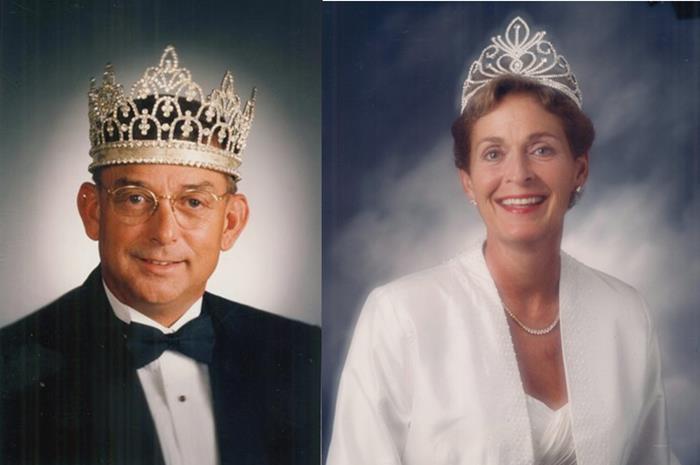
Freda and Roy Urban, the first Mardi Gras Queen and King
The Shreveport Journal
01 Feb 1990

Royals for Krewe of Gemini: 
Queen of Gemini IX- Cherryll Young Arnold, 
King of Gemini the 9th- Mike Etheredge
2009.002.009 Bossier Chamber of Commerce

1993 Royals: Sharon Boyd and Bill Schwartz
2009.002.009 Bossier Chamber of Commerce

1990-1994: Bossier Krewe of Gemini Scrapbooks
Ed069.007-.009  Keeler Collection

1990-1994: Bossier Krewe of Gemini Scrapbooks   
Ed069.007-.009  Keeler Collection 


Feb. 24, 1921: Weekly news from 100 years ago

       · Farmers were talking about planting corn, but the cold weather may cause them to back out.
· Miss New spent the weekend with Mr. & Mrs. New
· The resident of Mr. Harvey Spruill (Brushy Community) caught fire, flame was extinguished by       the school boys

 *Please enjoy the newspaper clippings from the Feb.24, 1921 issue of the Bossier Banner and photos from our collection

C.1920’s:  “Getting ready to work on the farm”
 Eddie and Freddie Chandler as toddlers
1999.142.008 Matlock collection


C.1920’s: the New Family. Back row: Madge Dudney New Johnson, 
Clifford Oglesby, Nanna Mae New Oglesby, Nathaniel Nixon New,
Elizabeth Rebecca Dudney New, and Ella Lee New Powdrill.  
Front row: Arthur New, Ruth Marie New Rivers Garrett Carson, 
and Clifford B. New.
1999.143.010 Crochet Collection


C. 1920’s: Photograph of Virginia Spruill and Harvey Spruill.
2002.025.015 Dunford Collection