Wednesday, January 26, 2022

The Only Major Crime of 1949

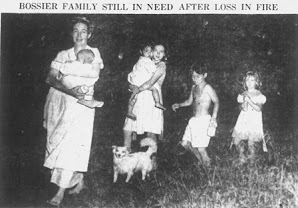
In the fall of 1949, fire swept through a group of 25 cabins in Bossier City called Shirley’s Tourist Courts. They were located at 1402 East Texas Street and arranged in a u-shape configuration. The blaze began in the pre-dawn hours, forcing one family of eight and their dog to flee for safety as they helplessly watched everything they owned go up in flames.

“A small boy, who resided nearby, said he looked out his window to see fire catch in two cabins simultaneously. ‘First, there were two explosions,’ he said, ‘and then fire started coming out of the window.’” The wind immediately carried the fire to other cabins. Of the 25 cabins, only five were untouched, while 13 cabins burned to the ground and seven were damaged. The total destruction was estimated at $38,000. The owner was out of town at the time of the fire.

Bossier Fire Commissioner Fred Jones,
Deputy Sheriff Maurice Miller, and
Police Officer James C. Cathey, Jr.
After Barksdale AFB and Bossier City firefighters extinguished the fire, the first inspection revealed apparent signs of arson. Bossier authorities found two one-gallon gasoline bottles with burning candles underneath them on gas burners in two of the cabins. In other cabins, gas jets were on, and they found heavy glass similar to the one-gallon jars found on top of the stove. Deputy State Fire Marshall Herman Jones said that the blaze “definitely looks like arson.”

The following week the State Fire Marshal Hugh W. Stewart announced that two Bossier City men were charged with aggravated arson of Shirley’s Tourist Courts. The accused were Robert Paul Hogg, owner, and J. L. Morris, a welder employed by Hogg. Morris had confessed to setting the fire. During the trial, “Morris testified that he was offered $1,000 by Hogg, a life-time job and lots of whiskey and pretty girls.”

The state’s star witness, Morris, pled guilty as charged, receiving a five-year suspended sentence, and was placed on probation. Hogg was convicted and sentenced to a prison term of eight years. At the time, he was on parole for a five-year federal sentence for embezzlement, for which he served one year in federal prison before being paroled. In violation of his parole, he was returned to Georgia to complete his federal prison sentence, and in 1952 he was moved to Angola to finish his time for the arson.

According to the testimony of an insurance agent, Hogg would have gained little from the insurance payout. Most of the money would have gone to pay off both mortgages. He had a first mortgage of $13,000 and a second mortgage held by the previous owner, T.R. Hester, of $18,400. With the insurance estimate of $38,000, Hogg would have made out with a little over $6,000.

If you’re wondering how much that would be in terms of today’s dollar, then he would have pocketed approximately $70,000 after paying off the two mortgages totaling about $386,000. Hester ended up having to sue Hogg and the insurance companies for the money due him on the second mortgage. The fire was the only major crime that year, according to the then newly elected Bossier City Police Chief Burgess E. McCranie.

Visit the Bossier Parish Libraries History Center to learn more about fires or crimes or anything about Bossier Parish history that interests you. We are next to the Central Library
branch at 2206 Beckett Street, Bossier City. Can’t come in, call 318-746-7717 or email history-center@bossierlibrary.org with your request. For fun facts, photos, and videos, be sure to follow us @BPLHistoryCenter on FB, @bplhistorycenter on Tiktok, and check out our blog http://bpl-hc.blogspot.com/.

By: Amy Robertson

Wednesday, January 19, 2022

Special Needs School Comes to Bossier


Around this time in 1972, the groundbreaking for a much-needed facility took place here in Bossier parish for the Northwest Louisiana State School. It was an act of the Louisiana Legislature that made the facility a reality. And the culmination of work started by the Caddo-Bossier Association for Retarded Children, who sought a residential facility in Northwest Louisiana.

At that time, there were 1,800 special needs children on the waiting list for admission to state schools. And the only schools available were located in the central and southern sections of the state. The nearest one for Bossier residents was on the outskirts of Pineville, making visiting children a hardship for parents of Northwest Louisiana.

After being elected in 1968, Senator Jack Montgomery made it his number one mission to see a state school established in Northwest Louisiana. At the groundbreaking, in introducing Governor John J. McKeithen, Montgomery gave credit to all area solons for their help getting the project for this area. He specifically thanked Senator J. Bennet Johnston for “taking the initial interest in the project and then helping me to see that the project was kept active and to become a reality.”

Gov. McKeithen admitted the failure of the state to keep up with the needs of the intellectually disabled in regards to facilities available, and the Northwest Louisiana State School was “a tremendous step in the right direction.” The John D. Caruthers family donated the 90-acres for the facility. Gov. McKeithen praised them for their “devotion and interest in such a needed project to actually give the land for the facility.”

At the time of the groundbreaking, the estimated cost of the overall project was $7.5 million. Federal and state funds, a total of $2 million, were secured to build the first phase of more than 100,000 square feet, a 108-bed non-ambulatory unit, and two 24-bed cottages for ambulatory patients 17 years of age and older. The goal was to house between 650 and 750 patients upon completion of the entire project.

The first phase also included an administration building, professional service building, total care facility, educational building, kitchen and dining area, personal service building, and a maintenance and warehouse building.

The goal was to develop the facility into an all-purpose school capable of handling all psychological ranges and handicaps. This school was the fourth all-purpose state school in Louisiana. Providing an environment more closely related to everyday life was a primary goal in designing the facility.

“State Department of Hospital officials said future plans hope to include a gymnasium, training building, recreation building, a diagnostic center, a canteen and an auditorium. Outdoor facilities in the future stage include a swimming pool, picnic area, softball and baseball fields and space for track and field events.”

The Northwest Louisiana State School is now called the Arc of Acadiana. They are “committed to securing for all people with disabilities the opportunity to develop, participate, and live life to their fullest potential.” This facility has been a vital part of Northwest Louisiana for nearly 50 years.

By: Amy Robertson

Wednesday, January 12, 2022

Bossier Librarian Organizes Victory Book Campaign

Anytime there is war, organizations like the American Red Cross jump into action to support the troops. Shortly after America entered World War II, the Red Cross, the United States Organization for National Defense, and the American Library Association joined together to address the need for books for our rapidly growing military.

Immediately after the national book campaign announcement, the Bossier Parish Libraries council called a meeting with representatives from each town in the parish, where they made plans to back the campaign. A call to action appeared in The Planters Press, asking all Bossierites to donate to the cause. All books were welcomed, with used books being cleaned and repaired as needed.

According to the announcement, “These books will be sent to army camps in this area. Many of our boys who are in camp or who will be later, have had to discontinue their studies of various types, some of them would continue their work if the necessary text books were available, and of course books for recreation hours are always needed. The Victory Book Campaign slogan is ‘Give the Book You Are Now Reading.’”

Collection containers were placed in the schools throughout the parish. Each branch of the Bossier Parish Libraries accepted donations, and the bookmobile collected donations at each stop. And, in Bossier City, containers were also placed at City Hall, Barksdale Drug, the Planters Press, Bossier State Bank, the Bossier Tribune, and the Post Office.

Portrait of Mary Elisabeth Williams by A. Menosco.
Bossier Parish Library Collection: 2000.093.001.
Parish Librarian Elisabeth Williams appointed committee members to oversee various aspects of the campaign. Mrs. S.E. Norris led working with Bossier City Schools. Mrs. Nelson covered Haughton. Publicity in Bossier City was assigned to Mrs. Morris and Mrs. Dupuy. The containers for Bossier City were placed by Rev. A.P. Smith and Roy E. Horton. And A.R. Teague oversaw radio publicity.

The types of books needed also appeared in the announcement. The list included topics like applied psychology, current affairs, business, accounting, up-to-date technical books, mechanical drawing, photography, music, poetry, sports, geography, biography, history, novels, writing, math, mysteries, and westerns. All books donated were stamped, “Gift of the people of the United States through the Victory Book Campaign.”

The books were distributed across the nation to Army camps, Naval stations, Coast Guard stations, Merchant Marine libraries, and United States Organization centers. Five-million books were collected within the first five months of the campaign. The campaign ran from the beginning of 1942 through 1943, with approximately seventeen million books passing through the campaign clearinghouse in New York.

For the past eighty-one years, the Bossier Parish Library has proudly provided access to materials, programs, and technologies that enrich, educate, and inspire the residents of this great parish. To learn more about the Bossier Parish Library’s history, visit the BPL History Center at 2206 Beckett Street, Bossier City. Follow us @BPLHistoryCenter on FB, @bplhistorycenter on Tiktok, and check out our blog, http://bpl-hc.blogspot.com/.

By: Amy Robertson

Wednesday, January 5, 2022

Bossierites Help End the Polio Epidemic

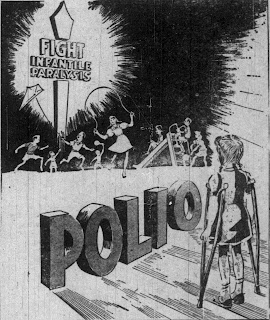
Most people know that the March of Dimes is a nonprofit foundation that "leads the fight for the health of all moms and babies." But do you know why this organization was founded? It began as the National Foundation for Infantile Paralysis, founded by President Franklin D. Roosevelt in 1938, to combat polio.

Like many viruses, the poliovirus has existed for centuries, with the first clinical description of the disease appearing in 1789. The first polio epidemic outbreak in the United States occurred in 1894. By 1905, the contagious nature of poliomyelitis was discovered, and a few years later, scientists discovered the disease was caused by a virus.

Most polio victims were children under ten; only one-fifth of all reported cases were in people 15 years of age and older. Seventy-five years ago, the poliovirus, also known as infantile paralysis, was the most feared disease in the U.S. Late summer intensified this fear as it was dubbed "polio season."

Every year at this time, the annual nationwide March of Dimes fundraising campaign is held. The time coincided with President Roosevelt's birthday, and the idea was to show the President that the people were with him in the fight against polio. Across the nation, committees and chapters were formed promoting the fundraiser.

In 1940, the Bossier Parish superintendent of schools, R.V. Kerr, served as chairman of the fundraising drive. Civic groups like the Benton Lions Club sponsored local events. In 1946, Bossier City held its first March of Dimes campaign, which came to close with the President's Birthday Ball, a common feature of the annual fundraiser seen across the nation.

Bossier City March of Dimes drive, c 1946.
James Allen Collection: L043
Bossier City's first campaign exceeded the expectations of those directing the campaign. Different groups of volunteers representing various clubs and organizations were in charge of solicitation each day of the drive. The Bossier City drive contributed about $1700 to the parish March of Dimes fund. Local elementary school children throughout the parish contributed $1153 to the parish fund that year.

The road to a vaccine was long during that time, without the scientific knowledge and technology we have today. At its peak in the 1940s and 1950s, polio would paralyze or kill over a million people worldwide every year. By the 1950s, polio had become one of the most serious communicable diseases among children in the U.S. Every year Bossierites organized and ran March of Dime drives. Mayor Burgess proclaimed January 1956 as National Polio month.

Through the work of volunteers, money raised by the March of Dimes supported research and education efforts, serving as an alliance between scientists and volunteers. The March of Dimes pioneered the polio vaccine research, making it possible to develop the Salk vaccine. Polio vaccine filed trials sponsored by the March of Dimes in 1954 at select locations nationwide. Bossier Parish was one of four parishes in Louisiana to participate in these trials, dubbed the greatest public health experiment in history.

After successful trials, vaccination clinics were held the following year. Efforts were slowed by vaccine shortages, but by 1957, the annual number of cases was reduced by over 90% following mass immunizations promoted by the March of Dimes. With a safe and effective vaccine, the dedication of health workers, and parents who vaccinate their children on schedule, the poliovirus was eradicated from the United States in 1979.

By: Amy Robertson

Saturday, January 1, 2022

This Month In Bossier Parish History

 January: Through the years!


Jan. 8, 1931: The announcement was made for enlistment to the Navy.  All men between the ages of 17 through 25 were encouraged to enlist. 

Bossier Banner
08 Jan 1931

Lieutenant Raymond B. Statham, 
Official Naval portrait, New Orleans, 1967.

USS Amsterdam, Raymond Statham was aboard
 this vessel during his service.
2002.021.002   Statham Collection

August, 1943: Billy Davidson and others leaving Shreveport
for Navy Boot Camp, San Diego, California by train.  
Left to right W. E. "Billy" Davidson, Betty L. Gibbs, Byran O'Donnell, 
Helen Hemperley, and "Billy" Heins. 

Jan. 15th: National Hat Day!

Since at least 1983, schools, libraries, and museums have observed National Hat Day.  Hats come in many shapes and sizes.  A hat is considered head covering which is worn for various reasons, including protection against weather conditions, ceremonial reasons such as a school  graduation, religious reasons, safety, or as a fashion accessory.

Please enjoy all the photos of citizens from our parish looking quite dapper with their hats, caps and bonnets.

C.1890’s: Young girl, identified as Wimmie Brownlee.  
Is seated on a fence, holding a large hat with a ribbon.

C.1930’s: Martha Gilmer Graves Swann "she always wore a hat with veil
2003.007.016c   Gramham Collection

Tom Parks  2019.045.349  Jones Collection

1910: Mercer B. (?) and Mercer Poole (son of Robert T. 
and Louella May Mercer Poole
2001.031.004   Antrobus Collection

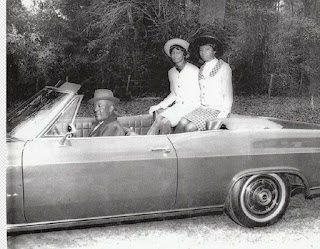
Gentleman driving two young ladies in a convertible automobile.
2016.038.015  Moore Collection

1914: Koran, La.  In front of the Bossier Point Baptist Church.  
The gate to the church can be seen in the background.  
L to R.  Mary Lee Thompson,  A.N. Tooke,  Trebie Jackson,  A.J. Thompson
0000.005.003

 "Jordan Smith- Ida's Grandfather, Luther Leroy Smith- Ida's Father,
 Glover Smith- Ida's Father's Brother"
2019.045.116   Jones Collection

 1900’s: four children play a game of marbles in Plain Dealing. Louisiana.
 One of the boys is believed to be the brother of Beulah Allen Findley.
0000.006.013

1900’s: Mabel Scanland and Lucy Antoinette Wyche Burt, both wearing hats. 
0000.004.017 Scanland Collection

C.1910’s: Ed Loftin with Abney Scanland
0000.004.019  Scanland Collection


Jan.26, 1922: Weekly news from 100 years ago

       · The Banks twins step up to help with house hold chores while their mother was ill.
· Rumors on the streets are that businesses are contemplating on moving.
· Mr. and Mrs. George Bounds entertained Wednesday night with a Rook Party.
· Alton Keoun, student at Centenary College, was guest of his parents.
· W.W. (William Walter) and daughter Vey, are improving from an attack of influenza.
· Garland DeMoss was at home sick.
· Namie New (Oglesby) spent the past week-end at her home in Plain Dealing.
· Lazarus Willer’s car to a ditch Sunday afternoon


1900’s:  Mary Ella and Mary Etta Banks 
on either side of an unidentified girl.
2018.010.099   Corley Collection


1900’s: Flooding along street, WC Banks Groceries & Feed store building seen.
 All buildings are wooden.
1997.031.039


George Albert Bounds, Sirena Mae Wilcox Bounds
 and daughter Myrtis Bounds.
2012.059.047


C. 1920’s Alton L. Keoun
2021.007.018   Rountree Collection


C.1880’s: William Walter Oglesby and his wife, Janie DeMoss.
1998.044.001  Rich Collection


1929 Plain Dealing High School Football Team
Front row, L to R: Honely Sears, Eugene Rodgers, Garland DeMoss
Middle row: Burnis Flanghan, Edison Kirklin, Mike Taylor, T.P.Gould, 
Buddy Nuckolls, Lynwood Fluitt, Clifford New, Wesley Sentell
Back row: Coach Glenn Crawford, Glendon Morris, Buddy Foster, Boots Oglesby,
 Ardner Chechire, Milton Foster, “Fats” Gleason, Odell Anderson, 
Dixon Barnett, Marcus Wingate, F.G. Phillips
2000.064.025  


1920-1930’s: New Family. Back row: Madge Dudney 
New Johnson, Clifford Oglesby, Nanna Mae New Oglesby, 
Nathaniel Nixon New, Elizabeth Rebecca Dudney New, 
and Ella Lee New Powdrill.  Front row: Arthur New, 
Ruth Marie New Rivers Garrett Carson, and Clifford B. New.
1999.143.010  Crochet Collection


The Samuel and Sarah Willer Family, 1926
Seated, left to right: Rosa W. Gamm, Samuel and Sarah Willer, Goldye W. Watner
Standing, left: Ethel W. Eltis, Clara W. Groner, Lazarus Willer, Rachel W. Braunig
2002.034.016    Eltis Collection