Showing posts with label Jr.. Show all posts

Wednesday, December 17, 2025

SAM ZEIGLER JR: BUILDING UP THE NAVY FOR SEA AND AIR. PART 2, AIR

Bossier’s almost-native son Samuel J. “Sam” Zeigler Jr.’s extraordinary naval career allowed him to be at the helm for critical developments in the now-200-year-old military service. In last week’s part I, Samuel J. Zeigler, Jr., “Sea,” we followed him from north Bossier Parish and Shreveport to LSU and the United States Naval Academy where he was among the top graduates in 1912. We saw him next complete graduate training and serve as a naval architect and engineer plus gain a graduate business degree at Harvard. He served in leadership posts in stateside shipyards in the midst of the transition to steel-hulled ships, and during WWI, he served overseas in Brest, France.


In late 1921, Zeigler’s focus turned to aviation, when he was sent to the Naval Aircraft Factory in Philadelphia, in the same basic location as the shipyard where he’d served. In late 1925, he was sent to the Bureau of Aeronautics, Navy Department in Washington DC as its third-highest ranking official, according to the editor of the Bossier Banner-Progress. The establishment of this bureau in 1921 is considered by naval aviation historian Barrett Tillman as first on his list of the most pivotal events in US naval aviation history.


When the 1920’s began, aviation had barely had even a chance to prove itself to be practical under at-sea operating conditions. By the end of that decade, however, under the new Bureau of Aeronautics, patrol squadrons and seaplane tenders were performing escorting functions, aircraft were assigned to battleships and cruisers and proving themselves in maneuvers (fleet wars), and three aircraft carriers were fully operational. The first of these carriers was the experimental USS Langley (CV 1). The next two were the first combat-capable carriers, the USS Lexington and the USS Saratoga, and Sam J. Zeigler Jr. had served as a commander on both of them, prior to WWII.


Of course, any rapid growth tends to be accompanied by growing pains, and this decade of rapid development of aircraft, aircraft carriers, naval aviators and new administrative divisions happened along with much push and pull between service branches, public and private sectors, politicians, the press and public opinion. To try to sort it out, President Calvin Coolidge convened the President’s Aircraft Board, also known as the Morrow Board, to make recommendations regarding the aviation industry and military aviation and to guide legislative measures. Board members listened to testimony from numerous camps, but vowed that half or more of it came from “flyers” themselves. At the end of November 1925, the Morrow Board submitted a report to President Coolidge, which was followed by another aviation report of the Lampert Aircraft Committee.


The reports got copious amounts of coverage in the American press, and Lt. Commander Zeigler, while conceding that all publicity has at least a chance at being good publicity, particularly for such a nascent program, was not pleased with the impressions being fed to the general public about naval aviation. He lamented that it left the impression that” the Navy is at sea in the air.” He wrote in an article titled “The Naval Aircraft Factory” in the January 1926 Proceedings of the U.S. Naval Institute that “an account of the Naval Aircraft Factory, its purpose, origin, and accomplishments,” may help refute that charge.


The Naval Aircraft Factory began in 1917 to solve the aircraft supply problem that faced the Navy Department when the US entered WWI. The private sector could barely meet the much larger requirements for aeronautical material of the Army’s Air Corps, and therefore had little use for business with the new Navy division. The Navy Department, decided that it was necessary to build an aircraft factory of its own. Zeigler pointed out that “The Naval Aircraft Factory is, in reality, a vast experimental station. Its purpose, as clearly set forth by the Chief of the Bureau of Aeronautics, is the ‘development and manufacture of experimental aircraft and aircraft accessories…” He argued that at no point does this purpose make it a competitor of civilian aeronautic plants.


Sam Zeigler Jr, ultimately did three tours of duty at the Naval Aircraft Factory, interspersed with positions as Engineer Officer for Aircraft (as a Commander in the Carrier Division ONE, US Fleet), and General Inspector of Naval Aircraft out of San Diego. He became Manager of the Naval Aircraft Factory in August 1943, when he was also designated Commanding Officer of the Naval Air Material Center in Philadelphia. The following year, Zeigler became the Bureau of Aeronautics Representative at Philadelphia and received a Commendation Ribbon from the Secretary of the Navy that praised Zeigler’s direction and inspection abilities with the effect that products of the aircraft plants “gave extraordinary and reliable performance during the war.” He stayed in Philadelphia until his retirement in 1947.


Zeigler continued to make trips to Shreveport and the Plain Dealing area for visits every now and then, since he always considered it home. The proud local newspapers reported on many of these visits. Sam Zeigler Jr. and his wife Fannie Marburg Zeigler had two sons, both of whom also joined the US Navy. Zeigler passed away on October 24, 1975.


If you have World War I or II (or beyond) family photos or stories to share, please visit or contact us at the History Center. We will scan them and return the originals if that is your preference. Don’t forget about our World War Tuesday coffee and discussion group on a variety of World War II topics held the second Tuesday of each month from 10:30 – noon. The next meeting will be on Tues. January 13th. We are located at 7204 Hutchison Drive, Bossier City, LA, 71111. We are open M-Th 9-8, Fri 9-6, and Sat 9-5. Our phone number is (318) 746-7717 and our email is history-center@bossierlibrary.org

For other fun facts, photos, and videos, be sure to follow us @BPLHistoryCenter on FB, @bplhistorycenter on TikTok, and check out our blog http://bpl-hc.blogspot.com/.

Images: 

  • Portrait of Samuel J. Zeigler, Jr. Modern Biographical Files in the Navy Department Library, Naval History and Heritage Command, Washington, DC.
  • Aerial view of the U.S. Navy Naval Aircraft Factory at Philadelphia, Pennsylvania (USA). Note: the flying boat in front of the hangar on the right seems to be a Consolidated P2Y which would date this photo in the 1930s. U.S. Department of the Navy. Bureau of Aeronautics photo, National Archives and Records Administration.
  • U.S. Navy N3N trainers awaiting engines and other parts at Naval Aircraft Factory, Philadelphia, Pennsylvania (USA), 28 June 1937. U.S. Department of the Navy photo, National Archives and Records Administration.
  • Navy 250 logo, “Learn About Naval History in your State.”
Article by: Pam Carlisle 

Wednesday, December 10, 2025

SAM ZEIGLER JR: BUILDING UP THE NAVY FOR SEA AND AIR. PART 1, SEA

On July 4, 2026, the United States will celebrate its 250th, or semiquincentennial, birthday. A branch of the United States military, however, has already sailed past that milestone. On October 13, 2025, the U.S. Navy hit the big 2-5-0. That date commemorates when the Continental Congress met in Philadelphia in 1775, and authorized a purchase of two merchant ships to convert to warships for its fight against the Naval superpower, Great Britian.


Samuel Jacob Zeigler, Jr., or Sam Zeigler, as he was known, was born in Bordeaux, South Carolina on July 29, 1889, to Samuel J. Zeigler Sr. and Howelle Zeigler. Samuel J. Zeigler Sr. was also born in South Carolina but had already made a name for himself, forming corporations and hundreds of acres of real estate deals, in the young city of Shreveport and the communities of north Bossier Parish. Samuel J. Zeigler Sr., in fact, is considered the “father” of the north Bossier town of Plain Dealing, developing it alongside the Cotton Belt Railroad. His first wife, Sallie Vance Zeigler, with whom he’d had five children, only two survived childhood, died in 1886. S.J. Zeigler returned to South Carolina for a time and married Howelle there in 1887. When Sam Jr. was a year old, the family returned to north Louisiana, where Sam’s sister Pola was born. Like his father’s landholdings and businesses, young Sam’s life straddled both parishes of Caddo and Bossier, and much of his time was spent in Vanceville and Plain Dealing.


On December 21, 1907, the Shreveport Journal reported that Sam Zeigler had been appointed as a midshipman at the United States Naval Academy in Annapolis, Maryland. The paper reporter Sam had been a student at Louisiana State University, Baton Rouge for two years, where he received preliminary military training and was a champion marksman. The paper praised Sam as “well qualified, both physically and intellectually” to withstand the academy’s rigid entrance requirements.


Sam Zeigler’s Navy career began at the United States Naval Academy (USNA) with a fore-deck view of historical change. His matriculation in 1908 coincided with the final years of the presidency of Theodore Roosevelt (1901- 1909), one of the era’s foremost naval strategists. Roosevelt’s goal was to expand and modernize the U.S. Navy with no less an aim than to see America galvanized as a world power.


The naval academy, which opened in 1845, had also been growing into its own, taking on the look and traditions that are well-known today. The famous USNA fight song and unofficial Navy anthem, “Anchors Away,” had recently been composed by the academy’s music and choir director. “The New Naval Academy,” a major construction plan to replace the inadequate and already-aging physical plant was nearing completion. In the five years leading up to Zeigler’s arrival on campus, new buildings were opening up annually. In addition, new ships, and even the first modern submarine, were arriving in the same timeframe. In 1911, the first naval aerodrome was established at Annapolis and experimental flights began at the school.


At Sam Zeigler’s graduation in 1912, when he was fourth in his class of 156, his class tossed their hats in the air - the very first Academy graduates to perform the now famous tradition. After his graduation, Ensign Zeigler had some time for vacation, visiting folks back in Louisiana. The Bossier Banner-Progress reported this visit on July 25, 1912, and quoted a Shreveport newspaper to inform readers, “The grade of ensign corresponds to the rank of lieutenant commissioned in the regular military service of the United States. At his graduation, Ensign Zeigler scored in the highest orders of merit. He is a product of Shreveport. His record, which is very creditable, is an index of his future promotion. It is to be hoped that he will in time reach the rank of admiral.”


Sam was assigned to the USS Minnesota of the Atlanta Fleet, based out of Norfolk, Virginia. In 1912, the ship operated in the Caribbean, then patrolled the Mexican coast between 1913 and 1914 during the Mexican Revolution. In January 1914, Sam Zeigler transferred to temporary duty at the navy yard in Philadelphia and was ordered to the Postgraduate School for Naval architecture in Annapolis. By summer of 1915, he was appointed Assistant Naval Constructor. Continuing in Naval architecture, he was sent to the Massachusetts Institute of Technology (MIT) in Cambridge and earned an M.S. degree in 1916. Taking advantage of his Cambridge location, Zeigler also completed a two-year business course at Harvard and reported for duty in the Boston Navy Yard’s hull division.


The Boston Navy Yard, which began in 1880, was one of the Navy’s first ship-building yards. When Sam Zeigler arrived, the shipyard was in the midst of the “New Navy’s” switch from wooden to steel-hulled battleships and was on the cusp of gearing up for the Great War, later known as WWI, that was raging in Europe. In August 1914, U.S. President Woodrow Wilson had declared the United States would continue its neutral position, and the Navy’s job was to protect that neutrality by stationing destroyers at the Boston Navy Yard. But following the sinking of the RMS Lusitania in May 1915, Wilson advocated for U.S. military preparedness to protect American interests and called upon Congress to authorize construction of over 150 warships. On April 6, 1917, following unrestrained German submarine warfare that sunk several American ships and claimed American lives, the U. S. declared war on Germany.


The Boston Navy yard was teeming with repairs on an endless supply of damaged warships and support vessels, as well as outfitting and commissioning a steady stream of private ships for use in warfare. Zeigler’s skill directing this kind of work was eventually needed in the Navy’s ship repairs department in Brest, France. The U.S. Navy’s primary role in the Great War was troop transportation. The sheer numbers of “fresh” American troops continually arriving to fight the increasingly war-weary Germans made the ships carrying them targets of German attacks. The Navy’s ultimate success in moving these troops became a main reason that Germany signed an armistice agreement on November 11, 1918, cutting short Zeigler’s time in France.


Watch this column for a continuation of the story of the Naval career of Shreveport-Bossier’s Samuel J. Zeigler, Jr. and its window into U.S. Naval History, including Naval aviation and WWII. If you have World War I or II family photos or stories to share, please visit or contact us at the History Center. We will scan them and return the originals if that is your preference. We are located at 7204 Hutchison Drive, Bossier City, LA, 71111. We are open M-Th 9-8, Fri 9-6, and Sat 9-5. Our phone number is (318) 746-7717 and our email is history-center@bossierlibrary.org


For other fun facts, photos, and videos, be sure to follow us @BPLHistoryCenter on FB, @bplhistorycenter on TikTok, and check out our blog http://bpl-hc.blogspot.com/.

Images: 

  • Navy 250 logo
  • Portrait of Samuel J. Zeigler, Jr. Modern Biographical Files in the Navy Department Library, Naval History and Heritage Command, Washington, DC
  • Boston Navy Yard in 1916, Boston National Historic Park photo

Article by: Pam Carlisle

Wednesday, March 20, 2024

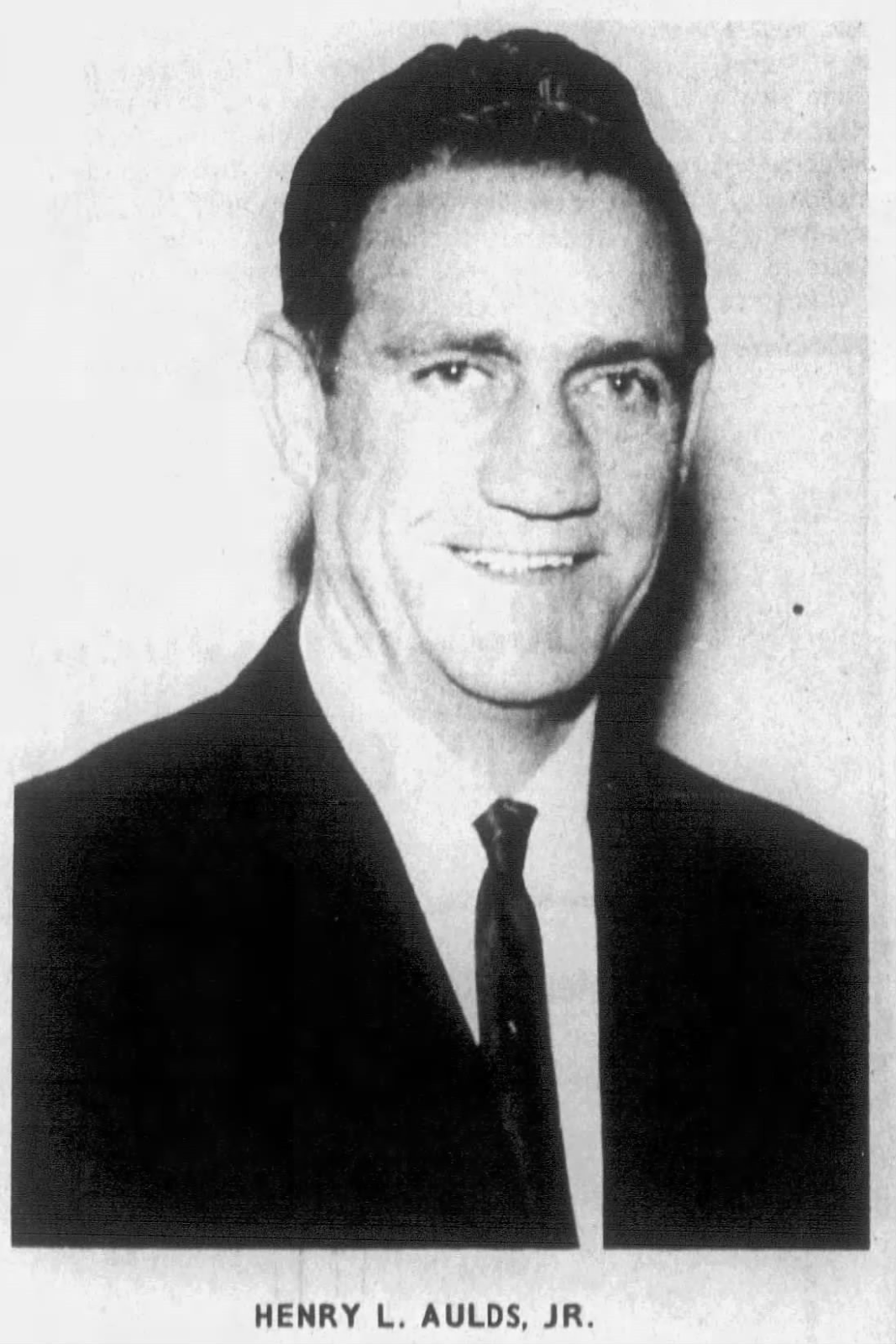
Henry L. Aulds, Jr. Branch Library - The Silver Lining of a Family’s Tragic Loss

The Bossier Parish Library’s South Bossier branch still has a small-town or neighborhood feel, but it has grown tremendously since it opened in the Shady Grove neighborhood in 1971 with 1, 200 square feet of space, with the limited hours of 2-6pm Mon -Friday. The branch opened in October, 1971 on land donated by Bossier City and was named in memory of Henry L. Aulds, Jr., a Bossier Parish Police Juror, whose efforts were instrumental in its existence.


Aulds died suddenly in September, 1970, at the age of 42, suffering a heart attack while on a dove hunting trip. He lived in the Shady Grove neighborhood on the same street as the library. He was owner of an investment company and served on many boards, including the YMCA and the recreation commission of Bossier. His wife, Betty, served as the “toybrarian” for the Toy Lending library at the Shady Grove community center.


Betty Aulds welcomed guests to the dedication of the new library, including extended family members, police jurors supporting their former colleague, and other Bossier Parish officials, plus guest of honor Miss Elisabeth Williams, the first librarian in the Bossier Parish Library System, and 400 other citizens. She stated, “We, the family and children, are so pleased to see the library for which my husband worked so hard a reality now. We hope the library will mean as much to the community as Mr. Aulds had hoped it would. He saw the need and wanted to make it happen. We are happy that even though he can’t see the results, the people of this area have been so responsive...”


Well-known Bossier citizen and longtime Clerk of Court Wilna Mabry concurred, “The new library is a wonderful thing for this part of Bossier City. In talking with residents of the area, I’ve found that everyone is so happy that the library is here. The library couldn’t have been named for a greater man.”


The Henry L. Aulds, Jr. library fulfilled its namesake’s wish that it would become a meaningful part of the community. It has served as the meeting spot for numerous community groups over the years, including “The Shady Ladies” homemaking club, the British Wives club (since the library is conveniently located close to Barksdale Air Force Base), and a local Girl Scout troop. The Aulds meeting room is also a voting location. The branch had enough use, that it was renovated and expanded in 1987, less than 20 years from its opening.


In 1991, the Aulds branch library had the distinction of being the first Bossier Parish library to have a personal computer available for patron use, thanks to the perseverance of Bossier Parish Libraries patron and Barksdale airman Staff Sgt. David Lambert and the forward-thinking Aulds branch librarian, Bonnie Clark. Lambert, who happened to be an information systems manager at Barksdale, had gone to the Bossier Central library to do some research when he found out there were no public use computers available there or in any Bossier Parish public library. When Lambert was told there was no money in the budget for them, he asked around to find a librarian who would be willing to try out a PC for public use. He found Ms. Bonnie at Aulds.


Then Lambert asked around for some donations. Donald Bonar of Shreve Systems in Bossier City donated a surplus Commodore “Colt” computer with both a hard drive and a floppy disk drive. The CPU and a dot matrix printer were donated by Francis Huhn and software donated from Keith Barr. The viewing screen, printer cable and controller for the hard drive came from Discount Computers and Software in Shreveport. The computer boasted Microsoft Works software and GW Basic for those who wanted to learn to how to program. In August 1991, Lambert was still looking for donations for additional software.


Patrons needed to bring their own 5¼” floppy disks if they wanted to save their work. Lambert and the Aulds library staff planned to have other computer workers from base to help out with maintaining the equipment and conducting classes in how to use the computer. Bonnie Clark the librarian foresaw the only drawback of the computer would be that very soon, one would not be enough!


Ms. Bonnie was right of course. In September, 2005, Aulds had an expansion and interior renovation so extensive that it felt like a new branch had opened. This expansion nearly doubled the library’s public service space with a 3,8000 square foot addition, and quadrupled the number of public access computers, as well tripled the children’s area. What Ms. Elisabeth Williams, the Bossier Parish Library system’s first librarian, said at the first dedication for the branch in 1971, could’ve been said at the branch’s re-dedication following the addition in 2005 and could be said again today: “It is wonderful that the library system is growing. Bossier Parish is growing and so is Bossier City.”


If you have any stories, photos or other information relating to the history of Bossier Parish libraries, or of Bossier Parish citizens who have worked to contribute to community life in Bossier, the History Center may be interested in adding the materials to its research collection by donation or by scanning them and returning the originals. Call or visit us to learn more. We are open M-Th 9-8, Fri 9-6, and Sat 9-5. Our phone number is (318) 746-7717 and our email is history-center@bossierlibrary.org. We can also be found online at https://www.facebook.com/BPLHistoryCenter/

Images: 

  • Henry L. Aulds Jr.
  • The original Henry L. Aulds Jr. Branch library building, which opened Fall of 1971.
  • Photo of the Shady Ladies Homemaking Club making bean bags and bibs in the Aulds branch library, 1982.
Article by: Pam Carlisle 

Wednesday, November 3, 2021

Pioneer Pilot Makes Military Aviation History

Did you know that at the end of the 19th century, there was a race for flight? While there were many worthy contenders, for the sake of this article, the focus will be on Professor Samuel Pierpont Langley and The Wright brothers, Orville and Wilbur. Both had been working on their flying machine concepts, but they were opposites in terms of credentials and funding.

Langley's flying machine was unpiloted and called an aerodrome. He was known for his work as an astronomer and was the secretary of the Smithsonian. The Wright's lacked college degrees and only had income from their bike shop to fund their experiments in building a man-controlled flying machine. In contrast, Langley received $50,000 from the U.S. War Department and $20,000 from the Smithsonian to fund his experiments after he had success with his models. The funding came with the expectation of having a piloted flying machine for military purposes.

Samuel Pierpont Langley's aerodrome experiment over the Potomac River, 1903.

In 1903 Langley made two attempts at manned flight. The first attempt was on Oct. 7 and the second on Dec. 8. Both attempts crashed into the Potomac River on takeoff. Had the aerodrome made it into the air, the 'pilot,' if you can call him that, had zero control over the flight, and there was no landing gear. Nine days later, on Dec. 17, 1903, the Wright brothers made and documented the first successful piloted flight in history.

Wright Type A Airplane. Orville Wright at Ft. Myer, VA
Sept. 09, 1908.
Langley's failure to produce a flying machine put a damper on government interest. More than four years passed before the U.S. Army Signal Corps awarded a contract for the first plane to the Wright brothers in the early part of 1908. By that summer, they conducted their first flight trials at Fort Meyer, VA, where they were more than successful and met the Army's requirements. The plane had to carry two people, attain an average speed of 42 MPH and remain in the air for at least one hour.

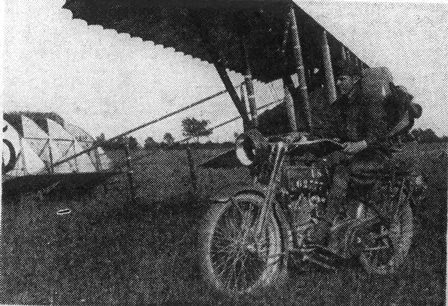
Eight years later, William Benjamin Wright, Jr., enlisted in the Army Air Force, then known as the Aviation Corps, a branch of the Signal Corps. Though he's not related to the Wright brothers, he shared their dreams of aviation. As a pioneer pilot, he made aviation history while in France during World War I. He is credited as the first American to perform aerial reconnaissance to adjust artillery
fire on the battlefront. This technique has proved vastly useful in both world wars and is still being used. He performed these missions from both an airplane and a balloon.

Capt. Wright, Jr. on his motorcycle in front of his lucky
No. 5 airplane "Krazy Kat Escadrille," France 1918.

Col. William B. Wright, Jr., 1945.
Barksdale AFB 7th Commander 1942-1945.
From 1942-1945, Col. Wright served as the 7th Base Commander at Barksdale Air Force Base. During that time, "under his leadership, Barksdale dispatched more medium bombardment crews overseas than any other base in the history of the air force."

In an article appearing in "The Barksdale Bark," announcing his reassignment, the writer points out, "It is significant that the pioneer aviator, who rode the tail of a Caudron J-4 down in a crash near Tours, France, in 1918, without injury, was to later inaugurate the training of combat crews at Barksdale in the mighty Superforts, which, as he says, 'roar clear across Louisiana in a takeoff.' He has helped develop air power from its infancy to the tremendous striking power it now possesses."

While at Barksdale, he was noted for his "gigantic" expansion program. He expanded the recreational facilities by installing boxing rings, an EM golf course, picnic grounds on Flagg Lake, bowling alleys, ball diamonds, and the Non-Commissioned Officers Club.

To learn more about the history of Barksdale AFB or aviation history in Bossier Parish, visit the Bossier Parish Libraries History Center. Your leading source for Bossier Parish History. We are at 2206 Beckett Street, Bossier City. Can't come in, call 318-746-7717 or email history-center@bossierlibrary.org with your request. Follow us @BPLHistoryCenter on FB, @bplhistorycenter on Tiktok, and check out our blog, http://bpl-hc.blogspot.com/.