Showing posts with label Bossier Parish Library. Show all posts

Wednesday, March 20, 2024

Henry L. Aulds, Jr. Branch Library - The Silver Lining of a Family’s Tragic Loss

The Bossier Parish Library’s South Bossier branch still has a small-town or neighborhood feel, but it has grown tremendously since it opened in the Shady Grove neighborhood in 1971 with 1, 200 square feet of space, with the limited hours of 2-6pm Mon -Friday. The branch opened in October, 1971 on land donated by Bossier City and was named in memory of Henry L. Aulds, Jr., a Bossier Parish Police Juror, whose efforts were instrumental in its existence.
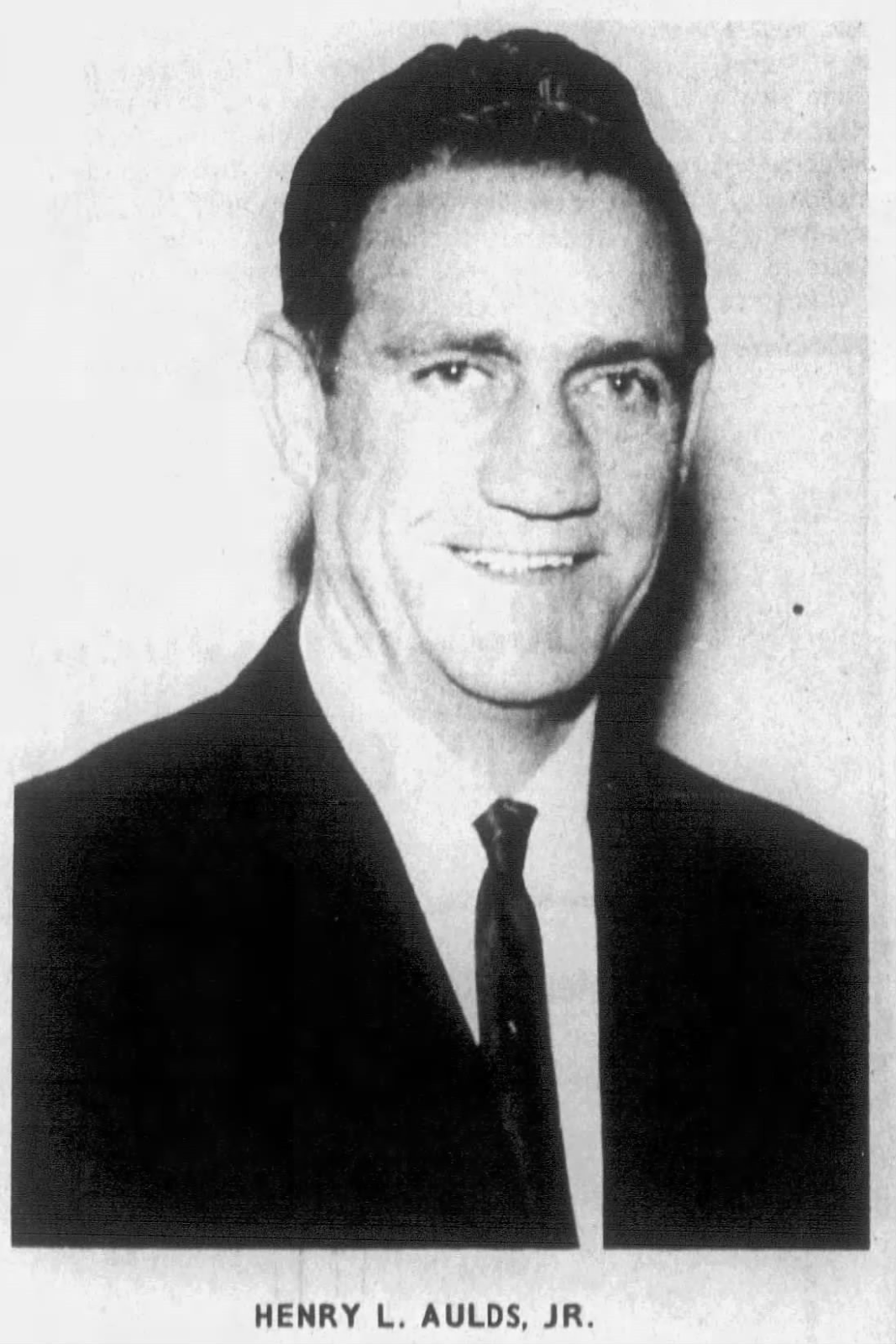


Aulds died suddenly in September, 1970, at the age of 42, suffering a heart attack while on a dove hunting trip. He lived in the Shady Grove neighborhood on the same street as the library. He was owner of an investment company and served on many boards, including the YMCA and the recreation commission of Bossier. His wife, Betty, served as the “toybrarian” for the Toy Lending library at the Shady Grove community center.


Betty Aulds welcomed guests to the dedication of the new library, including extended family members, police jurors supporting their former colleague, and other Bossier Parish officials, plus guest of honor Miss Elisabeth Williams, the first librarian in the Bossier Parish Library System, and 400 other citizens. She stated, “We, the family and children, are so pleased to see the library for which my husband worked so hard a reality now. We hope the library will mean as much to the community as Mr. Aulds had hoped it would. He saw the need and wanted to make it happen. We are happy that even though he can’t see the results, the people of this area have been so responsive...”


Well-known Bossier citizen and longtime Clerk of Court Wilna Mabry concurred, “The new library is a wonderful thing for this part of Bossier City. In talking with residents of the area, I’ve found that everyone is so happy that the library is here. The library couldn’t have been named for a greater man.”


The Henry L. Aulds, Jr. library fulfilled its namesake’s wish that it would become a meaningful part of the community. It has served as the meeting spot for numerous community groups over the years, including “The Shady Ladies” homemaking club, the British Wives club (since the library is conveniently located close to Barksdale Air Force Base), and a local Girl Scout troop. The Aulds meeting room is also a voting location. The branch had enough use, that it was renovated and expanded in 1987, less than 20 years from its opening.


In 1991, the Aulds branch library had the distinction of being the first Bossier Parish library to have a personal computer available for patron use, thanks to the perseverance of Bossier Parish Libraries patron and Barksdale airman Staff Sgt. David Lambert and the forward-thinking Aulds branch librarian, Bonnie Clark. Lambert, who happened to be an information systems manager at Barksdale, had gone to the Bossier Central library to do some research when he found out there were no public use computers available there or in any Bossier Parish public library. When Lambert was told there was no money in the budget for them, he asked around to find a librarian who would be willing to try out a PC for public use. He found Ms. Bonnie at Aulds.


Then Lambert asked around for some donations. Donald Bonar of Shreve Systems in Bossier City donated a surplus Commodore “Colt” computer with both a hard drive and a floppy disk drive. The CPU and a dot matrix printer were donated by Francis Huhn and software donated from Keith Barr. The viewing screen, printer cable and controller for the hard drive came from Discount Computers and Software in Shreveport. The computer boasted Microsoft Works software and GW Basic for those who wanted to learn to how to program. In August 1991, Lambert was still looking for donations for additional software.


Patrons needed to bring their own 5¼” floppy disks if they wanted to save their work. Lambert and the Aulds library staff planned to have other computer workers from base to help out with maintaining the equipment and conducting classes in how to use the computer. Bonnie Clark the librarian foresaw the only drawback of the computer would be that very soon, one would not be enough!


Ms. Bonnie was right of course. In September, 2005, Aulds had an expansion and interior renovation so extensive that it felt like a new branch had opened. This expansion nearly doubled the library’s public service space with a 3,8000 square foot addition, and quadrupled the number of public access computers, as well tripled the children’s area. What Ms. Elisabeth Williams, the Bossier Parish Library system’s first librarian, said at the first dedication for the branch in 1971, could’ve been said at the branch’s re-dedication following the addition in 2005 and could be said again today: “It is wonderful that the library system is growing. Bossier Parish is growing and so is Bossier City.”


If you have any stories, photos or other information relating to the history of Bossier Parish libraries, or of Bossier Parish citizens who have worked to contribute to community life in Bossier, the History Center may be interested in adding the materials to its research collection by donation or by scanning them and returning the originals. Call or visit us to learn more. We are open M-Th 9-8, Fri 9-6, and Sat 9-5. Our phone number is (318) 746-7717 and our email is history-center@bossierlibrary.org. We can also be found online at https://www.facebook.com/BPLHistoryCenter/

Images: 

  • Henry L. Aulds Jr.
  • The original Henry L. Aulds Jr. Branch library building, which opened Fall of 1971.
  • Photo of the Shady Ladies Homemaking Club making bean bags and bibs in the Aulds branch library, 1982.
Article by: Pam Carlisle 

Wednesday, January 31, 2024

Bossier City Library: From Small Branch to The Central Complex

The Bossier City Library Branch opened on September 21, 1940 in the old Bossier City Hall on Barksdale Boulevard, under librarian Miss Margaret Frances Wiseman, with library experience from Concordia and Morehouse Parishes, and assisted by Myra Wiley of Bossier City. It was among the first three branches of the brand-new, “demonstration” Bossier Parish Library System (along with Plain Dealing and Haughton and Benton Headquarters), meant to give parish voters the opportunities to see the possibilities and value of a library system, initially operated with largely state and federal resources, and then vote to keep it going with local funding.

Homer T. Cox, chairman of the Bossier City Library Committee, announcing the opening in an article in the Shreveport Times on 20 Sept. 1940, said that about 2,000 books would be available at the Bossier City branch. (Now the Bossier City “branch” is considered the Central Library, and has about that many items for loan in the category of “Tween,” kids roughly age 9-12, alone!)

A prized photograph in the History Center’s collection shows the Bossier Branch Library in the court room spectator area of Bossier City Hall, Oct. 2, 1941. The low railing separating the the litigation (well) area and the public (spectator) areas can be seen in the foreground. (If a court session ran over into scheduled “library time,” library users would just have to wait).

In this photo, a group of servicemen in uniform and librarian Irma Rayne are shown sitting or standing, writing, reading or visiting. The photo is From Bossier Tribune, Oct. 2, 1941. The newspaper story with the photograph is titled, “Soldiers Enjoy Use of Library:”

“That soldiers on maneuver (training exercises in Louisiana to prepare for the event of US entry into WWII), lonely and far from home, find libraries a godsend is testified by the above photograph of soldiers making themselves at home in the Bossier City branch library. The library makes a standing offer of stationery and writing materials for any solder desiring to use them…Night after night soldiers appeared to seat themselves at the reading tables and write home. Others enjoyed the newspapers, current magazines and books provided by the library. All were pleased with the friendly hospitality shown them…[and] the library was pleased to be of service.”

The Bossier City branch remained there for several years before moving to a neighboring storefront location on Barksdale Blvd. In 1959, the library moved again to its current location on Benton Road (at the corner of Beckett Street.) This Benton Road location doubled in size with a 1967 expansion. A major remodel in 1988 resulted in the current library facility, which is facing Beckett Street.

In the early 1960s, the Bossier Parish Library announced plans to compile a collection of photographs, scrapbooks, and other information related to the history of the parish. These items were indexed and kept at the Bossier City branch. A dedicated history center opened in 1998, directly behind the Central Branch on Beckett Street. The building features large exhibit spaces and a storage room for archival material, and its adjacent but separate addition made the Central Library a complex of three different structures that had been pieced together over three decades.

We are excited that a new 39,000-plus square foot state-of-the-art facility has been built directly across Beckett Street from this complex at the corner of City Hall Drive. Features of the new library include large-capacity, multi-functional community meeting spaces and more computers and technology equipment. The current facility was built before computers were even available to the public! The expected move-in time for the Central Library is coming in March of 2024. The History Center will follow Central across the street several months later.

To learn more about any Bossier Parish library history, visit the Bossier Parish Library’s History Center, 2206 Beckett Street, Bossier City. The History Center is open M-Th 9-8, Fri 9-6, and Sat 9-5. Our phone number is (318) 746-7717 and our email is history-center@bossierlibrary.org

For other fun facts, photos, and videos, be sure to follow us @BPLHistoryCenter on FB, @bplhistorycenter on TikTok, and check out our blog http://bpl-hc.blogspot.com/.


Photos: 

  • Soldiers on maneuvers using the Bossier City Branch library, located in the courtroom of old Bossier City Hall on Barksdale Blvd (currently home of the Bossier Arts Council). 1941.
  • Bossier City Library in a storefront on Barksdale Blvd., downtown Bossier City, c. 1950.
  • Bossier City Library on Benton Road, c.1959
Article by: Pam Carlisle

Wednesday, January 10, 2024

Haughton’s Dorothy Elston Alford Memorial Branch Library

 Haughton was home to one of the three original Bossier Parish Library branches, along with Plain Dealing and Bossier City, and a Benton headquarters. The Haughton library opened Monday Sept 16, 1940, inside the Lea Lawrence store, a historic building in “old Haughton” by the railroad depot that burned down in the late 1990’s.


Winona Tomlinson of Haughton deserves credit not only for establishing the Haughton library but for the parish library system as a whole. As part of the Bossier Parish Parent-Teacher Council, and head of the Bossier Parish Police Jury’s library committee, she worked hard in the 1930s to finally get a “demonstration” library system in the parish, through the State Library of Louisiana in 1940.


The December 12, 1940 Planters Press newspaper of Bossier City reported on a press release from the state capital with the headline, “Bossier Library Service [is] Meeting with Approval, Late Report Indicates. As a ringing example of this approval, the report stated that in the Haughton post office, the postmistress “rarely misses an opportunity to tell those who come in for mail about the good books to be borrowed.” In addition, the story reported, one of the mail carriers who would regularly come through her post office would pick up the library bookmobile’s weekly schedule from her so he could advise the people on his rural route of when they could meet ”the library on wheels.”


The Haughton library moved into the Haughton Masonic building in 1949, and in 1970, the village of Haughton donated land and $5,000 toward the construction of a new library building. The new 1,800-sq. foot building housed both the library and the town hall. When that building was about to open, the Bossier Parish librarian Mrs. Betty Sommer said proudly in the Bossier Press of July 2, 1970, that the Haughton library would have 4,500 books plus records, magazines, and newspapers and that films from the state library would also be available. A highlight was that it will be open forty hours a week, almost twice what it was previously. A special boast was that it was “made of brick, is air-conditioned and has a paved parking lot.”


Within less than 20 years, more space was needed for both facilities and the library expanded into the town hall portion of the building in 1987. A new town hall was constructed next door. After this expansion and remodel, the Haughton library was dedicated and renamed the “Dorothy Elston Alford Memorial Haughton Branch.” Mrs. Alford, a lifelong resident of Haughton who received a library degree from Northwestern State in 1943, served as the Haughton branch librarian for 19 years.


When the police jury passed the resolution to authorize the renaming and present a commendation to her family, they described the ways in which Dorothy Elston was an inspirational leader, committed to quality and cooperation in staff projects. They stated that children who use the Haughton library “quickly learned to love and appreciate Mrs. Alford because of the courtesy, respect and gentleness with she which she served them…There exists much public support in the Haughton area to name the Haughton branch after Dorothy Elston Alford in memory of the service and personal attention rendered by her.” The name change was resolved in order to perpetuate “the contributions and memory of this unselfish dedicated public servant,” and adopted July 14, 1987, just days after her death at age 64.


The Haughton library was again renovated and expanded in 2001. A special touch to the library was its cornerstone, provided by the Haughton Lodge #95 of the Freemasons, laid by Haughton Mayor Billy Maxey and Bossier Sheriff’s deputy Charles Rosalee, who previously had been a brick mason and was also a member of the Freemasons. The cornerstone was the finishing touch to the placement of a time capsule to commemorate the Haughton Masons and all involved and interested in the library, from the police jury members, the school board, sheriff etc. The cornerstone sealed the time capsule for an anticipated 50 years at minimum.


To learn more about Mrs. Alford or any Bossier Parish library history, visit the Bossier Parish Library’s History Center, 2206 Beckett Street, Bossier City. The History Center is open M-Th 9-8, Fri 9-6, and Sat 9-5. Our phone number is (318) 746-7717 and our email is history-center@bossierlibrary.org

For other fun facts, photos, and videos, be sure to follow us @BPLHistoryCenter on FB, @bplhistorycenter on TikTok, and check out our blog http://bpl-hc.blogspot.com/.


Images: 

  • Haughton branch library of Bossier Parish Libraries, C. 1950 (Now called the Dorothy Elston Alford Memorial Branch)
  • Picture of “Sponsors of the Bossier library project” from the Shreveport Journal, Sept. 21, 1940 

    Mrs. T.R. (Winona) Tomlinson of Haughton is  second from left
Article by: Pam Carlisle

Wednesday, November 8, 2023

Benton: The First Bossier Parish Library, September 1940

 In 1925, the American Libraries Association selected Louisiana, out of twelve competing states, to be the recipient of a $50,000 grant from the Carnegie Corporation to establish rural public libraries. The Louisiana Library Commission then selected Miss Essae (pronounced “Essay”) Culver, a 42-year-old librarian who had fallen in love with library work as a student at California’s Pomona College and who’d helped establish libraries in Oregon and California, to begin the project in Louisiana. She decided to work with a northern parish and a southern parish in which to establish a library system, Ouachita and Jefferson Davis. It wasn’t long after those first two projects before she set her sights on Bossier Parish, holding “mass meetings” across Bossier in 1928 to support the founding of a library system.

These meetings were arranged by the local library committee under Mr. J.E. Williams, of Benton, the executive secretary, who was also Bossier Parish Supervisor of Schools. Mrs. S. C. Barr, president of the Bossie Parish PTA, “made a forceful address” at one of these meetings, as did Mrs. Volney V. Whitington of Benton and other “very enthusiastic” people, as reported by the Bossier Banner-Progress on December 13, 1928. Well-practiced speaker Miss Culver held the “undivided attention of her hearers,” and the local social pages noted that Miss Culver also had a local dinner invitation while in the area, enjoying a turkey dinner at the “Wendt home,” likely the home of J.R. Wendt, parish engineer, who lived in Benton with his family as neighbors of the Bossier Banner office.


With Louisiana recovering from the great flood of 1927 and the nation entering the Great Depression in 1929, creation of public library systems stalled. In the meantime, Miss Culver encouraged the formation of readers’ clubs in the parish, for which the state library commission could supply books. However, it was a Depression-era government program that also helped the library project come to fruition. In 1940, the Bossier Parish Police Jury approved the formation of a parish library system on a “demonstration” basis, to be funded by the State Library of Louisiana for one year with the Work Projects Administration (WPA) providing several assistant librarians and custodians.


A New Deal agency, the Works Progress Administration (WPA), renamed the Work Projects Administration in 1939, employed 8.5 million people between 1935 and 1943. One initiative of the WPA was to sponsor nationwide, state-level library demonstration projects to encourage the development of library services to underserved populations and to extend rural service while simultaneously providing temporary work for the unemployed.


The Louisiana Library Commission supplied the demonstration library books. In an agreement between Bossier Parish and the State Library, the state also provided a bookmobile and other equipment, while a parish tax was used to maintain and expand library services. A headline in the local Planters Press newspaper from August 22, 1940 announced, “Library Books Reach Benton on Wednesday.” The article mentioned that the work of remodeling the old Post Office building for the library was going forward and the fixtures would soon be completed. It also said that once the books were arranged, the library would be ready to open to the public.


Located in the parish seat and serving as the Bossier Parish Library headquarters, the Benton library was the very first of the Bossier Parish libraries to open, on Friday, Sept 20, 1940. The library opened in Benton’s 1910 post office building, one of the oldest buildings in town. The opening was marked by a program featuring Miss Essae Culver and Mr. J. O. Modisette, an attorney who was chair of the state library commission. Elisabeth Williams, who came, along with the initial set of library books, from a demonstration library in Arcadia in Bienville Parish, served as Bossier Parish librarian from 1940 until her retirement in 1967. Because it was considered library “headquarters,” she worked from the Benton library.


The November 7, 1940, issue of the Planters Press noted that since the opening of the Parish’s four libraries that year (in Bossier City, Benton, Haughton and Plain Dealing) and having a book mobile on the road, 5,705 books circulated and 1,493 people registered as library users. At the end of that first demonstration year, the Police Jury approved the library on a permanent basis with the passage of a one-half millage sustaining tax in June of 1941, which was approved by Bossier Parish voters. By the end of 1944, the Benton Branch had circulated 5,885 books for a full year, and, along with the new branch located within the school in Elm Grove, had a perfect circulation record; all of the circulating books were accounted for.


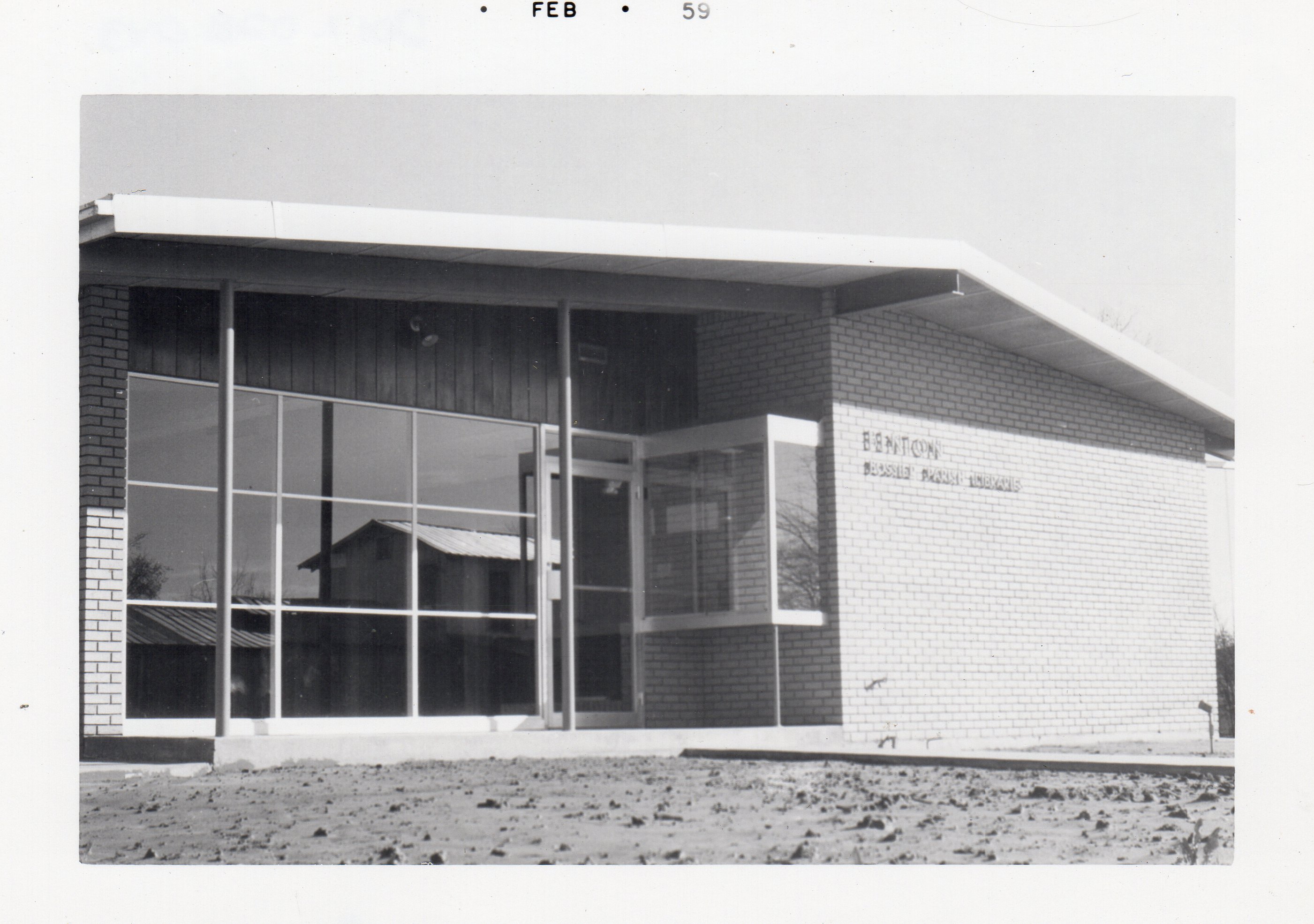
In 1959, the Benton library moved from its original building to more modern (and air conditioned!) quarters on the corner of Sibley and Sixth Streets, just half a block away. This location proved to be too small when library usage increased in the late 1980s, so the building was renovated and expanded in 1987 to provide a dedicated children’s area, magazine display shelves, and a casual reading area. The current Benton Branch building was constructed and opened in 2006, just down the street from the Bossier Parish Courthouse.


The Bossier Parish Libraries no longer has a bookmobile, but we now have six branch libraries plus the Central Library and History Center complex. We also have an outreach service for homebound patrons. To see us in person, please visit the History Center at 2206 Beckett St, Bossier City, LA and are open M-Th 9-8, Fri 9-6, and Sat 9-5. Our phone number is (318) 746-7717 and our email is history-center@bossierlibrary. For other fun facts, photos, and videos, be sure to follow us @BPLHistoryCenter on FB, @bplhistorycenter on TikTok, and check out our blog http://bpl-hc.blogspot.com/.


Images: 
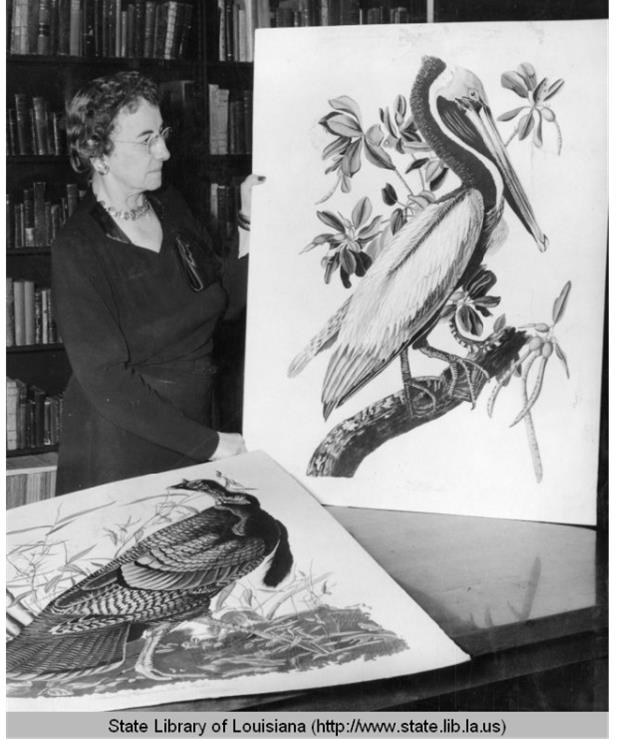
  • 1950s. State Librarian Essae M. Culver showing Audubon prints that are part of the Louisiana State Library collection. Photo: State Library of Louisiana Bossier Parish Library in Benton, LA, 1941.
  • Bossier Parish Library,  Headquarters/Benton Branch with Louisiana Library Commission Bookmobile.  Sign donated by the Coca Cola Company. May, 1941. Photo: State Library of Louisiana
  • Entrance to Bossier Parish Libraries Benton branch c.1966. Bossier Parish Libraries History Center photo.
Article by: Pam Carlisle


Wednesday, October 11, 2023

Rita Keoun and the Plain Dealing Library Branch

The Bossier Parish Library System was first discussed by the PTA of Bossier High School in 1940. The Bossier Parish Police Jury approved the formation of the library on a “demonstration” basis. The demonstration library was initially funded by the State Library of Louisiana for one year, and operated with the Works Progress Administration, a federal work relief program of the Great Depression era. At the end of that year, the Police Jury approved the library on a permanent basis with the passage of a one-half millage sustaining tax in June of 1941. The first branches were located in Bossier City, Haughton, Plain Dealing and the parish seat, Benton.


The Plain Dealing branch was one of the original three branches of the Bossier Parish Library system. The library in Benton, the Parish seat, was considered “headquarters”. The other branches were in Bossier City and Haughton. The Plain Dealing library was located on North Cotton Belt Street until 1944, when it moved to the South Lynch Street location where it remained until 1959, when the Police Jury approved the construction of a new building at Mary Lee and Lynch Street. A children’s area and preschool activity center were added during a 1987 expansion, along with the doubling in size of the public service space. The Plain Dealing Branch was renovated and expanded in 2003, almost tripling its square footage. Plain Dealing native Katie Lusk Allen and her husband, Curtis Allen, donated the property for the expansion in memory of the Arthur Clyde Lusk, Sr. family. Along with additional space for library services, the expansion allowed for exhibit spaces showcasing Bossier Parish history.

In 1991, the library was renamed the “Rita Sanders Keoun Memorial Plain Dealing Branch” in honor of a former Bossier Parish Libraries Board of Control member of over 40 years. Miss Rita, as she was most affectionately known, was born in Plain Dealing on Dec. 8, 1901. After graduating from high school in 1918, she went to Louisiana Polytechnic Institute in Ruston, where she completed her education degree in 1923. For the first six years of her teaching career, Miss Rita taught home economics and anything else that was needed, first, in Lisbon and then in Hosston, until Bossier school superintendent R.V. Kerr offered her a teaching position in Plain Dealing, bringing her back home to the community she loved. As the daughter and sister of three Plain Dealing mayors, Plain Dealing was her home.


For the next forty years, Miss Rita taught second grade to children in Plain Dealing. As a lifelong educator, she was also a lifelong learner, returning to school every summer during breaks, eventually receiving a master’s degree in primary education. In November 1949, Rita Keoun joined the Bossier Parish Library Board of Control and was elected president in 1960. In her forty-plus years on the board, she only missed one meeting due to car troubles. And, as the story goes, to keep Mrs. Keoun’s prized perfect attendance record, the board decided to just have that meeting “off the record.”


Miss Rita also assisted the Plain Dealing library in a very hands-on way through her participation in the Plain Dealing women’s club, the Kadelphian Club. Kadelphians, Miss Rita, chief among them, held children’s story hours and raised money for the library, and saw to it that both the grounds and interior were looking good, even raising money for draperies for the library!


Miss Rita was recognized for her contributions by many organizations on a regional, state, and national level. She was the recipient of the 1980 James O. Modisette Award for Public Library Trustees. Not only did the parish recognize her on “Rita Keoun Appreciation Day,” declared by the Bossier Parish Police Jury for Jun. 14, 1987, Louisiana Governor Edwin Edwards proclaimed Jun. 14, 1987, as “Rita Keoun Day” as well. When asked how she had felt about this special day, Miss Rita stated, “I was embarrassed to death.”


To learn more about Miss Rita or any Bossier Parish library history, visit the Bossier Parish Library’s History Center, 2206 Beckett Street, Bossier City. The History Center is open M-Th 9-8, Fri 9-6, and Sat 9-5. Our phone number is (318) 746-7717 and our email is history-center@bossierlibrary.org For other fun facts, photos, and videos, be sure to follow us @BPLHistoryCenter on FB, @bplhistorycenter on TikTok, and check out our blog http://bpl-hc.blogspot.com/.

Images: 

  • Rita Keoun receiving an award at the Plain Dealing library branch.
  • Black and white photo of Plain Dealing Library taken in 1975. 

Article by: Pam Carlisle


Wednesday, September 20, 2023

September is Library Card Signup Month

 Since 1987, Library Card Sign-up Month has been held in September to mark the beginning of the school year. However, there have been a variety of campaigns well before then, especially from women’s groups, to encourage as many residents as possible to take a first step in connecting to the widest array of library resources by getting a library card. Some of the most impassioned campaigns were in the 1960’s, and aimed at women, but with the intent that if you reach the women, you ultimately reach the whole family.


In February, 1963, “The Shreveport Journal” reported that the Louisiana Federation of Women’s Clubs, which included Northwest Louisiana, needed to come up with an entry for the Community Improvement Program of the nationwide General Federation of Women’s Clubs, which would fit their district’s theme for the year, “Women’s Role in Knowledge, Action.” Their simple, yet impactful, solution was a library card project, where they urged every single one of their approximately twelve hundred members to secure and use a library card. The library card project was implemented by Mrs. H.J. Haskins, Community Improvements Division Chairman, and Mrs. R.H. Sexton, Libraries Service Division Chairman.


In 1963, the Home Demonstration Clubs of Bossier Parish had a library card initiative for the week of April 21-27, which was National Library Week that year. Home Demonstration clubs existed through much of the twentieth century in even the smallest of Bossier Parish’s communities, where State Home Demonstration Agents could teach local women homemaking techniques. The initial emphasis of Home Demonstration work was teaching and aiding in food production and preservation, but the clubs evolved to teach all homemaking skills and knowledge in order to help women raise a happy, healthy family.


The Bossier home demonstration club initiative was announced in the April 24th, 1963, “Bossier Press” newspaper with the headline, “Library Card is Ticket to Knowledge,” followed by a glowing list of a library card’s benefits: “It entitles the holder to take part in one of the most valuable services offered in America today. It is available to rich and poor alike, and gives one access to the treasures of mankind found within the covers of a book.”


Even if a club member had a card, the week was meant to encourage card holders to actually use their library cards by enrolling in a reading program and to read a book each month for a year. Club members were also encouraged to promote “family reading programs at home,” with the ambition of strengthening family life by reading “for enjoyment, enrichment, information and enlightenment, ” ideally for the habit to grow into a year-round activity. The article ended in dramatic fashion by stating, “In the years ahead, America’s progress may well be determined by the number of library cards in use by all its citizens. For it is only by being well-informed that a people can remain free, and a well-used card is an assurance that this freedom will be safeguarded.”


Join the festivities of Library Card Sign-Up Month by getting your own library card today. Or, if you already have a library card, take advantage of the chance for patrons of Bossier Parish Libraries to help a friend enjoy the benefits of our libraries and also win a super prize. For the month of September, anyone who has a library card can give a ticket to a friend who doesn't have an account with Bossier Parish libraries. If their friend brings back the completed ticket, both patrons will be entered into a drawing to win a fabulous gift basket. Be sure to share with your friends the benefits of visiting the History Center for our local history exhibits and our comprehensive genealogical and local history research assistance, and our informative and fascinating programs.


The next History Center program will be an author talk with Philip C. Shackelford, Library Director at South Arkansas College and author of “Rise of the Mavericks: The U.S. Air Force Security Service and the Cold War, 1948 – 1979.” This free program will be in the History Center meeting room at 6:00 PM on Monday, September, 25th. The Bossier Parish Libraries History Center is located at 2206 Beckett St, Bossier City, LA. We are open M-Th 9-8, Fri 9-6, and Sat 9-5. Our phone number is (318) 746-7717, our email is history-center@bossierlibrary.org and the website is www.bossierlibrary.org


For other fun facts, photos, and videos, be sure to follow us @BPLHistoryCenter on FB, @bplhistorycenter on TikTok


Images: 

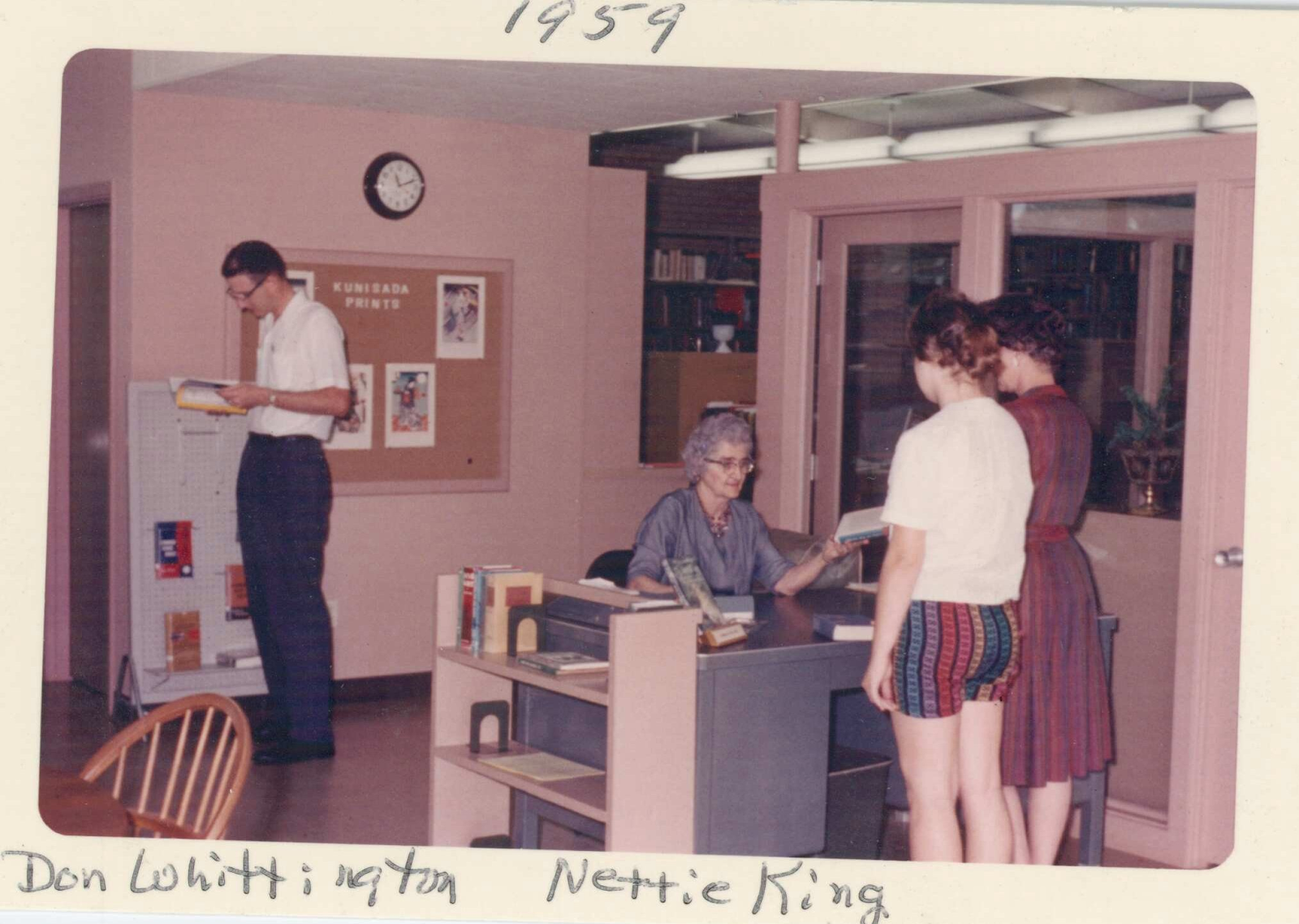
  • Color photo of interior of Benton Branch Library. Two women check out a book while a gentleman in the back, possibly Don Whittington, reads. 1959.
  • Photo of Judy Nugent and Mrs. Evelyn Warren, Librarian, at the Bossier City Branch Library, c.1966
Article By: Pam Carlisle

Wednesday, March 15, 2023

Billie Stevens: Wonder Librarian

It’s Women’s History month, and a perfect time to look back in our history and share the story of Bossier Parish Libraries’ very own Wonder Woman. Imagine a job ad like this, in the 1950’s: Wanted for Bossier Parish Libraries, a hard worker to perform the following duties: Put buckets under leaks, cut the tops off of large cans and nail them to cover holes in the floor, order books for all the schools in the Parish (in addition to all the public library books), take the bookmobile on unpaved roads to Rocky Mount or Chalybeate Springs, Red Land, Walker’s Chapel, or Mott, get that book mobile out of a ditch as needed, get back to Benton and type all the records of the circulated books and magazines, present children’s story hour, write a book review of the latest gardening book for the parish garden club meetings and home demonstration clubs, paint the walls and shelves, fix the plumbing and mow the grass (unless you want to pay your kid out of your own pocket to do it for you.) Sounds impossible? Though not a real job announcement, those were regular duties for Mrs. Billie Williams Stevens (1928-2017) of Benton, who worked for Bossier Parish Libraries from 1950 to 1984.  


Ms. Stevens was with the library almost from the beginning (the very first librarian was Elizabeth Williams). The library started in 1940 at the urging of the Bossier High School PTA as a demonstration library by the Louisiana Library Commission (now the State Library of Louisiana). It relied on library assistants who were from the Works Progress Administration, which was a federal employment program created by the Franklin Roosevelt administration to pull the U.S. out of the Great Depression. Bossier had never had a public library, although some books were donated to the courthouse for public use. The demonstration library system allowed the parish to experience the benefits of a public library for a year-long trial period. After which the parish would choose to either abandon the program or take over the library by accepting the state’s books and equipment. The Police Jury almost voted unanimously to adopt the library on June 12, 1941.  


Although World War II made the library visible as a “War Information Center,” dedicated funding for the library was thwarted by World War II. It limped along financially until 1947 when it was funded with a tax specifically for the library system. The library branches and locations when Ms. Stevens began her career were in Bossier City, Haughton, Benton, Plain Dealing and Elm Grove, plus a bookmobile. The Bossier City branch was at City Hall sharing space with the city court. The library could not open when court was in session, so the hours varied day-to-day. Library Headquarters, as it was called, was in Benton, in an old storefront. Elm Grove was in a one-room schoolhouse on the Elm Grove school campus, only open during school hours.  


The bookmobile, driven by Ms. Billie, was a very popular service to the parish in the 1950s. In that era,not everyone had cars, or certainly not two in a family. Ms. Billie grew up in the remote north BossierParish community of Wardview and was familiar with traveling for miles on sometimes muddy or washed-out roads. Not everyone had a TV and books were welcomed for entertainment. By the end of the 1960s, the demand for the bookmobile decreased. When the bookmobile broke down in 1968, Billie Stevens remembered, “so many women were going to work, and the new libraries were built and most of them were in distances that children could ride their bicycles.” The bookmobile service was retired then but the bookmobile itself became the parked library branch at Koran Station for several years. 


Bossier Parish Libraries no longer has a bookmobile, but we now have six libraries plus the Central Library and History Center complex.  We also have an outreach service for homebound patrons and places such as assisted living facilities. To see us in person, please visit the History Center at 2206 Beckett St, Bossier City, LA and are open M-Th 9-8, Fri 9-6, and Sat 9-5. Our phone number is (318) 746-7717 and our email is history-center@bossierlibrary. 


For other fun facts, photos, and videos, be sure to follow us @BPLHistoryCenter on FB, @bplhistorycenter on TikTok


Images: 

Koran Station branch of the Bossier Parish Library, housed in a red and white bookmobile. The bookmobile was operated from 1957 to Nov. 1967      1997.037.004 

Photo of Billie D. Williams Stevens, obituary, The Times 06 Dec 2017

Article by: Pam Carlisle

Wednesday, September 21, 2022

Remembering the Louisiana Maneuvers

Louisiana Maneuvers The Louisiana Maneuvers were large-scale military training exercises beginning in 1939. The maneuvers included a mock ’war’ to prepare the United States’ young and inexperienced military force for possible U.S. entrance into the Second World War. The idea was for troops (and equipment, including newly designed tanks and aircraft) to be tested in actual primitive battle conditions. As General George Patton himself said, "If you could take these tanks through Louisiana, you could take them through hell." Some of the men, who came from around the country, concurred with Patton’s view of Louisiana’s wilds: “I had spent some of the worst days and nights of my existence chasing all around the boondocks of that state,” wrote Bob Bearden, a paratrooper from Dallas who participated in three Louisiana Maneuvers.


The 1941 Louisiana Maneuvers were the largest training exercises ever held in U.S. Army history. They were held with half a million men in a 30,000 square mile area in northwest and central Louisiana. “The Second Army,” commanded by General Ben Lear, was pitted against the “Third Army,” commanded by Lieut. General Walter Krueger. The troops tested new types of equipment, strategies, supply systems and the use of massive divisions and corps instead of customarily small units. The maneuvers also brought public attention and money to this area of Louisiana and resulted in the establishment of new training camps like Fort Polk and Camps Claiborne and Beauregard. The 1941 maneuvers ended with the “Battle of Shreveport” in September, 1941 then moved to the Carolinas, wrapping up only 9 days before Japan attacked Pearl Harbor on Dec 7, 1941. The United States entered the war the following day.


As critical as the Louisiana Maneuvers were, and despite the fact that some of their key participants went on to become household names, like General George S. Patton, General (later President) Dwight D. Eisenhower, and General George C. Marshall, they are not widely-known. However, there are still some Louisianans who were children at the time, or who heard stories from their parents, who keep alive memories of when, almost literally in their front or back yards, young men from across the United States were preparing to fight across the globe.


That is, in fact, exactly how I first learned of the Louisiana Maneuvers, through a personal story from my mother-in-law, Mary Young Carlisle, who grew up in tiny Avinger in Northeast Texas and lived almost all of her adult life in Coushatta, Louisiana. Even though the Louisiana Maneuvers were supposed to stay in Louisiana, Major General Patton, commanding the Blue Army’s 2nd Armored Division, decided to capture Shreveport using the element of surprise. Instead of coming from the south where they were stationed in central Louisiana, they’d approach Shreveport coming from the north, by going well up into northeast Texas, then coming south. This maneuver took them right past Mary’s house, where the teenager stood at the end of her driveway smiling and waving as the young men rolled past. The soldiers wrote down their contact info, crumpled the paper into a ball, and threw the papers to her. Mary struck up correspondence with these young men, sending morale-boosting letters when the men were stationed overseas. Return letters to Mary often included WWII insignia patches as souvenirs, a collection she cherished all her life.


History Center patron William David Caldwell, who grew up in Bienville Parish, cherishes a letter his father, Chapman Caldwell, received from William M. Kerr of Buncome, Illinois who had been sent to the woods of northwest Louisiana during the Maneuvers. William Kerr wrote on November 11, 1941, after he’d been stationed to Camp Forrest Tennessee, “Dear Mr. Caldwell. I often think of you and others who were so nice to us during Maneuvers. I appreciated every kind word. “


Another patron, W. E. Heins, wrote in an email, “I remember the Louisiana Maneuvers. The soldiers camped out on the old football field at what is now Bossier Elementary School. Our home was on Colquitt Street across the street from the school. My friends and I visited with the soldiers and were fascinated by the rifles and other military equipment. They used blank rifle ammunition. They even gave us some of their K-Rations. One day my grandmother invited two of the solders to have lunch with us. We enjoyed talking to them and hearing their stories about military life.”


These could have been some of the same soldiers that turned up at the nearby Bossier City branch of the Bossier Parish Library that shared space in the courtroom of the old City Hall of Bossier City on Barksdale Blvd. A photo in our collection depicts uniformed soldiers packing the small space, seated or standing among the handful of research tables. A newspaper clipping with the photograph is titled, “Soldiers Enjoy Use of Library:”

Remembering the Louisiana Maneuvers

“That soldiers on maneuver, lonely and far from home, find libraries a godsend is testified by the above photograph of soldiers making themselves at home in the Bossier City branch library. The library makes a standing offer of stationery and writing materials for any solder desiring to use them…Night after night soldiers appeared to seat themselves at the reading tables and write home. Others enjoyed the newspapers, current magazines and books provided by the library. All were pleased with the friendly hospitality shown them…[and] the library was pleased to be of service.”


Of course, we are still pleased to be of service. If WWII’s one of your pursuits, come join us at the History Center for World War (II) Tuesdays on the second Tuesday of each month at 10:30 AM for coffee and informal discussion. Participants can share stories like some of the ones above, which brings the war experience “home” in a way that you won’t find in any history text book. We’d love to hear your family’s stories or see your photos or clippings about the Louisiana Maneuvers, whether you attend the program, just drop by or give us a phone call or an email. The History Center is located at 2206 Beckett St, Bossier City, LA. We are open M-Th 9-8, Fri 9-6, and Sat 9-5. Our phone number is (318) 746-7717 and our email is history-center@bossierlibrary.org


For other fun facts, photos, and videos, be sure to follow us @BPLHistoryCenter on FB, @bplhistorycenter on TikTok, and check out our blog http://bpl-hc.blogspot.com/. 


Article by: Pam Carlisle

Wednesday, January 12, 2022

Bossier Librarian Organizes Victory Book Campaign

Anytime there is war, organizations like the American Red Cross jump into action to support the troops. Shortly after America entered World War II, the Red Cross, the United States Organization for National Defense, and the American Library Association joined together to address the need for books for our rapidly growing military.

Immediately after the national book campaign announcement, the Bossier Parish Libraries council called a meeting with representatives from each town in the parish, where they made plans to back the campaign. A call to action appeared in The Planters Press, asking all Bossierites to donate to the cause. All books were welcomed, with used books being cleaned and repaired as needed.

According to the announcement, “These books will be sent to army camps in this area. Many of our boys who are in camp or who will be later, have had to discontinue their studies of various types, some of them would continue their work if the necessary text books were available, and of course books for recreation hours are always needed. The Victory Book Campaign slogan is ‘Give the Book You Are Now Reading.’”

Collection containers were placed in the schools throughout the parish. Each branch of the Bossier Parish Libraries accepted donations, and the bookmobile collected donations at each stop. And, in Bossier City, containers were also placed at City Hall, Barksdale Drug, the Planters Press, Bossier State Bank, the Bossier Tribune, and the Post Office.

Portrait of Mary Elisabeth Williams by A. Menosco.
Bossier Parish Library Collection: 2000.093.001.
Parish Librarian Elisabeth Williams appointed committee members to oversee various aspects of the campaign. Mrs. S.E. Norris led working with Bossier City Schools. Mrs. Nelson covered Haughton. Publicity in Bossier City was assigned to Mrs. Morris and Mrs. Dupuy. The containers for Bossier City were placed by Rev. A.P. Smith and Roy E. Horton. And A.R. Teague oversaw radio publicity.

The types of books needed also appeared in the announcement. The list included topics like applied psychology, current affairs, business, accounting, up-to-date technical books, mechanical drawing, photography, music, poetry, sports, geography, biography, history, novels, writing, math, mysteries, and westerns. All books donated were stamped, “Gift of the people of the United States through the Victory Book Campaign.”

The books were distributed across the nation to Army camps, Naval stations, Coast Guard stations, Merchant Marine libraries, and United States Organization centers. Five-million books were collected within the first five months of the campaign. The campaign ran from the beginning of 1942 through 1943, with approximately seventeen million books passing through the campaign clearinghouse in New York.

For the past eighty-one years, the Bossier Parish Library has proudly provided access to materials, programs, and technologies that enrich, educate, and inspire the residents of this great parish. To learn more about the Bossier Parish Library’s history, visit the BPL History Center at 2206 Beckett Street, Bossier City. Follow us @BPLHistoryCenter on FB, @bplhistorycenter on Tiktok, and check out our blog, http://bpl-hc.blogspot.com/.

By: Amy Robertson

Wednesday, September 1, 2021

This Month In Bossier Parish History

September: Though the Years


Weekly news from 100 year ago   

*Please enjoy the newspaper clippings from the Sept. 1, 1921 issue of the Bossier Banner and relating photos. 

· Some boys made a night raid in hope to enjoy a “Watermelon” feast but pulled citron melons.  Upon their disappointment, they left a note “Many thanks, but we don’t want your old “Citrons”.  


C. 1920’s: Eddie and Freddie Chandler as toddlers, Children near a large piece of farm equipment

1999.142.008 Matlock Collection


· Elam Dortch celebrates his 80th birthday with a  dinner consisting of about 100 guest. Dinner was composed of barbecued beef, pork, mutton and chicken. He was president of the Police Jury for 12 years and served on the jury for 20 years.


     1893 Bossier Parish Police Jury (Left to right-standing): T.M. Love, Ward 3; J.T. Manry, Ward 5; C.D. Sandidge, Ward 6  (Seated): B.R. Nash, Secty.; J.W. Jeter, Ward 2; F.M. Barnett, Ward 4; E.S. Dortch, Ward 1, Pres.; J.A. Sewall, Ward 2.

2003.026.037C    Corley Collection


· The Brandenburg’s move to Princeton and request that the Banner be delivered to their new address.

Cassius Clay "Buddy" Brandenburg, Jr.  ( Son of Cassius and Maggie Brandenburg)

From the program for Lt. Brandenburg's Memorial Services "On February 26, 1943, Lieutenant Brandenburg was reported missing in action on a bombing mission over Wilhelmshaven, Germany. He was the lead bombardier on the raid. On March 1, 1944, there was received from the War Department a letter stating he was presumed dead. His plane when last seen had started losing altitude at a point near Utrecht, Holland, and had turned back toward the continent. No other information could ever be obtained."

2019.057.015 Jones Collection


· J.J. Swindel was hurt while splitting wood.

Demolition of the J. J. Swindle house.

South East Corner of Palmetto Avenue and Perrin Street.

1997.062.029 Turnley Collection


 · Lillian Logan is to leave soon for New York, where she has secured a position as governess.


      Conway and Lillian Logan,  Catherine and I, also Clyde   in front of house

0000.004.070     Scanland Collection


· G.M Johnson purchased a new car

Sawmill located at Antrim. Built by G.M. Johnson, later owned by Roy and John Wesley Johnson. The mill burned around 1947 or 1948. Donald Anderson is shown in the picture.

Antrim was another saw mill town and was located on the Cotton Belt Railroad about three miles south of Plain Dealing. The milling company also had a well kept road leading out to the heavier timber.

2014.007.001  Anderson Collection


 Sept. 10, 1947:  (The Times) The Bossier Parish levee board, the state director and  the engineer of public works, disclosed that Bossier Parish farming land has almost doubled as a result of the drainage  program .  The work was similar to the work that was being done in 26 parishes  and was closely interrelated with the flood control program of the state.


Sept. 20, 1940:  The Bossier Parish Library System was first discussed by the PTA of Bossier High School in 1940 and the Bossier Parish Police Jury approved the formation of the Library on a “demonstration” basis.  The first three branches were located in Bossier City, Haughton, Plain Dealing and the parish seat, Benton as well as with a bookmobile and other equipment. 

Photograph of Bossier Parish Library.  Original building. 1950s.

0000.001.009   

Bossier Parish library collectionLocated in the parish seat, the Benton library opened in 1940, serving as the main Bossier Parish Library headquarters which was the old post office


Saturday, May 1, 2021

This Month In Bossier Parish History

 May: Though the Years


May 5, 1921; Weekly news from 100 years ago.

  •       Ben Keeth was an appreciated caller at the Bossier Banner office.


1906: J.P. Keeth General Merchandise Store. 
South Cotton Belt Street. 
"Cheap General Merchandise Store $1.00 cash for 75c "  
"Located in area of Otasco about 1906 Plain Dealing, La."
To right of Keeth store is the J.A. Mitchell Hardware store.
Left to right J.T. Manry, ? , Benton Boggs, J.T. Dudney, 
boy in front of stool is A.B. Turnley, 
boy with leg crossed is J.B. Turnely, 
unknown, Phill Haskins, A. Dudney.
1997.062.105 Turnley Collection

  •  The switchboard at the local telephone exchange is now in charge of Mrs. Myrtis


C.1900’s:  Plain Dealing telephone operator for Plain  Dealing Telephone Company.  
Her name is Annie Bell.
1997.062.165 Turnley Collection

  • Mr. Will Manry hurt his arm while cranking the motor of a six-cylinder automobile. 

 C.1920’s: Members of the Manry, Banks & Wheeler Families donated by Mary Wheeler Corley.
2003.026.011L  Corley Collection


May 18, 1984: Justin Wilson (1914-2001),  was a Southern American chef and humorist known for his brand of Cajun-inspired cuisine, humor and storytelling helps kick off the summer program.  While at the Bossier City/Central Branch, he read his book “Justin Wilson’s Cajun Fables” to the children and autographed books.   program at the library may 18 1984
Justin Wilson Program, Bossier Parish Libraries Central Branch, 1984
He was known for the catchphrase, "I gar-on-tee!" (I guarantee). 

May 18, 1984: Justin Wilson Program, Bossier Parish Libraries Central Branch
2020.001.0206

The Times
19 May 1984 


May 22, 1953:  Bossier City was the 10th largest city in the sate of Louisiana. 


The Shreveport Journal
22 May 1953


Aerial view of Bossier City, showing Red River, Texas Street bridge, railroad bridge, Barksdale Blvd in "old downtown" Bossier City, and Bossier High School. 
000.006.008


May 29, 1884: Bossier Parish Medical Society was organized
The Bossier Banner
29 May 1884

Dr. Elisha J. Hall of Bossier Parish.
2005.007.002Hall Collection


1920-1930’s: Mr. Cecil Kelly,  grandfather of Patrick Boggs, in his pharmacy at Stamps, Ark.  Mr. Kelly moved to Plain Dealing in 1931 and went into business with Dr. Bell.
1997.109.001 Boggs Collection


C.1900’s: Dr. Paul Lawrence is shown standing with his family in front of his south Haughton home. From left to right are T. Humphrey Lawrence, Mary Lawrence (sister to Paul), Dr. Paul Lawrence, Eva Lawrence, Myrtis Lawrence, Mary Haughton Lawrence (wife of Paul), Sudye Lawrence (youngest of nine children), and Lucille Lawrence.
1999.089.003 Cardin Collection


1915: Dr. Sidney Gardner when he practiced medicine.  Dr. Sidney Gardner was killed June 1917.
2000.071.089A     Watson Collection