Showing posts with label Railroad. Show all posts

Wednesday, March 12, 2025

Julia Sparke Rule: Nineteenth Century Community Chronicler and Mother

March is Women’s history month and it’s always exciting to find women from local history who challenged conventions, achieved something out-of-the-ordinary, or used whatever gifts and opportunities they had for the good of their community. Mrs. Julia Rule, became nationally famous for driving the golden spike in Bossier City, La. to mark the completion of the Shreveport and Arkansas Railroad on April 6, 1888 (later known as the Cotton Belt). She was well-known locally for her role working in the male domain of journalism, especially as the society columnist known as “Pansy” and was not afraid to use that platform to benefit both her own financial security as a widowed mother, but also the philanthropic endeavors of other women.


On the surface, Julia Rule’s life may have looked rather glamourous. Perhaps it was, but she was also fulfilling the never-ending demands on a working mother of very young children, and soon, as a widowed and bereaved mother of young children. She was doing so in the days before Social Security, life or disability insurance. Much of this behind-the-scenes story didn’t get widely told. Julia, of course, wrote mostly about other people’s lives.

Julia Sparke was born in Kentucky around 1852. The 1870 census shows her living in Shreveport at the age of 18 with her 27-year-old husband Charlie Rule, listed as a bookkeeper. Living right next door are her parents and younger siblings, ranging in age from 8 months to 15. She had just gotten married in 1869 in Louisville.

According the Census 10 years later, much in Julia’s life had changed. She is listed with the occupation of “Boarding,” apparently helping to run a boarding house, and has three children ages 1, 5 and 6, Ida, Louise and Glenn. Her husband is no longer employed, and has not been employed for the entire census year.

Not shown in the census records is that between 1870 and 1880 there was an older child born, named Lucy Stewart Rule who passed away in Shreveport on Oct. 11, 1877 at the age of 6 years and 9 months. Lucy Stewart’s life is evidenced only by a very brief notice in the Shreveport Times and a stone with her name on it near her parents’ headstones in Shreveport’s Oakland Cemetery. Then Charlie Rule passed away in 1881. That same year, Julia began teaching calisthenics (physical education – and later also penmanship) for head Kate Nelson at the Shreveport Seminary for Girls and Children not long after Charlie passed.

Mrs. Rule began a newspaper career within a decade, writing for several local papers. Venturing even further into unfamiliar territory for women, she became Secretary of the Louisiana State Press Association, and was always in attendance at their state conferences, sometimes as a featured speaker. She even attended the National Press Association conference in July, 1891.

Mrs. Rule also took a job as the secretary for the mayor of Shreveport, a position which set her up to be the first woman to drive the golden spike, in the mayor’s absence, along with R. N. McKellar who was the president of the Cotton Exchange. She gained national media attention for this honor, since she was considered to be the first woman to drive a golden spike to mark the completion of a railroad. The New York Evening Post even had a little fun at her expense, dubbing her “the Golden Rule.”

Perhaps most remarkably, Mrs. Rule was also an entrepreneur. By 1890 local and regional newspapers show that she decided to put her connections and fashion observations made while covering society to her financial benefit. She put a notice announcing her own “purchasing agency,” later called the Mrs. Julia Rule Millinery and Dressmaker supply:

“My extensive acquaintance with business houses in the city and experience gives me unrivaled facilities for filling orders that may be sent me…Parties residing out of the city who desire goods can save the expense of a trip and obtain better prices by ordering what they want through me than by purchasing themselves…”

In fact, Mrs. Rule put her column itself to use in advertising this business, interspersing her society notes in the “Shreveport Times” with entries about the latest goods available at “Mrs. Julia Rule’s millinery store.” She was perhaps, just ahead of her time, because by January 1895, her inventory was listed in a bankruptcy sale, then not advertised any further. She did end up going to work for the Louisiana State Fair in what was comparable to the more modern “public relations” position.

Julia Rule also wrote fondly of her friend Adah Vinson DeLay well-known Shreveport advocate for abused, abandoned or orphaned children. The daughter of a former mayor, Mrs. DeLay had been raised in comfort but died penniless while funding her work for children.

In addition to Mrs. DeLay’s philanthropy, Julia’s society column is credited with helping to promote Shreveport’s Home for the Homeless, later known officially as the Home for the Aged or unofficially as the “Old Ladies’ Home.” The home was started by women who organized themselves as the Ladies Charitable Association in 1897, and continued to be directed by women even after the addition of an “Old Men’s Home.” These homes became what is now known as the Glen Life Plan Community. They were much-needed institutions in a time well before the Social Security Act of 1935 provided for a system of Federal old-age benefits or enabled states to make more adequate provision for aged residents. By the early 1920’s the only other home like it in Louisiana, was the Little Sisters of the Poor in New Orleans.


Julia Rule herself lived well into old age, living with her daughter and family in the end. She passed away in April, 1931. To read more about the Home for the Aged, see The History of the Glen, 1898 to 1998 by Dr. Ann Mathison McLaurin, which is available in the reference collection of the History Center. If you would like to have our “Women Who Made a Difference in Bossier Parish” program, which includes Julia Rule (in Part 2) or any of our other programs presented to your group, please contact us, as well. We are located at 7204 Hutchison Drive, Bossier City, LA and are open M-Th 9-8, Fri 9-6, and Sat 9-5. Our phone number is (318) 746-7717 and our email is history-center@bossierlibrary.org

For other fun facts, photos, and videos, be sure to follow us @BPLHistoryCenter on FB, @bplhistorycenter on TikTok, and check out our blog http://bpl-hc.blogspot.com/.

Images: 

  • Portrait of Pansy: Mrs. Julia Rule, Shreveport Daily Times, Illustrated Edition, October 24, 1894
  • Pansy illustration that headed Julia Rule’s society column Shreveport Times, Dec 6, 1896 

Article by: Pam Carlisle 

Wednesday, January 1, 2025

What’s in a Name: Tycoons or Plain Dealers?

Happy New Year – it’s the first day of 2025! Have you come up with your New Year’s resolutions? If you’re the trendy type, perhaps you’ve eschewed New Year’s resolutions for a business or even personal “rebranding.” Let’s take a look at a historical rebranding in Bossier, when the community of Guernshein became known as the town of Plain Dealing in 1890. The names themselves represented two very different images of life in America in the late twentieth century.  


The name Plain Dealing came from the expansive cotton plantation (5000 acres) owned by James Oglethorpe Gilmer, whose land became the subdivided site for the town. The name was meant to represent Gilmer’s honesty to potential cotton traders and represented a more agrarian society. 


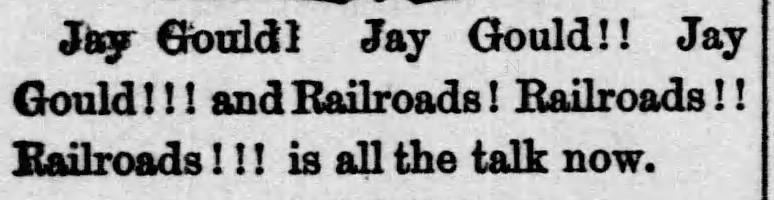
In the 1880s, prior to Plain Dealing’s incorporation, but when its train depot for the Cotton Belt Railroad was already built and busy and the subdivision home lots were being sold, the community was named Guernshein or Gernshein. According to local histories, the name was for a prominent railroad investor, sometimes noted as an investor in the Jay Gould railroad syndicate (of which the Cotton Belt eventually became a part). 


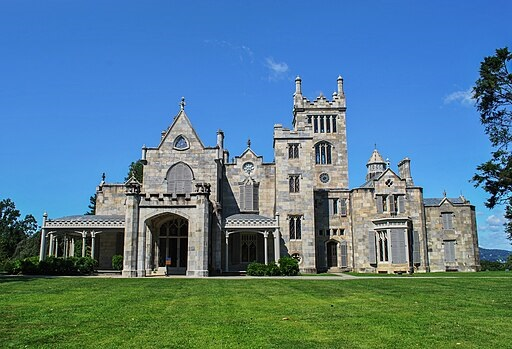
Jay Gould controlled railroads from coast to coast by sometimes underhanded (to put it mildly) tactics. He was known as one of the original Robber Barons, or less-scrupulous titans of industry of the Gilded Age. The Gilded Age in U.S. history, from the late 1870s to the early 1900s, was a time of great industrial growth and accumulation of massive and ostentatious new wealth among industrial owners. It was also a time of growing economic inequality and of political corruption. Railroads that Gould owned included the Missouri Pacific railroad, the St. Louis and Iron Mountain, the International and Great Northern, the Richmond Terminal, the Texas Pacific, the Union Pacific, the Wabash, the St. Louis Southwestern (the official name of the Cotton Belt), and the Manhattan Elevated Railroad. He also owned the Pacific Mail Steamship Company, and the Western Union Telegraph Company.


Gernshein himself was not identified in Plain Dealing histories beyond his last name and the simple description of “railroad investor”, but research into railroad investors of the time points to Michael Gernshein (spellings varied) of Manhattan, New York City. He was a German immigrant who worked as a banker, stockbroker, and railroad investor. He was an early general partner (from 1875 – 1881) of the most influential investment banking house of the Gilded Age in New York - Kuhn, Loeb and Company. It was a major competitor of the J.P. Morgan Company in financing America's swiftly growing railroad industry. The bank has since merged with Lehman brothers, and later with American Express.


Despite changing its name from Gernshein, which harkened back to its railroad, and not its agrarian roots, Plain Dealing’s history with the railroad was inextricably linked. The young town prospered due to its connection to the Cotton Belt. Ornate Victorian homes sprung up in the town in an area previously known for simple, practical dog-trot style log cabins (with two living areas separated by a wide-open hallway) and it became the site of the parish’s first brick building, Plain Dealing High School. The first high school building was actually funded by the vice-president of the Cotton Belt, S.J. Zeigler, whose daughter was among its first pupils. 


From the staff of the Bossier Parish Libraries History Center, we wish you all a happy New Year. If you have any information, stories, or photos of old Plain Dealing or other communities in Bossier Parish, we would love to add them (or scanned copies) to our History Center’s research collection. We are located at 7204 Hutchison Drive (formerly called 850 City Hall Drive) just across Beckett Street from the old Central Library and History Center in Bossier City, LA. All Bossier Parish Libraries locations will be closed Wednesday, 1/1/2025. Normal operating hours for Bossier Central Library and History Center are M-Th 9-8, Fri 9-6, and Sat 9-5. Our phone number is (318) 746-7717 and our email is history-center@bossierlibrary.org


For other local history facts, photos, and videos, be sure to follow us @BPLHistoryCenter on FB, @bplhistorycenter on TikTok, and check out our blog http://bpl-hc.blogspot.com/.


Images: 

  • Jay Gould clipping from Bossier Banner-Progress   January 27, 1887
  • Bond of the St. Louis Southwestern Railway Company 1891 Image By Edhac-Edham - Public Domain, https://commons.wikimedia.org/w/index.php?curid=53837122
  • Map of the St. Louis Southwestern Railway (Cotton Belt) system as of 1918, with trackage rights in purple.  modified 2008 from Bureau of Transportation Statistics North American Transportation Atlas Data). Public Domain, https://commons.wikimedia.org/w/index.php?curid=5283506
  • Lyndhurst, Jason (Jay) Gould mansion, Tarrytown, NY, Photo by Elisa Rolle, Shared under the Creative Commons license https://creativecommons.org/
Article by: Pam Carlisle

Wednesday, March 8, 2023

Julia Sparke Rule: Nineteenth Century Media Maven and Mother

 March is Women’s history month and it’s always a delight to find women from local history who challenged conventions, achieved something out-of-the-ordinary, or used whatever gifts and opportunities they had for the good of their community. It never ceases to amaze me the women like this that you can find when you look. One such woman is Mrs. Julia Rule, who became nationally famous for driving the golden spike in Bossier City, La. to mark the completion of the Shreveport and Arkansas Railroad on April 6, 1888 (later known as the Cotton Belt), and was well-known locally for her role working in the male domain of journalism, especially as the society columnist known as “Pansy.”.


On the surface, Julia Rule’s life may have looked rather glamourous. Perhaps it was, but she was also fulfilling the never-ending demands on a working mother of very young children, and soon, as a widowed and bereaved mother of young children. She was doing so in the days before Social Security, life or disability insurance. Much of this behind-the-scenes story didn’t get widely told. Julia, of course, wrote mostly about other people’s lives.


Julia Sparke was born in Kentucky around 1852. The 1870 census shows her living in Shreveport at the age of 18 with her 27-year-old husband Charlie Rule, listed as a bookkeeper. Living right next door are her parents and younger siblings, ranging in age from 8 months to 15. She had just gotten married in 1869 in Louisville.


According the Census 10 years later, much in Julia’s life had changed. She is listed with the occupation of “Boarding,” apparently helping to run a boarding house, and has three children ages 1, 5 and 6, Ida, Louise and Glenn. Her husband is no longer employed, and has not been employed for the entire census year.


Not shown in the census records is that between 1870 and 1880 there was an older child born, named Lucy Stewart Rule who passed away in Shreveport on Oct. 11, 1877 at the age of 6 years and 9 months. Lucy Stewart’s life is evidenced only by a very brief notice in the Shreveport Times and a stone with her name on it near her parents’ headstones in Shreveport’s Oakland Cemetery. Then Charlie Rule passed away in 1881. That same year, Julia began teaching calisthenics (physical education – and later also penmanship) for head Kate Nelson at the Shreveport Seminary for Girls and Children not long after Charlie passed.


Mrs. Rule began a newspaper career within a decade, writing for several local papers. Venturing even further into unfamiliar territory for women, she became Secretary of the Louisiana State Press Asociation, and was always in attendance at their state conferences, sometimes as a featured speaker. She even attended the National Press Association conference in July, 1891.


Mrs. Rule also took a job as the secretary for the mayor of Shreveport, a position which set her up to be the first woman to drive the golden spike, in the mayor’s absence, along with R. N. McKellar who was the president of the Cotton Exchange. She gained national media attention for this honor, since she was considered to be the first woman to drive a golden spike to mark the completion of a railroad. The New York Evening Post even had a little fun at her expense, dubbing her “the Golden Rule.”


Perhaps most remarkably, Mrs. Rule was also an entrepreneur. By 1890 local and regional newspapers show that she decided to put her connections and fashion observations made while covering society to
her financial benefit. She put a notice announcing her own “purchasing agency,” later called the Mrs. Julia Rule Millinery and Dressmaker supply:


“My extensive acquaintance with business houses in the city and experience gives me unrivaled facilities for filling orders that may be sent me…Parties residing out of the city who desire goods can save the expense of a trip and obtain better prices by ordering what they want through me than by purchasing themselves…In ordering, state specifically what is wanted and the limit of your investment and send money with the order. My charges are 2 and ½ percent for purchasing. She noted as references the Shreveport Times and “the merchants of Shreveport.”


In fact, Mrs. Rule put her column itself to use in advertising this business, interspersing her society notes in the “Shreveport Times” with entries such as, “For the Reunion. Just received at Mrs. Julia Rule’s millinery store on Market Street, a full line of black and white leghorn flats, with or without flowers, for the picnics.” Or “Read This. A large lot of beautiful hats, baby caps and bonnets are offered to the public at a reasonable price at Mrs. Julia Rule’s fashionable millinery store, No. 210 Milam Street.”


She was perhaps, just ahead of her time. By January 1895, her inventory was listed in a bankruptcy sale, then not advertised any further. However, imagine her today as a “personal shopper” or “influencer” with the help of e-commerce infrastructure and social media! In fact, she did end up going to work for the Louisiana State Fair in what was comparable to the more modern “public relations” position.


Julia herself lived well into old age, living with her daughter and family in the end. She passed away in April, 1931. The local Typographical Union included a tribute to her in their Memorial Day exercises held on the printers’ lot in Greenwood Cemetery. The union president said, “I could not let this occasion pass without paying special tribute to the memory of a woman who, throughout her 40 or more years as a newspaper woman of this city, was one of the best friends the printers ever had. Her character was as spotless and her soul as clean and white as this lily, which I now place in the vase as a loving tribute to her memory.” A committee from the union then went to Oakland to lay a floral tribute on her grave.


If you have stories or photographs of some of the area’s strong and trail-blazing women, we’d love to see them, and perhaps make copies for our collection, with your permission. If you would like to have our “Women Who Made a Difference in Bossier Parish” program, which includes Julia Rule (in Part 2) or any of our other programs presented to your group, please contact us, as well. We are located at 2206 Beckett St, Bossier City, LA and are open M-Th 9-8, Fri 9-6, and Sat 9-5. Our phone number is (318) 746-7717 and our email is history-center@bossierlibrary.org

For other fun facts, photos, and videos, be sure to follow us @BPLHistoryCenter on FB, @bplhistorycenter on TikTok, and check out our blog http://bpl-hc.blogspot.com/.


Images: 

Portrait: The Times, 23 Jan 1966

Newspaper Clipping: Springfield News-Sun, Springfield, Ohio · Saturday, April 07, 1888

Article by: Pam Carlsile

Friday, April 1, 2022

This Month In Bossier Parish History

 April: Through the years


Apr.6, 1888:  On this day, upon the completion of the Shreveport and Arkansas Railroad, a celebratory ceremony was held for the “Driving of the last spike”. 

In honor of this day we are sharing a photo of the golden spike being driven to mark the completion of the St. Louis Southwestern (Cotton Belt) branch from Lewisville, AR to Shreveport. This photo was taken near the eastern approach to the Texas Street bridge in Bossier City (the bridge was not there yet). Mrs. Julia Rule Julia Rule (1851-1931) was the first woman to help drive a golden spike. Along with R. N. McKellar who at that time was the president of the Cotton Exchange, the last spike was driven on April 6, 1888. McKellar later become the mayor as well as street commissioner of Shreveport. Mrs. Julia Rule was the mayor's secretary at the time of this photo. She was a pioneer of local women's rights. She was one of Shreveport's earliest newspaper columnists and society editors. Rule wrote for The Shreveport Times under the pseudonym "Pansy." Therefore, nearly everyone that knew her called her "Miss Pansy." 

photo of the golden spike being driven to mark the completion of the St. Louis Southwestern (Cotton Belt) branch from Lewisville, AR to Shreveport. This photo was taken near the eastern approach to the Texas Street bridge in Bossier City (the bridge was not there yet). Mrs. Julia Rule was the first woman to help drive a golden spike


Article 1: The Times 29 Apr 1931
Article 2: The Times-Democrat  08 Apr 1888


Apr 12, 1951: Bossier Bear Facts Newspaper

  •   Newspaper staff working on next issue of Bossier Bear Facts.
  •   1951 Bossier High’s Track Team has won four meets in a row.
  •   BHS band scores 12th Straight Superior in the Northwest Music Festival.


Apr.23: National Picnic Day!  We’re a month into spring. It’s time to get outside! Luckily, National Picnic Day has arrived on April 23. 

*Please enjoy the newspaper clippings and photos relating to picnics
C.1900’s: Children (probably grandchildren) and 
older woman (Mrs. Julia Zachary) having a picnic.
1997.054.051   Findley Collection 


May be a dinner/picnic on the grounds or a
 Zachary family reunion.
1997.054.052  Findley Collection 

Apr.27, 1922: Weekly News From 100 Years Ago

  • Elm Grove Oil Field was producing 2,000 barrels daily. 
  • An interesting ball game was played between Plain Dealing and Alden Bridge.
  • After a visit with his mother, W.H. Scanland Jr. returned to his house in Dallas. 

*Please enjoy the newspaper clippings from the Apr.27, 1922 issue of the Bossier Banner and relating photos. 


Wednesday, December 29, 2021

The Wheels of Change Ends an Era

Plain Dealing Depot c 1910s.
Bryce Turnley Collection: 1997.062.108
The American railroad system was built around the turn of the nineteenth century. Today, many towns in America owe their existence to being selected for a railroad depot. Whether pre-existing or established by the railroad, any place chosen as a depot experienced significant growth from the commerce that followed. Plain Dealing enjoyed such growth as a depot on the Cotton Belt Railroad.

The depot was built there in February 1888, with the track reaching Shreveport a couple of months later. Mrs. Julia Rule, one of Shreveport's most popular women and newspaper columnists, was given the honor of driving the golden spike in Bossier City. The following month telegraph offices were opened at Vanceville, Benton, Alden Bridge, Plain Dealing, and Bradley, AR.

Plain Dealing Depot c 1910s. Photograph by John H. Allen
Located in the center of town, the depot was a vital landmark used in the town's charter to specify the town limits in terms of distance from the depot. According to Manry, "Young and old would meet the northbound train from Shreveport every evening. Drummers would be ushered to waiting hacks, and friends and relatives would be helped down the steps from the train cars. All the daily news that was fit to hear was repeated at the depot when the train arrived."

Plain Dealing Depot, c 1950s.
Bryce Turnley collection: 1997.062.321
In 1971, after 83-years in operation, the announcement of its closing was reported to The Shreveport Journal by correspondent J.A. Manry. The closing of this depot was the end of an era, evidence of the wheels of change. While for many decades, the trains serviced passengers and freight. But with the advent of automobiles and airplanes led most railroad companies to stop pulling passenger cars and focus strictly on hauling freight.

With the focus on freight, the decision to close the depot in Plain Dealing was in the name of efficiency, to allow freight trains to highball through town. The last depot agent here was Ben Bethany. He was transferred to Waldo, AR. Tomorrow will be the 50th anniversary of the closing of the depot. The railroad's last Morse circuit was dismantled while railroad officials gathered to check it out. Cuspidors, clocks, coal shuttles, lanterns, hand grenades, cotton hooks, ticket cases, and trucks were inventoried and hauled away.

Plain Dealing Depot.
Source: The Shreveport Journal, Dec. 31, 1971
The big question lingering in everyone's mind was, what would happen to the old depot building? The St. Louis Southwestern Railway Company offered to give the building to the town as long as it moved it away within three months. At that time, Mayor Leon Sanders stated, "he would consult with the town's inhabitants and the town council would decide its new location and the purpose for which it will be used."

However, meeting minutes of the Town of Plain Dealing reveal that "After a lengthy discussion, a motion was made by Alderman Southerland and duly seconded by Alderman Pittman that the donation be declined and that the mayor be authodized [sic] to draft a letter to the Railway Company stating the reasons for the refusal. This motion being put to vote carried unanimously." Unfortunately, the minutes did not give insight into the reasons for the refusal.

By: Amy Robertson

Wednesday, December 1, 2021

Two Robberies, a Broken Marriage, and a Murder

The first railroad to come through Bossier Parish was the Vicksburg, Shreveport, and Pacific in 1884. Communities lucky enough to be selected for railroad stations and depots were opened to new economic opportunities, stimulating the development of towns and communities. While they attracted more people, industry, and commerce, they also attracted criminals. In addition to train robbers, there were also station holdup crooks, pickpockets, con men, and bootleggers to contend with.

On Dec. 3, 1886, a bold burglary took place at the storehouse of John Franklin Lay at Bodcau Station on the VS&P Railroad. Details of the robbery and how they nabbed the thief appeared in The Bossier Banner the following week.

It was a Friday night between 11 and 1 o'clock when Lay, Levi F. Head, and two or three others were asleep in the store, a common practice in those days. They closed the store at 10 p.m. and went upstairs to retire. They were awakened by a "heavy sound from below like some object had been hurled against the front door or wall." They jumped out of bed and quickly got dressed, struck a light, and went down to the storeroom, where they found that someone had busted the front door open with a large stick of wood.

Upon inspection, they discovered a small desk, which contained over a hundred dollars in gold and about twenty-five to thirty dollars in paper money, was removed from the store. Upon searching the grounds, they discovered the desk some distance from the store. The thief took the gold but overlooked the cash in his haste to abscond the scene.

In the next day or two, a neighboring man named Isaac Gallimore became the prime suspect. They described him as playing the part of "gay Lothario" with a woman named Francis Williams. The name Lothario was used to describe men that were unscrupulous seducers of women. According to the article, "It was through her displaying a plethoric stocking to one of the amateur colored detectives sent out by Lay that Isaac was so quickly 'given away.'"

The detective asked Isaac to change a ten-dollar bill for him. Isaac replied that Francis had all his money. When the detective asked her for change, she pulled her money out, primarily twenty-dollar gold pieces, and could not make the change. This information and the fact that Isaac was headed to Bellevue for a license to marry Francis gave them reason enough to seek an arrest warrant.

Head swore out a warrant the following Monday. Justice A. J. Murff issued the warrant given to Deputy Sheriff Thomas N. Braden, who arrested Isaac while the clerk was issuing the marriage license. Needless to say, the marriage was broken before it began. The money was recovered from Francis, and she was left mourning the loss of her man and the money.

Fourteen years later, Lay's store was burglarized again. This time Lay was closing the store, and while he was bending over to fasten the bottom of the door, a number 3 shot was fired into his chest. The motive appeared to be robbery, as a drawer containing $20 was missing from the store and was found empty at a neighboring gin house between two bales of cotton.

The two suspects arrested were John and George Gallimore, but after further investigation, they were released. Not knowing who murdered Lay, the jury recommended that the Governor offer a suitable reward in the case.

Lay was a native of Bossier Parish, born in 1853. His death was mourned by his three sisters, brothers-in-law, and many other relatives and friends. The money stolen on the night of his murder is equivalent in purchasing power to about $658.55 today.

By: Amy Robertson

Wednesday, June 16, 2021

Haughton's Early Days

The Village of Haughton
This unique picture of Haughton, Louisiana, was taken in 1910, from atop the church bell tower. A wagon loaded with a bale of cotton proceeds to the railroad depot. the three-story building in the center is the Crume Hotel. At the far left is the store of T.H. Lawrence, which was the last surviving building, until 1997, when it was dismantled. the white house on the right would burn in the 1950s. Behind it is the Edwards' home, which would burn in the 1990s. Fire has been a strong enemy of Bossier Parish's early homes and towns. Emma Patillo Collection: 0000.003.033-2

When William Purvis Haughton moved his family to Bossier Parish, he had no idea that the land he pioneered along with the Lawrence family would one day be named after him and would continue to grow as it has. Haughton's beginning goes back roughly forty years before it was officially designated as such on Sept. 1, 1884, when the VS&P railroad changed the community known as Lawrenceville to Haughton.

The name change was because when the railroad came through Lawrenceville, the train station was named Lawrence Station, but there was already a Lawrence Station in Mississippi. Dr. Paul Andrew Lawrence, the son of pioneer David Lawrence and son-in-law of William Haughton, chose to change Lawrence Station of Lawrenceville to Haughton Station. And the community from that point forward has been known as Haughton.

Being chosen as a location for a railroad station set into motion a significant growth spurt for Haughton. During the summer of 1884, the railroad was built through the community. The Bossier Banner reported on July 10, 1884, "Lawrenceville, situated ten miles south of Bellevue, on the Vicksburg, Shreveport and Pacific Railroad, is having quite a boom in business and improvements. There is life and bustle everywhere, and our new railroad town evidently has a bright future before it, in which well directed industry and liberal investments will surely be well rewarded. Success to the new town and its progressive citizens."

A few days later, the first U.S. Post Office opened with Luther E. McDade as postmaster. Of course, the post office name changed from Lawrenceville to Haughton a little over a month after the community's name was changed. The second postmaster was Milus W. Haughton, son of William.

The community continued to grow, and when talks of moving the Parish seat from Bellevue started, the citizens of Haughton wrote a letter to the editor of the Bossier Banner with their bid to be chosen for the new location. The letter was dated May 7, 1885, and was published a week later. It reads as follows:

"As there is a great deal of talk about the Parish site removal, and some little bidding for the Court House, the citizens of Haughton and vicinity desire to be heard. We will give ($3,000) three thousand dollars and one lot of ground for the parish site. Our land ranges in value from $125 to $1000 per lot; and we will give a suitable lot worth at least $500. If parties do not believe that we are in earnest, let us be awarded the parish site and the cash will be forthcoming. In the early days of Rome the crown was put up to the highest bidder, and the money this derived was given to the people. — In this, we propose to assist the people of Bossier in building a new Court House and jail. If any other community offers this amount we may raise our bid, but think that those who get the advantage of the parish site, should pay for that advantage. We are willing to do so."

The letter continues with boastings of the fruitfulness of the land, its commercial advantages, and schools. The amount of cotton they shipped out in 1884 was 3,000 bales, and the fact that they paid more for cotton than any other place. Pointing out that "everything argues in favor of Haughton. We have six business houses, boarding houses, livery stables, saw mills, and everything that constitutes a first-class village, with the ambition of a town — Within the present year Dr. Lawrence, Messrs. McClanahan, Davis, Grounds, Bullock and Odom, have built residences, and Messrs. Bryan, Radcliff, Bodenheimer, McKinney and J.F. Edwards are constructing residences. If any town, or neighborhood in the parish can beat this showing of a town less than a year old, we would like to hear from them, especially if they will offer more for the Court House."

That same year a Baptist church house and Methodist church house were erected. P.B. Holt became the editor and proprietor of the first newspaper, the “Haughton Democrat.” The village held its first election that fall, where the people elected Henry Bodenheimer as their first Mayor and for Trustees, Dr. Paul Lawrence, J.F. Edwards, J.W. Elston, D.H. Cale, D.E. Griffin, and J.G. Grounds. Come Christmas time; the people put up a community Christmas tree in the schoolhouse where they gathered on Christmas Eve. The first telephone was installed in June of 1889.

The village of Haughton continued to grow. With a population of over 1,000 inhabitants, Governor Edwin Edwards, through proclamation, reclassified the Village of Haughton to the Town of Haughton in Sept. 1975. Currently the largest town in Bossier Parish, and once it reaches a population of 5,000, it will be eligible for reclassification as a city.

To learn more about Haughton, visit the Bossier Parish Libraries History Center at 2206 Beckett Street, Bossier City. Be sure to follow us @BPLHistoryCenter on FB, @bplhistorycenter on Tiktok, and check out our blog, http://bpl-hc.blogspot.com/.

By: Amy Robertson

Wednesday, December 30, 2020

Bridging Two Cities in the 1800s

In 1862 a man by the name of James Oliver Nuckolls migrated to Bossier Parish with his family. Two years later, at the age of 17, he joined the Third Louisiana Battalion Army and served the duration of the war between the states. After the war, he returned to Bossier Parish, where he settled in Plain Dealing. Here, he farmed the land, married, raised a family, and lived out the rest of his days.

In his later years, he enjoyed writing about days gone by. One of his writings provides details of old Red River crossings during bygone times. He wrote this recollection upon an "urgent request" from his friend J. T. Manry on Feb. 29, 1932, just three months before his death. The Bossier Banner-Progress published his story Mar. 10th.

Jones' Landing, Va., vicinity. Pontoon bridge over the James, from the north bank. United States Virginia Jones' Landing, None. [Between 1860 and 1865] Photograph. https://www.loc.gov/item/2018666613/.

He begins by describing the first bridge to connect Bossier City to Shreveport. According to Nuckolls, "The first bridge across the river at Shreveport was a pontoon bridge. It was constructed by placing a number of skiffs parallel and close together and laying across heavy plank for flooring. It made a very substantial bridge. It was built chiefly to facilitate military operations. My own company, the Third Louisiana Battery of Light Artillery, crossed on it the last year of the war."

Other articles have appeared over the years that mention the pontoon bridge during the war. William S. Ingram was a long-time newspaperman who managed both the Shreveport Journal and the Shreveport Times during his career. He enjoyed writing historical pieces. In an article published by The Shreveport Times in 1926, he states, "Nathan Hirsch, the father of Willie R. Hirsch, lived for many years with Mr. Levy, and during the Civil war guarded the pontoon bridge which crossed the Red river near Cotton street..."

Eric J. Brock, a long-time local historian, wrote many articles and books about Shreveport and Bossier. In an article he wrote for The Shreveport Times, he states, "In 1864, a pontoon bridge was built crossing Red River from near the Confederate Navy Yard (established to build ironclads and located on the riverfront about where the Expo Hall and Harrah's now stand) to the Cane Place - "Elysian Grove." This bridge was destroyed a year after the war by massive flooding. Another bridge was also built, connecting Fort Turnbull to Bossier Parish, just south of Battery Ewell."

In Nuckolls' article, he explains that after the pontoon bridge was gone, ferry steamboats were used to provide transportation of people, stock, and wagons across the river. One of the ferries in operation for a long time was the Sterling White, captained by Ben M. White. In 1881, the Red River's water level became too low to operate his ferry. He was granted permission to install a pontoon bridge until the water level returned to his steamboat's navigable level.

The use of ferries between Bossier City and Shreveport came to an end when the first permanent bridge was constructed in 1884. The VS&P railroad bridge had a wooden deck that allowed wagon and pedestrian traffic to cross. There was a toll fee for wagons and pedestrians to cross. Nuckolls tells about the new bridge and informs his readers, "I was collector of the tolls on the bridge during 1906 and 1910, and everybody going east or west had to pass me."

VS&P bridge with wagons and pedestrians crossing, 1884. Neill Yarborough Collection: 2006.034.018

Recording history by writing stories of days gone by, like Nuckolls and others have done, provide future generations with historical facts that might not otherwise be known. The Bossier Parish Libraries History Center has been the primary repository for the history of Bossier Parish since 1999. What do you want to know about Bossier Parish's history? Visit, call, or email the Bossier Parish Library History Center for help with your research. We are at 2206 Beckett Street, Bossier City, 318-746-7717, history-center@bossierlibrary.org.

By: Amy Robertson

Wednesday, July 15, 2020

Louisiana's Health Exhibit Train


The Louisiana Health Exhibit Train in Plain Dealing c. 1911. Bryce Turnley Collection: 1997.062.171.

In 1910 Dr. Oscar Dowling, a prominent oculist in Shreveport, became the president of the Louisiana State Board of Health and instituted a massive campaign on public health reform. In an article in the Times-Democrat, Sep. 2,1910, Dowling was quoted as saying, “I shall try to make my administration of the affairs of the State Board of Health as efficient as possible. By means of an educational campaign, I hope to arouse a deeper and more popular interest in health matters the State over.”

He set out to teach every community in the state about personal hygiene, sanitation, mosquito control, and disease prevention. He assembled a small team of lecturers and assistants that traveled with him on the health exhibit train, which consisted of three cars; two 75-foot cars for exhibits and a Pullman car for living quarters. The Queen and Crescent Railway Company provided the train.

The health exhibit train debuted on Nov. 1, 1910, at the State Fair in Shreveport, where Dr. Dowling invited all physicians, dentists, and representatives of the press to be special guests of his “gospel of health on wheels.” When the fair was over, the train was parked at the Market Street crossing for its\ first public viewing. According to Henry Oyen, “Every city, town or village – 256 in all – of more than 250 inhabitants was visited, inspected and lectured. Where the railroads didn’t run Dowling went in motor cars or carriages. On the narrow-gauge tracks hemounted a railway hand car and pumped himself over the line. Where other methods of transportation failed he walked; in the bayou parishes launches and rowboats were called into service.”

An article in the Shreveport Journal, Jan. 7, 1911, states that one of the exhibits “tells a story of prevention of disease. Arranged on a table in the center of the room are twenty glass jars. In these are sections of the human form, not of wax or composition, but actual specimens. These sections, which have been prepared by Dr. Edmond Souchon, show the progress of tuberculosis in various stages of development. Set up along the sides of the car are transparent views prepared from photographs taken by Dr. P. T. Talbot on his recent tour of inspection of the state. There is also an interesting exhibit furnished by the Louisiana Anti-tuberculosis League. A model of a sanitary closet constructed according to the plans of Dr. Charles Wardell Stiles, the noted hookworm expert, is also on exhibition.

“Constructed according to the plans furnished by the United States department of agriculture is the framework of a model dairy in miniature. Some interesting charts prepared by Dr. Gustave Mann of Tulane, show the food values of various food exhibits. There are microscopes and other aparati, milk coolers, pails, aerators, and model school furniture of the latest design. … There is also an exhibit of bacilli cultures prepared by Dr. Jones, showing the effect of fly contamination. An interesting pathological exhibit of preventable diseases prepared by Dr. Charles W. Duval, by courtesy of Tulane University, is also in the car. Dr. William Ernest Walker’s oral hygiene exhibit attracting much attention. Additional exhibits on blindness and milk appliances have been recently added. Quantities of literature, consisting of cards, banners, etc., calling attention to the evil of flies and spitting, and also containing statistics on various diseases, are distributed from the car.

“The daily program covers a full day’s work. The car is open from 8 o’clock in the morning until 10 and sometimes 11 o’clock at night. In the mornings Miss Morris and Dr. Porter visit and inspect the schools and talk to the children. Miss Morris also meets the ladies and organizes school improvement and civic leagues. The doctors make the sanitary inspections of the towns. At night illustrated lectures, slides and moving pictures are given. These evening entertainments are free and a cordial invitation is extended to the people in the surrounding country, as well as those in town, to attend the meetings.”

In 1911, Dr. Dowling received an urgent invitation from California to bring the health train to them, which he obliged, presenting his health exhibit train at the American Medical Society Convention, making stops along the way. The popularity and effectiveness of the health train kept it going in Louisiana for well over a decade, and this method of educating citizens and improving public health quickly became adopted by other states.

Before going to California, the health exhibit train completed its first state tour and stopped in Plain Dealing in May of 1911.

By: Amy Robertson

Wednesday, June 17, 2020

Dr. Paul Lawrence: Man of Many Hats

Dr. Paul Lawrence C. 1890
Emma Pattillo Collection: 0000.003.040

Dr. Paul Lawrence is remembered as the one-legged, horseback doctor of Haughton. Though he served this rural community for fifty years as a doctor, it is not how he made his living. That is because during the 19th Century, doctors, especially frontier doctors in rural areas, were rarely paid in cash. Instead, they were often paid in-kind with whatever produce, services or goods were available to the patient. Because of this, he was a man of many hats.

Lawrence first came to Bossier Parish in 1851, when he was only twelve-years-old, moving here from Mississippi with his family. He obtained his education from Fillmore Academy. Then, in the fall of 1860, Lawrence began his medical studies in New Orleans at the University of Louisiana, known today as Tulane University.

With tensions rising between the states, he came home in Dec. 1861 and enlisted in the Robin Greys, a Bossier Parish company of the 19th Louisiana Infantry, Company B, The Army of Tennessee. The Army of Tennessee was the principal Confederate army operating between the Appalachian Mountains and the Mississippi River.

During the Civil War, Lawrence sustained two injuries, one to the shoulder in 1863. After a six-month recovery, he rejoined his company, and two months later, he suffered an injury that required the amputation of his right leg. After convalescing in Mississippi with relatives until he was well and able to travel, he returned to Louisiana, wasting no time in resuming his medical studies in the summer of 1865.

Mary "Mollie" Jane Haughton C. 1890
Emma Pattillo Collection: 0000.003.040-2

In 1867, Lawrence returned to Bossier Parish and began his medical practice. He married Mary (Mollie) Jane Haughton, daughter of Harriet (Hassell) Haughton and William Purvis Haughton, whom the town is named after. When the railroad first came through the area, it was initially called Lawrenceville, after Dr. Paul Lawrence as the train depot, often referred to as Lawrence Station, was located on land that was formerly owned by him. On Sep. 1, 1884, Lawrenceville officially became Haughton.

As mentioned earlier, Lawrence was a man of many hats. Besides always being on call as the town’s physician, he was also a third-generation cotton planter, as well as a merchant, owning and running a general mercantile and cotton brokerage business, Lawrence & Son. After his death, his youngest son, Thomas Humphrey Lawrence, who partnered with him at the store, changed the name to Lawrence & Company, and it remained open until his retirement in the 1950s.

Even after retirement, Lawrence continued to superintend his farm until his death. As a retired physician, he would still provide medical services when called on, whether filling in when a doctor was not available and assisting in surgeries when requested. He was a prominent member of the community, and he gladly served it in various ways, from serving as a voting commissioner to being a member of the Bossier Parish School Board, and later as a member of the Board of Trustees for Haughton white 
schools.

Lawrence was appointed by the Bossier Parish Police Jury as a Health Officer for the Fillmore area in 1878 in response to the threat of dangerous and contagious diseases, such as smallpox and yellow fever. In 1885, he was on the building committee for the Methodist Church in Haughton, which has been in the same location on E. McKinley Ave for 120 years.

He was nominated to represent Bossier Parish as a delegate for the Democratic State Convention. And, he was a delegate for the Louisiana State Division, United Confederate Veterans in 1914. When he died in Nov. 1934; he was the last Robin Grey soldier to die.

When driving down Hwy. 157, about a half-mile south of the red light in Haughton, sits Dr. Paul Lawrence’s old house, which is now a historic site.
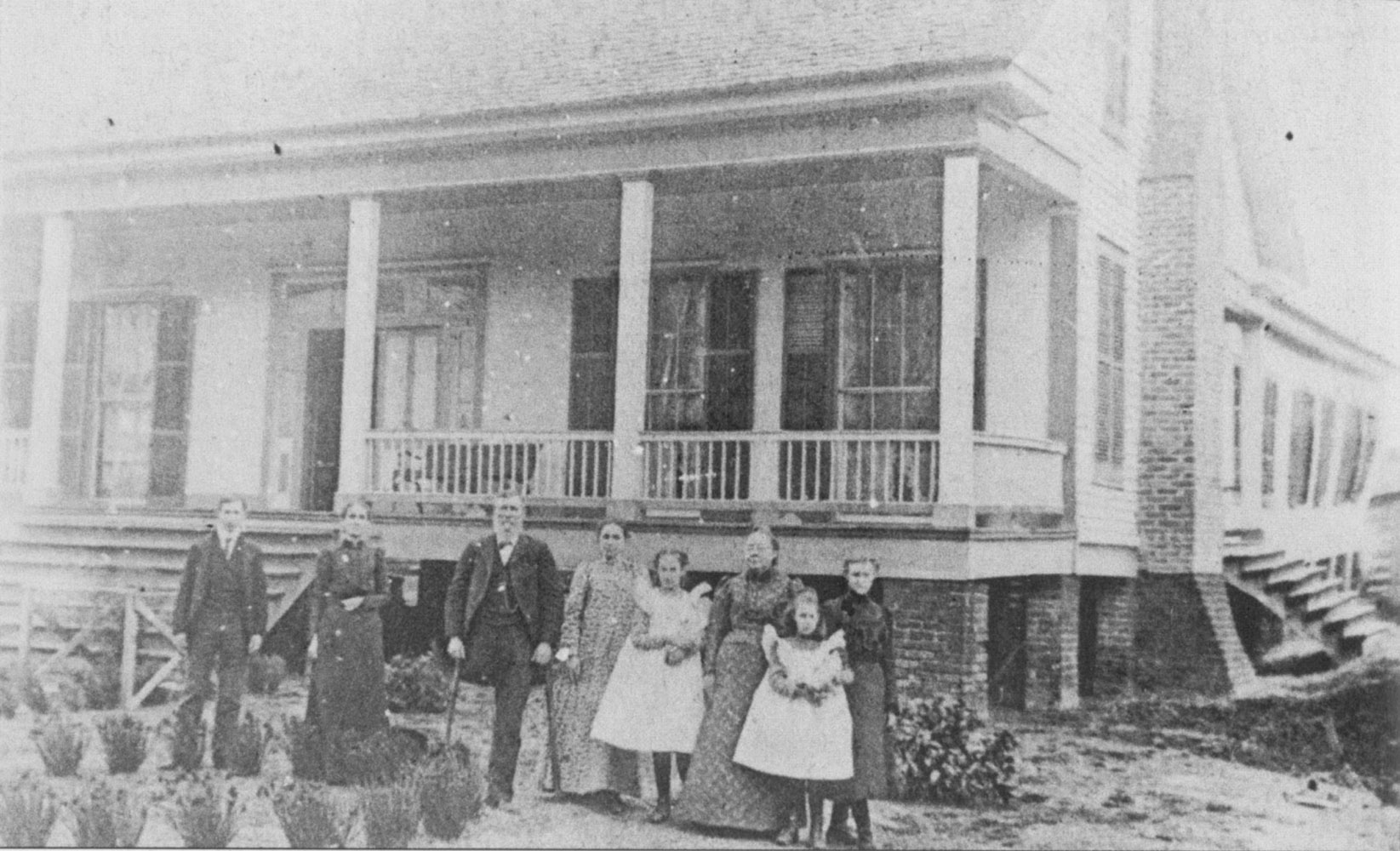
C. 1900. Dr. Paul Lawrence is shown standing with his family in front of his south Haughton home. From left to right are T. Humphrey Lawrence, Mary Lawrence (sister to Paul), Dr. Paul Lawrence, Eva Lawrence, Myrtis Lawrence, Mary Haughton Lawrence (wife of Paul), Sudye Lawrence(youngest of nine children), and Lucille Lawrence. (Clifton Cardin Collection: 1999.089.003)

Wednesday, August 28, 2019

L&A Railroad Establishes Princeton

Mrs. Perry at the Central Point South Princeton train sign in Princeton, La, 1996.
Kenneth R. Perry collection: 1998.048.003.
In the early history of Bossier Parish, the steamboats and later the railroads influenced the movement of the populace. Communities like Fillmore and Bellevue suffered because they were not selected as depots when the railroads came in 1884 (VS&P) and 1888 (Cotton Belt), respectively. Likewise, Haughton, Benton, and Plain Dealing grew because they did become depots during that time. In 1909 the L&A Railroad was built establishing Princeton as a depot. The first train passed through on November 2, 1909.

We can’t be confident as to how Princeton got its name because there are at least two different accounts. Both accounts agree that the community was named for early settler Joseph Wilson Prince, Sr. It has been written that Princeton was named when it was established as a train depot. One account is that Joseph’s wife Dollie McDade Prince was given the honor of naming the community for the sake of the train depot. Her first choice was Princeville. Since this name was already in use at another train depot, she decided on Princeton and was quoted as saying, “Princeton is a pretty name.” However, Joseph Wilson Prince, Sr.’s great-granddaughter, Dorothy Watson Glover, believes that Ella Cooper Watson named the community after her beloved deceased stepfather, Joseph Wilson Prince, Sr. (1833-1902).

The railroad caused the little community of Princeton to change from being just a quiet farming community to a bustling railroad depot community. On March 24, 1910, it was announced in The Bossier Banner that Mr. Burge of Minden was erecting a store.

In an article found in The Bossier Banner on August 11, 1910, the writer describes Princeton as having “a store, a freight room, and several residences,” but not a post office. The writer notes, “things bear the appearances of being exceptionally busy during weekdays for a little flag station.” He also writes that Mr. F. E. Burrage served as the ticket and freight agent for the L&A while running his store and raising chickens. Bellevue sawmill was one of Burrage’s freight customers shipping thousands of feet of lumber, such as pine cross ties and piles. “A number of the piles, sixty feet in length and skinned from end to end ... were consigned to the creosoting plant in Bossier City and will later be shipped to West Texas, where they will be used in the construction of a new railroad.” The writer finishes by opining that, “Princeton is admirably located to become a trading and shipping point of local importance and no doubt it will develop into such within the next year or so.”

By September of that same year, the first Post Office was opened at Princeton with Allie J. Burrage as postmaster. On January 31, 1919, the post office was discontinued in Princeton with all mail being sent to Haughton, but it was re-established on October 30, 1922, with Clara M. Crawford as acting postmaster.

Over the next few years, Princeton continued to grow. By 1914 it had a sawmill that was producing about “20,000 feet of lumber daily.” Their railroad depot went from being a “little shack” to “a large and commodious depot.” An express office was planned along with the promise of telegraph and telephone facilities. A new school building was constructed and filled with new desks and equipment. “Land in and around Princeton was beginning to be hard to find.” And apparently so were wives according to an article by an unknown writer in The Bossier Banner on March 5, 1914, “Princeton can boast of a high, salubrious, free-from-malaria atmosphere, of an intelligent, broad-minded and progressive community, and six or seven of the handsomest, most industrious and good all-around young bachelors that can be found anywhere. If you girl readers doubt this last statement come and see for yourselves.”

By the beginning of 1915, the cross arms and insulators arrived for the telephone lines which were run by Cumberland Telephone Company in April. Finally, the telephone box was installed in May, making it possible for the Princeton community to communicate with the outside world via telephone.

To learn more about Princeton or Bossier Parish history, visit the Bossier Parish Libraries History Center at 2206 Beckett Street in Bossier City.

Note: The History Center's collection database could use more historical photographs etc. of Princeton, La. If you have any you would like to donate; please contact the History Center today (318.746.7717). If you do not wish to part with your photographs, but would like to share them, we are happy to scan them to add to our collection.

By: Amy Robertson

Wednesday, July 31, 2019

Bossier City's First Railroad

Photo of wagons crossing the VS&P bridge entering Bossier City, c.1900.
Neill Yarborough Collection: 2006.034.018
This year marks the 150th anniversary of the completion of the transcontinental railroad which is the connection of the Central Pacific Railroad with the Union Pacific Railroad spanning from the east coast to the west coast. This major accomplishment was completed in 1869, however, it was 1884 before Cane’s Landing (now Bossier City) received its first railroad the Vicksburg, Shreveport, & Pacific (VS&P) Railway.

The VS&P was building their railroad in 1882 from Monroe to Shreveport when they approached Caddo and Bossier Parishes about assisting them in bridging the Red River. The parishes agreed to help. They also decided to floor the bridge with thick timbers to allow for wagon and pedestrian traffic and charge a toll which would, over time, offset the cost of building the bridge. For the first time, people would be able to cross the Red River from Cane’s Landing to Shreveport without taking a ferry. The VS&P eliminated the Sterling White ferry boat, which had been the only mode of crossing the river at that juncture.

In the summer of 1882, Mr. Peter Scully of St. Louis arrived in Shreveport to prepare to start building the VS&P bridge. He was contracted to construct the piers of the VS&P railway bridge. Mr. P. C. Livingston was contracted for the setting of the stone and the brickwork on the piers. Livingston was an experienced builder and brickmaker of Monroe, La and made all the bricks for the bridge at Monroe. Mr. W. E. Crume was the engineer of the VS&P railroad track with Major T. G. Dabney serving as the chief assistant engineer.

Over 1300 tons of steel were used in laying the tracks and building all sidings from Monroe to Shreveport. The tracks were laid at the rate of over one-mile per day. Convicts completed much of the grading work under the supervision of Captain Sanchez and Captain Husted. In addition to the convicts, there were over one hundred hands hired to work on the railroad. The VS&P provided service running east to Jackson, Ms and Savannah, Ga.

On May 8, 1884, the VS&P crossed Dorcheat Bayou and began laying tracks in Bossier Parish and was approaching Lawrenceville (now Haughton) on May 23. The VS&P bridge crossing the Red River, just north of Horseshoe Casino, was completed on July 1, and the railroad was within two miles of Shreveport on July 7. At last, at 4:30 pm on July 12, 1884, the last spike was driven completing the VS&P Railroad.

On July 17, 1884, The Bossier Banner announced the completion of the VS&P railroad from Monroe to Shreveport hailing it “The grandest event in the history of Bossier Parish!!!” and stating, “After many years of anxious, patient waiting, the Iron Horse has come at last, and we greet its arrival with great rejoicing.” What had started over thirty years earlier was finally complete.

The old VS&P is currently used by the Kansas City Southern (KCS) Railway Company.

To learn more about the railroads in Bossier Parish, visit the Bossier Parish Libraries
History Center at 2206 Beckett Street, Bossier City.

By: Amy Robertson