Showing posts with label black history month. Show all posts

Wednesday, February 4, 2026

Black History Month: The Sears Catalog

February is Black History Month. Here’s a story that both celebrates the old-fashioned way of shopping for (or wishing for) items in a printed catalog, and shines a small light on one challenging aspect of everyday life for African Americans in the segregated South. The ability to order items from a catalog, as opposed to relying on the limited inventory of small-town stores, brought convenience and a wider availability of “stuff” to make it into American homes, even rural ones. This success brought changes to American society, changes that were especially important for African Americans.


The first really successful, widely used mail order catalog was Montgomery Ward’s, which issued its first catalog on August 18, 1872. It was printed on one piece of paper and offered 163 different items. About a year later, the Sears and Roebuck catalog successfully jumped in to serve the mail order market, offering watches and some jewelry, but eventually grew to sell almost anything an American home could need, including a kit for the home itself.


Items had been sold by catalog and delivery from the beginnings of the country, but what made mail order available to the masses were new U.S. postal regulations and services, especially Rural Free Delivery. Rural Free Delivery allowed rural Americans, not just big-city dwellers, to have their mail delivered directly to them. Rural Free Delivery was permanently established effective July 1, 1902, and the service arrived in Bossier Parish in 1907. Mail order’s growth was still hindered by a 4-pound weight limit. Anything over four pounds had to be sent through a private delivery service. That restriction changed with the advent of the U.S. Postal Service’s “Parcel Post” in 1913, when mail order’s growth became nearly boundless.


Under the “Jim Crow” laws of the post-Reconstruction South through at least the 1960’s, a trip for African Americans to conduct business anywhere outside of their home was fraught with limitations, humiliations and dangers. Named after a minstrel show character, Jim Crow laws and social rules segregated, marginalized and attempted to intimidate African Americans.


A trip to a store could include being forced to ride in the back of the bus, or stepping off a sidewalk to let white shoppers pass by. The shopping trip could also mean having to enter store by separate entrances, and/or during separate, limited hours. And even though limited transportation and long distances could mean a shopping trip to town took the better part of a day, Black patrons faced not being permitted to use the store’s lunch counter or restrooms.


Moreover, if a Black family was headed by a sharecropper, their landlord was often the owner of the local store, and would only reconcile accounts once the cotton crop came in. This opaque accounting system typically trapped the consumer in a cycle of debt. Sears, however, gave African American customers an alternative way to buy on credit. The mail order business suddenly allowed African Americans to have more access to the consumer goods of the American middle class by allowing them to shop conveniently, anonymously and with a credit system that was not tied to a crop cycle.


Local merchants, of course, resented the business they were losing from mail order customers. One way to combat this loss was to appeal to the “Jim Crow” mindset of white Southerners, and a rumor was spread that Richard Sears was Black. Others said that Alvah Roebuck, the lesser-known business partner of Sears, Roebuck and Company, was Black. This assertion also spread, and in some cases have persisted, among African American communities. Neither is actually true, though the CEO of Sears Julius Rosenwald, a successor of Alvah Roebuck and later Sears himself, was a Jewish man who famously championed the cause of education and “uplift” for African Americans, putting his vast fortune from his success at the helm of Sears behind the effort. His foundation provided seed money and architectural plans for rural schoolhouses across the South in the early to mid-19th century, including close to 20 school buildings in Bossier Parish and over twice as many in Caddo Parish.


Come to the History Center to see some of the historic or reproduction catalogs in our collection, or to see the Black History Month photo display in our main hallway. We are located in the Bossier Central Library Complex at 7204 Hutchison Drive in Bossier City, LA. 2206 Beckett St, Bossier City, LA. Or, go online to our collections database and search for “Catalogs” at http://bossier.pastperfectonline.com/


Please note the new hours for the History Center: M-Fri 9-6. Saturdays we are open by appointment. Our phone number is (318) 746-7717 and our email is history-center@bossierlibrary.org For other local history facts, photos, and videos, be sure to follow us @BPLHistoryCenter on FB, @bplhistorycenter on TikTok, and check out our blog http://bpl-hc.blogspot.com/.


Images: 

  • Alvah Curtis Roebuck. Sears Archives.
  • Cartoon in response to the growth of mail-order catalogs business from The St. Helena Echo, Greensburg, Louisiana, Feb. 15, 1907.
  • Lindsey Bros. Dealers in General Merchandise in Benton, La. C. 1900, Bossier Parish Libraries History Center Collection.
Article by: Pam Carlisle

Wednesday, February 19, 2025

Inez Smith Grisby – Accomplished Teacher, Trailblazing Student

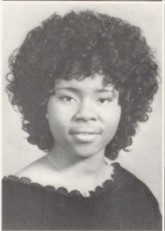
As one of Bossier Parish’s esteemed supervisors of schools for African American children in the mid-20th century, Inez Smith Grisby was especially known for her role as teacher, and teacher supervisor, not only in Bossier Parish, where she worked for over twenty years, but throughout the state. Less known, but as much of an achievement, was Inez Grisby’s role as a student, first in obtaining a rare high school diploma in 1925, because secondary schools for African-American students in Louisiana were few and far between, and then as a recipient of a master’s degree from Louisiana State University (LSU) in the 1950’s when the university was trying unremittingly to maintain its campus as an all-white institution.


Young Inez Smith, who was born in 1905 and hailed from south Louisiana, had the opportunity to attend high school in the New Orleans area. If she had grown up in Bossier, such a diploma would not have been available to her unless she travelled to Central Colored High School in Shreveport. In New Orleans, however, she was able to get her diploma from the “secondary department” of New Orleans University, a historically Black university founded by the Methodist Episcopal Church. The university had merged with Gilbert Academy, a private college preparatory school that was the first standard high school for African Americans in the nation accredited by the Southern Association of Colleges and Secondary Schools.


Early 20th-century African American schools, especially in rural areas, were in a catch-22 caused by segregation. You couldn’t have schools for African American students without African American teachers, and you couldn’t have African American teachers without African American schools – especially high schools. With a coveted high school diploma, an African American graduate could quality for a teaching certificate while completing requirements for postsecondary “normal,” or teacher-training, courses during summer institutes for teachers. Thus, Inez was teaching in rural schools soon after receiving her high school diploma, and attending summer institutes at Baton Rouge’s Southern University, a historically black university founded in 1888. She completed a bachelor’s degree from Southern in 1936, and began her supervising career in St. Mary Parish in 1936 – 1937.


Inez became Bossier Parish’s third Jeanes Teacher, or Jeanes Supervisor, in the 1937 – 1938 school session. A Jeanes Supervisor was a multi-faceted position named for the Quaker woman, Anna T. Jeanes, who funded a program to ensure a cadre of educated and professionally trained African American teachers to provide more and better schools for African American children, including secondary schools. In Bossier Parish, the Jeanes Teachers also supervised home demonstration (home economics) work for African-American women, such as teaching food preservation, home management skills, public health, making home visits and organizing homemaker clubs. They also organized community members to raise money to build more or better schools, and raised money for community organizations like the Red Cross or the March of Dimes.


In the 1950’s Inez pursued a Master’s degree from Louisiana State University when graduate and professional degrees (such as law or medicine) were not available at the universities or colleges for African Americans in Louisiana. Beginning in 1950, LSU admitted black students to these programs under court order since the school could not make the argument that “separate but equal” academic accommodations were available elsewhere. These orders meant that LSU admitted African American graduate students almost 15 years before it admitted African American undergraduate students (1964).


The Louisiana Weekly newspaper of New Orleans on Sept 15, 1956, outlined in painstaking detail the LSU Board of Supervisors’ conditions for maintaining social segregation in the face of mandated educational integration. One example (of twenty-one) is that the African American students could be invited to join an academic honor society, but were barred from attending the annual banquet. Religious clubs were also permitted to hold non-segregated religious meetings, but any social functions held by the group had to be segregated. Unfortunately, after completing her master’s degree as a trailblazing student, Inez, who rounded out her career as principal of Butler elementary in Bossier city, had little time to enjoy the benefit of the Master’s degree she earned in 1956. She passed away suddenly in 1959 at age 54.


As History Center curator Randall Palmer wrote in his parting article two weeks ago, here at the History Center we want to ensure that the stories of all who have shaped this parish, such as Inez Smith Grisby, are represented and preserved. By donating, or allowing us to scan or copy photographs, documents, family histories, and other materials, community members can help us build a richer, more inclusive collection that reflects the true diversity of Bossier Parish.


Please visit or contact us at the History Center. We are located at 7204 Hutchison Drive (formerly called 850 City Hall Drive) just across Beckett Street from the old Central Library and History Center in Bossier City, LA. All Bossier Parish Libraries locations will be closed Wednesday, 1/1/2025. Normal operating hours for Bossier Central Library and History Center are M-Th 9-8, Fri 9-6, and Sat 9-5. Our phone number is (318) 746-7717 and our email is history-center@bossierlibrary.org


For other local history facts, photos, and videos, be sure to follow us @BPLHistoryCenter on FB, @bplhistorycenter on TikTok, and check out our blog http://bpl-hc.blogspot.com/.


Images: 

  • Picture of Inez Smith Grisby from the Bossier City Colored High/Charlotte A. Mitchell High School Reunion Booklet for Classes 1942-1969, July 6-9, 2000. Walter H. Martin collection, History Center archives.
  • New Orleans College (New Orleans University), circa 1920. P. 115. Illustration in book "Methodist Adventures in Negro Education" by Jay S. Stowell; published in New York: The Methodist Book Concern, no date, circa 1921-1922. Accessed via Documenting the American South. University Library, The University of North Carolina at Chapel Hill. 14 February 2025 ˂https://docsouth.unc.edu/church/stowell/ill31.html>.
Article by: Pam Carlisle

Wednesday, February 5, 2025

A Black History Month Call for Donation

Writing this week’s local history column, I feel a mix of gratitude and sadness. My wife and I will soon be moving out of state, and this column will be my last. While I am excited about the new opportunities ahead, leaving this role is bittersweet. The work we at the History Center do together—documenting, preserving, and sharing the rich history of Bossier Parish—has been some of the most rewarding of my career.

When speaking with donors of our collection items, I often use the analogy comparing history to a jigsaw puzzle. With every photograph, letter, or artifact donated, a new piece of the puzzle fits into place, giving us a clearer view of the overall history of Bossier Parish. Many of these donations have come to us through the generosity of local citizens who recognize the importance of preserving the parish’s history for future generations. Other donations have come to us as a last resort when there are no descendants to take an interest in them. These items narrowly missed being thrown in the trash. Regardless of how they come to us, these donations are the lifeblood of our work, allowing us to ensure that the stories of our community are not forgotten.

That being said, during my time as curator I have come to recognize an imbalance within our collection. Currently, artifacts and records from people of color make up only a small fraction of our materials. This gap risks framing the history of Bossier Parish solely through the lens of its white population. We want to ensure that the stories of all who have shaped this parish are represented and preserved. By donating photographs, documents, family histories, and other materials, members of underrepresented communities can help us build a richer, more inclusive collection that reflects the true diversity of Bossier Parish. This month’s featured object underscores the complex history of Bossier Parish and the necessity of confronting even the most uncomfortable aspects of our past.

In 2022, the History Center received one of its largest donations, containing over 1,000 documents and objects from the Bossier Parish School Board. Among these was a wooden square cutout removed from a bathroom door at a school. The cutout once held metal letters reading “WHITE”. Along with the wooden block were photographs showing the original location of the door and a copy of the specifications for the school.


In the fall of 1953, Plantation Park Elementary opened in Bossier City to white students in grades one to six. Next to the school’s cafeteria was a corridor with two bathrooms for cafeteria staff, one for white staff and one for African American staff. The “whites-only” bathroom had metal letters nailed to the door spelling “WHITE”. When Bossier Parish schools integrated systemwide in 1970, the metal letters were likely removed. However, the faded outlines where the letters were originally nailed remained, a painful reminder to every person of color who walked past that door. The portion of the door with the word was cut out sometime during a remodel in the early 2000s. The square hole that was left would later be sealed with a glass panel.


This door fragment offers a tangible reminder of segregation and inequality in Bossier Parish’s history. Artifacts like this are crucial to understanding and confronting our shared past, but they also highlight gaps in our collection and the need to hear from a multitude of voices when learning about that past. If concerns about parting with family photographs or documents are a barrier, please know that we can scan these items for our collection and return the originals to you.

We are located in the new Bossier Central Complex Library at 7204 Hutchison Drive (formerly called 850 City Hall Drive) just across Beckett Street from the old Central Library and History Center in Bossier City, LA. Our normal operating hours are M-Th 9-8, Fri 9-6, and Sat 9-5. Our phone number is (318) 746-7717 and our email is history-center@bossierlibrary.org

For other local history facts, photos, and videos, be sure to follow us @BPLHistoryCenter on FB, @bplhistorycenter on TikTok, and check out our blog http://bpl-hc.blogspot.com/.


Images: 

  • Wooden cutout from a Plantation Park Elementary school bathroom door, showing an outline of the word “WHITE.” Door fragment from the Bossier Parish School Board collection at the Bossier Parish Libraries (BPL) History Center.
  • Photo of area where door cutout was removed and replaced with glass panel. Photo from the Bossier Parish School Board collection at the BPL History Center.
  • Plantation Park Elementary cafeteria, mid 1950’s, from the Plantation Park Elementary Yearbook collection at the BPL History Center.
Article by: Randall Palmer

Wednesday, February 28, 2024

From Bright Lights Back to Bossier City: There Was No Place Like Home for Judi Ann Mason

When Carter G. Woodson established Negro History week in February, 1926 (which became Black History Month in 1976), he wanted to provide a yearly theme to help focus the public’s attention. The 2024 theme is African Americans and the Arts, including the fields of visual and performing arts, literature, fashion, folklore, language, film, music, architecture, and culinary arts.

Judi Ann Mason was born Feb. 2, 1955, in Bossier City, Louisiana and grew up in Elm Grove, where her families’ history goes back several generations. Her father was a Baptist preacher, as was her grandfather and great-father and more generations back. She became an orphan as a teenager when her father, the Rev. Walter Mason, passed away. Her mother passed away when Judi Ann was 8. She and a sister were raised by their older sister Viola. She graduated from Parkway High School in 1973, where she was among the first African American students to attend. Bossier Parish schools did not desegregate until 1970. The very first year of integration was her sophomore year, which she spent at Bossier High School, then transferred to Parkway for her last two years.

In high school, Judi-Ann participated in choir, drama, journalism club and Future Teachers of America. As the only African-American member in many of these clubs and leadership positions, Judi Ann was already a trailblazer. She recalls classmates laughing at her dreams to attend college (saying marriage or immediately joining the workforce was the more typical plan among her peers), and they really howled with laughter when she said she planned to study speech and drama, laughingly asking, “What are you going to do, go to Hollywood?”

Judi Ann went away to college, but not too far, attending north Louisiana’s HBCU (historically black college or university), Grambling College, which a year later, in 1974, became Grambling State University, and studying speech and drama in the journalism department. While there, she saw an ad for a playwriting contest, with a prize of $ 2,500. She said, “Boy, I could sure use that money,” Mason recalled to the New Orleans Times-Picayune in 1995 and penned her first play, “Living Fat,” at the age of 19. She won that American College Theater Festival’s 1975 Norman Lear award for best original comedy.

“Living Fat” was a comedy, which apparently fit with Judi Ann’s sunny personality, Lear later remembered in memorial articles. It covered the dilemma of a poor southern African-American family faced when the father, a bank janitor, came across a windfall of stolen money. It was produced in New York City while Mason was still a college student. Again, while still at Grambling, Mason wrote the play, "A Star Ain't Nothin' but a Hole in Heaven," a semiautobiographical play about an orphaned girl who leaves behind relatives in Louisiana for a broader education. Her senior year in college, it won the first Lorraine Hansberry Playwriting Award in 1977 for best student-written play. That amazing year Judi Ann also was chosen by Glamour Magazine for its annual list and feature article, “Top Ten College Women.”

When Judi Ann was fresh out of college, and barely 20 years old, Norman Lear hired her to work on his comedy “Good Times” when she moved to Hollywood to pursue a career in screenwriting. Later, she wrote episodes for “Sanford,” and “Beverly Hills, 90120” and co-wrote the 1996 cable TV movie “Sophie & the Moonhanger.” She became executive story editor for “A Different World,” executive story editor for “I’ll Fly Away,” and development executive and associate head writer for the NBC soap opera, “Generations,” the first soap opera to have an African-American family as main characters. She also wrote the screenplay for the Whoopi Goldberg movie, “Sister Act II: Back in the Habit.” She gained several Emmys for her television work, which sometimes based her out of New York City. As the first

African-American woman, and also the youngest woman (of any race) in so many of these roles, she inspired other African-American women and young playwrights and screenwriters after her.

Later in her career, Judi Ann Mason found her calling back home in Bossier City. The Sept 20, 2000 issue of the Shreveport Times reported Judi Ann recalling that she had hiked up to a waterfall at Robert Redford’s ranch in Utah. She realized the peace she found while sitting beside the waterfall, feeling its mist on her face, was something she’d been deeply missing that she wasn’t going to find in Hollywood. She had always maintained a home in Bossier City, and she made the decision to move back fulltime, continuing her writing projects from her Bossier home office.

Once back in Bossier, the children of some old friends asked Judi Ann if she would write a Christmas play for them to perform at their church. She wrote “Joyful, Joyful,” and the play was a hit. The kids asked her for more; she complied, and she realized she had a great love for children’s theatre and inspiring local children to find their voice and follow their dreams. Soon she’d put together an acting team called Rock Sold T4Y (Theater for Youth). Tragically, Judi Ann Mason died too young on July 8, 2009 of a ruptured aorta. She left behind two children.

Visit the History Center to look at an oral history interview with her brother Rev. Walter Mason (Sr.), one of several Baptist ministers who preached here in Bossier. To be able to present the well-rounded view of American history that Carter G. Woodson promoted, the Bossier Parish Libraries History Center is always looking to add more photographs or documents of African-American life in Bossier Parish. We can always make copies and you keep the originals. We are currently focused especially on obtaining photographs and church histories from as many African-American religious congregations in Bossier Parish as possible.

The Bossier Parish Libraries History Center is located at 2206 Beckett St., Bossier City, LA. We are open M-Th 9-8, Fri 9-6, and Sat 9-5. Our phone number is (318) 746-7717 and our email is history-center@bossierlibrary.org

For other fun facts, photos, and videos, be sure to follow us @BPLHistoryCenter on FB, @bplhistorycenter on TikTok, and check out our blog http://bpl-hc.blogspot.com/.


Images: 

  • Judi Ann Mason’s senior picture in the 1973 Parkway High School yearbook
  • Advertisement for “Livin’ Fat,” A Family Comedy by Judi Ann Mason at the Jubilee Theatre in downtown Fort Worth, TX. “Fort Worth Star-Telegram, Dec. 29, 1995
  • Judi Ann Mason pictured in Washington, D. C. with Louisiana Fourth District Congressman Joe D Waggonner Jr, “Bossier Tribune,” Nov. 10, 1977


Article by: Pam Carlisle

Wednesday, February 21, 2024

Phyllis Kidd’s Words from the Heart


The special recognition of Black history was begun by Dr. Carter G. Woodson (1875 – 1950), a Harvard-trained historian whose parents had been enslaved. Dr. Woodson believed black people had a culture and tradition that scholars should investigate and artists should use as inspiration. He challenged all Americans to understand their country by seeing beyond American culture as simply transplanted British culture.


When Carter G. Woodson established Negro History week in February, 1926 (which became Black History Month in 1976), he wanted to provide a yearly theme to help focus the public’s attention. The 2024 theme is African Americans and the Arts, including the fields of visual and performing arts, literature, fashion, folklore, language, film, music, architecture, and culinary arts.


Ms. Phyllis A. Kidd was a local author and poet from Bossier City. She put her heart and soul into every word she wrote and encouraged other writers, including children, visiting schools and volunteering for Artbreak, a hands-on family festival celebrating the importance of curriculum-based arts programs. She began writing around 1994. Her inspiration to write arrived through her faith in God and heart complications that frightened her into thinking each heartbeat could be her last. She decided it was time to share some things with her two children, and she started with simply writing them letters.


Additional hardships also prompted her to write, including the loss of her job. She recognized that God gave her the desire to write about things she knew about and lived on a daily basis. She found encouragement, kindred spirits and an avenue for publication and poetry readings with the local Trapped Truth Poetry Society. Ms. Kidd’s first book of poems is suitably titled “Straight from the Heart of Phyllis Kidd” located at the History Center. Her later book, “I Still Have My Joy,” was initially typed and proofread by her friend Adrian Lee, who worked at Bossier Central Library. Sadly, Phyllis Kidd passed away in 2001 when she was only 50 years old. Her poem, “Then I Came to Myself” was read at her funeral by her sister Cynthia Kidd:


…I was almost overcome, I was almost vexed beyond belief, I was perplexed, I of all people had become fearful, I was about to give up, to succumb to the enemy, he had me going for a while, “Then I Came to Myself”


...No! No! Self-help Book delivered me, no transcendental meditation did this; it was God all the way!”


I literally took Him at His word, “Then I Came to Myself” (excerpt)


Phyllis Kidd wrote her poem I HAVE AN ATTITUDE (yes, she meant for it to be in all caps) in honor of Black History month:


I HAVE AN ATTITUDE


We are Magnificent, Resourceful, Brilliant, Suave, Arrogant, Proud and Angry, Yes!


And I Wonder Why?


We have Prodigies. We are Skilled. We are Wise. We can Excel, even after being Prohibited. And Angry, Yes!


And I Wonder Why?


We are Perceptive, Keen, Abiding, Submissive, Enduring Servitude, being of Grandeur Descent, and Angry, Yes!


And I Wonder Why?


The Long Hidden Secret is Out. We Are, We Were, We Will Again. And Angry, No!


Because I Know Why.


Her piece titled Jamil Guess What! is in reference to another poem of hers, What Do You Want to Be When You Grow Up? based on the time her then seven-year-old granddaughter asked her that very question.


Jamil Guess What! (excerpt)


…Who would have ever thought that I would be writing and reading poetry? One never knows what a day may bring. We don’t know what God has in store for us. We don’t know what our lives will evolve into. When you asked me the question, “What do you want to be when I grow up?”, I had no earthly idea that I was still growing. It’s amazing, for life is truly a “journey and not a destination.” I thought I had become all that I was supposed to be.


…So, Jamil, guess what, I’m an Author, or at least somewhat!


Visit the History Center to look at Phyllis Kidd’s poetry books in our collection or view her oral history transcript. (You can also access that in our online collections database.) To be able to present the well-rounded view of American History that Carter G. Woodson promoted, the Bossier Parish Libraries History Center is always looking to add more photographs or documents of African-American life in Bossier Parish. We can always make copies and you keep the originals. We are currently focused especially on obtaining photographs and church histories from as many African-American religious congregations in Bossier Parish as possible.


The Bossier Parish Libraries History Center is located at 2206 Beckett St., Bossier City, LA. We are open M-Th 9-8, Fri 9-6, and Sat 9-5. Our phone number is (318) 746-7717 and our email is history-center@bossierlibrary.org


For other fun facts, photos, and videos, be sure to follow us @BPLHistoryCenter on FB, @bplhistorycenter on TikTok,

Wednesday, February 14, 2024

The Green Book: A Remnant of a Segregated World

 Before the days of the Interstate, Henry Smith, Sr. was driving with his wife and two young children, Henry, Jr. and Cheryl, across country, from their home in Seattle, Washington to his and his wife’s home state of Louisiana. They planned to visit relatives outside of Baton Rouge. They had just crossed into northwestern Louisiana when little Cheryl piped up from the back that she needed to use the restroom. Henry, Sr. looked at the road signs. They were just entering Bossier City, an area with which he was well familiar, having served in the Civilian Conservation Corps on Barksdale Air Force Base and in the small Bossier Parish communities of Haughton and Plain Dealing prior to his service in WWII. Barksdale and the CCC camps had offered the all-black units some protection, but off-base or out-of-camp, he hadn’t forgotten how the black units were made to feel unwelcome and unsafe. He begged her to wait, exclaiming that Bossier City was the absolute worst place of the entire trip for them to have to make a stop. The little girl insisted she could NOT wait.

              
Mr. Henry Smith (junior), researcher and author, can tell you this story better, and how upon seeing the condition of the segregated “facilities” the white gas station attendant offered, his little sister realized she could “hold it” after all. You will have the opportunity to hear him tell this story and others at Green Book Sites in Louisiana: Remnants and Recollections of a Segregated World: A Black History Month talk and slideshow at the Bossier Parish Libraries History Center along with Kevin Shannahan, reporter and photographer. This special program will be held Thursday, Feb. 22nd, 2024 at 6pm at 2206 Beckett St., Bossier City, LA.

The “Negro Motorist/Travelers’ Green Book” was a road-travel and vacation guide for African-Americans that was published in the U.S. from 1936 to 1967, a time when segregation and suspicion toward African-American travelers meant anything from a lack of available services, to grave threats toward their safety. “The Green Book” was a directory of service providers and accommodations that welcomed African-American travelers, including hotels, motels, gas stations, and beauty salons. With a characteristic green cover, it was published by an African-American postal worker in Harlem, New York named Victor Hugo Green. The book expanded as Green gathered tips from readers and other postal workers from around the country, eventually listing more than 9,500 safe havens nationwide.


Kevin Shannahan’s images of the remnants of Green Book sites in Louisiana provide a way to explore African-American history through a photographic lens that highlights black entrepreneurship in Louisiana. His photos show the architectural and artifactual remains of these historically successful businesses that served local African American customers and those who were making safe passage to somewhere else. A reporter and photographer, Mr. Shannahan has been a resident of Natchitoches since 1994. A former Air Force officer, he taught in the Troops to Teachers Program in Red River Parish for four years and is a recently retired state employee. Kevin has a professional photography business, Kevin Shannahan Photography and is a writer and photographer for the Natchitoches Parish Journal. He is also an amateur historian with an interest in Louisiana during the Reconstruction and Jim Crow eras.


Mr. Smith’s stories of traveling cross-country by automobile with his parents and little sister from Seattle to Louisiana in the 1950’s will vividly provide the context within which the Green Book existed, the inconveniences and perils for African-Americans traveling the roads of America in the Jim-Crow era. Currently of Bossier City, Mr. Smith was raised in Seattle, Washington. He was the Dr. James W. Washington, Jr. and Janie Rogella Washington Foundation Writer-in-Residence for June 2019 in Seattle. He is a Board member of The Gloster Arts Project of Gloster, MS, and has formerly worked as a libraryand archives technician, including for the National Archives in Atlanta, Georgia and Washington, DC. He is completing a book based on his father’s life story called The Big Picture.

Please come visit us on Thursday night February 22nd to hear Mr. Smith’s and Shannahan’s program. Or stop by anytime this month to see our black history month displays, including a small one on the Green Book that also highlights additional resources on the Green Book, such as books and videos, both digital and traditional, available for all ages within the Bossier Parish Libraries system. The Bossier Parish Libraries History Center is located at 2206 Beckett St., Bossier City, LA. We are open M-Th 9-8, Fri 9-6, and Sat 9-5. Our phone number is (318) 746-7717 and our email is history-center@bossierlibrary.org


For other fun facts, photos, and videos, be sure to follow us @BPLHistoryCenter on FB, @bplhistorycenter on TikTok.

Wednesday, February 22, 2023

Part 2 Henry Adams and Resisting Intimidation: Black History Month 2023

 It’s Black History Month and this year’s theme, from the Association for the Study of African American Life and History (ASALH), is “Black Resistance.” This is Part 2 of last week’s column about the Shreveport and Bossier-area freedman Henry Adams, whom the ASALH upholds as an example of Black Resistance. The ASALH highlighted that Adams (and Benjamin “Pap” Singleton) led a mass exodus westward of Southern Blacks in the Reconstruction period following the U.S. Civil War. The ASALH credited Bishop Henry McNeal Turner of the African Methodist Episcopal Church with organizing an emigration of Southern Blacks to Liberia in West Africa. Local sources show that Henry Adams, in the time of Reconstruction, also led a movement to Liberia, especially of Black Louisianans. 


Leading a colonization movement to the Midwest or the African continent was not originally part of Henry Adams’ plan. Henry Adams was asked to appear as a witness in the U.S. Senate’s investigation into the exodus of African Americans from the South. He said the secret committee he established to travel the South was investigating conditions for African Americans, to see if it was safe enough to live as free citizens among those who had held them in slavery. According to Adams’ testimony, the committee’s answer was that it was not safe.  


Question (from Congress, in the Senate Report 693, 46th Congress, 2nd Sess., part 2): 

I am speaking now of the period from 1870 to 1874, and you have given us the general character of the reports that you got from the South; what did you do in 1874?


Henry Adams: 

Well, along in August sometime in 1874, after the White League sprung up, they organized and said this is a white man’s government, and the colored men should not hold any offices; they were no good but to work in the fields and take what they would give them and vote the Democratic ticket. That’s what they would make public speeches and say to us, and we would hear them. 


The White League was a paramilitary group allied with the Democratic Party in the South. In 1874 and 1875, the White League was responsible for widespread violence against black and white Republicans in Louisiana and Mississippi. The White Leagues particularly flourished in parishes along the Red River, which were largely reorganized from the Democratic memberships of earlier incarnations of terrorist groups like the Ku Klux Klan and the Knights of the White Camellia. 


The White League likely gained some starting fuel from the contested gubernatorial election of 1872, in which Republican William Pitt Kellogg prevailed, and which coincided with the first of a series of cases where Black plaintiffs successfully sued white Louisianans who had violated civil rights and public accommodation statutes. However, Tulane University historian Lawrence Powell claimed that what really gave the White League momentum was “the visible, unmistakable retreat from Reconstruction on the part of the federal government and judiciary.” Indeed, Henry Adams testified that he and his committee members appealed for protection, but to little avail. (Understand that his testimony includes details of violence):


…We first appealed to President Grant…That was in September, 1874…at other times we sent to Congress…We told them our condition and asked Congress to help us out of distress and protect us in our lives and property, and pass some law or provide some way that we might get our rights in the South…we appealed when the time got so hot down there, they [White Leaguers] stopped our churches from having meetings after nine o’clock at night. They stopped them from sitting up and singing over the dead, and so forth, right in the little town where we lived, in Shreveport. I know that to be a fact; and after they did all this, and we saw it was getting so warm—killing our people all over the whole country—there was several of them killed right down in our parish. 


The next step was to leave, and Adams’ committee re-named themselves the Colonization Council. Adams testified that they either wanted territory in the United States set apart for African Americans fleeing the South, or to get money appropriated to aid them in emigration to Liberia, a colony in West Africa set up by the American colonization Society in 1824 for the purpose of relocating free-born and formerly enslaved African Americans. 


Henry Adams appeared to work both angles. He testified that in 1875 and 1876 he was shot at in DeSoto Parish for helping to organize “Exodusters”, the name given to African Americans fleeing the South (especially Louisiana) for the Midwest and West, most notably Kansas. In November 1877, Shreveport and New Orleans newspapers reported meetings over which Henry Adams presided for making colonization plans in Liberia. Meeting attendees chose representatives to go to Washington to request financial assistance from the Federal government. In addition to Adams, Richard Pickett of Bossier and Henry Bullocks of Webster Parish were selected. In a later meeting, in addition to Adams, Pickett and Bullocks, Rev. John Hooks and Rev. Robert Griffin of Caddo Parish and Jordon Mims of Bossier Parish were chosen to go to Liberia for reconnaissance.


However, President Hayes denied federal funds for the colonization of Liberia and members of the Colonization Council‘s own support was waning. They were suffering financially and had to return to their farming jobs. The Exoduster movement was losing steam, too. The farm land available to the African emigrants was not very productive, and little support was given the Exodusters. 


After Adams testified in 1880 about the cause of the Black exodus from the southern states, Shreveport newspapers ridiculed him and said he was “a liar cut from whole cloth.” On the other hand, a newspaper in Ohio printed much of his actual testimony, including descriptions of horrors such as, “I saw white men whipping colored men, just the same as they did before the war, or before freedom in this State. I saw white men beating a colored man because he had been a United States soldier. They beat him all but to death.” 


In 1882, Adams was reported in New Orleans attending a memorial service for the Liberian ambassador from the United States. Soon after, he disappears from the historic record.  It is unknown if he made it to Liberia. Over the following three decades, 11,000 southern blacks settled in Liberia, and likely many of those were due to Adams’ influence. 


To read newspaper accounts of Henry Adams and the experiences of other freedmen, or to share accounts from your family’s history, come visit us at the Bossier Parish Libraries History Center, located at 2206 Beckett St., Bossier City, LA. We are open M-Th 9-8, Fri 9-6, and Sat 9-5. Our phone number is (318) 746-7717 and our email is history-center@bossierlibrary.org For other facts, photos, and videos, be sure to follow us @BPLHistoryCenter on FB 

Images attached:
Map of Liberia, the American Colonization Society, Library of Congress
Headline from the “Memphis Daily Appeal” Sat, Mar 13, 1880 

Article by: Pam Carlisle

Wednesday, February 15, 2023

Henry Adams and Resisting Intimidation: Black History Month 2023

 It’s Black History Month, and last week’s column was about how historian Carter G. Woodson initiated it in 1926 as “Negro History Week” and founded the association that continues today as the Association for the Study of African American Life and History (ASALH). Each year ASALH announces a Black History Month theme. This year, it’s “Black Resistance.“ The theme is described by ASALH in detail on its website, and in reading a part of it, I was pleasantly startled to find a local name, Henry Adams:


“In an effort to live, and maintain and protect economic success Black people have organized/planned violent insurrections against those who enslaved them, such as in Haiti, and armed themselves against murderous white mobs as seen in Memphis, TN (1892), Rosewood, FL (1923), and New Orleans, LA (1900). Additionally, some Black people thought that the best way to resist was to self-liberate as seen by the actions of those who left the plantation system, of Henry Adams and Benjamin “Pap” Singleton, when they led a mass exodus westward in 1879…”


Henry Adams was once a resident and worker right here in the Shreveport-Bossier area, and the location from which he organized his resistance movement. This was a time period in history that still gets little attention: Reconstruction, following the Civil War. As context for Henry Adams’ actions, Reconstruction, especially by the 1870’s, was an extremely violent time for African-Americans, targeted as they were freed from bondage and by law could no longer be considered property. 


Accounts of Henry Adams’ earlier life vary. According to the version of one historian, Tabitha Wang on BlackPast.org, Henry Adams was born into slavery in Georgia in 1843, but when he was a young child, the family in which he was enslaved moved to Louisiana. While enslaved he married a woman named Malinda and they had 4 children. He and his wife were able to acquire property during the Civil War, not a common feat. According to late, local historian Eric Brock, the slaveholder’s daughter who had “inherited” Henry Adams freed him and 60 other enslaved people on May 26, 1865, the day Shreveport surrendered to Union forces. 


After the war, Henry Adams moved to Shreveport and had a successful peddling and merchant business but he aimed to leave the limited opportunities and maltreatment of African Americans he witnessed and experienced to join the United States Army in 1866. He served in New Orleans and rose to the rank of quartermaster sergeant. Significantly, while he was in the Army he learned to read and write. He returned to the Shreveport area in 1869. He worked as a woodcutter and planation manager. He was much in demand and worked for some of the area’s most prominent planters including Col. J.M. Foster, who had plantations in both Caddo Parish and 3300 acres in cultivation in Bossier. 


To relate Henry Adams’ life following his return to Shreveport, perhaps he can tell it the best himself in his moving testimony to the 46th U.S. Congress, in their second session (December 1879-June 1880), where he was called as a witness in the investigation into why so many African Americans were leaving the South. The “Testimony of Henry Adams regarding the Negro Exodus” is available online courtesy of the Yale Macmillan Center’s Gilder Lehrman Center for the Study of Slavery, Resistance, and Abolition. Understand that some of the details will include violence:  


Question: Now tell us, Mr. Adams, what, if anything, you know about the exodus of the colored people from the Southern to the Northern and Western States; and be good enough to tell us in the first place what you know about the organization of any committee or society among the colored people themselves for the purpose of bettering their condition, and why it was organized… 


Henry Adams: Well, in 1870, I believe it was, or about that year, after I had left the Army… a parcel of us got together and said that we would organize ourselves into a committee and look into affairs and see the true condition of our race, to see whether it was possible we could stay under a people who had held us under bondage or not…


Some of the members of the committee was ordered…to go into every state in the South where we had been slaves there, and post one another from time to time about the true condition of our race and nothing but the truth….And we worked some of us, worked our way from place to place and went from State to State and worked – some of them did-amongst our people in the fields, everywhere, to see what sort of living our people lived; whether we could remain in the South… 


Henry Adams testified that these reports were sent to the committee at Shreveport and they would be read aloud at a meeting. He was then asked again about the object of the committee, if when they began, they intended to “remove [their] people from the South.” Mr. Adams replied: 


O, no, sir; not then; we just wanted to see whether there was any State in the South where we could get a living and enjoy our rights…The character of the information they brought to us was very bad, sir…they said in several parts where they was that the land rent was still higher there in that part of the country than it was where we first organized it, and the people was still being whipped, some of them, by the old owners, the men that had owned them as slaves, and some of them was being cheated out of their crops…


Question: Was anything said about their personal and political rights in these reports, as to how they were treated about these?


Henry Adams: Yes, some of them stated that in some parts of the country where they voted they would be shot. Some of them stated that if they voted the Democratic ticket they would not be injured.


Question: But that they would be shot, or might be shot, if they voted the Republican ticket?


Henry Adams: Yes, sir.


To find out how the committee came to the realization they needed to pivot their sights to exodus, and how they planned to achieve such a mass movement, be sure to read the continuation of this story in the next column. 


The Bossier Parish Libraries History Center is located at 2206 Beckett St., Bossier City, LA. We are open M-Th 9-8, Fri 9-6, and Sat 9-5. Our phone number is (318) 746-7717 and our email is history-center@bossierlibrary.org

For other facts, photos, and videos, be sure to follow us @BPLHistoryCenter on FB, @bplhistorycenter on TikTok


Wednesday, February 8, 2023

The History of Black History Month and its Early Days Bossier


Why is Black History Month celebrated in February and not some other month, such as January, the month of Martin Luther King Jr. Day? Because February has the birthdays of Abraham Lincoln and Frederick Douglass and Black History Month began before MLK Jr. was even born. This special recognition of Black history was begun by Dr. Carter G. Woodson (1875 – 1950), a Harvard-trained historian whose parents had been enslaved. Dr. Woodson believed black people had a culture and tradition that scholars should investigate and artists should use as inspiration. He challenged all Americans to understand their country by seeing beyond American culture as simply transplanted British culture.


Dr. Woodson’s challenge was an early example of multiculturalism. In 1915 he founded the Association for the Study of Negro Life and History, now known as the Association for the Study of African American Life and History, Inc. (ASALH), which debuted a “Negro History Week" in 1926. Negro History Week became Black History Month in 1976, the bicentennial of the U.S.A., by declaration of President Ford, a declaration that has been made by every U.S. President thereafter.


Negro History Week really took hold nationwide in the 1940’s, when it was already being celebrated in Bossier Parish. The History Center has in its archive a girls’ dormitory ledger from the Bossier Parish Training School in Benton, which was the earliest secondary school for African Americans in Bossier Parish. Once the dormitories were built, those who lived too far away to make the daily trek to school could board at the school.


The ledger from 1937-1938 included a mention of “Negro History Week” with the “C.C. High School Music Dept.”, which appears to be Central Colored High School in Shreveport, and possibly indicates that the schools collaborated in their celebration. We have not found Bossier newspaper accounts of early “Negro History Week” events, but there are reports for Shreveport. Perhaps the music program mentioned in the ledger was like the one reported in the Shreveport Journal on February 15, 1935. “A special program in observance of Negro History week was held at the West Shreveport negro school Friday morning. The history of outstanding members of the race was told and negro folk songs rendered by a chorus directed by H. Chambers and J.B. Morgan.“

Do you have any memories or memorabilia from local “Negro History Week” or Black History Month celebrations? If so, the Historical Center would love to hear from you. To be able to present the well-rounded view of American History that Carter G. Woodson promoted, the Bossier Parish Libraries History Center is always looking to add more photographs or documents of African-American life in Bossier Parish. We can always make copies and you keep the originals. We are currently focused especially on obtaining photographs and church histories from as many African-American religious congregations in Bossier Parish as possible.

The Bossier Parish Libraries History Center is located at 2206 Beckett St., Bossier City, LA. We are open M-Th 9-8, Fri 9-6, and Sat 9-5. Our phone number is (318) 746-7717 and our email is history-center@bossierlibrary.org

For other fun facts, photos, and videos, be sure to follow us @BPLHistoryCenter on FB, @bplhistorycenter on TikTok

The Bossier Parish Libraries History Center is located at 2206 Beckett St., Bossier City, LA. We are open M-Th 9-8, Fri 9-6, and Sat 9-5. Our phone number is (318) 746-7717 and our email is history-center@bossierlibrary.org


For other fun facts, photos, and videos, be sure to follow us @BPLHistoryCenter on FB, @bplhistorycenter on TikTok

Images: 
  • Carter G. Woodson, Smithsonian Institution
  • Expense Ledger from the Bossier Parish Training School Girl’s Dormitory, 1937-1938. Entry for Negro History Month is highlighted. History Center collection
Article by: Pam Carlisle

Wednesday, February 10, 2021

Beauticians and the Civil Rights Movement

(L to R) Mamie Stewart Love Wallace, Annie Townsend Brewster, and Bernice Smith.
In the 1920s, Mamie Stewart, Annie Townsend, and Bernice Smith were born in Benton, La, where they grew up learning that not all citizens in America were given equal rights. Little did they know that a century later, they would still be remembered and talked about for their never-ending pursuit for equal rights and reconciliation between races.

These three girls grew up to become successful business owners, civic leaders, and civil rights activists. Stewart, better known today as Mamie Love Wallace, founded the Modern Beauty Shop on Milam Street in the business district of the old Allendale neighborhood in Shreveport. Townsend, better known as Ann Brewster, was the co-owner. Later, Smith went to cosmetology school and went to work at Modern Beauty Shop.

These women were more than just beauticians. They were entrepreneurs, leaders, activists, and freedom fighters. Being self-employed, the women could be more active in fighting for civil rights than if they had been in the employ of another. They did not have to fear losing their jobs if they were found to be involved in any activities to advance equal rights.

In an interview, Wallace explained that her mother was a civil rights worker whose involvement in the movement got her interested. Her mother was a teacher, and many of her siblings also became teachers, but Wallace saw how the fear of losing your job hindered the work that needed to be done, which is why she became a beautician.

As an officer of the Louisiana state beauticians Wallace attended the National Beauticians' Convention in New Orleans in 1958. It was at this convention where Wallace met Martin Luther King Jr. for the first time. King spoke to the beauticians about the advantages they had as self-employed people and how they could support the civil rights movement.

A few months later, King made his first visit to Shreveport, where he spoke at the Southern Christian Leadership Conference at Galilee Baptist Church. The fear of violent repercussions made most churches afraid to open their doors to King, but Wallace's brother, the Rev. Jessie Taylor Stewart, was the pastor of Galilee Baptist Church, and he was not afraid.

The newspapers would not print the announcement of his scheduled visit, so flyers were made and distributed at barbershops and beauty salons like the Modern Beauty Shop. The majority of people in attendance besides the usual congregants were barbers, beauticians, and ministers. Again, those not self-employed were afraid to lose their jobs, and they often avoided taking any chances.

The Modern Beauty Shop, like so many, became a place for strategy meetings and education about the movement. It also served to provide a safe place for community members to communicate about issues and events. These women talked to their clients about the importance of being an informed participant in the voting process. If they were not registered to vote, they would be educated on the literacy test and provided with voter registration forms.

All three beauticians were known for their participation in countless voter registration drives, marches, sit-ins, and other non-violent protests. Smith was among the plaintiffs in the civil rights lawsuit that helped to desegregate Caddo Parish Schools, and her daughter, Brenda, was the first black student to integrate at Byrd High School. Wallace was a plaintiff in a lawsuit to integrate restaurants and was one of the first black people to eat at Woolworth's diner after integration.

Brewster was especially outspoken about the need for justice and was known for being arrested for protests that she was not in attendance. When students demonstrated at Booker T. Washington High School, police officers showed up at the salon to arrest her, and when she explained that she was not there, the police said, "her name was mentioned." Brewster opened her home for NAACP meetings and local gatherings of the Southern Christian Leadership Conference. King shared his vision with a group of like-minded people in her Allendale home. She also provided food and shelter for freedom riders that came through town.

These women cared about people, and they were passionate about fixing the injustices they faced. They fought and risked their lives to make a better world for themselves and future generations. They were instrumental in changing the course of black Americans' civil rights in the local community.

To learn more about black history in Bossier Parish, visit the Bossier Parish Libraries History Center, 2206 Beckett Street, Bossier City. Whether you want to know about local history or research your family history, we are here to help. Can't come in, call 318-746-7717 or email history-center@bossierlibrary.org with your request.

By: Amy Robertson

Wednesday, February 5, 2020

Local Educator Fulfills Need for Adult Education

Minnie B. Walker and her father Jim Walker
High School Graduation Day 1935, McDade, LA.
Minnie B. Walker Payne was born in 1926 in the south Bossier Parish farming community of McDade, La on Tinsley McDade’s Plantation, where her father, Jim Walker, was a tenant farmer with five families that worked under him. The information shared in this article comes from an oral history interview of Payne conducted by Bossier Parish Library History Center’s archivist at that time, Nita Cole, in the summer of 2000. During the interview, Payne recalls picking cotton with her siblings growing up there, stating, “I used to pick 380 [pounds] a day.”

According to Payne, McDade, La was named for Tinsley “Tin” McDade. She describes McDade as a small crossroads community during the 1920s. It had the L.R. & N. railroad, which “it would switch at McDade, and he [Tin McDade] would send the wagon there to pick up the food to stock his commissary.” McDade also had a post-office, a store, and a gas station.

Minnie B. Walker age 4, and her mother
Louisa Hall Walker 1917, McDade, La.
When asked if education was important in her family, she replied, “Oh yes, ma’am. Mama saw that all of her children got an education.” In response to the question about her parent’s level of education, Payne stated, “Well at that time see, Mother married Daddy Sept. 8, 1888. It wasn’t too much education that people got other than what they would give themselves, you know. Now she could read and write. And then, when we were walking to New Zion School, she went right along with us every day, and the teacher taught her. She got as high as the seventh grade.”

After finishing the seventh grade, Payne went to C.H. Irion in Benton, where she lived in a dormitory while school was in session. During her time at C.H. Irion, R.V. Kerr was the superintendent, and Mrs. Hessie Player was the dean. Through observation, Mr. Kerr saw that Payne was “a real lady” and obeyed the rules, so he advised the board that she should be assigned as the Assistant Dean. One task assigned to her as the Assistant Dean was to keep the girls from hopping out of the windows at night to meet boys, reminding that they needed to finish their education. She was also in charge of taking the girls to church.

Upon graduation from C.H. Irion in 1935, Payne went to Grambling State University. Due to a shortage of teachers, “Mr. Kerr fixed it so we could go to summer school and get a third-grade certificate, and he would let us teach. And we would go to college on a Saturday or either at night.” “And when school closed, then we would go to summer school.” Payne started her teaching career “in Allentown, where the shell plant is now,” where she was the only teacher for grades 1-7 and made $26 per month. She also taught fifth grade at Butler Elementary School from 1953 until she retired in 1971.

Payne also taught adult education in the evenings, first at an adult education school for veterans only, located on “the Doyline Road” under the supervision of Frank Hughes. On Oct. 3, 1968, Payne purchased the old Redmond Spikes three-room, wood-frame schoolhouse from the Bossier Parish School Board for $273. She paid to have the building moved onto her father’s property in Haughton and to have electricity run to it.

She and her sister, Lula Walker Hardman, established the Jim Walker Adult Education School in honor of their father. The two sisters and Adeline Williams were the teachers in the beginning, and the school was open to any adult in the community that wished to earn their high school diploma. Payne recalls, “I had forty-nine old folk to get their high school diploma under me through Dr. Miles at Centenary College.”

When asked about paying for the building and moving it out to the family property to teach adults, Payne replied, “Yes. They wanted to...the old folks wanted a school to go to.” Payne recognized this need and how important it was for these adults to achieve the simple dream of finishing high school, something that is often taken for granted these days. Later, the adult education school was relocated to Saint James Lodge in Elm Grove.

Oral histories of Bossier Parish residents are one of the many sources that the Bossier Parish Libraries History Center offers. Oral histories provide a window into the past of not only the person interviewed but also into the community that they lived and worked. Often, times providing insights that cannot be found through any other source.

Another fascinating fact that I learned while reading the transcript of Payne’s oral history interview is that her father was the first African American man to vote in Bossier Parish sometime before 1920. To explore the history of Bossier Parish through our oral history collection, visit the Bossier Parish Libraries History Center at 2206 Beckett St., Bossier City.

If you did not make it to Monday night’s R & R with history, it is not too late to register and join in the discussion. This reading and discussion series will focus on Jason Fagone's book, The Woman Who Smashed Codes: A True Story of Love Spies, and the Unlikely Heroine Who Outwitted America's Enemies. Facilitating this R & R series is Mr. Rusty Beckham, a history teacher at Benton High School. Back by popular demand, Rusty has an M.A. in History from Villanova University. Call the History Center to register and reserve a book, (318) 746-7717. Monday nights, Feb. 3 through Mar. 2, 2020, from 6 – 7:30 p.m. at the History Center meeting
room.

By: Amy Robertson