Showing posts with label Women's Home Demonstration Club. Show all posts

Wednesday, September 4, 2024

Bossier Biography: Lettie van Landingham

Have you ever had questions about gardening, landscaping, pressure cooking, furniture refinishing, public health, floral design, nutrition, infant care, historic preservation, city cleanup, sewing, personal hygiene, or food preservation? Would you believe that for 30 years Bossier Parish had one woman who could provide you with answers to questions on this wide variety of subjects? That woman was Lettie van Landingham. She described her work as “doing everything you can’t get the other fellow to do.”
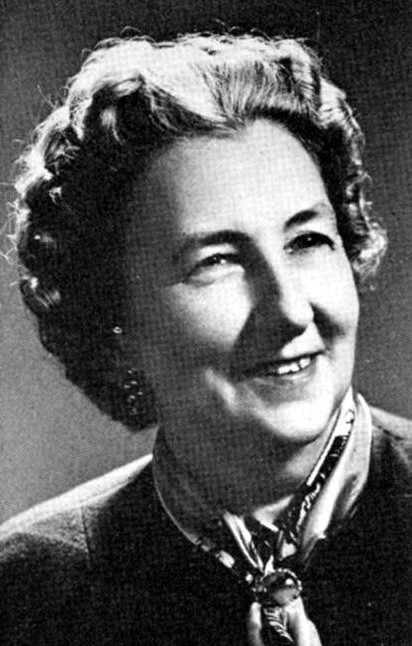


Lettie was born in Claiborne Parish on August 21, 1893. She graduated from Louisiana Industrial Institute in Ruston, which is now called Louisiana Tech. Miss van Landingham began her teaching profession in 1914, teaching home economics in De Ridder, Lake Charles, Minden, and Belcher. She accepted the position as the first Bossier Parish Home Demonstration Agent on August 1, 1929. She held this post with the LSU Cooperative Extension Service until her retirement in 1960; completing 31 years of service.


Home demonstration agents taught local women vital homemaking techniques through organized clubs. These clubs were in even the smallest of Bossier Parish communities. Representatives of the clubs formed a larger Parish Home Demonstration council. These Home Demonstration clubs were popular in from the 1930s through the 1950s, a time when our parish was segregated. Bossier did have an active home demonstration program for African American women. Lettie worked with community leaders, including supervisory teacher Charlotte Mitchell, to assist all clubs in the parish. In 1931, Bossier’s African American clubs filled 6,000 tin cans at canning centers located within 4 of the local Black schools, with many of the cans going to the American Red Cross to distribute to the hungry.


Lettie pioneered the food preservation program in Bossier. She taught rural girls in 4-H classes and women in home economic skills, particularly food production and preservation. These skills were especially important during the Great Depression of the 1930s and during World War II, when food preservation was a necessity. The price of canned goods was prohibitive for many rural Bossier Parish residents, so Lettie took orders throughout the parish. She then placed one large bulk order and had an entire truckload of canned goods delivered. This bulk price allowed families to purchase the cans they needed at a reasonable price.


She also wanted to help make cooking both easier and safer. Pressure cookers were considered dangerous by some housewives. The Bossier Banner ran an article in 1932 titled, “Caution needed; Cooker Explodes During Past Week” when Mr. A.E. Robinson, the agricultural instructor at Haughton High School, was burned by steam in an accident with a pressure cooker. Miss Van submitted a list of 5 rules for safe pressure cooker use and also demonstrated how to can corn in a pressure cooker over an improvised brick furnace.


The beloved “Miss Van”, as she was affectionately called, set up 23 canning centers, a community frozen food plant, and helped bring electricity to rural Bossier Parish residents. She was also one of the founders of the Bossier Restoration Foundation, an organization dedicated to preserving Bossier Parish’s historic sites. She received a certificate for outstanding work from the National Home Demonstration Association. She conducted health clinics with the assistance of local doctors and the Webster Parish Public Health Unit, and was instrumental in the establishment of the Bossier Public Health Department in 1937. During this time, she worked with a relief agency and, with the help of W.P.A. labor, built approximately 85 sanitary toilets. Several rural communities in Bossier Parish did not have running water or indoor toilets at this time.


She firmly believed in beautifying her community. She initiated the Plain Dealing Clean-Up Campaign in 1930, which was awarded a national certificate. One of her pet projects was the Keep Bossier Beautiful Club. She fought to rid the highways of litter and spearheaded a campaign to obtain the Cleanest City Award for Bossier City in 1966.


In a 1921 letter from the state superintendent, the value of a Home Demonstration Agent is discussed. “When the right agent is selected, she is always worth many times her salary to the parish. She goes into homemaking clubs of various kinds, which results in the girls having a deeper appreciation of a good home and in their knowledge and skill in making it such. If the agent is a woman of tact and wisdom (and she usually is) she gets into the homes of the people throughout the parish, especially the country homes, makes the acquaintance of the housewives and the girls who are beyond school age, and establishes among them better ideals of homemaking. She shows them what a good home is and how to provide the elements that result in good homes.”


In 1968, on her 75th birthday, Mayor George Nattin proclaimed Wednesday, August 21 as Lettie Van Landingham Day in Bossier City. This honor was in tribune to the people of Bossier City and for the example she set in friendship and devotion to her work. Sadly, Lettie was killed in a traffic accident 8 years after her retirement, on October 24, 1968. “Miss Van gained the respect with all whom she has served and with whom she has worked.”


* To see an illustrated video (5.36 minutes) of this biography, with additional images of Lettie van Landingham and of home demonstration work, check out the Bossier Parish Libraries YouTube channel. Go to www.youtube.com then search “Bossier Parish Libraries” and choose the History Center’s “Playlist.” or use the link below. 

https://www.youtube.com/watch?v=Ba8ERyDuKFI&list=PLHkR-8TzYOEZcND1t3EpBk6FZBFStx3tX&index=2

To visit us in person, the History Center is now within the new Bossier Parish Libraries Central Complex at 850 City Hall Drive, Bossier City, LA (across Beckett Street from the original History Center and “old” Central Library). We are open M-Th 9-8, Fri 9-6, and Sat 9-5. Our phone number is (318) 746-7717 and our email is history-center@bossierlibrary.org


For other fun facts, photos, and videos, be sure to follow us @BPLHistoryCenter on FB, @bplhistorycenter on TikTok, and check out our blog http://bpl-hc.blogspot.com/.


Images: 

Lettie van Landingham, portrait.

Bossier City wins Fourth District Cleanest City competition. (L-R) Mayor Geoge Nattin, Lettie van Landingham, Mrs. L.H. Taylor, Mrs. W.E. Piper, and George Adams. May, 1966. Photo from the Marie Wissman Collection, BPL History Center.

Cover of the Bossier Parish Home Demonstration Council Yearbook for 1953 – 1954, showing locations of Home Demonstration Clubs throughout the parish.


Article by: Marisa Richardson

Wednesday, June 1, 2022

This Month In Bossier Parish History

 June: Throughout the Years

June: The month of June is African-American Musician month. The United States has been celebrating African-American Music Appreciation Month since 1979. The month is set aside to appreciate the contributions of African-American musicians, composers, singers, and songwriters in American culture. The month honors the history and rich traditions that was the staple to different styles of music such as rap, hip-hop, jazz, rhythm and blues, barbershop, and swing. 

In honor of this month, we would like to recognize musicians from our local areas.  

Lead Belly, also spelled Leadbelly, by name of Huddie William Ledbetter, (born January 21, 1885?), Jeter Plantation, near Mooringsport, Louisiana, U.S.—died December 6, 1949, New York, New York), American folk-blues singer, songwriter, and guitarist whose ability to perform a vast repertoire of songs in a variety of styles, in conjunction with his notoriously violent life, made him a legend.
After resuming a life of drifting, in 1930 Lead Belly was convicted of attempted murder and imprisoned in the Angola, Louisiana, prison farm. There he was “discovered” by the folklorists John Lomax and Alan Lomax, who were collecting songs for the Library of Congress. A campaign spearheaded by the Lomaxes secured Lead Belly’s release in 1934, and he embarked on a concert tour of eastern colleges. Subsequently, the Lomaxes published 48 of his songs together with commentary (Negro Folk Songs as Sung by Lead Belly, 1936). Lead Belly performed and recorded extensively. His first commercial recordings were made for the American Record Corporation, which did not take advantage of his huge folk repertoire but rather encouraged him to sing blues.
Lead Belly’s legacy is extraordinary. His recordings reveal his mastery of a great variety of song styles and his prodigious memory; his repertory included more than 500 songs. His rhythmic guitar playing and unique vocal accentuations make his body of work both instructive and compelling. His influence on later musicians—including Eric Clapton, Bob Dylan, Janis Joplin, and Kurt Cobain—was immense.
Lead Belly was inducted into the Blues Hall of Fame (1986) and the Rock and Roll Hall of Fame (1988). In 2015 the Smithsonian Institution’s Smithsonian Folkways record label released a five-CD box set of his recordings.
Provided below is a link to the only known footage of Huddle Ledbetter “Lead Belly"
https://www.openculture.com/.../only_known_footage_of... 


Ever Ready Gospel Singers: had their genesis at Barksdale Field (Barksdale Air Force Base) in 1944. The Ever Ready Gospel Singers sang in the old-time (predominantly) acapella Southland gospel style. They were the first African-American group to preform on KWKH, at the Louisiana State Fair, the Municipal Auditorium in Shreveport as well as the first to appear on local TV.
They continued to work together for 60 years.
Provided below is a link of the group preforming “Jezebel” for the Robert Mugge film RHYTHM ’N’ BAYOUS: A Road Map to Louisiana Music in 1999 at the Municipal Auditorium in Shreveport, LA
Previded below is a link to a video of the Ever Ready Gospel Singers
https://vimeo.com/76847679

Dave Alexander (born David Alexander Elam), also known as Omar Sharriff, Omar Shariff, Omar Hakim Khayam was an American West Coast blues singer and pianist Alexander was born in Shreveport, Louisiana, in 1938, and grew up in Marshall, Texas. His father was a pianist, and his mother encouraged him to play in church. Alexander joined the United States Navy in 1955. He moved to Oakland, California, in 1957, and began a long history of working with various San Francisco Bay area musicians. A self-taught pianist, he played with Big Mama Thornton, Jimmy Witherspoon, Muddy Waters, Buddy Guy and Albert Collins. In 1968, he recorded his first songs for the compilation album Oakland Blues, released by World Pacific Records. He performed at the Ann Arbor Blues and Jazz Festival in 1970 and at the San Francisco Blues Festival many times from 1973 onward. He was the warm-up act at the Last Waltz, a concert staged by the Band at the Winterland Ballroom, on Thanksgiving Day, November 25, 1976. He also performed in Europe.

Leon (Ndugu) Chancler, a drummer whose crisp grooves and pinpoint fireworks of syncopation were heard on hundreds of albums — including Michael Jackson’s “Thriller,” on which his drumbeat starts the song “Billie Jean”.
Mr. Chancler was born in Shreveport, La., on July 1, 1952, and moved with his family to Los Angeles. At 13 he started teaching himself to play drums, with advice from older musicians.
He started playing Latin jazz with the percussionist Willie Bobo while still in high school, and soon after graduation he joined Gerald Wilson’s big band. He performed with the trumpeter Hugh Masekela on weekends (he died on Jan. 23) while studying music education at California State University, Dominguez Hills.
He died Feb. 3 in Los Angeles at the age of 65.


Marjorie Ann Johnson was born in Shreveport, Louisiana on July 17, 1939. Internationally renowned Louisiana-bred artist, Margie Evans is a legendary entertainer, businesswoman, spokeswoman and historian. As the only African American President of the civics-oriented 5-4 Optimist Club of Los Angeles, she taught music history, respect for law, educational achievement, endless perseverance and integrity to local schoolchildren and citizens. These are the tools of community building that spring-boarded the conception of L. A. Music Week. Executive Director Margie Evans is well established as a multi-talented lyricist, classy multi-genre entertainer, blues historian, community leader and motivational speaker. She represents the Blues Genre with an uncategorical poise, dignity and trademark robustly effervescent, jovial sophistication, unlike the typical blues stereotypes. She shares, "I've been around a long time and I've really paid my dues."

Will J. "Dub" Jones was an American R&B singer. He was born in Shreveport, Louisiana, and died in Long Beach, California. He was inducted as a member of the Rock and Roll Hall of Fame as a member of The Coasters in 1987. Other groups with which he recorded include The Cadets, The Crescendos, and The Charades.
Jones is a singer who is most notable as the bass vocalist for The Coasters and The Cadets. His best known vocals were on The Cadets' biggest hit single "Stranded in the Jungle" and his bass vocals on The Coasters' hits "Yakety Yak" and "Charlie Brown". Cornell Gunter and Jones joined The Coasters in early 1958, as replacements for Leon Hughes and Bobby Nunn.
Jones also appeared on various other recordings. In 1956, he sang on The Crescendos' recording "Sweet Dreams".  Jones died in January 2000, from the effects of diabetes. He was 71 years old, and is buried at Riverside National Cemetery in Riverside, California.


Joseph Young Jr., known as Mighty Joe Young, was an American Chicago blues guitarist.
Young was born in Shreveport, Louisiana, moving to Milwaukee in about 1945. He was an amateur boxer in the 1940s, but he later recalled that "It was nothing to write home about... I decided that music was the best thing to do." He began his music career in the early 1950s, singing on the Milwaukee nightclub circuit and taking his stage name after the film of the same name. In 1955, he returned to Louisiana to make his recording debut, for Jiffy Records.
He then moved to Chicago, where he worked as a sideman, notably with Joe Little & his Heart Breakers and later Billy Boy Arnold. After recording "Why Baby" / "Empty Arms" for Bobby Robinson's Fire Records in 1961, he performed with Otis Rush in the early 1960s, playing on Rush's album Cold Day in Hell. He also continued to record under his own name for small labels such as Webcor, Celtex, and Jacklyn.[2] He played on Magic Sam's albums West Side Soul and Black Magic and also worked with Jimmy Rogers, Willie Dixon, Tyrone Davis and Jimmy Dawkins.
Young's album Blues with a Touch of Soul was released by Delmark Records in 1971, and two further albums followed on the Ovation label in the mid-1970s 


Jun. 6, 1940: On this day, the first annual Flower Show was held by the Bossier City Garden Club And the Home Demonstration Club.

The second annual Flower Show was held on May 7, 1941


*Photos are from the Bossier City Garden Club's Scrapbooks


The Planters Press

Bossier City, Louisiana

30 May 1940


Bossier Garden Club: Marie Wissman in front of a table with yellow plates. Behind her are various flower displays
2011.008.133


Bossier Garden Club: A poster presentation display featuring several variety of Louisiana Wildflowers
2011.007.106a


Bossier Garden Club: Display of moon and star plate arrangement with yellow flowers.2011.008.152


Bossier Garden Club: display of a flower arrangement.
2011.013.032


Bossier Garden Club: Marie Wissman and     unidentified members of the Bossier Garden         Club. Several displays of flower arrangements are behind them.   2011.011.058


Jun. 20, 1955: On this day, the formal dedication of the Miller’s Bluff Bridge took place.  Mrs. Eugenia Sentell Kennon had the honor of cutting the ribbon.

*Please enjoy the clippings from the 16 Jun 1955 issue of the Bossier Banner and relating photos.

Mrs. Eugenia Sentell Kennon cutting the ribbob across the center of the Bridge
The Times
21 Jun 1955


Bossier Banner
16 Jun 1955