Showing posts with label Home Demonstration Club. Show all posts

Wednesday, September 4, 2024

Bossier Biography: Lettie van Landingham

Have you ever had questions about gardening, landscaping, pressure cooking, furniture refinishing, public health, floral design, nutrition, infant care, historic preservation, city cleanup, sewing, personal hygiene, or food preservation? Would you believe that for 30 years Bossier Parish had one woman who could provide you with answers to questions on this wide variety of subjects? That woman was Lettie van Landingham. She described her work as “doing everything you can’t get the other fellow to do.”
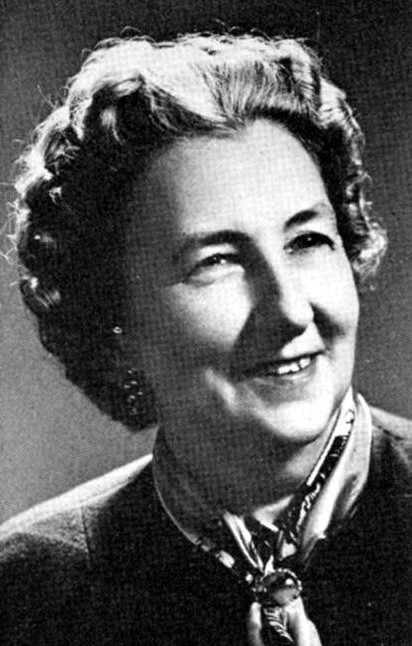


Lettie was born in Claiborne Parish on August 21, 1893. She graduated from Louisiana Industrial Institute in Ruston, which is now called Louisiana Tech. Miss van Landingham began her teaching profession in 1914, teaching home economics in De Ridder, Lake Charles, Minden, and Belcher. She accepted the position as the first Bossier Parish Home Demonstration Agent on August 1, 1929. She held this post with the LSU Cooperative Extension Service until her retirement in 1960; completing 31 years of service.


Home demonstration agents taught local women vital homemaking techniques through organized clubs. These clubs were in even the smallest of Bossier Parish communities. Representatives of the clubs formed a larger Parish Home Demonstration council. These Home Demonstration clubs were popular in from the 1930s through the 1950s, a time when our parish was segregated. Bossier did have an active home demonstration program for African American women. Lettie worked with community leaders, including supervisory teacher Charlotte Mitchell, to assist all clubs in the parish. In 1931, Bossier’s African American clubs filled 6,000 tin cans at canning centers located within 4 of the local Black schools, with many of the cans going to the American Red Cross to distribute to the hungry.


Lettie pioneered the food preservation program in Bossier. She taught rural girls in 4-H classes and women in home economic skills, particularly food production and preservation. These skills were especially important during the Great Depression of the 1930s and during World War II, when food preservation was a necessity. The price of canned goods was prohibitive for many rural Bossier Parish residents, so Lettie took orders throughout the parish. She then placed one large bulk order and had an entire truckload of canned goods delivered. This bulk price allowed families to purchase the cans they needed at a reasonable price.


She also wanted to help make cooking both easier and safer. Pressure cookers were considered dangerous by some housewives. The Bossier Banner ran an article in 1932 titled, “Caution needed; Cooker Explodes During Past Week” when Mr. A.E. Robinson, the agricultural instructor at Haughton High School, was burned by steam in an accident with a pressure cooker. Miss Van submitted a list of 5 rules for safe pressure cooker use and also demonstrated how to can corn in a pressure cooker over an improvised brick furnace.


The beloved “Miss Van”, as she was affectionately called, set up 23 canning centers, a community frozen food plant, and helped bring electricity to rural Bossier Parish residents. She was also one of the founders of the Bossier Restoration Foundation, an organization dedicated to preserving Bossier Parish’s historic sites. She received a certificate for outstanding work from the National Home Demonstration Association. She conducted health clinics with the assistance of local doctors and the Webster Parish Public Health Unit, and was instrumental in the establishment of the Bossier Public Health Department in 1937. During this time, she worked with a relief agency and, with the help of W.P.A. labor, built approximately 85 sanitary toilets. Several rural communities in Bossier Parish did not have running water or indoor toilets at this time.


She firmly believed in beautifying her community. She initiated the Plain Dealing Clean-Up Campaign in 1930, which was awarded a national certificate. One of her pet projects was the Keep Bossier Beautiful Club. She fought to rid the highways of litter and spearheaded a campaign to obtain the Cleanest City Award for Bossier City in 1966.


In a 1921 letter from the state superintendent, the value of a Home Demonstration Agent is discussed. “When the right agent is selected, she is always worth many times her salary to the parish. She goes into homemaking clubs of various kinds, which results in the girls having a deeper appreciation of a good home and in their knowledge and skill in making it such. If the agent is a woman of tact and wisdom (and she usually is) she gets into the homes of the people throughout the parish, especially the country homes, makes the acquaintance of the housewives and the girls who are beyond school age, and establishes among them better ideals of homemaking. She shows them what a good home is and how to provide the elements that result in good homes.”


In 1968, on her 75th birthday, Mayor George Nattin proclaimed Wednesday, August 21 as Lettie Van Landingham Day in Bossier City. This honor was in tribune to the people of Bossier City and for the example she set in friendship and devotion to her work. Sadly, Lettie was killed in a traffic accident 8 years after her retirement, on October 24, 1968. “Miss Van gained the respect with all whom she has served and with whom she has worked.”


* To see an illustrated video (5.36 minutes) of this biography, with additional images of Lettie van Landingham and of home demonstration work, check out the Bossier Parish Libraries YouTube channel. Go to www.youtube.com then search “Bossier Parish Libraries” and choose the History Center’s “Playlist.” or use the link below. 

https://www.youtube.com/watch?v=Ba8ERyDuKFI&list=PLHkR-8TzYOEZcND1t3EpBk6FZBFStx3tX&index=2

To visit us in person, the History Center is now within the new Bossier Parish Libraries Central Complex at 850 City Hall Drive, Bossier City, LA (across Beckett Street from the original History Center and “old” Central Library). We are open M-Th 9-8, Fri 9-6, and Sat 9-5. Our phone number is (318) 746-7717 and our email is history-center@bossierlibrary.org


For other fun facts, photos, and videos, be sure to follow us @BPLHistoryCenter on FB, @bplhistorycenter on TikTok, and check out our blog http://bpl-hc.blogspot.com/.


Images: 

Lettie van Landingham, portrait.

Bossier City wins Fourth District Cleanest City competition. (L-R) Mayor Geoge Nattin, Lettie van Landingham, Mrs. L.H. Taylor, Mrs. W.E. Piper, and George Adams. May, 1966. Photo from the Marie Wissman Collection, BPL History Center.

Cover of the Bossier Parish Home Demonstration Council Yearbook for 1953 – 1954, showing locations of Home Demonstration Clubs throughout the parish.


Article by: Marisa Richardson

Wednesday, June 26, 2024

Winning World War II from the Kitchen

In the archives of the Bossier Parish Libraries History Center is a 1944 photograph of Mrs. Bonvillion’s fifth grade class at Bossier Grammar School (now Bossier Elementary School). The students proudly hold a banner that proclaims, “We brought the GREASE to write the PEACE.” They brought waste fats and tin cans that were needed to make munitions for the armed services during World War II.


Schools were not the only places in which kitchen fats were collected. Lettie VanLandingham was Bossier Parish’s Home Demonstration Agent through the Depression, WWII and into the 1950’s. Home Demonstration agents were provided by Louisiana State University’s Cooperative Extension Service. They taught women homemaking techniques, particularly related to food production and preparation, through organized clubs and general outreach in even the smallest of their parish’s communities.

In “The Bossier Banner” throughout WWII, Ms. VanLandingham advised homemakers on how to contribute to the war effort in their kitchens by saving cooking fats, which she referred to as a “miracle material”

“If the necessary supply of fats and oils is to be maintained, Louisiana housewives will have to save more frying-pan drippings that are unfit for further use.”

“By salvaging grease otherwise ready for the garbage, home-makers can assure themselves of more fats and oils, and at the same time supply the armed forces with the raw materials to make TNT, incendiaries, vaccines and thousands of battle-field necessities.”

“To make a hundred essentials for the battlefield, as well as the home front, they are vitally needed. One pound of fat saved in a kitchen will help supply the medicines to maintain a hospital bed for 12 days. One pound of fat will also help to make 19 pounds of synthetic rubber for ambulance tires. Save all fats. They are vital to help make these and other essentials like parachutes, bullets and soaps for the battlefield and home front. By saving one teaspoonful of fat each day for a month, the housewife will find that she has salvaged one pound of fat.”


Ms. Van Landingham’s dispatches on saving fats made it clear that recycling during WWII was not only good for the life of the planet, it helped to save lives of soldiers. Another important reason for saving fats, though perhaps not as noble, was that it was good for the wartime homemaker’s wallet, which would have included ration stamps or coupons in addition to money. Food was rationed during World War II for a variety of reasons, including supply and demand issues, military needs, and the economy, including keeping inflation in check. Food was mostly rationed using a point system that adjusted frequently for shifts in supply and demand. Products with high demand and low availability needed more points than items that were easier to obtain. Point value on a blue ration stamp were for foods that were processed and canned, frozen, dried or otherwise pre-packaged. Red stamps were for meat, cheese and fats. Therefore, Ms. Landingham pointed out,

“The more used kitchen fats home-makers turn in, the less likely are point values to rise on such items as shortening, lard and cooking oils,” she said. “Each pound of used kitchen fats means two extra red ration points and 4 cents to the home-maker. In other words, the home-maker who saves kitchen fats and sells them, trades a commodity she can’t use for one she can. In return for her salvaging job, she finds more fats and oils on open shelves, and she has more red points with which to buy them.

Bring or send any kitchen fats you have to the home demonstration club meetings and it will be delivered to some of the dealers who are taking care of it,” concludes the agent.

To learn more about life during World War II, join us for World War Tuesdays on the second Tuesday of the month from 10:30 – noon. The next meeting is July 9th and will feature food issues on the home front with the development of Victory Gardens and home food preservation. This meeting will be in the new Central Library building 850 City Hall Drive, Bossier City, LA (across Beckett Street from the original History Center and the “old” Central Library). We are open M-Th 9-8, Fri 9-6, and Sat 9-5. Our phone number is (318) 746-7717 and our email is history-center@bossierlibrary.org

For other fun facts, photos, and videos, be sure to follow us @BPLHistoryCenter on FB, @bplhistorycenter on TikTok, and check out our blog http://bpl-hc.blogspot.com/.

Wednesday, May 4, 2022

Handmade in Bossier: Flags of the United Nations

 “United Nations Flags Made Here” said the caption in the Planters Press newspaper of Bossier City, La. above a photo of Mrs. W. P. Belcher holding the United Nations emblem and Mrs. W.E. Richie with a standard flag-sized cloth laying on the table before her. No, a new factory didn’t open up, though the two factories that did exist in the U.S. for making the flags were already cranking them out as fast they could in the Fall of 1950. Taking up the slack for the increased demand for U.N. flags caused by the onset of the Korean War and the United Nations Day of late October, were women and girls of Home Demonstration Clubs and 4-H clubs that were affectionately referred to at the time as modern-day “Betsy Rosses.”


When North Korea attacked South Korea on June 25, 1950, the United Nations, formed on October 24, 1945, took action that invigorated much of the American public’s interest in and support of the U.N., even among folks who originally did not have high hopes for it. It was American farmers, under the urging of Mr. Albert Johnson, the head of The National Grange, a longtime fraternal organization for farmers, who conceived of the United Nations countrywide flag-making effort. The U.S. Dept. of Agriculture through its Cooperative Extension Service endorsed the project and provided the leadership to promote the effort. The Extension Service tapped the National Committee on Boys and Girls Work (later known as the National 4-H service Committee and National 4-H Council) to make kits of materials and patterns for the flags, and got the woman and girl-power to put them together through its Home Demonstration (women) and 4-H Club (youth) membership.


The kits contained iron-on patterns of the U.N. logo design, blue cloth, and directions to make the 3x5 foot flag. Clinics for making the flags were planned for Oct 16th through Oct. 23rd of 1950 though Bossier actually started on Sept. 22nd when the home demonstration council had its regular meeting. The Louisiana State Agricultural Extension Agent, H.C. Sanders, assured potential makers that the plans were simple. (The fact that the Bossier Parish “champion United Nations Flag Maker,” Mrs. Clotelle McCoy of the Bossier City Home Demonstration Club, was so-designated because she made two flags, with each one taking twenty hours, seems to belie that statement!)


Ultimately, 25 flags were completed by the Bossier Parish home demonstration and 4-H clubs. The flags were presented to local mayors, including Bossier City mayor Hop Fuller, high school principals, home demonstration club buildings and other schools. The hope for the project, according to head agent Sanders, was that it would provide the participants, especially the youth, not only a practical stitchery lesson but a broader understanding of the U.N. and U.S. efforts for world peace.


Anything to which people pledge their allegiance attracts scrutiny, and the U.N. flag making project was no exception. The program had critics who said it was un-American. One of these critical groups was the Veterans of Foreign Wars under its National Commander, Charles C. Ralls, who disparaged it as an effort to supersede the American flag. The major U.S. farm organizations released an editorial to rebut this claim, saying:


“Kremlin propagandists who have been attempting to discredit the United Nations have been given invaluable assistance by uninformed and bigoted American groups seeking to block display of the UN flag on October 24, United Nations Day; The farm organizations


unanimously reaffirm their confidence in the United Nations as the greatest single instrument for peace in the world; The project…was accepted immediately by members of the national labor, business, veteran, civic, fraternal and educational groups; Display of the United Nations flag along with the American flag on October 24 will be an expression of the same unity on the home front that exists on the battlefield of Korea where the men of free nations are fighting and dying under the United Nations banner...” - Joint statement by American Farm Bureau Federations, National Council of Farmer Cooperatives, National Farmers Union and National Grange, 10/12/1950.


Perhaps as a rural locale with a strong farming tradition and an exceptionally strong Home Demonstration program, U.N. flags were completed and raised, often accompanied by elaborate ceremonies, throughout Bossier Parish. The publisher of the Planters Press boasted in his newspaper that they were the first in the parish to fly one of the flags at their printing plant on Traffic Street in Bossier City and that he personally hung it. The following week his paper gave a detailed example of U.N. Day (October 24th) 1950 at a local school with Benton High School’s event, which was sponsored by the Benton 4-H Club:


The entire student body, faculty, T. L. Rodes, Supervisor of Schools, Home Demonstration Club members Mayor Carter and Mrs. Voncell Lank associate Home Agent, attended the celebrations. A letter to all youth of the nations was read by Mary Alice Stinson. The United Nations flag, made by 4-H members of that club, was advanced on a staff by George Stroud along with a United States flag of the same size advanced by John Paul Jones. The audience then pledged allegiance to the United Nations Flag. Barbara Grisham gave the history of the flag. A panel discussion on United Nations was led by the 4-H Club, president, Bobbie Jones…


If you have any information, stories, or photos about the UN Flag project or other Home Demonstration or 4-H local club photos or stories, we would love to see them or to copy them, with permission, to add to the History Center’s research collection. Please come to the History Center to do research or see our exhibits at 2206 Beckett St, Bossier City, LA. We are open M-Th 10-8, Fri 10-6, and Sat 10-5. Our phone number is (318) 746-7717 and our email is history-center@bossierlibrary.org

For other fun facts, photos, and videos, be sure to follow us @BPLHistoryCenter on FB, @bplhistorycenter on TikTok, and check out our blog http://bpl-hc.blogspot.com/.

Photo: H.C. Sanders, Director of the Louisiana Agricultural Extension Service, and Miss Ellen Le Noir, State Home Demonstration Agent, hold up the first United Nations flag made in Louisiana to launch a statewide campaign to make the flags in preparation for United Nations Day on October 24, 1950. Bossier Parish Home Demonstration Clubs and 4-H Clubs answered the call and U.N. flags were raised throughout the parish on that day. Photo from The Planters Press Thu, Oct 19, 1950 · Page 4

Article by: Pam Carlisle

Wednesday, April 14, 2021

Campaign Against Litter Creates State Law

It's National Keep America Beautiful Month, which is about the shared responsibility we have in building and maintaining clean, green, and beautiful spaces. Improving our environment includes planting trees, flowers, and gardens and applying a fresh coat of paint on fences, decks, and buildings. It also involves reducing waste by repurposing and reusing old items, recycling, and picking up litter on our streets, highways, and in our communities.

While the initiative for keeping America beautiful began in 1953, Bossier Parish's strong efforts started in 1929 when Lettie Van Landingham came to Bossier Parish to start her long-time career as Bossier Parish Home Demonstration agent. In a Bossier Press article written by Van Landingham, she talks about her fight against litter in this parish.

(L to R) Mrs. Cason, Mrs. Dalrymple, Mrs. Kilgore, and Miss Lettie Van Landingham
Baton Rouge, 1933

“’Thank you’ is not enough to say to the Bossier City Quota Club and all of the other people who have been so wonderful to help carry out our civic programs.

“Therefore I shall give a brief history of my work along this line.

“As a little county girl I attended Minden High School. At that time Mrs. Joe Miller was president of the Minden Civic Club. This club had annual spring clean-up each year.

“This being in the day of one horse delivery wagons, owned by the grocery stores, the merchants furnished the drivers, and all school children assisted in picking up litter surrounding the school and the downtown area and putting it in the wagons.

“Therefore, I was like the little nine-year-old boy whom I picked up one day when he was on his way to the auction barn. He said, ‘I’m going to the auction, you know once you get it in your blood you can’t get it out.’

“The first group I organized was in 1918 in a small town that needed everything. This organization was made up of high school boys and girls. We followed Mrs. Miller’s plan and the town was greatly improved. The remains of wood walks and outdoor toilets were piled and later carried away by the merchants.

“When I came to Bossier in August, 1929, one of the first things the rural women asked was to please help to get the people not to throw their litter on their roads and land.

“Plain Dealing led the way with a good clean-up program. The report was sent to a magazine which awarded them with a plaque. This was placed in the Bell Hotel where the Lions Club held their meetings. Like many other valuable things, it was burned with the hotel.

The home demonstration club women and I worked in many ways to improve the sanitation and beautification of the parish. The members of the Police Jury also assisted and on April 8, 1949, passed ordinance No. 182. A few years later, through our efforts, the state passed a law prohibiting dumping litter on the highway.

“In 1953 Mrs. M.E. Tipton had the idea of getting the heads of the departments together and trying to accomplish more. This was done, the meeting being held at the State Highway building with representatives of the Police Jury, lumber companies, highway department, women’s organizations and others present.

“The name ‘Keep Bossier Beautiful’ was selected for the organization and Harry Balcom was elected president. We worked closely with the state organization, ‘Louisiana Associated Clubs for Roadside Development, Inc.,’ with Mrs. H.H. Harris of Alexandria as chairman.

“This organization, ‘Keep Bossier Beautiful,’ has worked continuously since it was organized and has contributed much to the improvement of highway beautification and sanitation.

“Thier first meeting of the 1967-68 year was held at the Amber Inn October 11 at 12 noon.

“Again thanking all of those individuals and organizations who have assisted in making our parish a more beautiful and better place in which to live.”

Keeping Bossier beautiful has been important to Bossierites since its beginning. Looking at newspapers from the late 1800s, you will see admonishments in there like "Clean up your yards" and "Clean up the front yard; tack on that loose board or picket, slick up and make home and its surroundings as neat and cheery as possible. You will live just as long, have just as good crops and feel a great deal better if you tidy-up a bit. Try it."

What do you want to know about Bossier Parish's history? Visit, call or email the Bossier Parish Library History Center for help with your research. We are at 2206 Beckett Street, Bossier City, 318-746-7717, history-center@bossierlibrary.org.

By: Amy Robertson

Thursday, April 1, 2021

This Month In Bossier Parish History

 April: Though The Years

Apr.10, 1988: Bossier Parish Libraries Central Branch had their Open House/Dedication.  Everyone was in the invited to attend the dedication and ribbon cutting. The entertainment was provided by: Shreveport Bossier choral Ensemble, A.T. and Georgia (folk music), Sunshine Generation, Willie the Clown and displays of art work and Native American Artifacts. 

  *Please enjoy the before and after comparison photos of the Bossier City/Central Branch.


Apr.16:  Happy National Librarian Day!

First public librarian in Bossier Parish: 
Elisabeth Williams

Apr.23, 1921: Weekly news from 100 years ago

   *Please enjoy the headlines from the Apr.23, 1921 Bossier Banner and related photos. 

᪇ Shilo School had a successful term with a large portion of pupils being promoted to a higher grade. 

C.1890's: Shilo school, Mrs. R.P. Rodgers (in doorway) was the teacher

😑 Concord School is progressing nicely and is inviting everyone to the school house for a short program. 

1907: concord school, teacher was Mr. Thatcher

💭 A delightful picnic was enjoyed. 

1902: Picnic at Koran Community

😀 J.J. Roberson was an appreciated caller at the Bossier Banner. 

1930-1940's: Morris Roberson & James J. Roberson


Apr.30, 1950:  Bossier Women to observe National Home Demonstration Week. There were over 3 million members of the Home Demonstration Club members through out the United States, Puerto Rico and Hawaii (Became the 50th state in 1959).  Over three hundred of those member were from Bossier Parish. 
   *Please enjoy the photos from the Home Demonstration Club members from our parish.
1954: Home Demonstration Officer: Mrs. B.J. Cannon (Treasurer), 
Mrs. D. Cryer (Secretary), Mrs. J.C. Lee (President), Mrs. M.L. Laing (Vice-President), 
Mrs. H.C. Stinson (Parliamentarian) 

1957: Contestants in the Parish Dress contest
L to R: Mrs. J.C. Lee (2nd Place), ?, Mrs. D.D. Hollis (4th Place)

1958: Mrs. R.E. Briggs, won 1st place on the Sack Dress at the Bossier-Webster Fair.