Showing posts with label Agriculture. Show all posts

Wednesday, May 28, 2025

Where’s the Beef! - Louisiana Beef Week

Agriculture is a key piece in the puzzle that is the Louisiana economy, and within that lies Louisiana beef. Cattle raising, and the subindustries built around enabling it, has been a mainstay in the Louisiana culture and economy since the early days of Louisiana colonization. From there, the industry has only grown, and Bossier Parish is no exception. In 2023 alone, beef production was valued at 15.2 million dollars according to the LSU AgCenter’s annual report of Louisiana agriculture. Therefore, it should come as no surprise that to honor this continued contribution, a celebration was devised in the early 1960s with a single goal: drive Louisianians to eat Louisiana beef. Thus came the aptly titled “Louisiana Beef Week.”


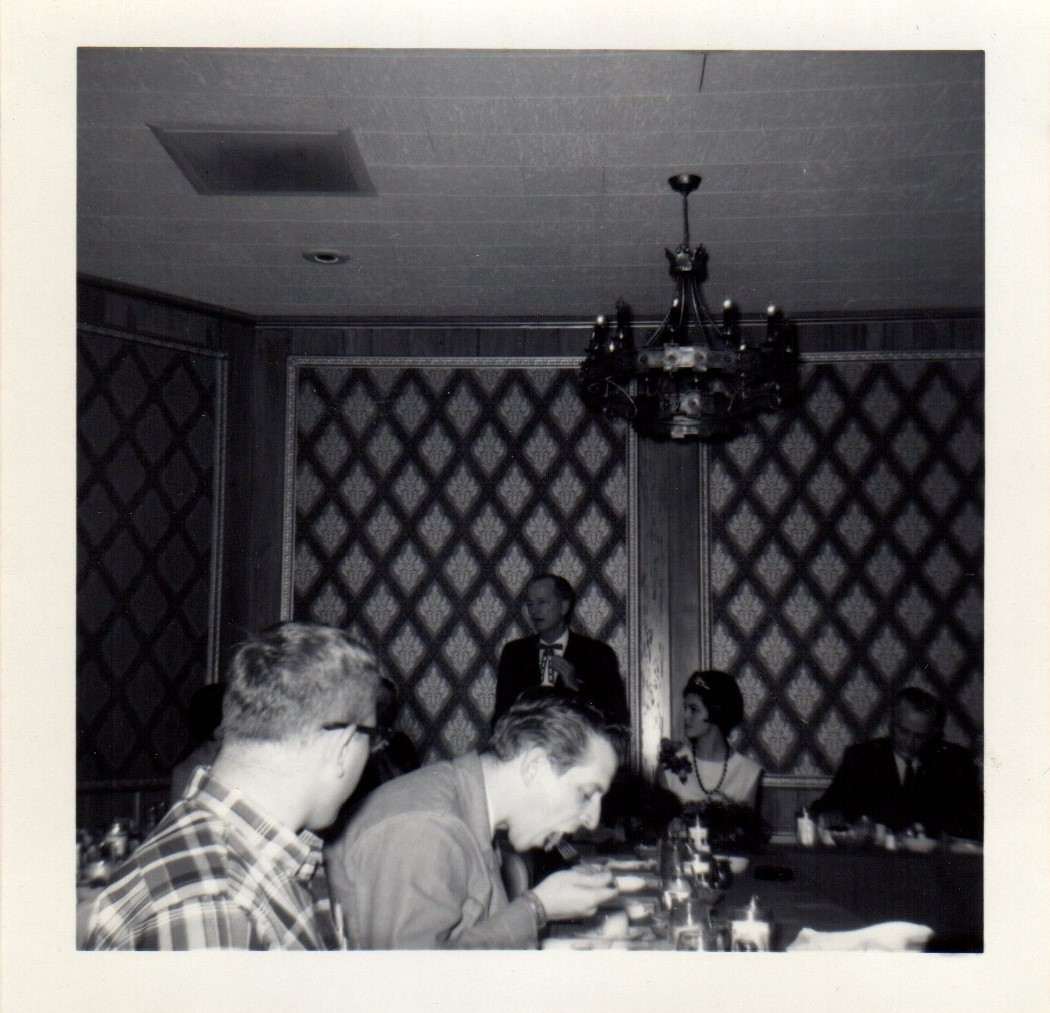


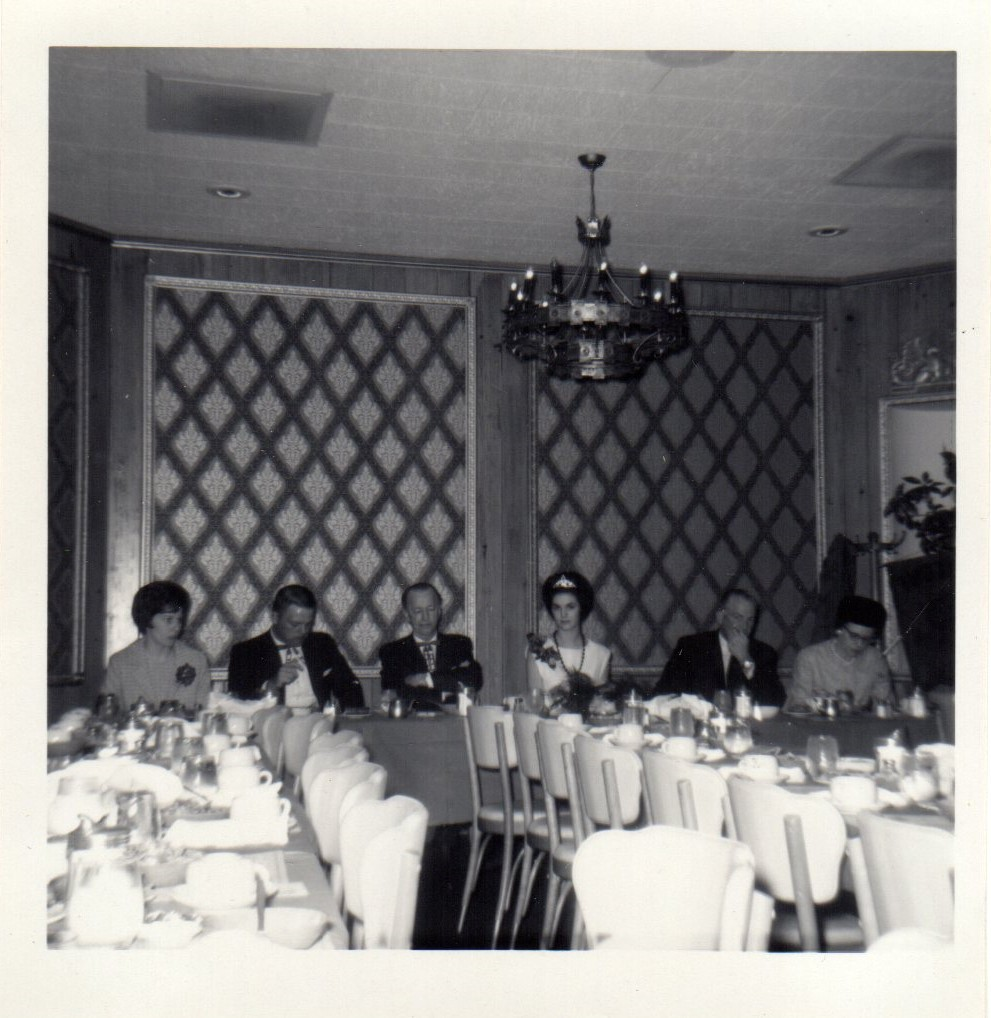
Starting in 1962, after being signed into existence by Governor’s Proclamation by Governor Jimmie Davis, Louisiana Beef Week was imagined by the Louisiana cattle sector in conjunction with the Louisiana Department of Agriculture to encourage Louisiana residents to eat Louisiana beef. Likewise on the local level, the Mayors of both Shreveport and Bossier City met with the local organizers of the celebration to show their support for the mission of Beef Week. Local organizers took to radio and newspaper spots, as well as holding press conferences and luncheons, all revolving around encouraging Caddo-Bossier to partake in Louisiana beef. For example, the “Beef Week Queen” of 1962, Rayetta Broussard, as well as her counterpart in the Caddo-Bossier Cattlemen’s Association Jim Burt III, met mayors George Nattin of Bossier City and Clyde E. Fant of Shreveport. The purpose of this meeting, of course, was to promote the local beef industry, as well as the secondary industries that support and benefit from the wider cattle sector. This tradition of meeting with local leaders would continue as the event grew older and larger. For another example, look to the “Kick-Off Luncheon” of 1967, with a guest list sporting names of local business owners, politicians, and members of the local media. According to a column published in the Shreveport Journal on May 2, 1967, the event was hosted by the Sweetheart of the Caddo-Bossier Cattlemen's Association, Shellye Abington, and held at the Piermont Mall. Mayors Nattin and Fant were gifted beef roasts from the Caddo-Bossier Cowbelles (the women’s auxiliary of the Cattlemen's Association). In 1967 alone, there were multiple such luncheons all sporting similar guest lists. While Beef Week has waned in popularity, the wider idea of a beef focused celebration has not lapsed from the public consciousness. In 2023, by Governor’s Proclamation, the month of May was declared Beef Month, and likewise the LSU AgCenter has tried to continue the tradition of encouraging local beef consumption during what is considered Beef Month.




In retrospect, Louisiana Beef Week’s mission to increase Louisiana beef consumption seemingly succeeded. According to numbers from the USDA, there were over 45 million heads of cattle in Louisiana by the mid 1970s. While numbers have since decreased, cattle still play an integral part in Louisiana at large, and more locally here in Bossier Parish.


If you have any photos or other information relating to the history of Bossier City or Bossier Parish, the History Center may be interested in adding the materials to its research collection by donation or by scanning them and returning the originals. Call or visit us to learn more. We are open M-Th 9-8, Fri 9-6, and Sat 9-5. Our phone number is (318) 746-7717 and our email is history-center@bossierlibrary.org. We can also be found online at https://www.facebook.com/BPLHistoryCenter/ and http://bpl-hc.blogspot.com/

Images: 

  • Beef Week is Proclaimed by Governor Jimmie Davis (Photo courtesy of The Shreveport Journal, March 15, 1962)
  • Mayors of Shreveport and Bossier City with local Cattlemen (Photo courtesy of The Shreveport Journal, Jack Barham, March 22, 1962)
  • 1967 Photo from the Beef Week Kickoff Luncheon - Mayor Fant Issuing proclamation of "Beef Week" (Photo from the Beef Week Scrapbook (Page 18) BPL History Center)
  • 1967 Photo from the Beef Week Kickoff Luncheon - Special guests at Head Table (Photo from the Beef Week Scrapbook (Page 18) BPL History Center)
  • 1967 Photo from the Beef Week Kickoff Luncheon - Mayor Nattin Issuing proclamation of "Beef Week"(Photo from the Beef Week Scrapbook (Page 18) BPL History Center)
  • 1967 Photo from the Beef Week Kickoff Luncheon - Shelly presenting Mayor Fant & Nattin, each, a roast at the luncheon.(Photo from the Beef Week Scrapbook (Page 18) BPL History Center)
  • 1967 Photo from the Beef Week Kickoff Luncheon - Lanny Thomas, Shreveport Times, Jack Dillard, Farm Dir., KWKH Radio, Jack Copeland, Shreveport Chamber of Commerce (Photo from the Beef Week Scrapbook (Page 18) BPL History Center)

Article by: Jonah Daigle

Wednesday, March 27, 2024

4-H, the State Fair and Pigs, and the Peace Boys of Benton

 Digitally flip through the book, “Club Men of Louisiana in Caricature,” drawings by W.K. Patrick and Associates, 1917, available online from the Library of Congress, and you’ll find illustrations that poke fun at, yet revere some very influential members of clubs across Louisiana, a powerful, yet limited group. Most of the men are from points further south. However, there’s one illustration that very clearly states it is in Shreveport - William R. Hirsch. A put-together and rather unperturbed-looking, oversize Billy Hirsch sits at a comparatively small desk, labeled “Secretary, State Fair of Louisiana.” The State Fair coliseum (not yet named after Hirsch) and Exposition Building are sketched behind him. 

Surrounding Hirsch in the illustration is a clearly loud, agitated mob of “ladies and gentlemen” assailing him with a barrage of questions or commentary: “I had the goldurned best pertaters in the hull shebang, war’s my prize?” “Tilly Moots got the prize I otta had -shameful!” and, “Samhill! Whar’s the prize on my shote? Thar wuz a blue ribbon on ‘im’?” That one I had to look up – turns out shote, aka shoat is a young pig. 


This cartoon had me wanting to learn more about William Rex Hirsch too. He was president of Hirsch & Leman Company of Shreveport, and secretary of the State Fair, though in more common parlance, he was often known as MISTER State Fair. He had deep roots in Shreveport and wanted to leave a lasting legacy on the city and state. His 1952 obituary said the affairs of youth, particularly the educational improvement of rural youth, was a deep-seated interest of his. The writer speculated it was one of the prime reasons that Mr. Hirsch was involved with the fair. (And if the cartoon was any indication, it was the adults who were “sore losers”.) The writer mentioned that Hirsch was especially a promoter of the livestock auction for 4-H entrants (the youth who were learning to have a future in agriculture) and that it is thought that the Louisiana State Fair under Hirsch was the very first to have 4-H’ers showing pigs, which then become commonplace across the country. 


By 1929, the swine show for adult farmers at the Louisiana State Fair was considered among the best in the country. Also, that year, the 4-Hers had really hit their stride with the Pig Club event, with Rapides Parish coming out on top. By 1944, 4-H club entries in the swine category at fairs and livestock shows bested even the pigs of adult competitors. 


By the late 1940’s, the best of the 4-H swine came from Bossier Parish. As announced in the Planters Press Bossier City newspaper of Jan. 30, 1947, three brothers from the Peace family in Benton, Ernest Richard, 13, Jerald, 11, and Marion Dale, 9, not only raised champion pigs and gained national recognition for their methods of care and the fine product that resulted, but then donated the pigs to the March of Dimes Polio fund for auction. The pigs brought in a record-breaking donation of $540, over $7,700 in today’s money!


In April of 1947, five Bossier 4-H club members exhibited 28 head of swine in the statewide competition at the Louisiana Junior Livestock Show in Baton Rouge, and got many of the honors. The grand championship “fat barrow” prize went to Jerald Peace’s 310-pound Duroc Jersey pig. Ernest Peace also won several places in the swine competition. Marion Dale was too young to participate in that show, but he attended along with their father, stock farmer Mr. E.R. Peace. In addition, Jerald’s pig was sent on an educational tour over the Illinois Central railroad as Bossier’s exhibit, with other 4-H exhibits taking up the entire train. The public was invited to attend this novel event and visit the giant porker during the train’s stop in Shreveport. 


The boys’ 4-H advisor, assistant agricultural extension agent Enoch Nix, and other adults who traveled to Baton Rouge for the exhibition, expressed pride in the Bossier boys’ fine showing at the event. Clearly their behavior, and the generosity of the Peace brothers, could teach the disgruntled adult exhibitors in the cartoon of William Hirsch a thing or two about gracious winning! 


Do you have any stories or photos to share of your Bossier Parish friends or family of various generations growing, raising, or preparing their own food? If so, we’d love to add either originals or copies to our collection. The Bossier Parish Libraries History Center is located at 2206 Beckett St, Bossier City, LA (across the street from the new Bossier Central Library). We are open M-Th 9-8, Fri 9-6, and Sat 9-5. Our phone number is (318) 746-7717 and our email is history-center@bossierlibrary.org


For other fun facts, photos, and videos, be sure to follow us @BPLHistoryCenter on FB, @bplhistorycenter on TikTok, and check out our blog http://bpl-hc.blogspot.com/.

Images: 

  • William Hirsch caricature/courtesy "Club Men of Louisiana in Caricature" & the Library of Congress
  • Jerald Peace and his grand champion pig/courtesy The Bossier Banner April 3, 1947
Article by: Pam Carlisle 


Wednesday, July 20, 2022

FILL THE SCHOOL BUS -- with Sour Cream!?


Here in Bossier it’s almost time for school to start! That means it’s a good time to make a pitch for United Way of NWLA’s Fill the Bus campaign.  Each of your Bossier Parish Libraries branches has a box available through Aug. 2nd to collect school supplies for this program. The United Way will distribute the supplies to Bossier schools and students who need them. 

Did you know almost a century ago there was another program where school buses were used to provide community aid for tough economic times. In 1930, the first full year of the Great Depression, the Bossier Parish School Board had shelves installed in the back of school buses so the buses could contain not only students, but sour cream! That might sound a bit odd, but sour cream was very deliberately chosen for what would now be referred to as a “cash cow” project. It was a project designed to bring local farmers additional cash with little ongoing investment beyond the initial one, which in this case was literally the purchase of a cow! 

Bossier parish farm agent H.F. Spencer, as well as agriculture agents across the region, encouraged farmers to get a cow, or maybe even a few cows, which could then produce cream that could be sold as a profitable “sideline” in the slower season of their farms, like late fall and winter. Agent Spencer believed that the cows could “bring in a nice little pay check during a season that is often barren for most farmers. Though they cannot hope to realize any great profit from such a program, they can, by using sour cream shipping as a sideline, make enough money to buy groceries and other necessities during the great part of the year.” 

Why sour cream? According to agent Spencer, as reported in the “Bossier Banner-Progress” in September, 1930, “It is not necessary to have dairy barns and practice extreme sanitation with sour cream as with marketing whole milk.” He instructed, “Cows may be milked in the usual way, the cream skimmed off by hand each day and put away in a cool place, preferably in a tub of cool water. Then when the shipping day is at hand the cream is taken to the station and the money received for it.” The farmer could keep the skim milk at home “to feed to hogs and poultry.” Spencer admitted the price for the sour cream was not as much as for milk, but given that refrigeration was prohibitively expensive (and electrification had not yet reached all of rural Bossier), he argued that with the lower overhead costs for sour cream, the profit from cream versus milk was just about equal.

The August 14, 1930, issue of the “Bossier Banner” reported that,

 “As evidence of the interest in the milk cow, the Bossier Parish School Board held a special meeting Monday to discuss plans and ways of aiding the farmers of the parish in the marketing of sour cream.  All members of the Board were very much interested in the movement, and have agreed to equip their school buses with racks for the transporting of cans of cream and other farm produce to the high school agricultural departments.” 

In other words, the buses would pick up both kids and cream on their drives through rural Bossier Parish, and bring them both to school! Once at the high schools, the cream was tested for butterfat in the agriculture department and then shipped to the Claiborne Cooperative Creamery in Homer, which would pay by the pound of butterfat. 

The Bossier Parish Libraries History Center can provide an abundance of interesting facts about Bossier Parish.  Visit us soon at 2206 Beckett Street, Bossier City. We are now open: M-Th 9-8, Fri 9-6, and Sat 9-5. Fill the Bus School Supplies will be collected from July 14 - August 2. Requested supplies include pencils/pens (black, red, blue), wide ruled lose leaf paper, glue bottles or sticks, safety scissors, and crayons. For more information, and for other intriguing facts, photos, and videos of Bossier Parish history, be sure to follow us @BPLHistoryCenter on FB, @bplhistorycenter on TikTok, and check out our blog http://bpl-hc.blogspot.com/

Photo: Claiborne Creamery, courtesy of the Claiborne Parish Library. The Claiborne Parish Cooperative Creamery provided farmers of the region, which included Bossier Parish, a cash market for milk and cream. The Creamery opened on June 16, 1929 and operated successfully until the business sold in 1960.

Article by: Pam Carlisle

Wednesday, June 23, 2021

Shop Local and Win a Cow

Would a free cow get you to come out and shop locally? Well, it worked for many communities throughout the country during the great depression. After successful "Cow Days" in La Salle and Morehouse parishes, and elsewhere, local merchants in Bossier Parish started plans of their own. The first-ever Cow Day for Bossier City took place on Jun 28, 1930. The Cow Day project was to bring people into town and to get them to spend money with local merchants or "Home-Owned" merchants, as they called it back then.

The idea was to get people shopping and with each purchase of at least $1 or payments made on accounts earned the buyer one "Cow Ticket," a numbered ticket, entering them into the drawing for a live Jersey Cow or one of 25 other prizes provided by the local merchants and sponsors. The more tickets you collected increased your chances of winning. The local merchants had a sale or bargain day once a week until Cow Day for about six weeks.

But it wasn't just local merchants that were being promoted, "the keeping of cows, good grade hogs and chickens on the farm," was also being encouraged. A full-page promotion of the upcoming Cow Day gave a listing of all the participating merchants and a program for the day's events. The advertisement declared: "Cow Day promises to be the greatest event in the history of Bossier City." They expected the excitement to attract up to 5,000 visitors.

The Caplis Building, built 1927.

The program began at 11 a.m. with a parish flower show at the Caplis building, located at the corner of Cain (now Barksdale Boulevard) and Minden Streets. Then at 2:10 p.m., a caravan of about forty cars and floats in a parade led by Marshal George C. Huckabay took off. It started with the "official's auto," which included then-Mayor Tom Hickman. Following next was the entire troop of the Boy Scouts from Shreveport, including a bugler. Then, in a fire truck was the Bossier City Volunteer Fire Department, including Fire Chief Nathan Huff.

Taking center stage was the grand prize and the star of the parade, the Jersey cow. Following the cow was the Bossier Parish Demonstration Agent, Miss Lettie Van Landingham with H.F. Spencer, and the Boys' and Girls' Agricultural Club of Bossier Parish. And finally, a procession of cars and floats with banners of every home-owned merchant participating in the 'Cow Day' program.

Beginning in front of City Hall, the parade route was as follows:

"Out Cain Street to New Benton Road. Out New Benton Road to intersection of Minden Highway. Turn left and follow New Minden Highway to Hamilton Road. Turn right on Hamilton Road to Old Benton Road. Turn left follow Old Benton Road to Wyche Avenue. Right on Wyche Ave. To East Second Street. Left on East Second Street to Traffic Street and Thence on Traffic to Cain. Turn left at the intersection of Traffic and Cain Streets, thence out Cain Street to City Hall again."

During the parade, the Brook Mays & Co. Band furnished the music with Prof. Jeff Wilcox, director. At 3 p.m., the prizes were drawn from a large yellow barrel with 35,000 or more Cow Tickets. The first ticket drawn was for the grand prize, the Jersey cow, won by W.B. Grosjean of 601 Delhi Street, Bossier City. 

Due to the intense heat that day, they only drew about 1,500 visitors, less than expected, but considered the program a success. The program attracted locals not typically seen in town shopping and visitors from out of town, including many who had never been to town before, all hoping to win a cow.

Plain Dealing wasted no time in hosting its first Cow Day program on Aug. 19th. It was much the same as Bossier's, having a parade, music, prize drawings, and bargains, but their program started with an address from Governor Huey P. Long. That day D.S. Boldon won the cow. Plain Dealing was so pleased with the success of their first Cow Day that they held a second Cow Day on Oct. 9th, with the grand prize going to Mrs. L. Nugent.

What do you want to know about Bossier Parish's history? Or, perhaps you have important information or artifacts about Bossier Parish History that you would like to share. Donations are a large part of our collection and are vital in helping us preserve Bossier Parish's history. Visit, call, or email the Bossier Parish Library History Center for help with your research. We are at 2206 Beckett Street, Bossier City, 318-746-7717, history-center@bossierlibrary.org.

By: Amy Robertson

Wednesday, March 24, 2021

Bossier Gets First Smith-Hughes Teacher

Many believe that teaching agriculture in public schools began with the passing of the Smith-Hughes Act in 1917. However, this act's passage was the culmination of work started in 1893 by Alfred C. True, Director of the Office of Experimental Stations. The OES was established in 1888 as a special branch of the Department of Agriculture.

When True became the OES Director, his first report concluded that "the farm boy or girl in the rural high school should be taught...the theory and practices of agriculture." He believed that doing so would result in "more contented and prosperous rural communities." He continued to advocate the need for, development of, or progress in agricultural education in public schools.

In 1901, True hired Dick Crosby as his special assistant to carry out work related to agricultural education. "With the addition of Crosby to the staff and the awakening demands for a more relevant education from progressives, agricultural education in public schools started to become a reality." The OES established a division of agricultural education in 1906 to promote and support agricultural education through consultations, research, curriculum guides, and instructional materials.

At that time, states began establishing agricultural education programs, and by 1916 agriculture was being taught in over 4,000 high schools. The passage of the Smith-Hughes act in 1917 provided federal funds to states to support the teaching of vocational agriculture, home economics, and trade and industrial education. With access to funding, more schools could afford to hire vocational teachers, often referred to at that time as Smith-Hughes teachers. Ten years after the act passed, approximately 90,000 public schools were teaching agriculture.

James Turner Manry in front
of his home garden.
Mary Wheeler Corley Collection:
2003.026.010h
You may be wondering what this has to do with local history. In 1926, James T. Manry of Plain Dealing took a trip to Georgia to see family and friends. He wrote about his journey for the Bossier Banner-Progress. His story included a visit to a Smith-Hughes school where he saw the community benefits of having an agricultural program in public schools. In the article, he asserts, "By all means Bossier Parish is entitled to at least two of these schools." Manry was sure that he would win his friends in Plain Dealing over to his way of thinking.

One month later, the remainder of his story about his trip to Georgia appeared in the newspaper. He mentions that a friend requested him to contact the State Agricultural Department for further information along that line, which he did. He also said, "The wonder is that every parish does not take advantage of the Government's offer and thus learn the young people to love the farm. The only reason that these schools might not be a success in every instance is in the selection of a teacher. In passing through sections where these schools are maintained one can't but help notice the improved appearance of the crops grown. With the right selection of teachers Bossier Parish can't afford to do without this aid is my humble opinion."

The first Smith-Hughes teacher in Bossier Parish was Shelby M. Jackson. He taught agriculture at Plain Dealing and Benton High Schools while also serving as the Smith-Hughes director of Bossier Parish. He got right to work and made it possible for local students to participate in the Smith-Hughes schools' district agricultural fair that first year. Winners were selected to attend the first national congress of vocational agricultural students for a national livestock judging contest at the American Royal Livestock and Horse Show in Kansas City.

Manry must have been satisfied with the Parish's selection of Jackson because the program was a success. Jackson not only instructed the school children, but he also taught the community through weekly articles that appeared in the Bossier Banner-Progress. In 1930, Jackson earned the distinction as the master vocational instructor for the State of Louisiana. He later became the State Supervisor of Vocational Agriculture and then State Superintendent of Education after that.

According to the Future Farmers of America website, "The advancement in agricultural education since the Smith-Hughes Act has bettered the quality of life not just for America's rural and farm families but for everyone across the globe who is fed and clothed by the American Farmer."

By: Amy Robertson