Showing posts with label Plain Dealing High School. Show all posts

Wednesday, August 23, 2023

Back-to-School in Bossier Pop Quiz

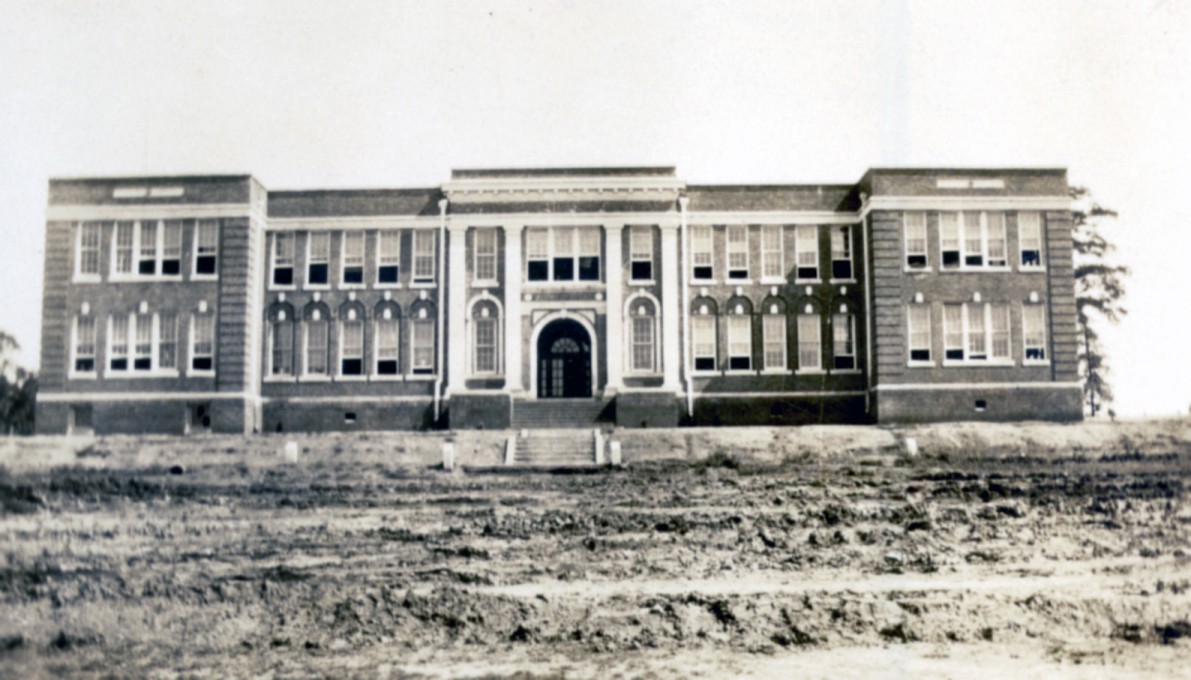
 It’s back to school time…and time for a quick pop quiz! Question 1) What was the first high school in Bossier Parish? Question 2) What was the first brick building in Bossier Parish? Answer, Question 1: Pioneer High School in Plain Dealing. The Pioneer High School cornerstone in Plain Dealing was laid in 1888, making it the first high school in Bossier Parish. The school opened in January of 1889, Answer, Question 2: Plain Dealing High School. In 1921, a new brick building was built for Plain Dealing High School to accommodate its growing student body. It was the first brick building to be built in Bossier Parish, and was built by Edward F Neild, architect.


But I’ll go easy in grading this ‘quiz’. If you answered Plain Dealing High School for both, or Pioneer High School for both, or even have the answers flip-flopped, I’ll still give you full credit. Plain Dealing got its solid though short-lived start as Pioneer High School at the very same location where it still stands. Also, if for the first question you answered Benton High School, well, I think I’ll give you some credit for that one, as well. Benton was actually the first school built in Bossier Parish using taxpayer money, in 1907. Schooling for children was not required until the 20th century, so schools that were completely tuition-free for the student and their family were a rarity. Even when they did exist, they often required citizens or community organizations to donate or raise money for the buildings.


The Pioneer High School cornerstone mentioned above gives two names: J.E. Johnston (often known as “Professor” Johnston) and S.J. Zeigler, vice president of the Cotton Belt branch railroad, which had just been completed from Lewisville, Arkansas to Shreveport. The railroad’s arrival created a business and residential building boom in Plain Dealing. Ziegler donated the land and Joseph E. Johnston was the first teacher and principal.


The first session at Pioneer High School began January 1, 1889, with primary, intermediate, and high school departments. Monthly tuition was, $2.00, $3.00 or $4.00, respectively, for the three departments. In 1890, the town of Plain Dealing was chartered, and in 1898, the mayor of the town of Plain Dealing authorized the town to buy the building, land and fixtures of Pioneer High School. Not long after, Mayor J.A. Mitchell authorized the town to donate it to the Bossier Parish School Board and Pioneer High School became Plain Dealing High School. (Like Pioneer and other high schools well into the 20th century, PDHS served primary through high school grades.)


In 1910, Plain Dealing High School was remodeled and an auditorium and 8 classrooms were added to the building. Following the brick building that upgraded the wood frame school in 1921, an additional brick building was erected in 1928 for high school grades (8-11) and another one was built in 1938 for upper elementary students. In 1963, the high school building burned and the “new” one (that still stands) opened August 31st, 1964.


If you would like to see the cornerstone from Pioneer High School, it is on display here at the Bossier Parish Libraries History Center. If you would like a presentation on the history of education and schools in Bossier Parish, featuring photos from the History Center collection of the one or two room school houses scattered throughout the parish, or a Bossier history “trivia” activity for your group or classroom, these and many other presentations can be requested by contacting the History Center. The History Center is located at 2206 Beckett St, Bossier City, LA. We are open M-Th 9-8, Fri 9-6, and Sat 9-5. Our phone number is (318) 746-7717 and our email is history-center@bossierlibrary.org


For other fun facts, photos, and videos, be sure to follow us @BPLHistoryCenter on FB, @bplhistorycenter on TikTok.

Images: 

  • Plain Dealing High School’s 3rd grade in 1916 in front of their wood school building that was originally the Pioneer High School.
  • Plain Dealing High School 1928
  • Cornerstone of Pioneer High School
Article by: Pam Carlisle


Wednesday, October 19, 2022

Calisthenics and Keeping Fit in North Bossier Parish

 One of my favorite photos in the History Center collection is a panoramic photo taken in 1931 by the Grabills, two of Shreveport’s most significant and talented photographers, father and son Burch and William Grabill. The sepia-toned photograph shows a wide ensemble of a hundred or more girls of varying grades among the tall timbers surrounding Plain Dealing High School. The school encompassed all grades, from first grade to last year of high school. The girls were wearing their regular school clothes of skirts and blouses, tights and lace-up shoes, and were apparently taking a physical exercise break led by their teachers, also in their usual cardigans, blouses, skirts stockings and elevated-heel shoes. Each group of girls, surrounding a group in the center playing basketball, is in a different pose, some with both arms straight out on either side, some with arms at angles above and below their heads and one group is possibly doing push-ups. One can guess they are participating in the popular group exercises known as “calisthenics”.


Calisthenics are free body exercises (exercises that use the body’s own weight) that include such motions as bending, stretching, twisting, swinging, kicking, and jumping, as well as such specialized movements as push-ups, sit-ups, and chin-ups. Calisthenics are designed to promote strength, endurance, flexibility, and coordination and improve wellbeing by putting the cardiovascular system to work in a controlled and steady way.


Calisthenics arose in the early 19th century from the work of Germans who worked to popularize gymnastics. Some physiologists stressed the exercises’ importance in the development of education for women. In the United States, Catherine Beecher was an early advocate of calisthenics and wrote Physiology and Calisthenics for Schools and Families (1857). Beecher was among those who promoted calisthenics solely for women, but they quickly became an activity for both sexes.


In advertisements for private schools in Bossier Parish newspapers in the 1880’s (when public school offerings were still extremely limited) calisthenics was touted in the curricula of schools of both sexes. The “Bossier Banner-Progress” in 1881 ran an advertisement for the Minden Male Academy that emphasized, “In order to promote the heath of the students, and to cultivate a graceful movement and carriage, there will be regular exercises in calisthenics.” The Minden Female College Boarding and Day School for Young Ladies and Children ran a longer ad that laid out a rather full description of their academic and musical offerings, but also emphasized that no matter what course (and tuition tier) one chose for their daughter, “Calisthenics, [is] a part of the daily exercises and free of charge.”


The health benefits of calisthenics were generally recognized by the beginning of the twentieth century, and primary and secondary schools throughout the Western world began instituting them. Schools eventually used these classes to show they took physical health and development seriously. This emphasis was spurred on by World War I when as many as one-third of U.S. military recruits were deemed physically unfit for combat. The U.S. government then passed legislation to improve the quality of physical education. In fact, physical education became mandatory in many states in the 1920’s.


Calisthenics among the trees seemed to seamlessly fit among the other activities of the school day at Plain Dealing High School. An article from the “Plain Dealing Progress” dated April 9th, 1937 and entitled, “Art Exhibit Was a Huge Success Here During Last Week” stated that, “A very interesting literary and physical education program was conducted in connection with the art display and Mr. Phillips said the pupils especially enjoyed the exercise outdoors last Thursday afternoon.”


The Bossier Parish Libraries History Center can provide an abundance of interesting facts and photographs about Bossier Parish. We would also love to hear your stories and see your photos. With your permission we could scan them to add to our collection. Visit us soon at 2206 Beckett Street, Bossier City. We are now open: M-Th 9-8, Fri 9-6, and Sat 9-5. For more information, and for other intriguing facts, photos, and videos of Bossier Parish history, be sure to follow us @BPLHistoryCenter on FB, @bplhistorycenter on TikTok

Article by: Pam Carlisle

Image 1: Advertisement for the Minden Male Academy from the Bossier Banner-Progress, September 15, 1881.

Image 2: Panoramic photo (scanned in two parts) of female students exercising and playing basketball on the grounds of Plain Dealing High School, 1931. Photo by Grabill, from the Mayme Rae and Hunter Willett collection at the Bossier Parish Libraries History Center

Saturday, October 1, 2022

This Month In Bossier Parish History

 October: Through The Years


Oct. 1: Model T Day is celebrated every year on October 1 to commemorate the day that changed how America traveled on its roads. Model T was an iconic automobile that changed America’s streetscape. We absolutely love and respect Henry Ford for introducing the car to America and contributing to its progress. Celebrating Model T Day is our way of paying tribute to his extraordinary enterprise.

Photo: Richard "Dick" Bradford, Sallie Tidwell Bradford, Mary A. (widow of John Leven) Bradford and Mary Leven Bradford taken about 1930s     2002.035.215B   


Oct 13, 1953: The "Big Chain" store opens in the heart of Bossier City. 
Photo: The Times Oct. 13, 1953


Oct. 19th: Weekly news from 100 years ago.  Newspaper clippings are from the Oct. 19, 1922 issue of the Bossier Banner.
  • J.B. Arnold’s store burns, nothing of value could be saved. 
Photo: C.1880’s: James Brownlee Arnold    2002.035.394  
                 

  • Grace Larkin was able to return to work
Photo: The interior of the old courthouse at Benton is best shown in this c. 1931 photograph. James M. Henderson, the clerk of court at that time, is seated. Grace Hamilton Larkin, who succeed Henderson upon his death is wearing a dark coat. 
 

  • The boys and girls Plain Dealing High School basketball teams were a success at the Bossier City Fair.
Photo:   Plain Dealing High School Girls' Basketball team.  1923-24.  Girls are dressed in bloomers and middy blouses.   Pictured are Mattie Sentel, Madge New, Inez Hefner, Nevella Peyton, Hazel Sanders, Lucille Wright,  Marie McKeller,  and Sea Willa Kilgore. 
1998.055.002                                        
Plain Dealing High School Boys Basketball Team 1922  
1997.054.122   


Oct. 27th: The Louisiana State Fair is here!
In recognition of well over 100 annual state fairs, here are a few photos and newspaper clippings from the early 1900’s

Photos: c.1910's Louisiana State Fair, various pictures.  1997.054.


Wednesday, November 24, 2021

Remembering "Happy" Cornish

“Happy” Cornish, born William Clayton Cornish, was a native of Plain Dealing. He started his athletic career at Plain Dealing High School as a star athlete playing football and track & field. While earning his M.S. in Education at Louisiana Normal College at Natchitoches (now Northwestern State University), Cornish was a headliner athlete. He was a three-letter man in football (quarterback), track & field, and baseball. Still, he also excelled in poll-vaulting and javelin throwing. He was one of eight people inducted into the Northwestern State University’s N-Club Hall of Fame in 1973.

After college, Cornish coached the Bossier City High School Bearkats for eight years, from 1933-1941, where he quickly proved his skills as a coach. His first year there, the Bearkats were undefeated in their regular season. In 1941, he received his Master’s degree at LSU, and he became principal of Elm Grove High School. After that, he spent two years at Louisiana State University as a physical education instructor. From 1945-1951 Cornish was the head of Centenary’s Physical Education Department.


The following article appeared in the Shreveport Journal, Jan. 13, 1961, detailing how Cornish revived Centenary athletics after World War II:

“Shortly after the outbreak of World War II, Centenary de-emphasized its athletics, abandoned football, basketball, and boxing. When the warfare began to diminish, Centenary College persuaded Cornish to move into its athletic director’s office in a period that found veterans marching back to the campus.

“Happy’s athletic curriculm [sic] for the students was sound with emphasis on conditioning—principally on an intramural scale.

“Flow of veterans picked up tempo in their return to the classrooms with many of the battle scarred men boasting previous football and basketball experience on outfits at other colleges. With the veterans showing the way, Cornish’s athletic program was hiked to include a campus fraternity football league. Interest soared, frequently the fraternities rented Byrd High School stadium for games that were played under the lights. Byrd and St. John’s 9now Jesuit) offered to loan equipment to the teams.

“One day Cornish was seated in his office when he was greeted by a surprise telephone call.

“It was from Camp Polk, La., an Army training center. A colonel of Camp Polk advised that he had an Army football team troubled by a lack of opponents and asked if Cornish would be interested in bringing a team of Centenary All-Stars to the military base for an exhibition.

“Cornish explained that the college did not have a piece of football equipment other than a few footballs for use in touch football games and told the officer he would investigate the possibility for developing the game.

“Next, Happy summoned a few of the leaders of the various fraternities to review the offer. The idea ignited with enthusiasm.

“Equipment was obtained (via loan from excess material in store rooms at local high schools) and a call was issued for Centenary All-Stars.

“The players gathered—some of whom had played varsity football before entering the armed forces and others who were fresh from schoolboy careers. Drills were limited and the squad romped through about two seasons.

“Cornish secured a battered schoolbus [sic] for the trip to Camp Polk, The Stars arrived at Camp Polk, suited up and returned to their bus for a quick jaunt to Deridder where a packed stadium greeted the team on its entrance to the field.

“Loaded with material from the Pacific Coast, Midwest, Southwest and Southeast Conferences and bolstered by several All-American players, Camp Polk mauled the Centenary Stars.

“Nobody cried because the game had been arranged strictly for the morale of the servicemen in the Polk area.

“Cornish’s stars were invited to dine with Polk’s athletic officials; the meal was completed and the squad was preparing to return to Shreveport.

“Cornish was making his departure from the dining hall when he was summoned by one of the Army officers, only to hear a surprising story about an excess of football equipment. Polk’s excess togs were offered to Centenary. Cornish advised that he had no actual football team.

“Athletic leaders of the fraternities were asked to join the conversation. The equipment was accepted and divided among the school’s Greek organizations.

“Two weeks later, Camp Polk officials telephoned Cornish again. This time to inquire about possibility for a second football game with the Stars—a 15,000 seater at the time.

“Tickets were printed and distributed and on the night of the game a crowd of 10,000 gathered to watch Centenary’s brief return to the gridiron.

“It was Cornish who started Centenary on the return to the hardwood. With Nickie Lester, Omar Shively, Cotton Bobbins and Dayton Waller a cage outfit was formed for games with local independent teams. A year later, Cornish had his cagers playing a collegiate schedule that was stepped up when Jack Clayton was hired to take over the hardwood program.


“Cornish’s efforts to bring back football to Centenary resulted two years later in the college’s one-year revival of the sport in a shake-up of the athletic department. New coaches were hired. Cornish departed to become athletic director and head coach of Furman University with Clayton moving to Western Kentucky.” …

Everywhere he went, the students, faculty, and fans all loved him. When Cornish died in 1977, the 1935 BHS football team members paid for a wind-chime memorial for his church, Kelley Memorial Baptist Church.

By: Amy Robertson

Wednesday, September 15, 2021

Bossier Native Survives WWII Prison Camp, Part 1

This Friday is National POW/MIA Recognition Day, first established in 1979 through a proclamation signed by President Jimmy Carter. Since then, each subsequent president has issued an annual proclamation commemorating the third Friday in September as National POW/MIA Recognition Day. Today, more than 81,600 Americans remain missing from WWII, the Korean War, the Vietnam War, the Cold War, and the Gulf Wars/other conflicts. Approximately 72,000 missing Americans are from WWII alone, 976 of which are Louisianans.

Among those unaccounted for include those buried with honors as unknowns, officially buried at sea, and missing in action, including prisoners of war. Not all POWs became unaccounted for; many were liberated and came home. This week we remember Robert Milton Pittman, Sr., a Plain Dealing native who survived being a POW in Germany during WWII.

Pittman graduated from Plain Dealing High School in 1940 as a track runner and football player. His skill on the gridiron won him a scholarship to Tulane University, where he continued his education. At the end of 1941, the United States entered World War II after Japan staged a surprise attack on American military installations in the Pacific with the most devastating strike at Pearl Harbor. Pittman registered for the draft in 1942 and was accepted, along with 45 other Bossierites, by the Bossier City Draft Board No. 1 in May of 1943 for Army Air Force Services.

Robert Milton Pittman
After going through basic training and several technical schools, he reported to Omaha, Nebraska, for assignment to a combat crew. But once they saw that he played football for Tulane, they signed him up to play football for the Second Air Force that fall. Pittman did not want to stay and play football for the base team; he wanted to join a combat crew. He put in a request for assignment on a combat crew, and it was granted. His assignment was to a B-24 Liberator Bomber crew of the 712th Squadron of the 448th Bomb Group.

On Apr. 5, 1945, The "Bossier Tribune" announced, "Plain Dealing Man German POW."

"S/Sgt. R. Milton Pittman, radioman-gunner on a B-24, reported missing in action over Germany since Jan. 16, is a prisoner of the German government, his parents, Mr. and Mrs. S.D. Pittman of Plain Dealing, have been advised by the war department.

"In a card received a few days after the report from the war department, Sergeant Pittman told his parents he is in perfect health and is grateful for the Red Cross clothing distributed in the camp.

"The young flier, who has been overseas since August, 1944, has a brother, Sgt. Perry Pittman, stationed in Thomasville, Ga. His brother-in-law, S/Sgt. Cecil R. Roberts, is a marine stationed in the Pacific area."

Then, on June 7, 1945, "The Bossier Banner-Progress" announced, "Sgt. Milton Pittman Is Reported at Home Now" [Miller's Bluff Correspondent].

"Sgt. Milton Pittman arrived home Monday morning from overseas. He had been a war prisoner of the Germans since the 16th of last January. He was liberated on the 29th of April by our armed forces, and arrived in the States last Tuesday, May 29th.

"Milton was a radio man-gunner on one of the planes that bombed Berlin so often last winter. We're all quite glad he is back home and in good health. All are rejoicing with his parents, Mr. and Mrs. S.D. Pittman, of the Wardview community."

Another interesting report appeared in "The Shreveport Journal" on June 28, 1945.

"Lieut. John J. Doles, Jr., is with the 14th armored division that liberated the big prisoner of war camp at Moosburg, Germany. He did not know that his school mate, Milton Pittman, whom he had liberated many times in football games, was one of the prisoners. Lieutenant Doles has what it takes to make a good soldier. In his last letter to his parents, Mr. and Mrs. J.J. Doles, he asked them not to worry about him, that he is all right and is in no danger now. We are all proud of you, Lieutenant Doles."

These reports in the local papers let us know that he was captured by the enemy, held prisoner and that he wanted his folks to know that he was in good health. We also know that he was liberated and came home. These articles are all his community saw and learned about his ordeal until he shared his story.

Often, survivors of war don't like talking about their experiences; it's something that most want to and try to forget. Those who share their stories allow the listeners to understand better what it was like for them and others serving in the military during wartime. Pittman shared his story with the Plain Dealing Phi Delta Club in 1980. The Bossier Parish Libraries History Center is grateful to have been donated the transcript of that talk and the discussion afterward. Come back next week to read a summary of his account of what it was like to be a POW in Germany during WWII.

By: Amy Robertson

Wednesday, March 24, 2021

Bossier Gets First Smith-Hughes Teacher

Many believe that teaching agriculture in public schools began with the passing of the Smith-Hughes Act in 1917. However, this act's passage was the culmination of work started in 1893 by Alfred C. True, Director of the Office of Experimental Stations. The OES was established in 1888 as a special branch of the Department of Agriculture.

When True became the OES Director, his first report concluded that "the farm boy or girl in the rural high school should be taught...the theory and practices of agriculture." He believed that doing so would result in "more contented and prosperous rural communities." He continued to advocate the need for, development of, or progress in agricultural education in public schools.

In 1901, True hired Dick Crosby as his special assistant to carry out work related to agricultural education. "With the addition of Crosby to the staff and the awakening demands for a more relevant education from progressives, agricultural education in public schools started to become a reality." The OES established a division of agricultural education in 1906 to promote and support agricultural education through consultations, research, curriculum guides, and instructional materials.

At that time, states began establishing agricultural education programs, and by 1916 agriculture was being taught in over 4,000 high schools. The passage of the Smith-Hughes act in 1917 provided federal funds to states to support the teaching of vocational agriculture, home economics, and trade and industrial education. With access to funding, more schools could afford to hire vocational teachers, often referred to at that time as Smith-Hughes teachers. Ten years after the act passed, approximately 90,000 public schools were teaching agriculture.

James Turner Manry in front
of his home garden.
Mary Wheeler Corley Collection:
2003.026.010h
You may be wondering what this has to do with local history. In 1926, James T. Manry of Plain Dealing took a trip to Georgia to see family and friends. He wrote about his journey for the Bossier Banner-Progress. His story included a visit to a Smith-Hughes school where he saw the community benefits of having an agricultural program in public schools. In the article, he asserts, "By all means Bossier Parish is entitled to at least two of these schools." Manry was sure that he would win his friends in Plain Dealing over to his way of thinking.

One month later, the remainder of his story about his trip to Georgia appeared in the newspaper. He mentions that a friend requested him to contact the State Agricultural Department for further information along that line, which he did. He also said, "The wonder is that every parish does not take advantage of the Government's offer and thus learn the young people to love the farm. The only reason that these schools might not be a success in every instance is in the selection of a teacher. In passing through sections where these schools are maintained one can't but help notice the improved appearance of the crops grown. With the right selection of teachers Bossier Parish can't afford to do without this aid is my humble opinion."

The first Smith-Hughes teacher in Bossier Parish was Shelby M. Jackson. He taught agriculture at Plain Dealing and Benton High Schools while also serving as the Smith-Hughes director of Bossier Parish. He got right to work and made it possible for local students to participate in the Smith-Hughes schools' district agricultural fair that first year. Winners were selected to attend the first national congress of vocational agricultural students for a national livestock judging contest at the American Royal Livestock and Horse Show in Kansas City.

Manry must have been satisfied with the Parish's selection of Jackson because the program was a success. Jackson not only instructed the school children, but he also taught the community through weekly articles that appeared in the Bossier Banner-Progress. In 1930, Jackson earned the distinction as the master vocational instructor for the State of Louisiana. He later became the State Supervisor of Vocational Agriculture and then State Superintendent of Education after that.

According to the Future Farmers of America website, "The advancement in agricultural education since the Smith-Hughes Act has bettered the quality of life not just for America's rural and farm families but for everyone across the globe who is fed and clothed by the American Farmer."

By: Amy Robertson

Wednesday, March 17, 2021

Plain Dealing High School's Forest

Future Farmers of America with Oren S. McFatter, vocational instructor.
Plain Dealing High School Collection: 2004.013.020

In 1946, Plain Dealing High School Principal Felix G. Phillips called a meeting to discuss the organization of a forestry program for the school. Phillips explained to his audience that "he had been thinking of and was interested in forestry and the improvement of agriculture in general for many years; and for the past five years had been planning a forestry program for the Plain Dealing High School and had now reached that point where he could put those plans into effect.

"He explained that his idea was to develop a forest project on the land belonging to the school and use it to enable boys and girls to become familiar with forest development and management. In doing this it will also influence farmers in this section as well as other schools to become interested. The school is fortunate in having for its site about 25 acres.

"Mr. Phillips further stated that Bossier Parish is especially suited for the production of forest and forest products and he wanted to do all he could to get the citizenry interested. He believes this can be done by working through the children."

The meeting included members of the State Forestry Commission, Soil Conservation Service, Bossier Parish School Board, fire prevention, Louisiana State Forestry Commission, farmers, and the Southern Craft Paper Mill, an International Paper division. Those in attendance favored the idea and formed committees to see the project through to completion. By the end of 1946, Phillips' vision for a school forestry program became a reality after a 10-acre plot was dedicated to the program.

The District Forester, D.Y. Smith, brought 2,500 saplings for the occasion. That year's freshman class planted the first 500. Students in the Future Farmers of America club lead by Oren S. McFatter, Plain Dealing High School's vocational agricultural teacher; 4-H clubbers lead by Enoch T. Nix and other interested high school students planted the remaining 2,000 saplings. Over the next two years, an additional 4,000 saplings were planted in the school's forest.

Principal Phillips with sign O.S. McFatter presented
to him dedicating the forest plot in his honor, 1948.
In 1948, O.S. McFatter presented a plaque with a dedicatory inscription naming the forest plot in honor of Principal Felix G. Phillips.

Nine years after the program started, John Webb, a representative from the Louisiana Forestry Commission, visited the Phillips Forestry Project to inspect Louisiana high schools' first forestry project. Tommy Kohara, the official photographer of the Louisiana Forestry Commission, took pictures. Six months later, in celebration of the forest's 10th anniversary, a three full-page article appeared in "Forests and People," the Louisiana Forestry Commissions magazine.

According to Webb's article, "Since the dedication, small landowners in the environs of the town have planted many plots to pine. Oren McFatter, vocational agricultural teacher at Plain Dealing High School, is teaching forestry to agricultural classes each year, using the demonstration plot to teach planting and management. He and Glenn H. Crawford, present principal of the high school, plan on expanding the forestry project when and if more land can be obtained."

(L to R) C.O. Holland, James A. Gayle, B.L. Snyder, T.L. Rhodes
Dedication of Haughton High School Forest, 1961. Source: Bossier Press
Three years later, the school dedicated an additional 40-acres just north of the Arkansas-Louisiana line. In 1961, the second Bossier Parish High School forest was dedicated at Haughton High School. A 40-acre tract located just north of Fillmore, where vocational agriculture students studied under Frank Staten. Profits from selling forest products produced by both schools were used to buy equipment for vocational agriculture.

By: Amy Robertson


Wednesday, January 6, 2021

Plain Dealing School Struck by Lightning

Plain Dealing High School, c1920s. Virginia Crawford Collection: 1998.055.005.

On Jan 6, 1949, the following article appeared in the Plain Dealing Progress. “During an unusual display of Jupiter Pluvius’ wrath on last Monday afternoon at about three o’clock, a direct hit was made by one of his electric bolts on the northwest corner of the primary building, which is a strongly built brick structure erected about 1920.

“Fortunately the children were all inside the building and the jolt, though very severe, did rather minor injury to the building, and most happily resulted in no serious hurt to any of the children or school personnel. The fourth grade room of Mrs. G. H. Crawford, which is directly contiguous to the location of the hit, was the most severely jolted and several of the children were considerably dazed or stunned. Shirley Morgan, daughter of Mr. And Mrs. James Morgan, of the Pleasant Hill community, and Bobby Joe Walker, son of Mr. And Mrs. Henry Walker, of Miller’s Bluff, seem to have received the severest shocks, the former having evidence of a slight burn on the arm. It was exceedingly fortunate for Mrs. Crawford that she was not seated at her desk, which is in the corner of the room directly beneath where the lightning struck.

“Oddly enough, the most tangible evidence of the mighty force of the electrical phenomenon was the fact that both Rev. And Mrs. M. D. Felder, in their parsonage home, some 300 feet from the center of the stroke, received what was apparently direct hits from one of the radiating flaming forks that are usually in evidence on such detonations. Mr. Felder was reading a paper which fell from his hand as his arm dropped limp to his side at the stroke and Mrs. Felder, at the kitchen sink, receiced [sic] a definitely palpable injury to her left side which was still bothering her as late as Wednesday.

“The physical damage to the building was confined to the toppling of several score of bricks from the top corner of the structure and the cracking of quite a few window panes, the exact number of which cannot be ascertained, due to the fact that in 1928, during Plain Dealing’s worst hail storm, over fifty panes then received minor cracks. As may be recalled, very many hail stones practically as large as hen eggs littered the ground and pounded on the windows that afternoon, the same building bearing the brunt of the hail stone barrage.

“It must be said in praise and credit to all the pupils and teachers that though the explosing [sic] and shock was terrific, nothing resembling a panicky situation resulted, even Mrs. Crawford’s pupils allowing her to leave the room to return with a report of the damage, with no ado whatever.

“Other storm damage about Plain Dealing was slight. Some wind, hail and rain, with electrical disturbances most noticeable. Lights were out until 2 a.m. Tuesday.”

That same storm produced a tornado that touched down near Benton, overturning an unoccupied house and damaging several others on Dr. J. H. Wynne's farm. Another larger house nearby was moved several inches on the foundation. The tornado damaged many homes, but there were no injuries, and no lives were lost

By: Amy Robertson

Friday, January 1, 2021

This Month In Bossier Parish History


 January: Though The Years


 Jan.1:  Happy New Year!  Here' s to a new year and new beginnings 

1910’s: The First Presbyterian Church of Plain Dealing was organized on July 26, 1899. The first church building was finished in the latter part of 1900, and on January 1, 1901, the bell rang for its first church service.

1997.062.178 Turnley Collection


Oscar and Vay Gardner with their children Barney & Singleton at home at their new sawmill. Vay, Barney, & Singleton Gardner in Plain Dealing, Louisiana at Mrs. Evans' home.

2000.071.101A   Watson Collection


19 Nov.1997: Bossier Parish Historical Center Groundbreaking Ceremony.  Ada Myrick,Mike Montgomery, Patti Risinger, Marie Wissman,Rev.James Taylor

1997.127.014


Ribbon Cutting Ceremony at the Bossier City location of Chuck E. Cheese's Pizza House.

1998.047.253 Bossier Chamber of Commerce Collection


Jan.16, 1948: Plain Dealing High School's Future Farmers of America (F.F.A.) and the 4-H Clubs hosted the second annual Forestry Day event. Activities included a speaking program, a forum, free lunch to the public, and the tree planting ceremony.


1948: Future Farmers of America (F.F.A)

1948 Plain Dealing High School yearbook


1948: 4-H Club

1948 Plain Dealing School Yearbook


Jan. 20, 1921: Weekly news from 100 years ago. 

      · Little Garland DeMoss has been ill and his mother was unable to  teach at Nuckolls  school.


Garland DeMoss: first row, third from left to right  

Plain Dealing high school football team of 1929 . front row, left to right, Honley Sears, Eugene Rodgers and  Garland DeMoss; middle row, Burnis Flaghan, Edison Kirklin, Mike  Taylor, T.P. Gould, Buddy Nucolls, Lynwood Fluitt, Clifford New  and Wesley Sentell; back row, Coach Glenn Crawford, Glendon  Morris, Buddy Foster, Boots Oglesby, Ardner Cheshire, Milton  Foster, "Fast" Gleason, Odell Anderson, Dixon Barnett, Marcus Wingate, and F.G. Phillips.


     · Robert Vance (R.V.) Kerr has been elected Superintendent for Bossier Parish Schools.


1950: Haughton High School Yearbook


    · Time to plant the early gardens


1910-1920’s: Mabel Scanland hoeing in yard

0000.004.033   Scanland Collection


Jan.26: Happy National Spouses Day!


Mid. 1880’s:  George Washington Arnold and Salina K. Sims Arnold of Benton

McKim Collection


C.1880’s: William Walter Oglesby and his wife, Janie DeMoss

1998.044.001 Rich Collection


1929: Zack and Zena Gardner.  Plain Dealing, La.

1998.079.002
Gardner Collection


Wednesday, September 18, 2019

Fire Destroys Plain Dealing High School

February 16, 1963 - Firefighters working to
extinguish the fire at Plain Dealing High School.
Beulah Findley Collection: 1997.054.058.059-2
February 16, 1963 - Plain Dealing High School fire.
Beulah Findley Collection: 1997.054.058.059
 In its 75th year, on February 16, 1963, Plain Dealing High School was destroyed by fire as a result of faulty wiring. The two-story brick building was built in 1928; opening its doors on September 17 to grades 8-11. The building was declared a total loss at an estimated $120,000, which was mostly covered by insurance.

The Plain Dealing fire department was alarmed at 12:40 pm when the fire was spotted burning on the second floor in the middle of the building. The fire spread quickly across the second floor and by 2:15 pm the roof collapsed. It was 4:00 pm before the firemen gained control, but not before the fire caved in part of the second floor and began to consume the first floor.

Altogether about 50 firemen battled the blazing fire as the Plain Dealing firefighters received assistance from firefighters from Bossier City, Springhill, and Benton. The acting Bossier City assistant fire chief, Bobby Roy, stated, “The building wouldn’t have burned up if there had been an adequate water supply. We could have stopped the fire a lot sooner if we had the water.”

Though the fire did not damage some of the classrooms on both sides of the first floor, they did suffer extensive water damage. Fortunately, the school’s records survived; however, they were the only thing saved. The building housed 13 classrooms including a science lab, home economics, a library, and the principal’s office.

According to the Bossier Parish Superintendent, Emmet Cope, “the big handicap will be the loss of the science and home economics departments. We will set up another science department as quickly as possible.” When asked about what the students will do about schoolbooks Cope replied, “We hope a lot of the kids have them at home.”

Nearly 200 students in grades 8-12 were displaced, sending the administration into high gear to set-up temporary classrooms. The students were given a couple of days off while administrators prepared make-shift classrooms in the auditorium, gymnasium, and in empty classrooms in the elementary and junior high school buildings.

Before the fire, voters approved a bond to renovate the old building; instead, these funds allowed the school’s reconstruction. The Bossier Parish School Board approved a $350,00 contract to rebuild the school which opened in time for the 1964-1965 school year.

1964 - The new Plain Dealing High School.
Thomas R. Merideth, architect and McInnis Bros., contractor.
Linda Matlock Collection: 2004.017.013 (1965 Au Roarer)
Bossier City architect, Thomas Merideth, designed the new Plain Dealing High School and McInnis
Bros constructed it. It was designed to provide improved lighting, more drinking fountains, more locker space, as well as airconditioned offices and library.

September 13, 1964 - Raising of the flag at the official opening
ceremony for the new Plain Dealing High School .
Linda Matlock Collection: 2004.017.013 (1965 Au Roarer)
The new Plain Dealing High School opened on August 31, 1964, and the cornerstone laying ceremony took place on September 13 during the open house and reception held from 3 to 5 pm. Friends, former students, and teachers for the past 75 years were honored guests at the formal opening of the school. The ceremony included a brief history of the school, refreshments, and an open house tour of the new school building.

September 13, 1964 - Pledge of allegiance during dedication ceremony of the new Plain
Dealing High School. Linda Matlock Collection: 2004.017.013 (1965 Au Roarer)
September 13, 1964 - Visitors at the official opening ceremony for the new Plain Dealing High School.
Linda Matlock Collection: 2004.017.013 (1965 Au Roarer)
To learn more about the history of schools in Bossier Parish, visit the Bossier Parish Libraries History Center at 2206 Beckett Street, Bossier City.
September 13, 1964 - Mayor Leon Sanders sharing the history of Plain Dealing High School during the dedication ceremony. Linda Matlock Collection: 2004.017.013 (1965 Au Roarer)
September 13, 1964 - Plain Dealing High School opening ceremony program participants: B. H. Hearn, Principal; S. M. Wise, School Board.; Mayor Leon Sanders; James Roberson, School Board.; Emmet Cope, Superintendent.; Dr. W. E. B. Lockridge, Reverend Bob Lawton. Linda Matlock Collection: 2004.017.013 (1965 Au Roarer)
September 13, 1964 - Plain Dealing High School Principal B. H. Hearn and Bossier Parish Schools Superintendent Emmet Cope at cornerstone laying ceremony. Linda Matlock Collection: 2004.017.013 (1965 Au Roarer).


By: Amy Robertson