Showing posts with label Vietnam War. Show all posts

Wednesday, May 1, 2024

POW/MIA Bracelets: Wearable Prayers on Behalf of a Vietnam POW

Tomorrow, May 2nd, is the National Day of Prayer. Here is the story of an artifact in our collection that, to its honoree, represented a prayer in physical form. This plain yet striking item is a metal Vietnam-era POW/MIA bracelet engraved simply with the name, “William W. Butler” and the date, “11/20/1967.”

This bracelet belonged to Janis Alexander Gauthier of Bossier City. She and her soon-to-be husband, Bobby Gauthier, who had served as a survival skills trainer to pilots headed to Vietnam, each had bracelets. (Bobby Gauthier, upon completing his Air Force Service in 1971, joined the Bossier City Police Department, becoming chief in 1982.)

POW/MIA Bracelets were introduced to the public in a news conference on Veterans Day, November 11, 1970, by a Los Angeles student organization, Voices in Vital America (VIVA) to increase public awareness about the plight of Americans still prisoner, missing, and unaccounted for in the Vietnam War. The public responded immediately, and soon VIVA was receiving over 12,000 bracelet requests a day. Each bracelet had the name of a prisoner of war (POW) or someone who was missing in action (MIA), and the date they were taken or went missing. The idea was for the purchasers, who paid $2.50 for the bracelet, to wear until their named person was home.


In the days before the Internet, not all wearers learned the fate of their bracelet’s namesake, but Janis, a 1967 graduate of Airline High School, made it a point to find out, using the US Postal Service. With the bracelet, Mrs. Gauthier donated the letters she received in reply. Through them we can learn some of William Butler’s story.

His parents’ address was made publicly available, and Janis was able to inquire of William “Bill” Butler’s situation to his parents in Los Angeles, California in 1972. They had received several requests for information, so they sent Janis and Bobby a form letter:

“Thank you so very much for you letter and for your concern for our son and the other POWS/MIAs. We regret that we must answer you via this form letter, but many who wear Bill’s name on their bracelet have written and we don’t want to delay giving you some information on his status.

Bill is in the Air Force and was flying an F105 when his plane was shot down over North Vietnam. He was listed as “missing in action” (MIA) for nearly two years. We found out that he was alive and a prisoner in Hanoi when one of the 3 POWs released by the North Vietnamese in 1969 was able to tell us that he had caught a glimpse of our son in one of the camps…

They [Bill and his wife] have a son, 5-1/2 and a daughter whom our son has never seen, who is 4-1/2. We consider ourselves fortunate in at least knowing that Bill is alive. Most of the families still don’t know the status of their loved ones…We thank you for wearing Bill’s bracelet and for helping stir awareness among the American people of the facts concerning the plight of these men…”

The letter was signed Mr. and Mrs. Wallace Butler, with a hand-written note below their signature, “Bill, when he gets home, will be so pleased and proud to hear that his name was worn on the wrists of two such fine young people. We thank you both from the bottom of our hearts.”

Capt. Bill Butler did make it home. Following the Paris Peace Accords of 1973, Bill Butler was released in Hanoi on March 14, 1973 after 5-1/2 years of captivity at six different camps. In late April 1973, about a month after they were married, Bill and Janis Gauthier received a form letter from him. At the top was a picture of Capt. Butler in his Air Force uniform, his wife, and little boy and girl. All are smiling, with the little girl, in a frilly plaid dress, with the biggest grin of all. The letter stated,

“I thought since you had worn my bracelet during my captivity, and otherwise offered your support and prayers for me and those in my situation, that perhaps you would enjoy seeing this photograph of four of America’s happiest people. This will, at the same time, give me a chance to offer you my heartfelt thanks for your efforts and concern, for you can be assured that without your support this photograph would not have been possible.”

Capt. Butler went on to say that the treatment the POWs received at the beginning of their imprisonment was deplorable, violating all norms of International Law and civilized law. He said by late 1969, there was improvement in their treatment, though still contrary to the provisions of the 1949 Geneva Convention of the treatment of Prisoners of War. Those continuing minimal but significant improvements, Capt. Butler wrote, were not because the North Vietnamese had a “humanitarian awakening,” but because they were constantly keeping tabs on American and foreign public opinion, and took note of the burgeoning attitude of concern over the POW/MIA issue. “Your wearing of my bracelet brought me and the rest of the POWs a new chance to survive America’s longest war.”

He also gave an update on his life since his return. He and his young children were “having a ball getting to know one another.” He said he was basically in good health and condition, especially compared to other POWs. An article in the Gainesville Sun from May 28, 2004, continued Capt. Butler’s story. He left active duty on June 30, 1974. A lover of animals, he went on to veterinary school and opened his own veterinary practice. He and his wife Julie had a third child. He dealt with tragedy again, when Julie, a travel agent, died in 1987 in a commercial plane crash. He remarried in 1989, and his family grew even more. He used his experience as a POW to volunteer with the Kairos prison ministry, inspiring others and sharing ways to cope.

The article mentioned that over the years, Butler received thousands of bracelets and contacts from well-wishers who prayed for him during his ordeal. "It meant an awful lot to me," he said. "It made us [he and fellow POWs] feel like someone was standing behind us and caring about us." Dr. William Butler DVM, resided in California until his death in early March 11, 2013. He was buried at Arlington National Cemetery, with several of his cellmates from Hanoi in attendance.

If you would like to see the bracelet and the letters from the Gauthier collection, they are currently on display here at the Bossier Parish Libraries History Center. The History Center is located at 2206 Beckett St, Bossier City, LA. We are open M-Th 9-8, Fri 9-6, and Sat 9-5. Our phone number is (318) 746-7717 and our email is history-center@bossierlibrary.org

For other fun facts, photos, and videos, be sure to follow us @BPLHistoryCenter on FB, @bplhistorycenter on TikTok, and check out our blog http://bpl-hc.blogspot.com/.


Images: 

  • Metal Vietnam-era POW/MIA bracelet engraved with the name, “William W. Butler” and the date, “11/20/1967.” Bracelet from the Bobby and Janis Gauthier Collection, Bossier Parish Libraries History Center.
  • Capt. William W. Butler, a recently released prisoner of war greets a member of his family upon his arrival at Travis Air Force Base. Photo courtesy of  the National Archives (NARA), Defense Visual Information Distribution Service (DVIDS)
Article by: Pam Carlisle

Wednesday, December 27, 2023

Plain Dealing Man Earns Bronze Star During First Major Battle of Vietnam

Christmas of 1965 is likely one that Plain Dealing native Dr. Tone Johnson won’t forget. He was recovering from wounds suffered in the first major confrontation in Vietnam between U.S. forces and North Vietnamese troops – the Battle of Ia Drang Valley. Prior to this engagement, American involvement had been mainly advisory. That changed with this battle and left a lasting impact on Johnson’s life. What follows is not an uplifting read, but one of courage and bravery in a fight for survival.

With echoes of the brutal Korean conflict still reverberating across East Asia, the United States stepped up its attempts to halt the spread of communism across the continent by sending combat units to Vietnam in the spring of ’65. That fall, Johnson’s outfit - the 2nd Battalion, 7th Calvary Regiment - faced an enemy that was, as stated in an article in the military news source Stars and Stripes, “well-trained, well-equipped” and “prepared to stand and fight.” The jungle canopy, chest-high elephant grass and vehicle-sized termite mounds gave the North Vietnamese a distinct advantage.


For Johnson, Ia Drang was literally a world away from the life he’d known growing up in Plain Dealing. The son of a farmer and a graduate of Carrie Martin High School, he enlisted in the Army at age 17 after graduation, and as a private first class, found himself among those souls airlifted into a nightmare.


Air mobility – landing and extracting troops and supplies by helicopter - was a new concept at the time and one the Army was ready to test in battle. For the 2nd Battalion, that test started on November 16th as the unit was dropped off at a point called LZ (Landing Zone) X-Ray to relieve the men of 1st Battalion, 7th Calvary, who had been in a fierce firefight for nearly three days with three enemy regiments. With the assistance of airstrikes and artillery support, the North Vietnamese were driven back, and the 2nd was ordered to march the following day a few miles to a new landing zone, LZ Albany, for extraction.

Marching in heat and humidity while exhausted and hungry was not a task the 2nd Battalion was eager to do, but ignoring orders was not an option. The march proceeded uneventfully, until the men stopped to rest. That’s when, as Johnson recalled in an article in The Times in 1997, “All hell broke loose.” Enemy troops hiding under jungle cover opened up on the Americans with mortar and sniper fire. The 2nd returned fire, but was outnumbered. Johnson fell unconscious after being shot and hit by shrapnel. During a Vietnam War summit televised by C-SPAN in 2016, Johnson described what happened when he awoke. “I felt my face, and it was like somebody had caked mud all over my face,” he said. “It was my own blood, and it was covering my eyes, and I couldn’t see.” Eventually, Johnson was able to continue firing, and as with the fighting at LZ X-Ray, airstrikes and artillery finally drove back the enemy, and Johnson and the other survivors were able to receive medical attention. According to the Defense POW/MIA Accounting Agency, 155 men of the 2nd were killed in the ambush in what the Stars and Stripes article calls “the U.S. military’s single bloodiest day in Vietnam through the entire war.” Seventy nine other Americans lost their lives at LZ X-Ray.


The Battle of Ia Drang Valley left no doubt that the conflict in Vietnam would be long and costly. It was detailed in the best-seller “We Were Soldiers Once…and Young,” written by Lt. General Harold Moore and journalist Joseph Galloway, and in the movie “We Were Soldiers” starring Mel Gibson. For his part, Johnson would be awarded the Bronze Star for bravery. The care he received in the hospital convinced him to pursue a career in medicine. But Johnson is apparently uneasy being called a hero. In The Times article from ’97, he is quoted as saying, “I’m just an ordinary guy who made it through with a little bit of ….willpower. I really think if I wouldn’t have had a concept of God and country, I wouldn’t have made it.”


If you have any letters, photos or other information relating to residents of Bossier Parish who’ve served in the military, the History Center may be interested in adding the material to its research collection. Call or visit us to learn more. We are open M-Th 9-8, Fri 9-6, and Sat 9-5. Our phone number is (318) 746-7717 and our email is history-center@bossierlibrary.org. We can also be found online at https://www.facebook.com/BPLHistoryCenter/ and http://bpl-hc.blogspot.com/.


Images: 

  • Dr. Tone Johnson/courtesy Newspapers.com (taken from article in The Times from 1997)
  • Huey helicopter/courtesy Pixabay.com
  • Book cover/courtesy Amazon.com
Article by: Kevin Flowers

Wednesday, November 9, 2022

Wall of Faces – Remembering Vietnam Veterans

 In February of 2017, the History Center received one of its most poignant, and challenging, research requests via a phone call from Hawaii. Janna Hoehn, a volunteer researcher, was helping to find photographs for the Vietnam Veterans Memorial Fund’s (VVMF) Wall of Faces, the online “Virtual Wall” to pair with each name engraved in the Vietnam Wall memorial in Washington D.C. When Ms. Hoehn called us, she had the names of four veterans whose address of record was “Bossier” or “Bossier City” and for whom she had no photo for a proper visual tribute.  

Arthur N. Welch
Dennis Black
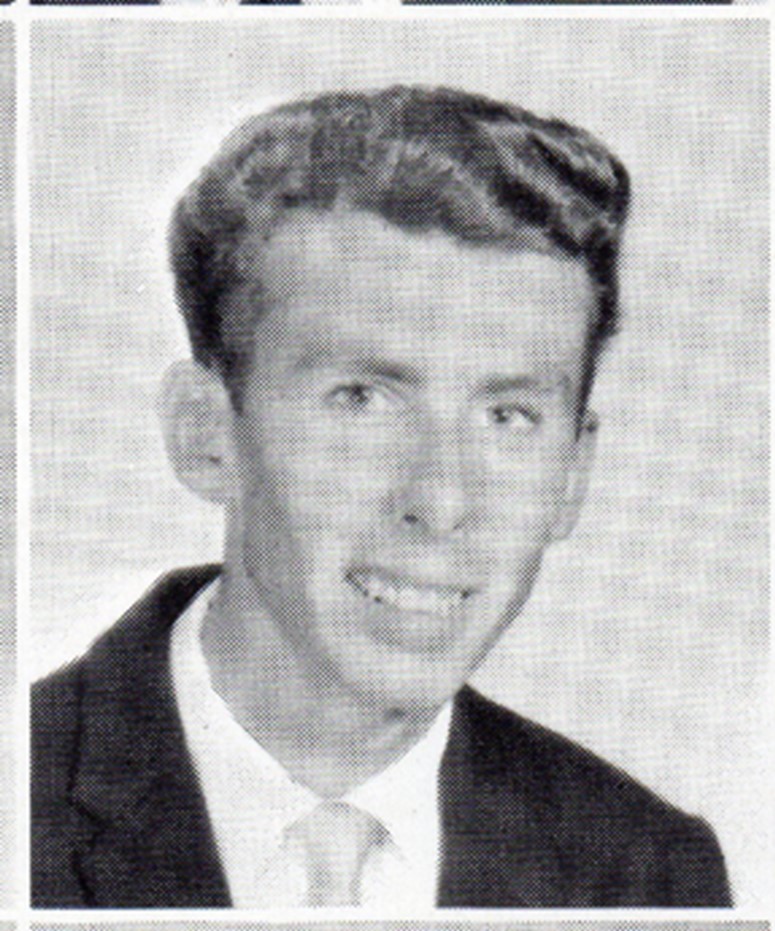
 Right after talking to us, Ms. Hoehn was able to   contact a girlfriend of Bossier veteran Alton D.   Kellogg and within minutes the girlfriend scanned   and emailed his military portrait. Within a couple of   days, History Center staffers were able to provide   Ms. Hoehn with photos for two more of the Bossier   names:  yearbook photos of Bossier High School   alums Dennis B. Black and Arthur N. Welch. Arthur   Welch a little bit of detective work by Marisa   Richardson at the History Center. At first, she passed   over the yearbook photo of the student listed as “Buddy Welch”. Once back at her computer, she decided to dig a little. She found through an online memorial tribute by a boyhood friend that Arthur N. Welch was indeed known by the name “Buddy.”  

The last remaining veteran to find was Herbert Walter, who died in September of 1969 at the age of 23. As an African American who would have attended high school around 1960-64 and whose home of record was Bossier City, we figured he likely attended Bossier Colored High (or possibly CH Irion High School in Benton. He is buried at Longview Baptist Church cemetery, northeast of Bellevue).  We did not have a complete run of yearbooks for the schools for black students. The yearbooks we do have or have seen tended to be paperback, less likely to last than hardbound books. Some of the schools were not able to put out a yearbook each year. We also could not locate an obituary for Herbert Walter, so we had to widen our search for Herbert Walter’s photo. I wrote in the Spring 2017 History Center newsletter that we were seeking the public’s help.   

After reading that newsletter, local researcher and genealogist, Isabelle Woods, along with researcher and retired “Shreveport Times” reporter John Andrew Prime, whose reporting included local military history, became determined to find a photograph of Herbert Walter. They were determined that his picture could be added to the Vietnam Veterans Memorial Fund’s Wall of Faces.  

Herbert Walter
Mrs. Woods and Mr. Prime searched for records that could lead to family members. After they found the soldier’s obituary which listed him as Herbert Walters, instead of Walter, Mrs. Woods was then able to get the names of his family members. However, his widow’s name was not given on the obituary, and it did not contain a photograph.  

Mrs. Woods located and contacted a different family member and learned the names of Herbert Walter’s widow and daughter and that they had long ago moved out of the state. Knowing just their names and a general location that they had moved to decades prior, Mrs. Woods continued her search. Incredibly, Isabelle Woods successfully located and contacted Herbert Walter’s widow, who was happy to share photographs of him. 


In summer of 2022, the Vietnam Veterans Memorial Fund made the announcement that at least one photo had finally been found for each of the 58,281 service members listed on The Vietnam Veterans Memorial Wall. This effort was completed by volunteers, like Jana Hoehn, from across the country, and by the attendant efforts from local institutions and volunteers who stepped up in cities and small towns and rural areas across the country. 

We remain grateful to Isabelle Woods for her time, her determination and her research expertise. We are thankful for John Andrew Prime, whose assistance was crucial in finding the trail that led to the visual reminders of the short life of Herbert Walter. It is because of their efforts that not one but three photographs of Herbert Walter were added to the Vietnam Veterans Memorial Fund’s “Wall of Faces.” You can virtually visit the wall of faces here: http://www.vvmf.org/Wall-of-Faces/ 

For research requests like Ms. Hoehn’s that we receive from around the country, we are delighted to take donations of yearbooks or to borrow one to carefully scan or photocopy. If you would like to add to or explore our collection of Bossier veterans’ stories or photos, please stop by or contact the History Center. We are located at 2206 Beckett St, Bossier City, LA and are open M-Th 9-8, Fri 9-6, and Sat 9-5. Our phone number is (318) 746-7717 and our email is history-center@bossierlibrary.org


For other fun facts, photos, and videos, be sure to follow us @BPLHistoryCenter on FB, @bplhistorycenter on TikTok

Article by: Pam Carlise

Images: 

Arthur “Buddy” Welch 1950-1969 Bossier High School yearbook 1967, his junior year. He is not in the yearbook his senior year.

Dennis Black 1947-1968 Airline High School yearbook 1966

Herbert Walter 1946-1969

Sunday, May 1, 2022

This Month In Bossier Parish

 May: Throughout the years!


May 1st: National “Get Caught Reading” month!

Get Caught Reading Month is all about reading books and raising awareness regarding the advantages of indulging in literature. The genres of books you can read include nonfiction, history, fables, etc — the options are unlimited. So get your hands on some books and start reading! 

     
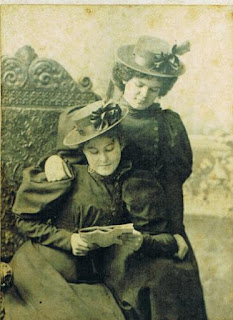
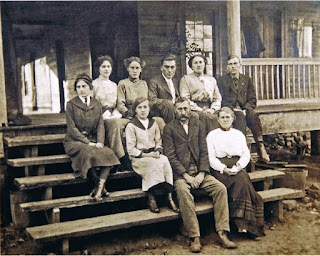
Photos; Top left: C.1900’s: Mary Arnold (left) and Nettie Dunlavey (right.) Two young women posed for studio photo, reading a book.    1999.127.012B Jennings Collection.  Top right: Unidentified man and young boy are pictured in a living room. The man is sitting down in a floral chair & the young boy is leaning over the chair looking down at a book the man is reading. 2018.038.205 Jones Collection
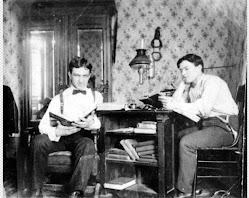
Bottom left: C.1900’s: Abney Scanland as a young man reading in his sister Mabel's room. 1999.136.005.  Bottom right: C.1900’s: Elias Goldstein and  Jacob Mahne Bodenheimer at LSU 2002.036.020      


May 11th:  Weekly news from 100 years ago.   

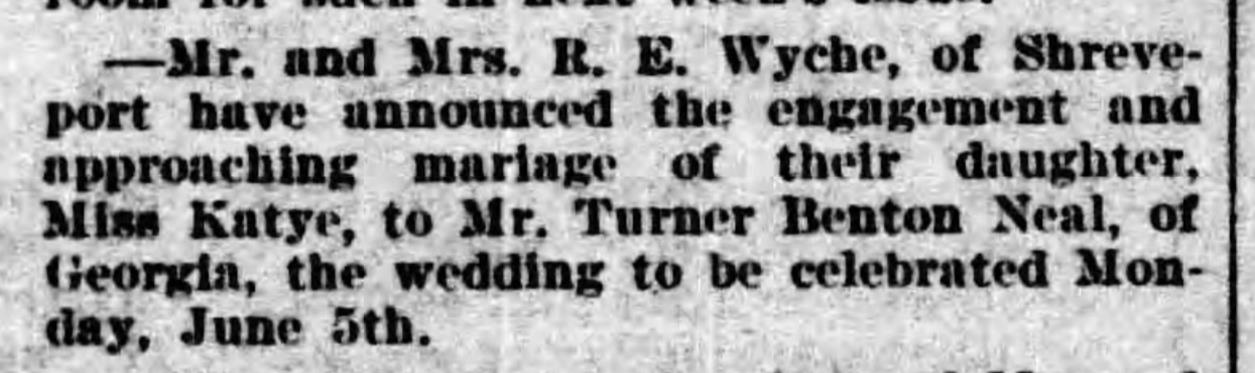
*Please enjoy the newspaper clippings from the 11 May 1922 issue of the Bossier Banner

· More new cars are being seen in town.


  • Plain Dealings postmaster, John H. Allen,  takes his first vacation after serving for 12 years.


· Mr. & Mrs. R.E. Wyche announce the engagement and approaching marriage of their daughter Katye (Katie)


  • Big gasser at Bellevue Oil Field


May 30: Memorial day

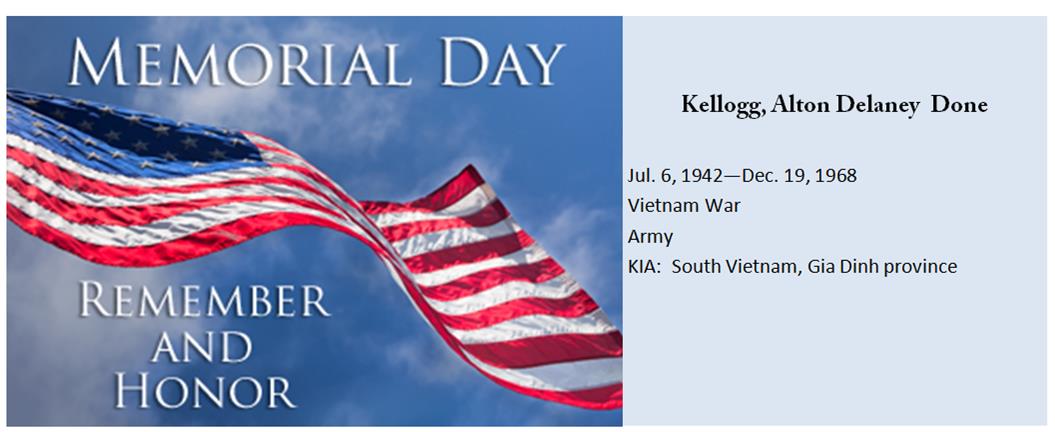
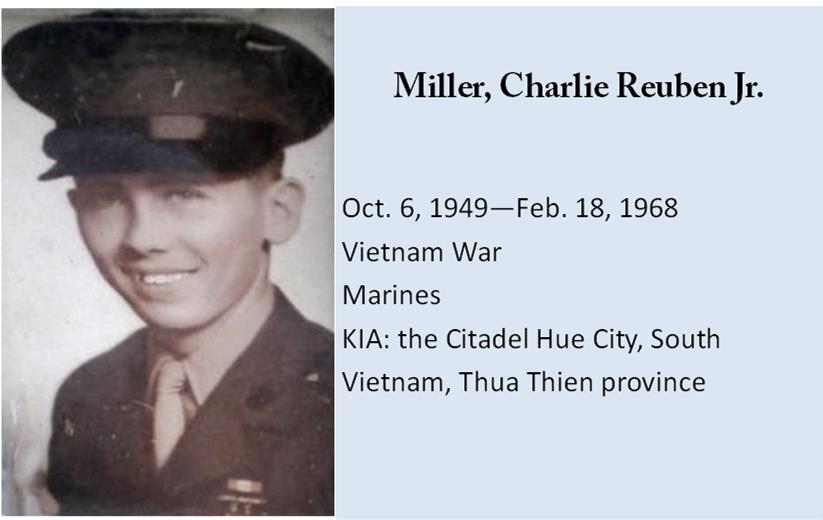
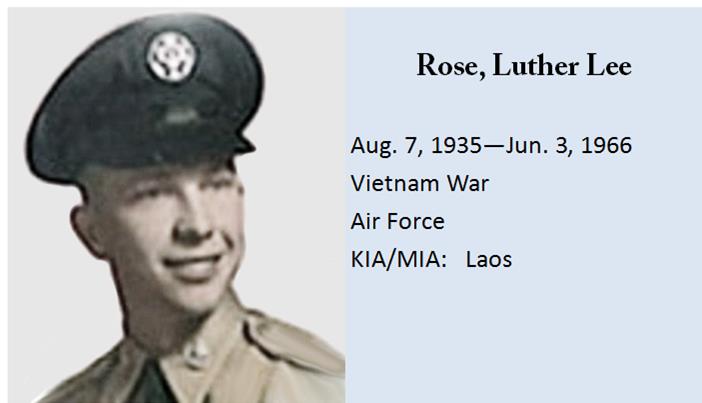
In honor of this day, may we pay tribute to those who have fallen.  Here are some of Bossier's unsung heroes. 

To all military personnel past, present and future...Thank you for your service.