Showing posts with label Memorial Day. Show all posts

Wednesday, May 15, 2024

Lt. Edward F. Teague: A Brave Pilot with a Brave Family

Decoration Day will be here soon, the last Monday in May. Three years after the Civil War ended, in 1868. Maj. Gen. John A. Logan, the head of the Grand Army of the Republic, an organization of Union veterans, established Decoration Day as a time to decorate the graves of their war dead with flowers, already a springtime tradition in several communities, both the North and South. Logan chose the date of May 30th because, some say, it was a time flowers would be in bloom all over the country. Over time, the day became Memorial Day, a day to honor all those who died in service to our nation.

In honor of a young man from Bossier City who made this ultimate sacrifice in 1947, replace the vision of springtime and flowers with snow, lots of snow, and short days of little sunlight. Imagine a resting place not in a manicured, flowering cemetery but in an isolated sub-arctic landscape 70 miles north of Goose Bay, Labrador, Dominion of Newfoundland (before it was a province of Canada). This was the transitional resting place of Lieutenant Edward F. Teague of Bossier City, whose C64 single-engine plane went down on March 13, 1947.

Growing up in Bossier City with six siblings, Lt. Teague attended Bossier High School, along with his future wife, Katherine Eatman. He attended LSU and joined the Army Air Force (AAF) in 1943. (The US Air Force began as the Army Air Corps in 1926 and became the more autonomous Army Air Force in 1941. It became the standalone US Air Force in September, 1947). After completing flight training in New Mexico, Edward Teague instructed at US airfields until sent to Goose Bay in Labrador in 1946. Goose Bay was a Royal Canadian Air Force airfield, with the south-side reserved for the AAF.

Lt. Teague was serving in the Atlantic division of the Air Transport Command (ATC). The Air Transport Command, active from 1942-1948, had extensive responsibilities: the ferrying of all aircraft within the United States and to many destinations outside of the US, the control, operation, and maintenance of establishments and facilities on air routes outside of the US and the transportation by air of personnel, equipment, supplies and mail for all War Department agencies that didn’t have their own troop carrier units.

Lt. Teague was an assistant base operations officer at the Goose Bay AAF station, which served as an ATC jumping-off point for Great Britain, and flew supplies to outpost weather stations and made rescue flights. In the bitter cold of February, 1947, he had rescued Sgt. Patrick Hayes of Wisconsin when he was lost after a crash. One month later, on March 13th, Teague, as pilot, with Sgt. Hayes and a Lt. William Haemker of Indiana, were in a single engine C-64 Norseman 4-seater, one of the light-transport work horses from WWII, when their base lost contact with them.

The March 18, 1947, Shreveport Times reported that bad weather impeded search operations but several planes were standing by in Goose Bay to search for Lt. Teague and the other two men once the weather cleared. The next day the Times reported that Royal Canadian Air Force planes had covered 19,000 square miles of the Labrador “wastelands” in the search, and a ground search was underway. The Times also reported that waiting for news in Bossier City were Teague’s parents, Mr. and Mrs. A.M. Teague, and his wife Katherine and two-year-old son.

Several days later, the Bossier City Planters Press reported that the aerial search for the lost men and their plane had been called off, but Teague’s family was holding out hope. Ground forces were still searching and an AAF captain stationed at Goose Bay, a friend of Edward Teague’s, was bolstering the family’s hopes through daily short-wave radio communications. He had advised Katherine Teague that

Edward’s plane (which was designed for the worst of conditions) was thoroughly equipped for emergencies, with skis and pontoons to land on ice or water. There were enough open areas in the snow - “wastelands” - that Edward could bring the plane down safely, and the men had ways to resist the cold. The captain also assured Mrs. Teague that the plane was supplied with an abundance of first aid articles, and ammunition and food to last for at least 30 days.

Edward’s brother, local realtor Arthur Ray Teague, reported the family found these Goose Bay reports encouraging. Their sister Joy Teague, who was in civilian service at General MacArthur’s headquarters in Tokyo, Japan, was also communicating with the family via radioed messages. In addition, the Planters Press article related that the family was receiving messages of concern and sympathy from a multitude of local friends and acquaintances to help them through their “period of anxiety.”

In late June, the family received dreaded news, in the least-comforting way. The Friday, June 27, 1947 Shreveport Journal reported that an Associated Press dispatch had just disclosed that the body of Lt. Teague had been found by a search party. The family, though, had not yet received any official notice by the War Department. They had only received word through Congressman Overton Brooks that a ground crew had been ordered to Mur Inlet 70 miles north of Goose Bay because wreckage of a plane had been spotted from the air.

Once the ground crew reported a positive identification of the plane and the three bodies found inside, Mrs. Teague was contacted by the War Department and the news was reported on the front page of the Planters Press on Thursday, Jul 3, 1947. After another week, and an incorrect speculation by the Associated Press that Lt. Teague’s body would be buried in the snow-covered sand dunes where it was found, Katherine Teague received word that the War Department would be sending her husband’s body home.

Twenty-five-year-old Lieutenant Edward Teague was buried in Shreveport on July 14, 1947, at Forest Park Cemetery with military honors. His body had been accompanied from Goose Bay by an officer of the US Army. Personnel of Barksdale Field conducted the service. Air Corps officers served as pallbearers. At the cemetery, an honor guard from Barksdale fired the traditional military salute, and the flag that had been on Lt. Teague’s casket was presented to his widow. The Planters Press reported that deep sorrow for the loss of Lt. Teague was felt not only by Mrs. Teague, her young son, and other family members, but felt throughout the community.

The day he was buried, Mrs. Katherine Teague signed a government application for a flat granite military grave marker for her husband. The application initially listed a typed date of death as 26 June 1947, the day he was found. That date was then scratched out in red pencil, and March 13, 1947 was handwritten over it. That hastily scribbled date honored the day his family’s world stopped. The June date is when it shattered.


If you would like to add to or explore our collection of Bossier’s military heroes stories or photos, please stop by or contact the History Center. We are located at 2206 Beckett St, Bossier City, LA and are open M-Th 9-8, Fri 9-6, and Sat 9-5. Our phone number is (318) 746-7717 and our email is history-center@bossierlibrary.org

For other fun facts, photos, and videos, be sure to follow us @BPLHistoryCenter on FB, @bplhistorycenter on TikTok, and check out our blog http://bpl-hc.blogspot.com/.


Images: 

  • Lt. Edward Teague
  • Norseman Noorduyn UC-64 from the Charles Daniels Photo Collection album "US Army Aircraft,” San Diego Air and Space Museum Archive.

Article by: Pamela Carlisle


Wednesday, May 17, 2023

Memorial Day Remembrances - Far Away yet Close at Heart

In honor of upcoming Memorial Day, I found a local history story that is an ocean away, in some of the most beautiful natural surroundings European countries have to offer, surrounded with flags of the United States. They are the American Cemeteries maintained by the American Battle Monuments Commission (ABMC), a government agency founded in 1923 that now manages 26 cemeteries and 35 monuments created after a variety of wars across four continents. The land is generously donated in gratitude to America, and is never taxed in these foreign countries. Forty percent of these cemeteries and monuments are in France.
One of these cemeteries in France, Aisne-Marnes (Aisnes is pronounced Enne) near Belleau, France, northeast of Paris, is the final resting place of PFC. Henry Homer Dalrymple, who was born on July 21, 1892 in Bossier Parish. Homer, as he was known, was raised in the rural Midway/Linton community near Benton and died July 1, 1918, just shy of his 26th birthday in the Picardie region of France (now known as the Hauts-de-France). He was killed in action by a direct hit with a high explosive, where the French and the American Expeditionary forces were holding off the Germans at the Marne River, just ahead of the famous battle of Château Thierry.

Homer Dalrymple’s first burial on his Army burial record listed an American cemetery at the Bézu-le-Guéry, near the village of Château Thierry. There was an American field hospital located there. Its purpose so close to the front was primarily triage. Burial at a field hospital would have likely meant burial in a mass grave, or at least a temporary or hastily constructed one. Homer Dalrymple’s burial record shows that he was reinterred in the beautiful American Cemetery in Belleau France, now known as the Aisnes-Marne, on June 10, 1919.


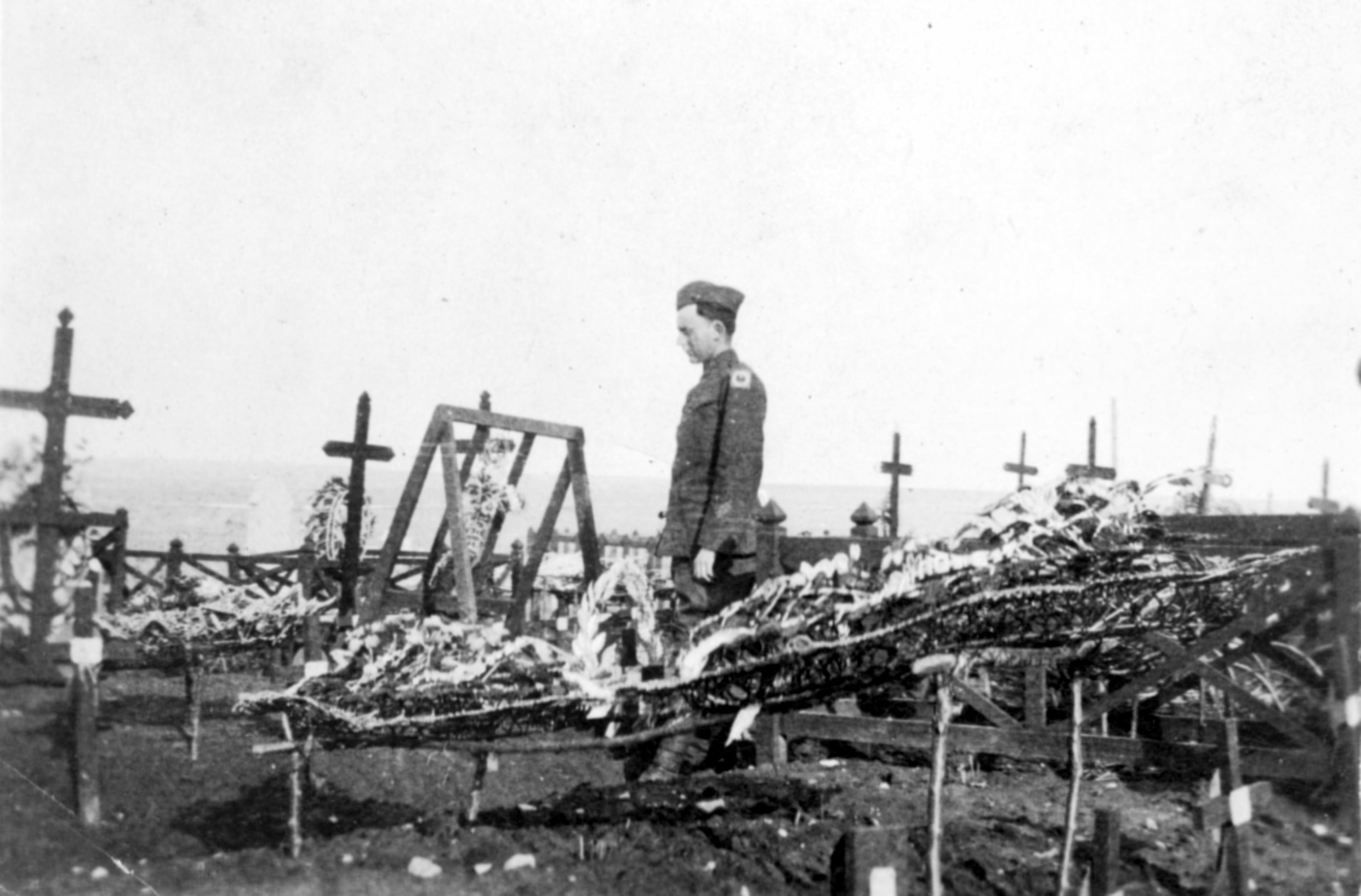
Another photo in our collection, this one of a Bossier WWI soldier who made it home and lived to an old age, was of Dan Rials (Arthur Daniel Rials), who was a member of Company B, 13th Engineer Corps of the US Army. This touching photo, though of a different location in France, may help to explain Homer Dalrymple’s reburial. The photo shows a young Dan Rials in uniform walking among tall wooden crosses and flower-covered yet spindly-looking makeshift funeral biers, platforms for coffins before they are lowered into the ground, identified on the photo as Fleury-sur-Aisne, France, circa 1919.


Fleury-sur-Aisne was a Red Cross “evacuation” hospital used following German advances into France. An online search for Fleury-sur-Aisne yields an even more somber photograph, a chaplain at a burial service there, praying over shrouded bodies in a mass grave of soldiers who had died at the hospital. It’s difficult to look at, but yields much information about death at the frontlines. It is likely, though, that those soldiers too would later have gotten their own cross, or Star of David if they were Jewish, at a permanent American cemetery, such as the beautiful Aisne -Marne mentioned above or the Meuse Argonne, also managed by the American Battle Monuments Commission, or sent back to the United States if their family so chose.


In fact, the American Battle Monuments Commission got its start at the end of WWI. The United States was granted plots of land by the Allies to bury their fallen. Six cemeteries were created in France, one in Belgium, and one in England, as perpetual, tax-exempt property of the U.S. government. Responsibility for their care and maintenance was placed in the hands of the ABMC in 1923.


Homer Dalrymple’s mother Lydia Dalrymple, did not request that her son’s body be returned home, but she did take advantage of the opportunity to go to France as a “Gold Star Mother” (a mother who lost one or more children in the war) to visit the grave of her son in the stunning, new American Cemetery at Aisne-Marne. The History Center has a photo of her, labeled as “Grandma Dalrymple”, by then looking quite elderly, beginning her trip on board a train in Dallas. This was possible because in the late 1920’s, the War Department of the United States compiled a list of mothers and widows of WWI soldiers killed and buried in Europe and offered to take them to their loved ones’ graves. Between 1930 and 1933, 6,000-plus women traveled on these “Gold Star Mother Pilgrimages”. The trips were entirely planned and paid for by the U.S. Army, a relatively rare act of public support for the private grief of families of the fallen.


If you would like to see these or other photos, such as those in our current Red Cross exhibit, visit us at the History Center, or ask us how to use our online catalog, which includes digitized images. We are located at 2206 Beckett St, Bossier City, LA and are open M-Th 9-8, Fri 9-6, and Sat 9-5. Our phone number is (318) 746-7717 and our email is history-center@bossierlibrary.org


For other fun facts, photos, and videos, be sure to follow us @BPLHistoryCenter on FB, @bplhistorycenter on TikTok,

Images: 

  • Dan Rials, 1919, in Fleury sur Aisne, France
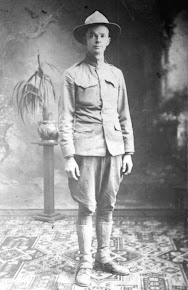
  • Postcard photo of Homer Dalrymple 1892-1918 in World War I uniform. He was in the 48th Infantry Co. H. He was killed near Château Thierry and buried in France.
  • Burial register card for Henry Homer Dalrymple. US National Archives: Record Group 92, Office of the Quartermaster General, Card Register of Burials of Deceased American Soldiers 1917 – 1922
Article by Pam Carlise

Sunday, May 1, 2022

This Month In Bossier Parish

 May: Throughout the years!


May 1st: National “Get Caught Reading” month!

Get Caught Reading Month is all about reading books and raising awareness regarding the advantages of indulging in literature. The genres of books you can read include nonfiction, history, fables, etc — the options are unlimited. So get your hands on some books and start reading! 

     
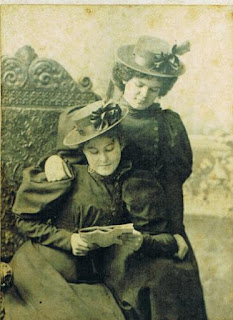
Photos; Top left: C.1900’s: Mary Arnold (left) and Nettie Dunlavey (right.) Two young women posed for studio photo, reading a book.    1999.127.012B Jennings Collection.  Top right: Unidentified man and young boy are pictured in a living room. The man is sitting down in a floral chair & the young boy is leaning over the chair looking down at a book the man is reading. 2018.038.205 Jones Collection
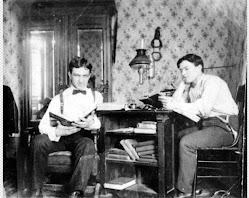
Bottom left: C.1900’s: Abney Scanland as a young man reading in his sister Mabel's room. 1999.136.005.  Bottom right: C.1900’s: Elias Goldstein and  Jacob Mahne Bodenheimer at LSU 2002.036.020      


May 11th:  Weekly news from 100 years ago.   

*Please enjoy the newspaper clippings from the 11 May 1922 issue of the Bossier Banner

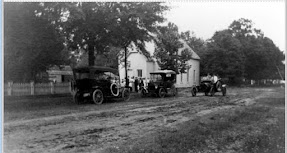
· More new cars are being seen in town.


  • Plain Dealings postmaster, John H. Allen,  takes his first vacation after serving for 12 years.


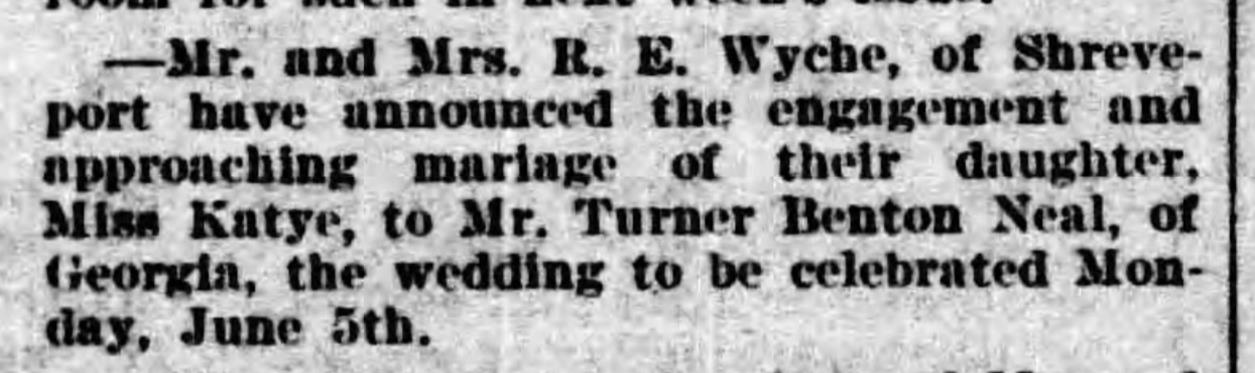
· Mr. & Mrs. R.E. Wyche announce the engagement and approaching marriage of their daughter Katye (Katie)


  • Big gasser at Bellevue Oil Field


May 30: Memorial day

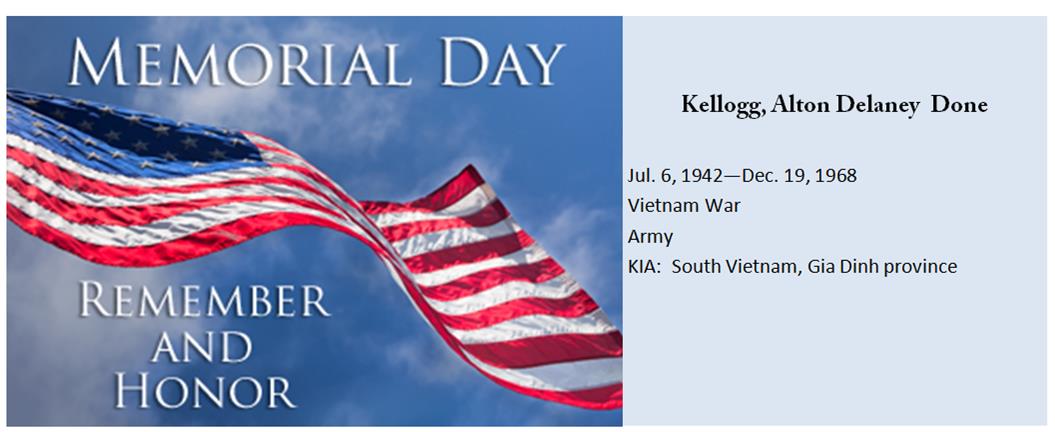
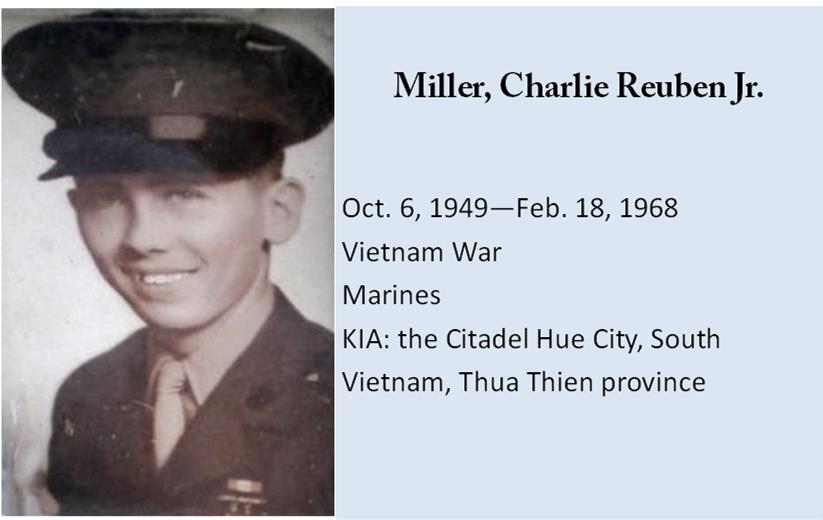
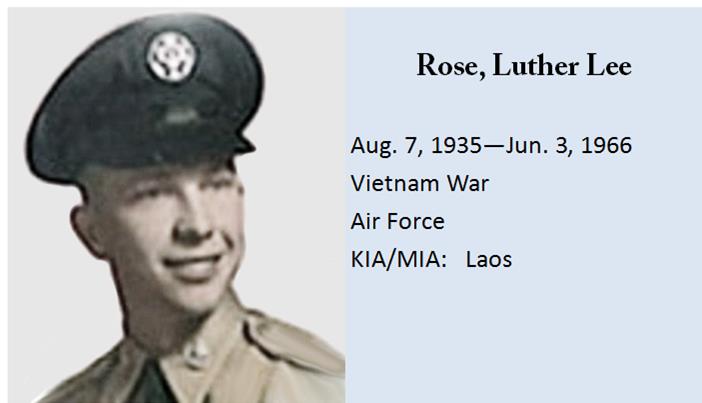
In honor of this day, may we pay tribute to those who have fallen.  Here are some of Bossier's unsung heroes. 

To all military personnel past, present and future...Thank you for your service.